Best App to Sell Clothes in 2026: 8 Apps Compared

How we put this together: we compare official feature and pricing pages, app store listings, privacy policies and public user reviews. Prices change, so check the provider's site before you pay.
Key takeaways
- Vinted and Depop cost sellers the least in the United States in 2026, with Vinted charging no seller fee and Depop charging only payment processing on current listings.
- Poshmark charges the most of the mainstream fashion apps, at 20 percent on sales of 15 dollars or more, but it includes a prepaid shipping label and a large fashion audience.
- The right app depends on what you sell: vintage and streetwear do well on Depop and Grailed, everyday brands move on Vinted, and designer pieces suit ThredUp or eBay.
- Fees are only part of the cost, so check who pays for shipping, how long payouts take, and what happens if a buyer returns an item.
- Listing the same item in two places can speed up a sale, but you must remove it from the other app the moment it sells.
Quick comparison
| Name | Who it suits | Starting price | Free option | |
|---|---|---|---|---|
 Vinted | Everyday clothes with no seller fee | Free | Yes | Visit |
 Depop | Vintage, Y2K, and streetwear | Free | Yes | Visit |
 Poshmark | Brand-name fashion with prepaid shipping labels | Free | Yes | Visit |
 Mercari | Quick, simple listings beyond fashion | Free | Yes | Visit |
 eBay | Wide reach and higher-value or collectible clothing | Free | Yes | Visit |
 Facebook Marketplace | Local sales, bundles, and bulky lots | Free | Yes | Visit |
 ThredUp | Hands-off selling of a whole bag of clothes | Free | Yes | Visit |
 Grailed | Menswear, streetwear, and designer pieces | Free | Yes | Visit |
The best app to sell clothes
We compared fee pages, shipping rules, and seller tools for the apps most people actually use to sell clothes in 2026. The eight below cover free listing, social selling, consignment, and local pickup, so you can match the app to your wardrobe rather than forcing every item onto one platform.
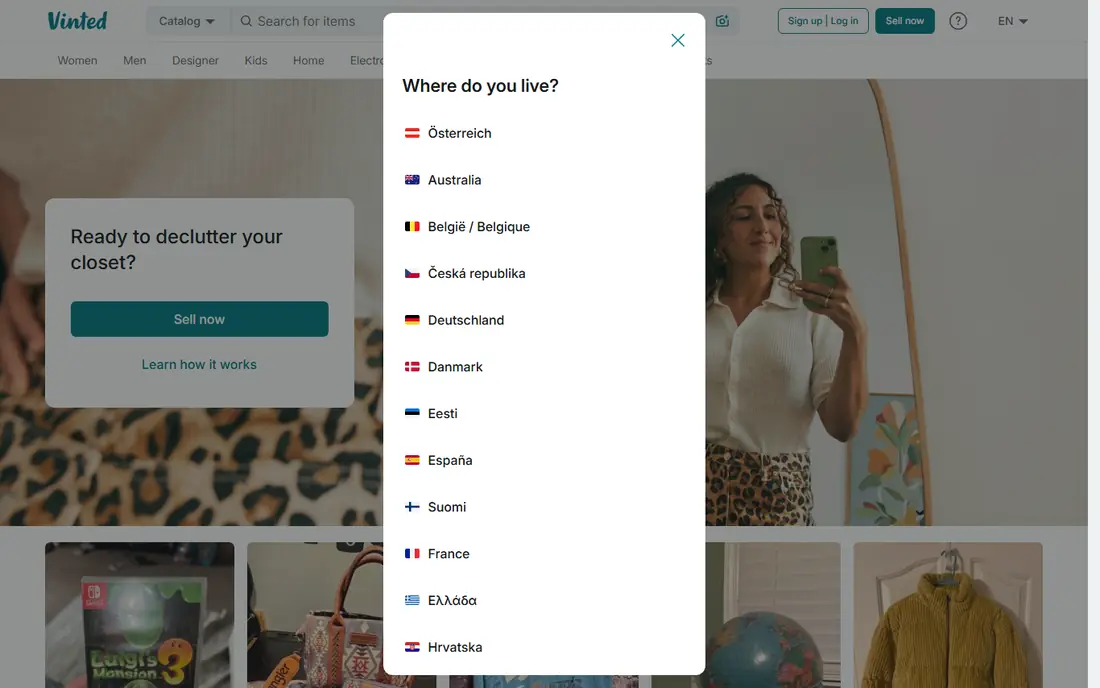
Vinted is our pick for clearing out everyday clothes without watching a fifth of each sale disappear in fees. Sellers keep the full sale price on standard sales, while buyers pay a protection fee at checkout. That structure makes it a strong choice for high-street brands, basics, and bundles that would barely be worth listing on a 20 percent commission app.
The trade-off is audience and presentation. Vinted buyers tend to hunt for bargains, so designer pricing needs to be realistic, and photos still matter: clear daylight shots, honest condition notes, and measurements help a listing stand out. If you sell in volume, bundle discounts and fast replies do more for your results than any paid boost.
- No seller fee on standard sales
- Buyers cover shipping in most cases
- Simple phone listing flow
- Buyer protection fee can make your prices look higher
- Less suited to high-end designer pieces
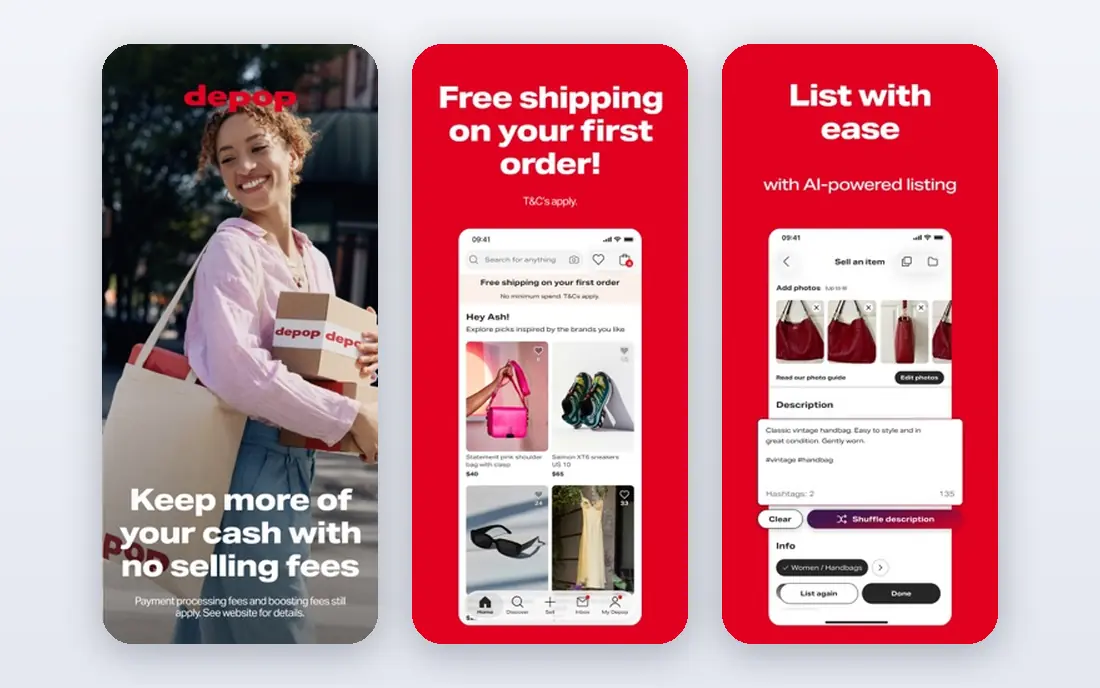
Depop works best when your clothes have a point of view. Vintage denim, band tees, Y2K pieces, and streetwear find buyers who browse shops the way they browse feeds, and a consistent photo style can turn one-off sales into repeat visits. United States sellers currently pay no selling fee, only payment processing, which keeps more of each sale than Poshmark or eBay.
The catch is effort. Depop rewards sellers who post often, write useful descriptions, and reply quickly, and it is less forgiving of vague listings than a general marketplace. Boosted listings can add visibility for a fee, so test organic reach first and only pay to boost items that already get saves and messages.
- No selling fee for United States and United Kingdom sellers on current listings
- Strong trend-driven audience
- Shop pages suit a curated style
- Payment processing of 3.3 percent plus 0.45 dollars still applies
- Optional boosts add cost
- Sellers arrange much of the presentation themselves
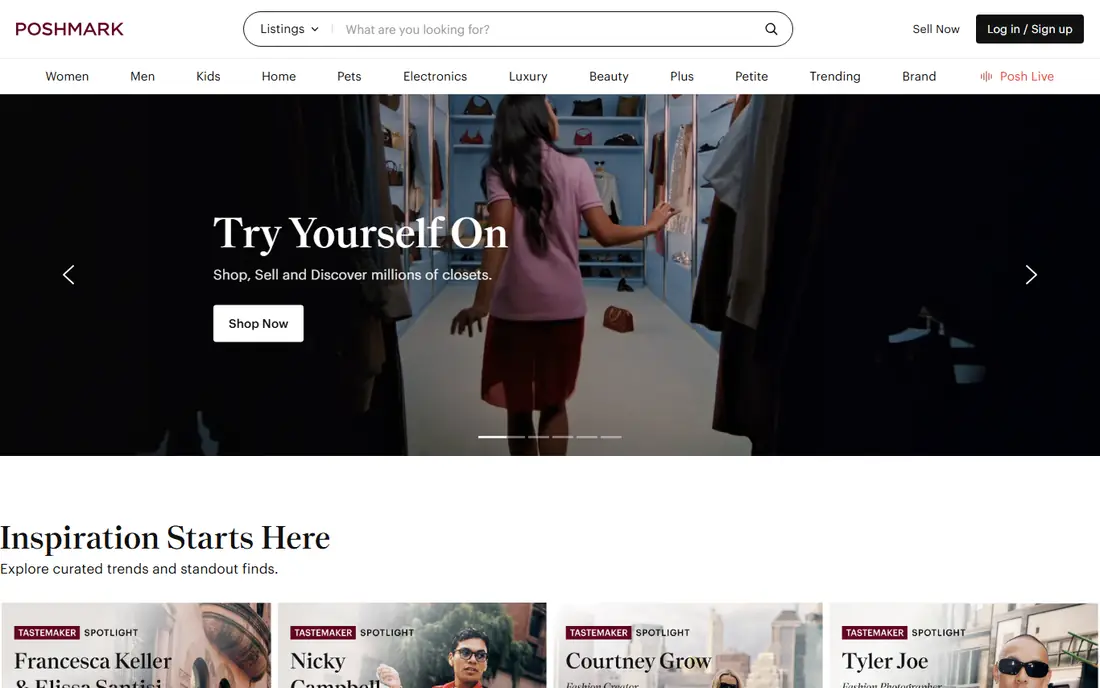
Poshmark remains the easiest app to start on if you sell brand-name women's, men's, or children's fashion. Every order comes with a prepaid label, so you do not need to weigh parcels or buy postage, and the social side of the app, including sharing listings and joining themed sales events, genuinely helps new sellers get views. Activewear, contemporary brands, and designer bags are particular strengths.
The fee is the honest catch, and it is steep. On a 50 dollar sale, Poshmark keeps 10 dollars, which is far more than Depop or Vinted. That makes Poshmark a poor choice for cheap basics, but a sensible one for mid-priced branded pieces where the audience and the prepaid label save you time and hassle.
- Prepaid shipping label on every order
- Large fashion-focused audience
- Social sharing features help listings get seen
- 20 percent commission on sales of 15 dollars or more
- 2.95 dollars flat fee under 15 dollars
- Fees hurt low-priced items
Mercari suits sellers who want to list a mixed box of items without learning a fashion community's rules. The app covers clothes, electronics, home goods, and more, and its prepaid labels keep shipping simple. Its flat 10 percent selling fee is easy to work out in advance, with no separate payment processing charge added on top.
That simplicity comes with a weaker fashion identity. A rare vintage piece may sit longer here than on Depop, and a designer item may fetch less than on eBay, where collectors search by brand and model. Use Mercari for solid everyday stock and for clearing several categories at once, rather than as your only shop for specialist pieces.
- Fast listing flow with prepaid label options
- 10 percent selling fee with no separate processing charge
- Works for clothes plus other household items
- Less fashion-specific audience than Poshmark or Depop
- 10 percent fee still bites on low-value sales
eBay is the app to use when reach matters more than community. Its search brings in buyers looking for a specific brand, size, or rare item, and that intent often supports higher prices for designer and collectible clothing. Auctions can also work well for genuinely scarce pieces, while fixed-price listings suit steady stock.
Fees and shipping choices need attention. The final value fee in most clothing categories is around 13.6 percent plus a per-order fee, and you choose the shipping terms, which means weighing postage costs into your price. For ordinary high-street items, that fee and effort may not beat Vinted, but for anything unusual, eBay's audience is hard to match.
- Huge buyer base and strong search
- Auction and fixed-price options
- Good for designer, vintage, and rare sizes
- Around 13.6 percent final value fee plus 0.40 dollars per order in most clothing categories
- Sellers handle more of the shipping decisions
Facebook Marketplace is our pick when you would rather hand over a bag of clothes than pack and post each piece. Local pickup sales paid in person carry no selling fee, and bundles, children's lots, and seasonal clear-outs move well to nearby buyers. It is also useful for bulky items that would cost too much to ship.
Shipped sales are a different deal, with a 10 percent fee on shipped orders, and the app offers less fashion discovery than Depop or Poshmark. Expect more messages and more no-shows than on a checkout-based marketplace, so set clear pickup times, keep messages short, and only ship through the app's own checkout rather than side payment links.
- No fee for local pickup sales paid in person
- Huge local audience
- Bundles and job lots sell well
- Shipped sales carry a 10 percent fee
- Less fashion discovery than dedicated resale apps
- Messages can be time-consuming
ThredUp is the option for people who want the clothes gone without becoming a seller. You order a kit, fill a bag, and ThredUp handles listing, photography, and shipping. That convenience is real if you have a wardrobe clear-out and no interest in photographing, measuring, and messaging buyers one item at a time.
The price of convenience is a smaller payout. ThredUp keeps a large share of each sale, and the percentage you receive depends on the item's selling price, so cheap basics earn very little. Payouts also take time, and not every item will be accepted. Use it for a bulk clear-out of decent brands, and list your best pieces yourself elsewhere.
- You send one bag and ThredUp lists, photographs, and ships items for you
- No listing work
- Accepts many quality brands
- Payout is a percentage of the sale price and varies by item value
- Selling takes weeks
- Items that do not meet standards may not earn anything
Grailed is where menswear collectors look first, and that focus is its main advantage. Designer labels, limited sneakers, and rare streetwear pieces get in front of buyers who know the market, and offers and price-drop tools help move stock that is priced close to market value. If your wardrobe leans heavily toward menswear, it often beats a general app on price achieved.
Costs and standards are the catch. Commission plus payment processing together come to roughly a tenth of the sale or more, depending on price, and buyers here check condition and authenticity closely. Photograph flaws honestly, keep receipts or proof of purchase where you have them, and price against sold listings rather than hopeful asking prices.
- Focused audience of menswear and streetwear buyers
- Strong for designer and rare items
- Seller tools for offers and price drops
- Commission plus payment processing brings total cost to roughly 10 percent or more
- Narrower audience than eBay
- Condition and authenticity matter a lot
How we picked these
We compared official fee and help pages, shipping rules, app store listings, and public seller reviews for the resale apps with the largest active audiences in 2026. We favored apps that are free to join and list on, that handle payments inside the app, and that cover a distinct selling style, from no-fee volume selling to consignment and local pickup. Where fee details differed between sources, we used the figure that matched the most recent fee summaries and noted the billing basis, such as per-order or percentage, so you can check it against the app before listing.
What to check before you list
Price for the fee, not just the label
Work backwards from what you want to keep. On a 20 percent commission app, a 25 dollar price leaves you 20 dollars before any shipping costs you absorb. On a no-fee app, the same price leaves you nearly whole, minus processing. A quick fee check per item beats a single rule of thumb, because the cheapest app for a 10 dollar tee is not always the cheapest for a 200 dollar coat.
Photograph the flaws, not just the best angle
Buyers on resale apps cannot try clothes on, so condition notes carry weight. Photograph wear, stains, loose threads, and label details, and state measurements rather than relying on a size tag. Honest listings get fewer returns and better reviews, and returns cost time on every platform.
Decide how you will ship before the first sale
Prepaid labels suit sellers who want no postage decisions, while arranging your own shipping can be cheaper for light items if you have a scale and packaging ready. Keep a small stock of mailers, and weigh one typical parcel so postage surprises do not eat your margin. For local sales, agree a public meeting place and a pickup window in writing.
Keep track of what sold where
If you cross-list, keep a simple sheet of item, app, price, and status, and delete the other listings within minutes of a sale. Selling the same jacket twice is the fastest way to lose a good seller rating, and ratings affect how often your future listings are shown.
Frequently asked questions
What is the best app to sell clothes for beginners?
Poshmark or Vinted are the easiest starting points. Poshmark gives you a prepaid label with every order, while Vinted charges no seller fee and keeps listing simple. Start with one app, learn what sells, and add a second only when you can keep listings in sync.
Which app has the lowest fees for selling clothes?
Vinted has the lowest seller cost in the United States, with no seller fee on standard sales, though buyers pay a protection fee. Depop is next for United States sellers, with no selling fee and payment processing of 3.3 percent plus 0.45 dollars. Local pickup sales on Facebook Marketplace also carry no fee when paid in person.
Is it better to sell clothes on Poshmark or Depop?
Poshmark suits brand-name fashion and sellers who want prepaid labels and a large built-in audience, despite its 20 percent commission. Depop suits vintage, streetwear, and curated shops, with lower seller costs and a trend-driven audience. Many sellers use both and send different stock to each.
Can I sell used clothes on eBay?
Yes, and eBay is a strong choice for designer, vintage, and rare items because buyers search by brand, size, and style. Expect a final value fee of around 13.6 percent plus 0.40 dollars per order in most clothing categories, and set shipping terms carefully so postage does not reduce your payout.
How do payouts work on resale apps?
Most apps hold payment until delivery is confirmed or a short window passes, then release funds to your linked bank account or the app balance. Poshmark releases funds a few days after delivery, while other apps vary from a couple of days to about ten days. Check the payout timing on each app before you rely on the money.
Should I cross-list the same item on several apps?
Cross-listing can speed up sales, but it adds work and risk. Keep a list of where each item is live, and remove it everywhere else as soon as it sells. If you cannot check messages daily, stick to one app until you have a routine that works.
Sources we checked (8)

Online Jobs is an independent blog about careers, online work, learning new skills and the tools that help people earn. More about us.
Keep reading
All posts
Best White Label SEO Companies
We compare the best white label SEO companies and tools in 2026 for agencies, from fulfilment services to branded reporting platforms, margins and prices.

Best Webinar Software
We compared the best webinar software for 2026 on price, attendee limits, automation and ease of use, to help you host better live sessions with confidence.
Best Web Scraping Tools
Compare the best web scraping tools in 2026, from no-code Octoparse and Browse AI to Apify, Firecrawl, Bright Data, Zyte, ScraperAPI and free Scrapy, with prices.