Best App Monetization Strategy in 2026: 9 Options Compared

How we put this together: we compare official feature and pricing pages, app store listings, privacy policies and public user reviews. Prices change, so check the provider's site before you pay.
Key takeaways
- Subscriptions suit apps with ongoing value, while ads suit free apps with large, frequent use.
- RevenueCat and Adapty reduce subscription engineering work, but they add a fee on top of store commissions.
- Ad mediation through AppLovin MAX or AdMob can raise ad income by running a competitive auction.
- Paywall tools like Superwall help test offers without a new app release for every change.
- Most apps earn more from a mix of two methods than from a single method used alone.
Quick comparison
| Name | Who it suits | Starting price | Free option | |
|---|---|---|---|---|
 RevenueCat | Subscription infrastructure | Free | Yes | Visit |
 Adapty | Paywalls and subscription analytics | Free | Yes | Visit |
 Superwall | No-code paywalls and testing | Free | Yes | Visit |
 Google AdMob | In-app advertising | Free | Yes | Visit |
 AppLovin MAX | Ad mediation | Free | Yes | Visit |
 Unity Ads | Ads for games | Free | Yes | Visit |
 Stripe | Web and cross-platform payments | See website | No | Visit |
 Paddle | Merchant of record for web sales | See website | No | Visit |
 Freemium plus in-app purchases | Strategy for paid features | See website | Yes | Visit |
The best app monetization strategy
App monetization is not one tool. It is a choice of how an app earns money: ads, subscriptions, one-time purchases, or a mix. The options below are platforms and strategies that support those choices, with honest notes on fees, effort and fit. Store commissions still apply on top of most of these tools.
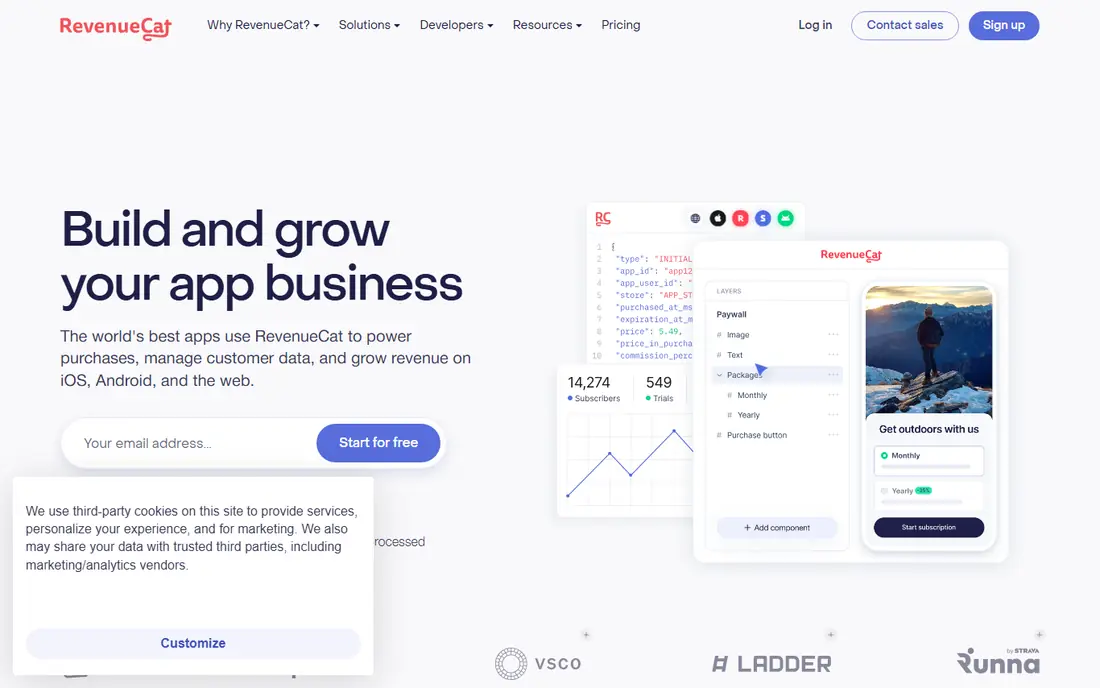
RevenueCat manages in-app subscriptions and purchases across iOS, Android and web, handling receipt validation, entitlements, renewals and refunds in one place. That removes a large amount of billing engineering for small teams. Pricing is free up to $2,500 in monthly tracked revenue, then 1 percent of tracked revenue thereafter in recent listings.
The fee is small at low revenue, but it sits on top of Apple and Google commissions, so total cost should be modeled together. For a first subscription app, RevenueCat is a strong default because it shortens time to launch and gives useful revenue analytics from day one.
- Handles receipts and entitlements across stores
- Analytics and paywalls
- Free under revenue threshold
- Fee applies above threshold
- Store commissions still apply separately
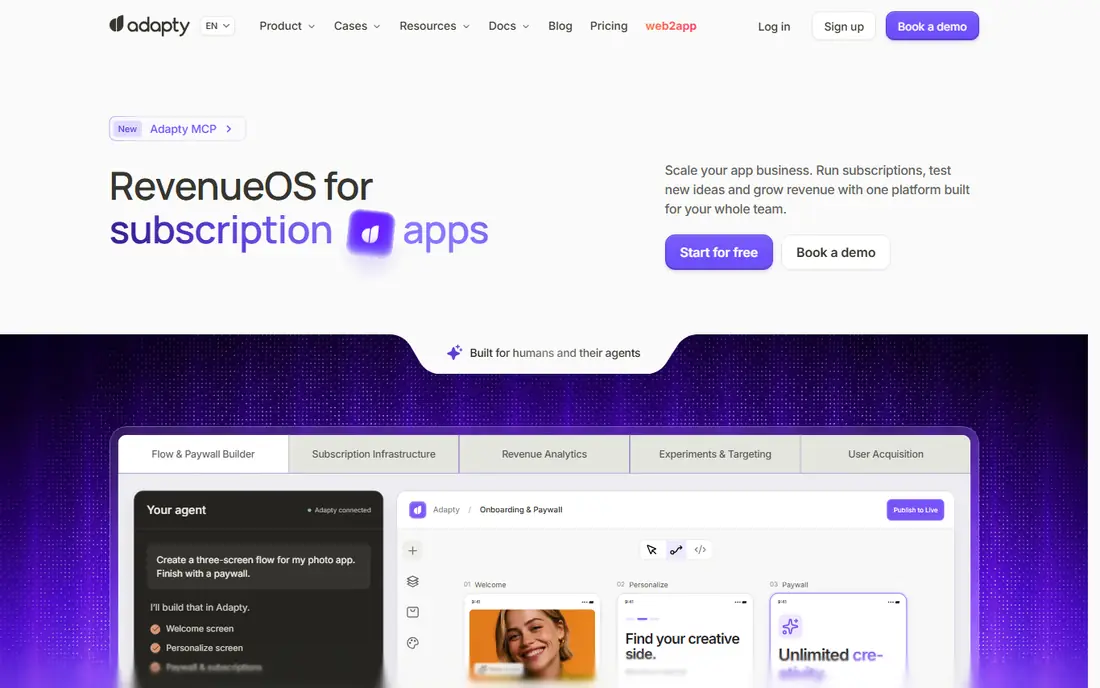
Adapty combines a cross-platform subscription SDK, a visual paywall builder and revenue analytics. Teams can design paywalls, test prices and offers, and track cohorts without rebuilding the app for every change. Recent listings show a free tier up to $5,000 in monthly tracked revenue, then 1 percent thereafter.
Adapty suits teams that want to test subscription offers often. The analytics help answer which price, trial length and paywall design converts best. Like RevenueCat, it adds a fee on top of store commissions, so teams should compare total cost at their expected revenue, not just the free tier.
- Visual paywall builder
- Subscription analytics
- A/B testing for offers
- Fee above free threshold
- Learning curve for advanced analytics
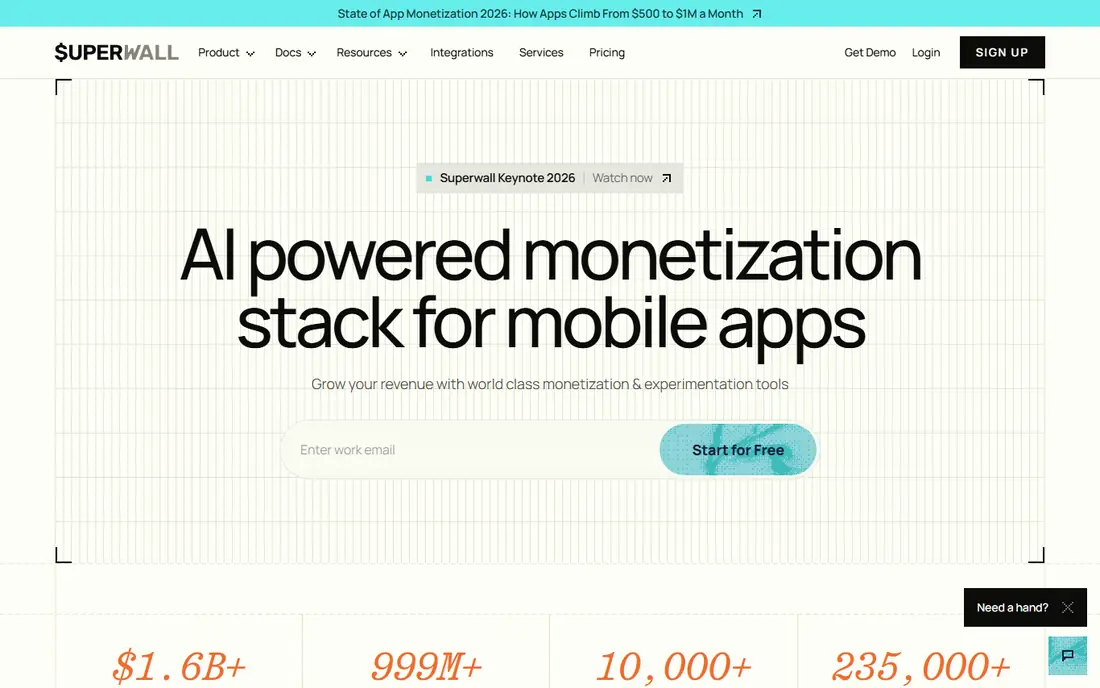
Superwall focuses on paywalls: building them without code, shipping them remotely without an app release, and testing different offers. That speed matters because paywall design, trial length and price can change conversion more than a new feature. Recent listings show a free tier up to $10,000 in paywall revenue, then 1 percent, with paid plans adding a fee.
For an app that rarely changes its offer, Superwall adds less value. For a subscription app that tests weekly, remote paywalls save release cycles and let product teams learn faster. Pair it with a subscription backend like RevenueCat or Adapty for full billing coverage.
- No-code paywall editor
- Remote paywall updates
- Fast offer testing
- Paid plans add a fee
- Best for teams that test offers often
AdMob is Google's mobile advertising platform, offering banner, interstitial, rewarded and native ads, plus mediation to run other networks alongside Google demand. It suits free apps with large, frequent use, especially utilities, content apps and casual games. There is no upfront fee; income comes from advertiser demand for your audience.
Ad income is uneven. US audiences and rewarded video formats tend to earn more than banners in other regions, and too many ads can drive users away. AdMob works best when ads are placed at natural breaks and rewarded ads give users a clear choice. For a paid or subscription app, ads usually harm more than they help.
- Large advertiser demand
- Many ad formats
- Mediation support
- Income varies by audience and region
- Ads can hurt user experience if overused
AppLovin MAX is an ad mediation platform that runs a competitive auction across many ad networks, so each ad impression can go to the highest bidder. That often raises income compared with using a single network alone, especially for games with high session counts. It is free to use, with income coming from ad demand.
Mediation adds setup and testing work, including SDKs, network accounts and placement tuning. It does not fix a weak audience or a poor app. For a free game or high-traffic app already using ads, MAX is a strong step up from a single network. For a new app with few users, focus on growth first.
- Competitive ad auction across networks
- In-app bidding
- Strong for games
- Setup needs care
- Income still depends on audience quality
Unity Ads provides rewarded video, interstitial and banner ads for games built with Unity, with simple integration for teams already using that engine. Rewarded video is its strongest format: players choose to watch an ad in exchange for in-game currency or a second chance, which keeps ads feeling voluntary.
Outside games, Unity Ads is a weaker fit, and income still varies by genre, audience and region. For a Unity game with a free model, it is a natural first ad network, often used alongside mediation. For non-game apps, AdMob or MAX usually offers broader demand.
- Built for Unity games
- Rewarded video formats
- Simple integration for Unity teams
- Less useful outside games
- Income varies by genre and region
Stripe suits apps that also sell on the web, such as a companion website, a web app version, or a cross-platform subscription. It supports one-time payments, subscriptions, trials and many payment methods, with developer tools for billing logic. Transaction fees apply, and pricing varies by region and method, so check the Stripe pricing page for current rates.
Stripe cannot replace Apple and Google billing for most in-app purchases, since store rules require store billing for digital goods inside apps in many cases. Use Stripe where it is allowed, such as web sales, physical goods and services, and use store billing inside the app. That split is common for successful cross-platform apps.
- Flexible web payments
- Subscriptions and one-time purchases
- Strong developer tools
- App store rules limit in-app use
- Fees apply per transaction
Paddle acts as merchant of record for web sales, handling payment processing, tax calculation, invoicing and compliance across regions. That helps small teams sell subscriptions or licenses on the web without building tax and billing operations themselves. It suits desktop and web products, and apps with a web checkout alongside store billing.
Like Stripe, Paddle does not replace Apple and Google billing inside apps for digital goods in most cases. Its value is web revenue: global sales, tax handling and subscription management in one contract. Teams should compare its fee with the cost of handling tax and billing themselves.
- Handles taxes and compliance for web sales
- Subscriptions and licensing
- Global payments
- Fees apply
- Not a replacement for in-app store billing
Freemium plus in-app purchases
Who it suits: Strategy for paid features
Freemium plus in-app purchases is a strategy, not a single vendor, and it remains one of the best ways to monetize an app. Users try the core app free, then pay for extra features, content or capacity. The official Apple developer site is listed here as a reference for in-app purchase rules, since store billing governs most in-app sales.
The hard part is drawing the free-to-paid line. Too little free value means few users try the app, while too much free value means few users pay. Successful freemium apps give real value free, then charge for power features, extra capacity or premium content. Test that line with paywall tools and analytics, rather than guessing it once at launch.
- Low barrier to try
- Paid features fund development
- Flexible pricing tiers
- Needs a clear free-to-paid line
- Store commissions apply
How we picked these
We compared vendor pricing pages, monetization guides and platform documentation from October 2026, and kept only platforms and strategies that are live and truly used for app monetization. We covered ads, subscriptions, paywalls and web payments, because most apps use a mix. Where pricing is a percentage or varies by region, we wrote See website or gave the published threshold rather than inventing a flat price.
How to choose a monetization mix
Start with user behavior. If users open the app daily and value grows over time, subscriptions usually fit. If use is occasional and broad, ads or one-time purchases may fit better. If users want extra capacity or premium features, freemium plus in-app purchases is a natural model.
Test one change at a time. Change trial length, price or paywall design, then measure conversion and retention before changing another variable. Watch retention closely: a monetization change that raises short-term income but drives users away will cost more over time. Finally, model total fees, including store commissions, platform fees and payment fees, before choosing a tool.
Frequently asked questions
What is the best app monetization strategy?
For apps with ongoing value, subscriptions are usually strongest. For free apps with large, frequent use, ads work well. For many apps, a mix wins: a free tier with ads or in-app purchases, plus a subscription for power users. Test the mix against retention, not just first-week income.
What is the best way to monetize an app?
Start with the value users get repeatedly, then charge for that value through subscriptions or in-app purchases. Add ads only if they fit the experience and do not drive users away. Use paywall testing to find the price and trial that convert best, and keep measuring retention after each change.
What are the best app monetization strategies for games?
Rewarded video ads and in-app purchases suit most free games, with ad mediation through AppLovin MAX raising competition for impressions. Subscription passes suit games with regular content. Avoid aggressive interstitial ads that interrupt play, since they hurt retention and ratings.
How do app monetization best practices differ for subscriptions?
Subscription apps should focus on trial conversion, paywall clarity and retention, not just downloads. Offer a clear free trial, show value before the paywall, and test price and offer design. Use a subscription backend to handle renewals, grace periods and refunds reliably.
Does RevenueCat cost money?
RevenueCat is free up to $2,500 in monthly tracked revenue, then charges 1 percent of tracked revenue thereafter in recent listings. Apple and Google commissions still apply separately. For a new app, the free tier usually covers the early months, and the fee grows only as revenue grows.
Sources we checked (9)

Online Jobs is an independent blog about careers, online work, learning new skills and the tools that help people earn. More about us.
Keep reading
All posts
n8n Alternatives
n8n alternatives compared for 2026, with Zapier, Make, Activepieces, and more, covering visual builders, code steps, self-hosting, and pricing models.

ZoomInfo Alternatives
The best ZoomInfo alternatives in 2026, compared on price, free plans, data coverage, and which tool fits small teams or large sales teams best in detail.
Zoom Alternatives for Webinars
Compare Zoom alternatives for webinars in 2026, from browser-based rooms to enterprise events, with prices, attendee limits, features and honest trade-offs.