Best Alternatives to None Programming in 2026: 9 No-Code Tools Compared

How we put this together: we compare official feature and pricing pages, app store listings, privacy policies and public user reviews. Prices change, so check the provider's site before you pay.
Key takeaways
- The phrase behind this topic is best read as building without programming, so we compare no-code builders rather than coding tools.
- Bubble is our pick for complex web apps with real workflows, databases, and user accounts.
- Glide and Softr are the fastest routes when your data already lives in a spreadsheet or Airtable.
- FlutterFlow and Adalo suit mobile-first projects, while Webflow suits design-led websites.
- Paid pricing varies by billing period and usage, so check the vendor pricing page before you commit.
Quick comparison
| Name | Who it suits | Starting price | Free option | |
|---|---|---|---|---|
 Bubble | Complex web apps | See website | Yes | Visit |
 Webflow | Design-led websites | See website | Yes | Visit |
 Glide | Spreadsheet-to-app tools | See website | Yes | Visit |
 FlutterFlow | Cross-platform mobile apps | See website | Yes | Visit |
 Softr | Portals on existing data | See website | Yes | Visit |
 Adalo | Simple native mobile apps | See website | Yes | Visit |
 AppSheet | Google Workspace business apps | See website | Yes | Visit |
 Mendix | Enterprise apps | See website | Yes | Visit |
 WeWeb | Flexible web front ends | See website | Yes | Visit |
The best alternatives to none programming
Building without programming means choosing a visual builder that handles the database, design, and logic for you. The tools below differ in what they build best, so the right pick depends on whether you need a web app, a mobile app, a portal, or an internal tool.
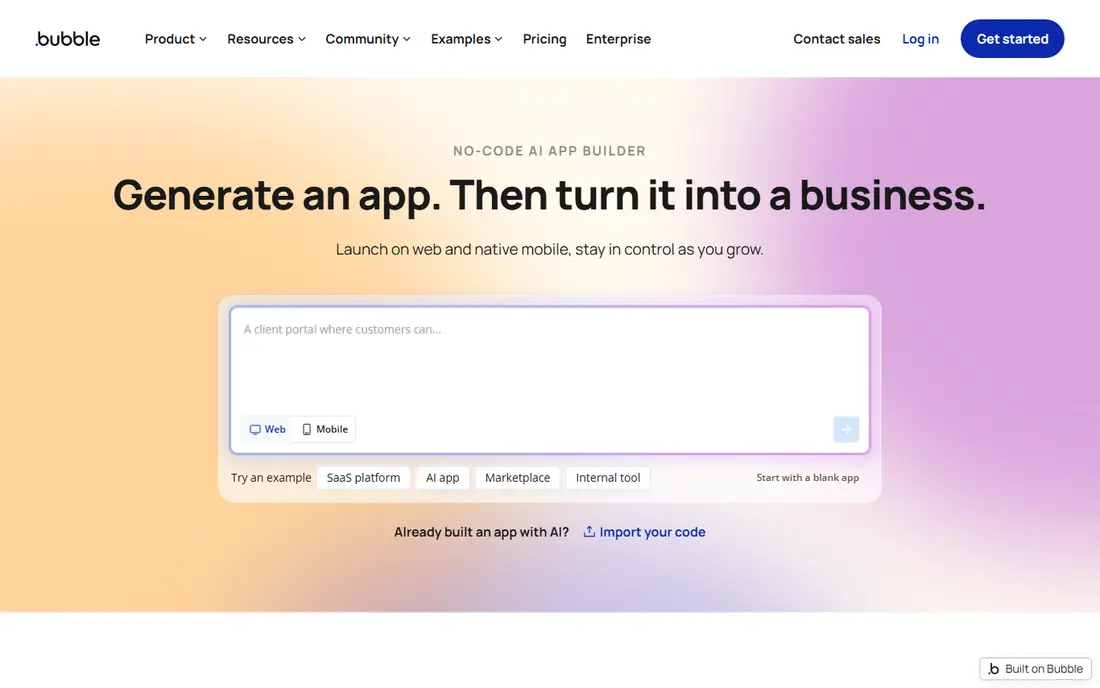
Bubble is the most capable visual builder for full web apps. You design pages, define a database, and build workflows with conditions and actions, all without writing code. That makes it a fit for marketplaces, SaaS products, and internal tools with multiple user roles.
The trade is complexity and cost control. Bubble charges in part by workload, which measures server work, so inefficient searches or workflows can raise the bill. Teams that plan their data structure early and test with real usage get the most from it. Beginners can still start free and learn on a small project.
- Deep visual workflow logic
- Built-in database and hosting
- Large plugin library
- Usage-based pricing can be hard to predict
- Learning curve for complex apps
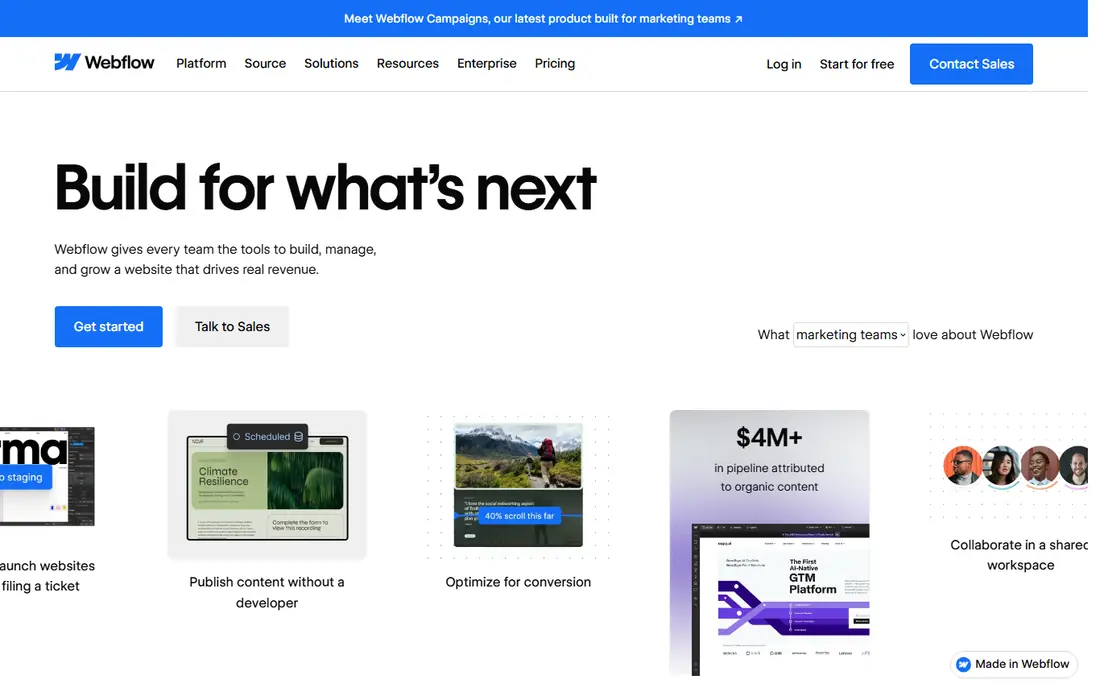
Webflow is the pick when design matters most. It gives designers control over layout, animation, and responsive behavior without handing a developer a mockup to rebuild. Its CMS handles blogs, portfolios, and marketing content well, and hosting is included.
It is not a full app builder in the Bubble sense. User accounts, complex workflows, and custom logic need extra tools or code. For a marketing site, portfolio, or content-led product front end, that limit rarely matters. For a multi-role app, pair Webflow with another tool or choose a different builder.
- Precise visual design control
- Built-in CMS and hosting
- Clean published sites
- Less suited to complex app logic
- CMS limits vary by plan
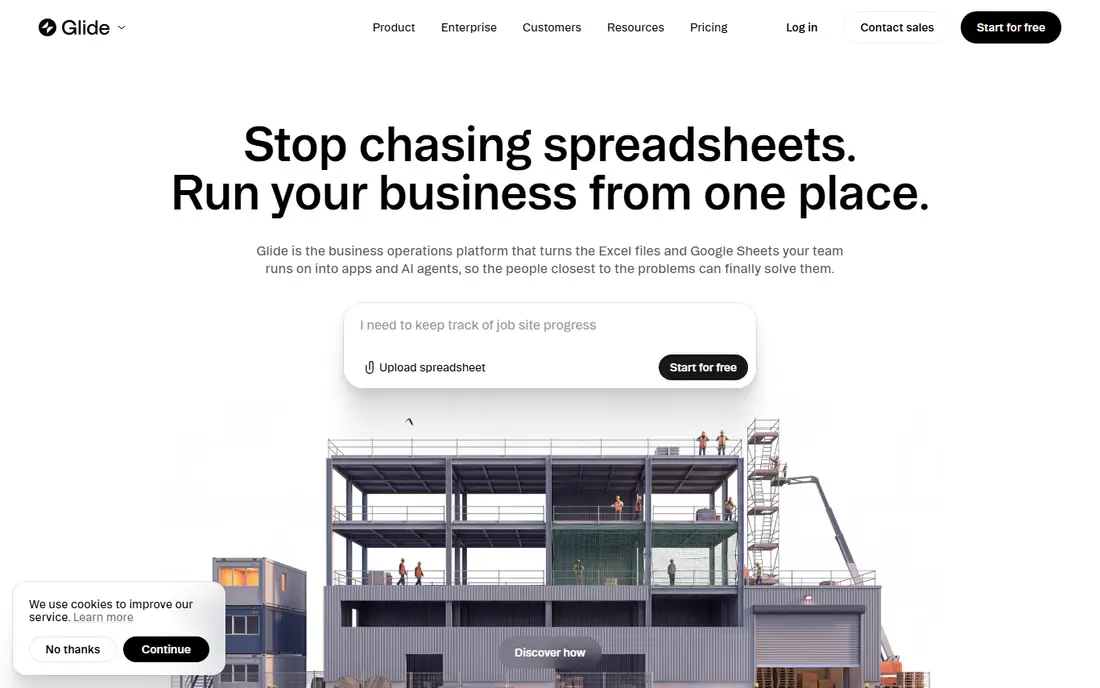
Glide is the fastest tool on this list for turning existing data into something people can use on a phone. Connect a spreadsheet, pick a layout, and you have a directory, tracker, or dashboard. That speed suits operations teams, schools, and small businesses that need an internal tool this week.
The limit is depth. Glide handles straightforward lists, forms, and filters well, but complex branching logic and custom interfaces take more effort. If your data is clean and your workflow is simple, Glide is hard to beat. If you need a public product with custom logic, look at Bubble or FlutterFlow.
- Turns a spreadsheet into a working app fast
- Good for internal tools
- Simple sharing
- Less design freedom than Webflow
- Heavy logic needs workarounds
FlutterFlow suits teams that want a real mobile app without learning native development. It builds on Flutter, so one project can ship to phones and the web, and Firebase covers login, data, and storage. The visual editor handles layouts, navigation, and many common actions.
Some Flutter ideas still show through, especially around state and data types, so complete beginners should expect a learning phase. The code export option is a genuine benefit for teams that may later hire developers. Check the current plan limits for publishing and team seats before you start.
- Builds for iOS, Android, and web from one project
- Firebase integration
- Code export option
- Flutter concepts still appear at the edges
- Paid plan needed to publish widely
Softr is built for a specific job: a portal, directory, or client area on top of data you already keep. Blocks for lists, details, forms, and user accounts snap together quickly, and permissions control who sees what. That makes it a strong pick for member directories, resource hubs, and client portals.
If your data does not live in a supported source, or you need logic that lives outside that data, Softr feels constrained. Teams already using Airtable will move fastest here. Teams starting from scratch may prefer Glide for internal tools or Bubble for a standalone product.
- Block-based building on Airtable or Google Sheets
- Membership and permissions built in
- Fast portal setup
- Tied closely to its data sources
- Less suited to standalone app logic
Adalo is a good first mobile builder for simple apps such as booking tools, directories, and small marketplaces. The editor is direct, components are easy to arrange, and publishing to app stores is part of the workflow. Small teams can ship a usable app without a developer.
Larger apps are where Adalo shows its limits. Heavy data, complex screens, and many users can slow things down, and advanced logic options are thinner than in Bubble or FlutterFlow. Treat Adalo as a pick for a focused mobile app, not for a large platform.
- Straightforward mobile building
- Component marketplace
- Native app publishing
- Performance limits on large or complex apps
- Fewer advanced logic options
AppSheet, from Google, turns spreadsheets and databases into business apps for field teams, approvals, and data capture. It fits organizations already in Google Workspace, since data, login, and sharing follow familiar patterns. Automation can send alerts, update rows, and move a request through stages.
Pricing is per user on paid plans, so a large field team should model total cost before rolling out. Design is functional rather than polished, which is fine for internal tools and less ideal for a customer-facing product. For operations apps inside a Google shop, it is a natural fit.
- Strong Google Sheets and Workspace fit
- Automation and approvals
- Mobile and web use
- Per-user pricing adds up with large teams
- Design control is limited
Mendix targets organizations that need to build business systems with governance, security, and team workflows. Visual models describe data, logic, and pages, and larger teams can work on the same app with review and deployment controls. That structure matters in regulated or large companies.
For a solo founder or a small team, Mendix is more process than needed, and pricing is aimed at organizations rather than hobby projects. A free tier lets you learn the platform, but a real deployment usually needs a conversation with sales. Choose it when governance matters as much as speed.
- Visual modeling for larger systems
- Governance and team controls
- Enterprise integrations
- Enterprise pricing and process
- Overkill for a small app
WeWeb fills a gap between Webflow and Bubble. It is a visual front-end builder that connects to your own back end, such as a database, API, or no-code back end. That suits teams that already have data somewhere and want a polished web app on top of it.
The catch is that WeWeb alone is not a complete app. You still need a back end and, for some features, a workflow tool. Teams comfortable with that split gain flexibility and less vendor lock-in. Teams that want everything in one place should start with Bubble or Glide instead.
- Connects to many back ends
- Flexible front-end design
- Code export options
- Needs a separate back end for full apps
- Learning curve for data binding
How we picked these
We compared official feature pages and pricing pages for visual builders that let people create working apps or sites without writing code. We favored tools with a free plan or free tier, a clear use case, and an active product in 2026. We did not claim hands-on testing, and where pricing varied by billing period or plan, we used See website rather than picking one figure that could mislead.
How to choose a no-code builder
Start from the thing you need to ship, not from the longest feature list. A portal on existing data, a mobile app, a marketing site, and a complex web product are different jobs, and each builder above leads on one of them. Write down your data source, your users, and the one workflow that must work on day one, then test that workflow on a free plan.
Check data, users, and limits before you build
Confirm where your data lives and how the builder connects to it. Check user limits, record limits, and whether publishing, custom domains, or app store submission need a paid plan. These limits, more than design features, are what force a rebuild later. Build a small version with real data before you invest weeks in polish.
Plan for growth and exit
Ask how pricing grows with users and usage, and whether you can export data or code. Bubble, FlutterFlow, and WeWeb offer different levels of portability, while spreadsheet-based tools keep your data in a familiar place. A builder that is cheap for five users and costly for five hundred is a different decision than it first looks.
Learn the logic model early
Every no-code tool has its own way of handling conditions, lists, and user permissions. Spend an hour on that model before building screens. A tool that feels easy on page one and confusing on workflow ten will cost more time than a steeper tool that stays consistent.
Frequently asked questions
What does best alternatives to none programming mean?
We read this topic as alternatives to programming itself, meaning no-code tools that build apps and sites without writing code. If you meant a specific product called None, check its exact name, since this guide covers the no-code reading of the phrase.
Can I really build an app with no programming experience?
Yes, for many common apps, especially portals, trackers, directories, and simple mobile apps. You will still need to plan your data, screens, and workflows carefully. Complex products may need help from a developer for custom logic or integrations.
Which no-code tool is best for beginners?
Glide is the easiest start when your data is already in a spreadsheet, and Softr is the easiest start for a portal on Airtable or Sheets. Bubble and FlutterFlow are more powerful but take longer to learn, so start with them only if your app needs that power.
Are no-code apps free to publish?
Most tools on this list have a free plan for building and testing, but publishing to a custom domain or an app store usually needs a paid plan. Check the current plan page for publishing, user, and record limits before you launch.
Can I move my app to another platform later?
Data can usually be exported, but screens and workflows rarely move cleanly between builders. Tools with code export, such as FlutterFlow and WeWeb, give more options than closed builders. Keep your data in a portable source where possible.
Sources we checked (9)

Online Jobs is an independent blog about careers, online work, learning new skills and the tools that help people earn. More about us.
Keep reading
All posts
Zoom Alternatives
Zoom alternatives compared for 2026: Google Meet, Microsoft Teams, Webex, Jitsi and more for free calls, large meetings and webinars for teams and classrooms.
Which Software Is Best for PDF Page Removal
Which software is best for PDF page removal? We compare free and paid tools for deleting pages quickly, safely, and without harming your file in this guide.

Which Software Is Best for Data Entry
Compare the best data entry software for forms, OCR scanning, and spreadsheets, with free plans, pricing, and honest limits for each tool before you commit.