Best Algorithmic Trading Platform in 2026: 10 Platforms Compared


broad market access with a full API · Starting price: See website
How we put this together: we compare official feature and pricing pages, app store listings, privacy policies and public user reviews. Prices change, so check the provider's site before you pay.
Key takeaways
- QuantConnect suits researchers who want cloud backtesting in Python or C# across several asset types.
- Interactive Brokers suits traders who need broad market access and a full API for live execution.
- Alpaca suits developers who want a simple API for US stocks and crypto without a heavy desktop platform.
- Paper trade first, test costs and slippage, and never run a strategy live on backtest results alone.
Quick comparison
| Name | Who it suits | Starting price | Free option | |
|---|---|---|---|---|
| Interactive Brokers | broad market access with a full API | See website | No | Visit |
 QuantConnect | cloud research and backtesting | Free | Yes | Visit |
 TradeStation | US stocks, options, and futures automation | See website | Free trial | Visit |
 MetaTrader 5 | forex and CFD automation through brokers | Free | Yes | Visit |
 NinjaTrader | futures automation with chart tools | Free | Free trial | Visit |
 Alpaca | simple API for US stocks and crypto | See website | Yes | Visit |
 TradingView | chart based strategy building | See website | Yes | Visit |
 TrendSpider | automated technical analysis and alerts | See website | Free trial | Visit |
 Coinrule | no-code crypto rule building | See website | Yes | Visit |
 cTrader | forex and CFD automation in C# | Free | Yes | Visit |
The best algorithmic trading platforms
This article is not financial advice, and trading carries risk, including the risk of losing money. We compared algorithmic trading platforms on backtesting, coding options, broker links, data, and cost, for coders, chart traders, and no-code users.
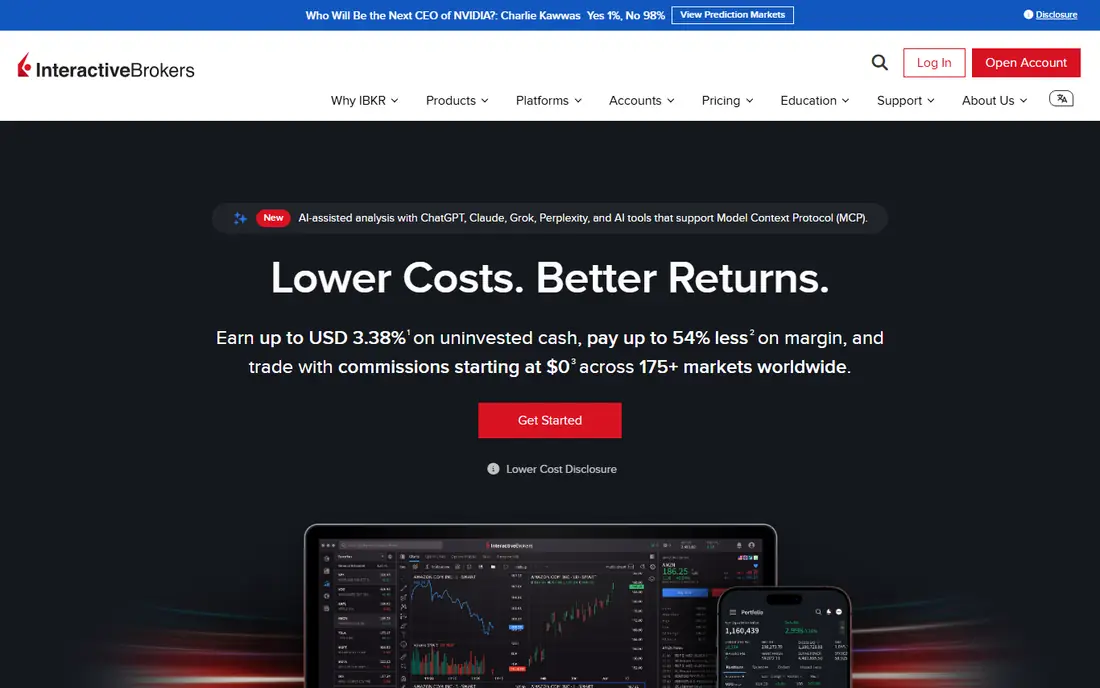
For teams that want a proven route to both app stores, Interactive Brokers gives traders broad market access plus APIs in Python, Java, C++, and C# for building and running automated strategies. It suits experienced traders who need many markets, order types, and data in one broker account. The trade is complexity, since the platform and API reward coding skill and careful testing, and beginners may find the setup heavy. Check the current pricing page and the free tier limits before you commit, since plan details change and the entry tier may cap builds, seats, or usage.
- Broad global market access
- Full API in several languages
- Deep order types
- Platform complexity for beginners
- API setup needs coding skill
- Account and fee rules need checking
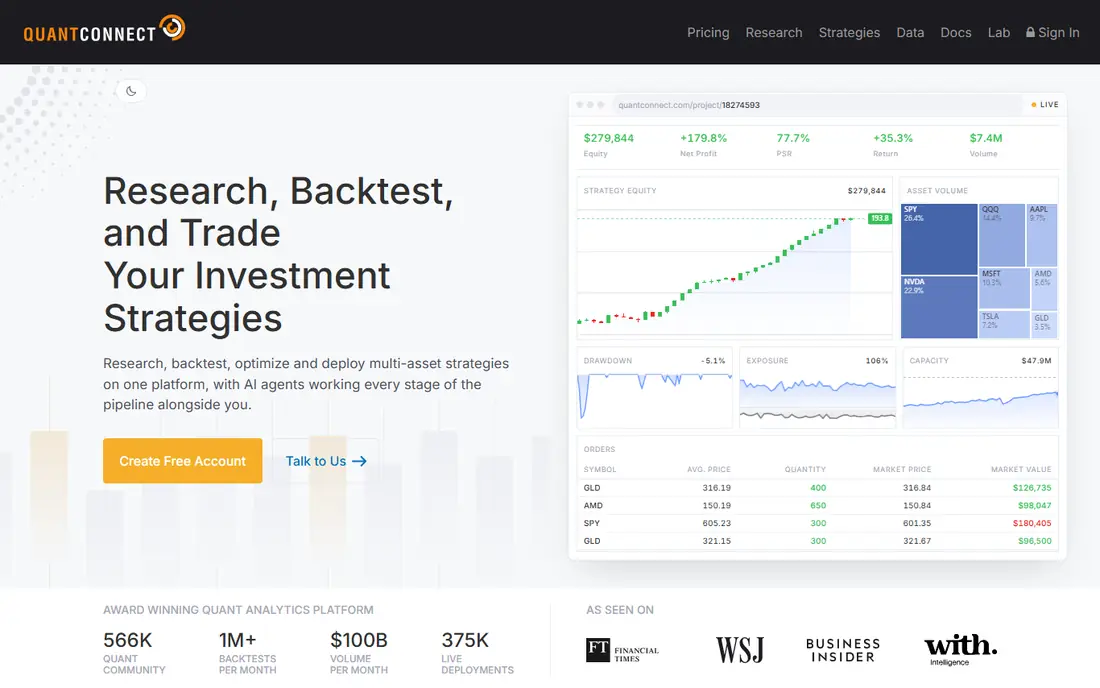
If your team already works in a matching language or stack, QuantConnect offers cloud backtesting and research for multi asset strategies in Python and C#, with a large data library and a research environment. It suits quants and developers who want serious testing before live trading. The trade is cost and setup, since live trading and higher compute need paid tiers and a broker connection. Run a small pilot with a real feature from your backlog, and judge it on build time, store submission, and how easy fixes are after release.
- Cloud backtesting engine
- Python and C# support
- Large historical data library
- Live trading needs a paid tier and broker link
- Learning curve for research design
- Costs grow with compute
When a single shared codebase matters more than a native look, TradeStation combines charting, EasyLanguage strategy building, and Python options for US stocks, options, and futures. It suits active US traders who want strategy tools and broker execution in one platform. The trade is geography, since global market access is narrower than Interactive Brokers, so check market needs first. Ask who will maintain the project in six months, and pick the option your current team can support without hiring for a new language.
- EasyLanguage plus Python options
- Strong charting and order tools
- US market depth
- US focus limits global access
- Platform fees vary by plan
- Learning EasyLanguage takes time
As a practical choice for a first release, MetaTrader 5 is a widely used platform for forex and CFD automation, offered free through many brokers with MQL5 strategy building. It suits forex traders who want a standard platform with many indicators and automated strategies. The trade is broker variance, since execution, fees, and data quality depend on the broker you choose, not just the platform. Check the current pricing page and the free tier limits before you commit, since plan details change and the entry tier may cap builds, seats, or usage.
- Widely supported by brokers
- MQL5 automation
- Large indicator and expert advisor library
- Quality of brokers varies
- CFD rules vary by country
- Strategy quality depends on the author
For projects where design control is the main concern, NinjaTrader focuses on futures trading with charting, C# strategy building, and order tools for active traders. It suits futures traders who want a desktop platform built around futures workflows. The trade is asset breadth, since stock and crypto traders may find a broader platform a better fit. Run a small pilot with a real feature from your backlog, and judge it on build time, store submission, and how easy fixes are after release.
- Futures focus
- C# strategy building
- Chart and order tools for active traders
- Futures focus limits stock breadth
- Advanced features are paid
- Data fees may apply
Where speed of setup beats depth of customisation, Alpaca offers a simple API for US stocks and crypto, with paper trading for testing strategies before live use. It suits developers who want to build and host their own trading code without a heavy desktop platform. The trade is breadth, since global markets and advanced order tools are narrower than a full broker platform. Ask who will maintain the project in six months, and pick the option your current team can support without hiring for a new language.
- Simple developer API
- Commission free US stock trading on standard plans
- Paper trading
- US market focus
- Crypto coverage is limited
- Support depth varies by plan
If you need to reuse web skills for a mobile release, TradingView lets chart traders build and test strategies in Pine Script, with alerts and webhook links to brokers and bots. It suits visual traders who think in charts and indicators rather than raw code. The trade is execution, since TradingView is a chart and alert platform first, so live automation needs a broker or webhook setup. Check the current pricing page and the free tier limits before you commit, since plan details change and the entry tier may cap builds, seats, or usage.
- Pine Script strategies
- Huge chart and indicator library
- Alerts and webhooks
- Live trading needs broker or webhook links
- Pine Script limits complex systems
- Advanced plans are paid
For a smaller team that wants to keep maintenance simple, TrendSpider automates technical analysis with chart patterns, indicators, and alerts that can trigger actions. It suits swing and chart traders who want automation without building a full coding system. The trade is depth, since complex multi asset research needs a coder platform, while TrendSpider excels at chart led work. Run a small pilot with a real feature from your backlog, and judge it on build time, store submission, and how easy fixes are after release.
- Automated chart patterns and indicators
- Dynamic alerts
- Backtesting for chart strategies
- Pricing is subscription based
- Coding depth is lighter than QuantConnect
- Broker links vary
When the app must reach several device types at once, Coinrule lets crypto traders build automated rules from templates without coding, with links to major exchanges. It suits retail crypto traders who want automation for common rules such as rebalancing and stop based exits. The trade is asset scope, since stock and futures traders need a different platform, and advanced logic needs higher tiers. Ask who will maintain the project in six months, and pick the option your current team can support without hiring for a new language.
- Template based no-code rules
- Crypto exchange links
- Backtesting for rules
- Crypto only focus
- Advanced strategies need paid tiers
- Exchange support varies
As an option for teams with a clear existing workflow, cTrader offers C# automation and visual backtesting for forex and CFD traders, provided free through supporting brokers. It suits traders who want a modern interface and C# strategy building without MQL5. The trade is broker variance, since execution and fees depend on the broker, so compare broker terms carefully. Check the current pricing page and the free tier limits before you commit, since plan details change and the entry tier may cap builds, seats, or usage.
- C# automation
- Visual backtesting
- Broker provided access
- Broker quality varies
- CFD rules vary by country
- Community is smaller than MetaTrader
How we picked these
We compared official feature pages, pricing pages, app store listings, and public reviews for each product, and we kept only products that exist and fit the topic today. Where a price or free tier could not be confirmed on a vendor page, we wrote See website rather than guessing a number. We also weighed fit for different team sizes, since a tool that suits a large enterprise may be a poor fit for a small team, and the reverse is also true. Products that needed a workaround for the core job, or that had closed or changed focus, were left out.
How to choose an algorithmic trading platform
Match the platform to how you build strategies
Coders suit QuantConnect, Alpaca, or broker APIs. Chart traders suit TradingView, TrendSpider, or TradeStation. No-code users suit Coinrule or similar rule builders. Picking the wrong style means rebuilding work later.
Test backtests for realism
Check whether backtests include commissions, fees, slippage, and realistic fills. Look for survivorship bias, look-ahead bias, and overfitting, since a backtest that ignores costs will flatter almost any strategy.
Start with paper trading and strict risk limits
Run a strategy on paper first, then live with small size and a kill switch. Set a maximum loss per day and per strategy, and keep manual oversight, since automated orders can compound a coding error fast.
Frequently asked questions
What is the best algorithmic trading platform for beginners?
Beginners often start with TradingView Pine Script, Coinrule, or a broker paper account, since those paths need less code. Paper trade first, and learn risk limits before using real money.
Do algorithmic trading platforms guarantee profits?
No. No platform can promise returns, and backtest results do not predict live results. Costs, slippage, market change, and coding errors all affect live performance.
Can I trade without coding?
Yes, with no-code rule builders such as Coinrule, and with chart based automation on TradingView and TrendSpider. Complex strategies still benefit from code and careful testing.
What is backtesting in algorithmic trading?
Backtesting runs a strategy on past price data to see how it would have behaved. It helps find logic errors and rough behaviour, but it cannot prove future results.
Which platforms are best for algorithmic trading in the US?
Interactive Brokers, TradeStation, Alpaca, and QuantConnect linked brokers all suit US traders, for different reasons. Check market access, fees, and account rules for your own situation.
Sources we checked (10)

Online Jobs is an independent blog about careers, online work, learning new skills and the tools that help people earn. More about us.
Keep reading
All posts
Best Charting Platform
Compare the best charting platform options for 2026, from TradingView and TrendSpider to thinkorswim and TC2000, with pricing, free plans and trading tools.

n8n Alternatives
n8n alternatives compared for 2026, with Zapier, Make, Activepieces, and more, covering visual builders, code steps, self-hosting, and pricing models.

iPhone Alternatives
Looking for iPhone alternatives in 2026? Compare 9 Android phones from Samsung, Google, OnePlus, and more, with cameras, battery life, and honest trade-offs.