Best ai voice over apps in 2026: 8 Tools Compared

How we put this together: we compare official feature and pricing pages, app store listings, privacy policies and public user reviews. Prices change, so check the provider's site before you pay.
Key takeaways
- ElevenLabs leads on natural voice quality and cloning, especially for multilingual work and long-form narration.
- Murf suits video-first teams, because its studio editor is built around syncing narration to slides and video.
- PlayHT and Resemble AI suit developers and teams that need APIs, while WellSaid Labs suits corporate training where a consistent, professional voice matters most.
- Free tiers are useful for testing, but most do not include commercial use or downloads, so check the licence before using a voice in a paid project.
Quick comparison
| Name | Who it suits | Starting price | Free option | |
|---|---|---|---|---|
 ElevenLabs | Natural voices and cloning | $6 per month | Yes | Visit |
 Murf | Video voiceover studio | $19 per month | Free trial | Visit |
 PlayHT | Voice variety and APIs | $31 per month | Free trial | Visit |
 Speechify | Studio voices and dubbing | See website | Yes | Visit |
 WellSaid Labs | Professional training narration | $49 per month | Free trial | Visit |
 LOVO | Emotional range and editing | $24 per month | Free trial | Visit |
 Descript | Editing audio like a document | $24 per month | Yes | Visit |
 Resemble AI | Custom voice cloning | See website | Free trial | Visit |
The best ai voice over apps
We compared tools that generate spoken narration from text, with attention to voice quality, languages, cloning, commercial licence terms, and how the output fits video, training, and podcast workflows.
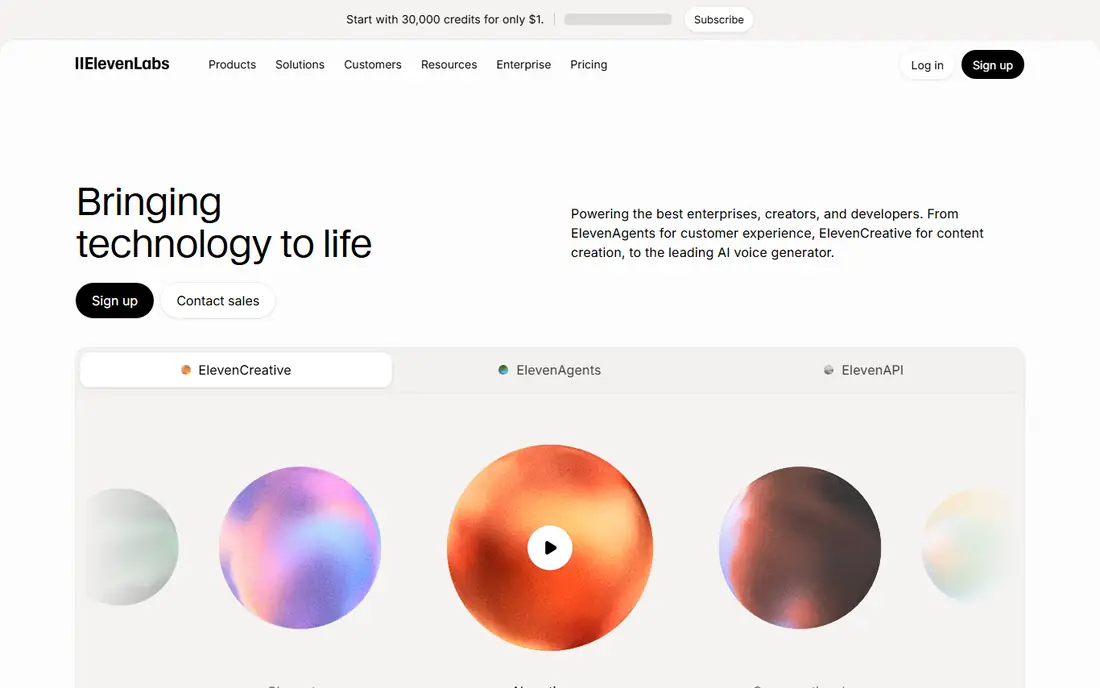
ElevenLabs is the quality leader in this list for most creators. Voices carry pauses, emphasis, and tone in a way that makes long narration easier to listen to, and the library covers many languages and accents. Instant cloning from a short sample is useful for creators who want a consistent narrator across a series, while professional cloning suits teams that need a closer match and are willing to provide more training audio. The catch is credits. Lower tiers include a limited amount of generated audio per month, and long projects can use that allowance faster than expected. The free tier is best for testing voice quality and workflow, not for publishing paid work, because commercial rights and download terms differ by plan. Start with the free tier to test voices on your own script, then price the tier that covers a full month of output before you commit.
- Natural-sounding voices
- Instant voice cloning on paid plans
- Broad language support and dubbing tools
- Credits run out quickly on lower tiers
- Free tier is not for commercial work in most listings
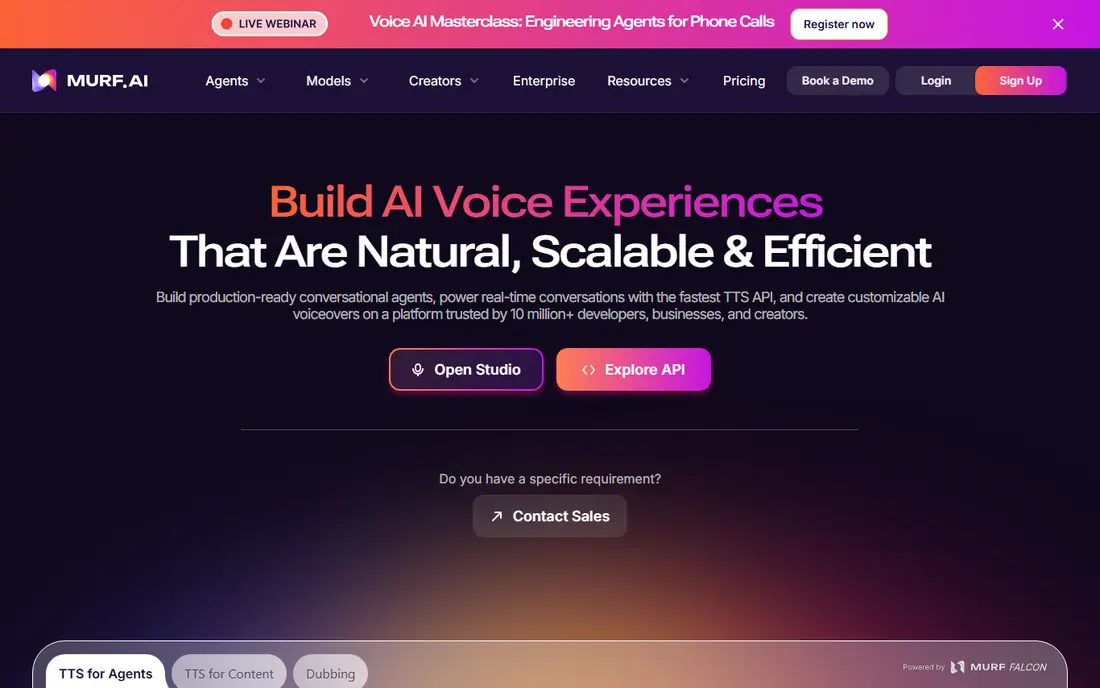
Murf is built for business and video voiceovers rather than for raw voice generation alone. The studio editor lets a creator place narration against slides or video, adjust timing, and preview how the voice sits with visuals. That workflow saves time for training videos, explainers, and marketing clips, because the narration and the visuals are adjusted together instead of in separate apps. The limit is the free tier. It is useful for testing voices, but downloads and commercial use generally require a paid plan, so a creator should not plan a launch around the free allowance. Voice quality also varies, so testing several voices on the same script is worth the time. For video-first teams that need a tidy studio workflow at a moderate price, Murf is a strong pick.
- Studio editor for video and slides
- Wide voice library
- Commercial rights on paid plans
- Free tier does not allow downloads in most listings
- Voice quality varies by voice and language
PlayHT suits creators and developers who need many voices and languages, or who want to build voice features into an app. The library is broad, the conversational styles work well for agents and interactive content, and API access on suitable plans lets teams generate audio at scale without manual work in a studio editor. For multilingual content and voice agents, that breadth is a real advantage. The trade-off is curation. A large library means some voices will suit a project better than others, and testing is essential before choosing a narrator for a series. The starting price is also higher than ElevenLabs or Murf, so a solo creator who only needs a few voices may get better value elsewhere. For teams that need variety, languages, and API access in one place, PlayHT is worth a trial.
- Large voice library and language coverage
- API access for apps
- Conversational voice styles
- Higher starting price than some rivals
- Quality varies across the large library
Speechify is known to many users as a reading tool, but its studio offering also covers voiceover and dubbing. That dual background helps creators who work with long text, because the tool is designed around turning written material into listenable audio. Dubbing tools are useful for creators who publish in more than one language and want a consistent voice across versions. The pricing is the part to check carefully. Speechify has more than one product line, and studio pricing differs from reading plans, so we list See website rather than a figure that could refer to the wrong plan. Test the studio voices on your own script, confirm the commercial terms for your use, and check whether dubbing, cloning, or API features are included in the tier you plan to buy.
- Studio voiceover and dubbing tools
- Useful for reading and listening workflows
- Broad voice options
- Pricing varies by product line, so check the studio plan
- Some features are split across plans
WellSaid Labs targets corporate training and e-learning, where consistency matters more than variety. A training series with dozens of modules needs the same voice, the same tone, and the same pronunciation every time, and WellSaid is built around that need. The voices sound professional and controlled, which suits compliance training, onboarding, and product education where a casual or playful voice would feel out of place. The price reflects that focus. Per hour of audio, WellSaid can cost more than Murf or ElevenLabs, so a creator making short social videos will likely find better value elsewhere. For a company that publishes training at scale and needs a dependable, professional narrator, the cost is easier to justify. Use the trial to test a full module, not just a short sample, because consistency across a long script is the real test.
- Consistent, professional English voices
- Suited to e-learning and corporate training
- Clear commercial terms on paid plans
- Higher price per hour of audio than many rivals
- Language range is narrower than some competitors
LOVO appeals to creators who want more control over emotion and delivery. The tool offers voices with different emotional styles, which helps for storytelling, ads, and character-style narration where a flat reading would fall short. The built-in editing tools also help creators who want to shape audio and video together without switching apps for every change. The limits are familiar for this category. Some of the more useful features sit on higher tiers, and voice quality can vary by language, so a voice that sounds strong in English may sound less natural in another language. Test the exact language and emotion you plan to use, and check the commercial terms for the tier you choose. For creators who value emotional control and an all-in-one editor, LOVO is a solid option.
- Wide emotional range
- Video editing tools
- Many languages and voices
- Some features sit on higher tiers
- Voice quality varies by language
Descript is different from the other tools here, because its main strength is editing. A creator can edit a podcast or video by editing the transcript, remove filler words, and fix a line by typing new text and generating that line in a matching voice. That workflow is powerful for podcasters and video creators who already edit in Descript, because voiceover becomes a fix and a narration tool inside the same project. The catch is that Descript is not primarily a voice library. Creators who need hundreds of voices, deep cloning options, or a dedicated voice agent API may prefer ElevenLabs, PlayHT, or Resemble AI. For podcast and video teams that value editing speed and want voiceover as part of that workflow, Descript is a strong pick, and the free tier is useful for testing the editing approach on a short project.
- Edit audio by editing text
- Podcast and video workflow in one app
- AI voices for fixes and narration
- Voiceover is part of a larger editor, not a dedicated voice library
- Pricing rises with features
Resemble AI suits developers and teams that need a custom voice, not just a library voice. Rapid cloning from a short sample lets a brand or creator build a recognisable narrator, and real-time API options suit interactive apps, games, and voice agents where latency matters. For teams building voice into a product, those developer tools are more important than a studio editor. The cost model needs care. Usage-based pricing can be efficient for small volumes and costly at scale, so estimate monthly minutes before choosing Resemble over a subscription tool. Cloning quality also depends on the sample, so a clean, varied recording will give a better result than a noisy one. Always get proper consent for any voice you clone, and check the platform terms for commercial use, because cloning raises consent and rights questions that a library voice does not.
- Custom voice cloning with short samples
- Real-time API options
- Developer-friendly tools
- Pricing is usage based in some listings, so costs vary
- Cloning quality depends on sample quality
How we picked these
We reviewed official feature and pricing pages, app listings, and public reviews for AI voice tools that are still offered in October 2026. We favoured tools with clear voice libraries or cloning, published pricing or free tiers, and a real use case in video, training, podcasting, or app development. We checked commercial licence terms where they were published, because a free tier that cannot be used for paid work is a different product from a free tier that can. Where pricing varied by plan, billing period, or usage, we used the vendor site as the source and wrote See website rather than publishing a figure we could not confirm.
How to choose an AI voice app for your project
Start with the output, not the voice library. A training series needs consistency, a social video needs a clear, engaging voice, a podcast needs a narrator that stays listenable for a long episode, and an app needs low latency and API access. Test three voices on the same script, at the same length you will actually publish, and listen on headphones and on a phone speaker, because a voice that sounds good in a short demo can tire over a long episode. Next, check the licence and the cost per finished minute. Confirm whether the tier you plan to buy allows commercial use, downloads, and the platforms where you will publish. Estimate how many minutes you will generate per month, including retakes, and compare that total across tools, not just the starting price. Finally, check consent and disclosure for cloning. If you clone a real person's voice, get clear permission in writing, and consider disclosing that narration is AI generated where your audience or platform expects it.
Frequently asked questions
What is the best ai voice over app?
The best app depends on the job. ElevenLabs is best for natural quality and cloning, Murf is best for video voiceover workflows, and WellSaid Labs is best for professional training narration. PlayHT and Resemble AI are best for developers and API use, while Descript is best for podcast and video creators who edit by transcript. Test voices on your own script before choosing.
What is the best ai voice over tool for YouTube videos?
For YouTube, Murf and ElevenLabs are both strong, because they offer clear voices, commercial rights on paid plans, and workflows that fit video production. Murf suits creators who sync narration to video in a studio editor, while ElevenLabs suits creators who need a natural narrator and cloning for a series. Check the monthly minute allowance, because a regular upload schedule can use credits quickly.
What is the best free ai voice over software?
Free tiers from ElevenLabs, Speechify, and Descript are useful for testing, but most free tiers limit minutes, downloads, or commercial use. That makes them good for learning and for short personal projects, but not a reliable base for paid client work. If you need free commercial use, read the licence for the exact tier and project type before publishing anything.
What is the best ai app for voice over in multiple languages?
ElevenLabs, PlayHT, and LOVO all offer broad language coverage, with ElevenLabs often cited for dubbing and multilingual narration. PlayHT offers a very large library across many languages, which helps for agents and multilingual apps. Test the exact languages you need, because quality varies by language and voice, and a tool that is strong in one language may be weaker in another.
Can I clone my own voice for voiceovers?
Yes, ElevenLabs, Resemble AI, and several other tools offer cloning, with sample length and quality requirements that vary by plan. Use a clean recording in a quiet room, provide varied sentences, and test the clone on a full paragraph, not just a single line. Get written consent if you clone anyone else's voice, and check the platform terms for how the clone can be used.
Do AI voices sound natural enough for professional work?
For many professional uses, yes, especially for training, explainers, and narration where clarity matters more than performance. The best tools now handle pauses and emphasis well, but long, emotional, or character-driven work still benefits from human review and, in some cases, a human narrator. Listen to a full sample in context, and use AI voices where they meet the standard your audience expects.
Sources we checked (8)

Online Jobs is an independent blog about careers, online work, learning new skills and the tools that help people earn. More about us.
Keep reading
All posts
Zoom Alternatives
Zoom alternatives compared for 2026: Google Meet, Microsoft Teams, Webex, Jitsi and more for free calls, large meetings and webinars for teams and classrooms.

Which Software Is Best for Data Entry
Compare the best data entry software for forms, OCR scanning, and spreadsheets, with free plans, pricing, and honest limits for each tool before you commit.
What's the Best App to Read PDFs
Find what's the best app to read PDFs in 2026, from Adobe Acrobat Reader and Foxit to PDF Expert and Xodo, with free options and honest limits for every device.