Best AI Tools for Optimizing Product Visibility in 2026: 8 Tools Compared


Enterprise product visibility tracking · Starting price: $99 per month
How we put this together: we compare official feature and pricing pages, app store listings, privacy policies and public user reviews. Prices change, so check the provider's site before you pay.
Key takeaways
- Product visibility in AI answers depends on clear product facts, strong category pages, and pages that AI systems can cite with confidence.
- Otterly gives small teams the lowest entry price in this list, while Profound and Peec AI suit teams that need deeper prompt level tracking.
- No tool here can force an AI answer to name a product, so treat these platforms as measurement and guidance tools, not guarantees.
- If you already pay for Semrush, Ahrefs, or SE Ranking, start with the AI feature inside that suite before buying a separate tracker.
Quick comparison
| Name | Who it suits | Starting price | Free option | |
|---|---|---|---|---|
| Profound | Enterprise product visibility tracking | $99 per month | No | Visit |
 Peec AI | Mid-market brand and product tracking | $95 per month | No | Visit |
 Otterly | Small teams on a tight budget | $29 per month | No | Visit |
 Semrush AI Visibility Toolkit | Teams already using Semrush | $99 per month per domain | No | Visit |
 Ahrefs Brand Radar | SEO teams inside Ahrefs | See website | No | Visit |
 SE Ranking | Agencies that want SEO plus AI tracking | See website | No | Visit |
 Scrunch | Content teams that need publishing guidance | $250 per month | No | Visit |
 Goodie | Brand teams that need attribution | See website | No | Visit |
The best AI tools for optimizing product visibility
AI answers now shape how many shoppers first meet a product, so product pages need to work for both people and answer engines. The tools below track mentions, citations, and competitor products across chat and search AI systems, and they point to the pages that need clearer facts.
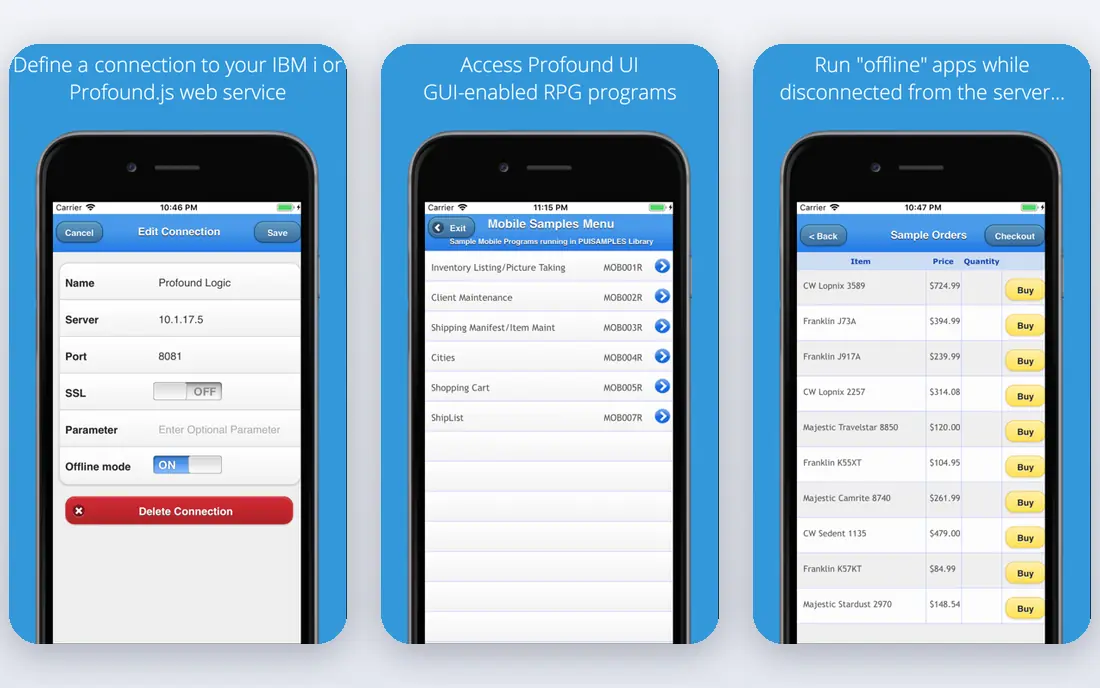
Profound focuses on one clear job, which is showing where a brand and its products appear in AI answers and which sources those answers cite. For a store with many products, that citation view matters, because a product that is never cited is hard for shoppers to find through AI search. The platform also lets teams compare their visibility with competitors, which helps decide which categories deserve new content first.
The catch is scope at the entry price. A small store may find that the starter limits cover only part of its catalog or only one engine, so it should check prompt limits before signing up. Profound still earns its place here for larger teams that need steady, comparable reporting rather than a one-off audit.
- Tracks brand and product mentions across major AI engines
- Shows citation sources
- Suits large catalogs and reporting teams
- Entry plan covers a limited set of engines
- Costs rise fast as prompt volume grows
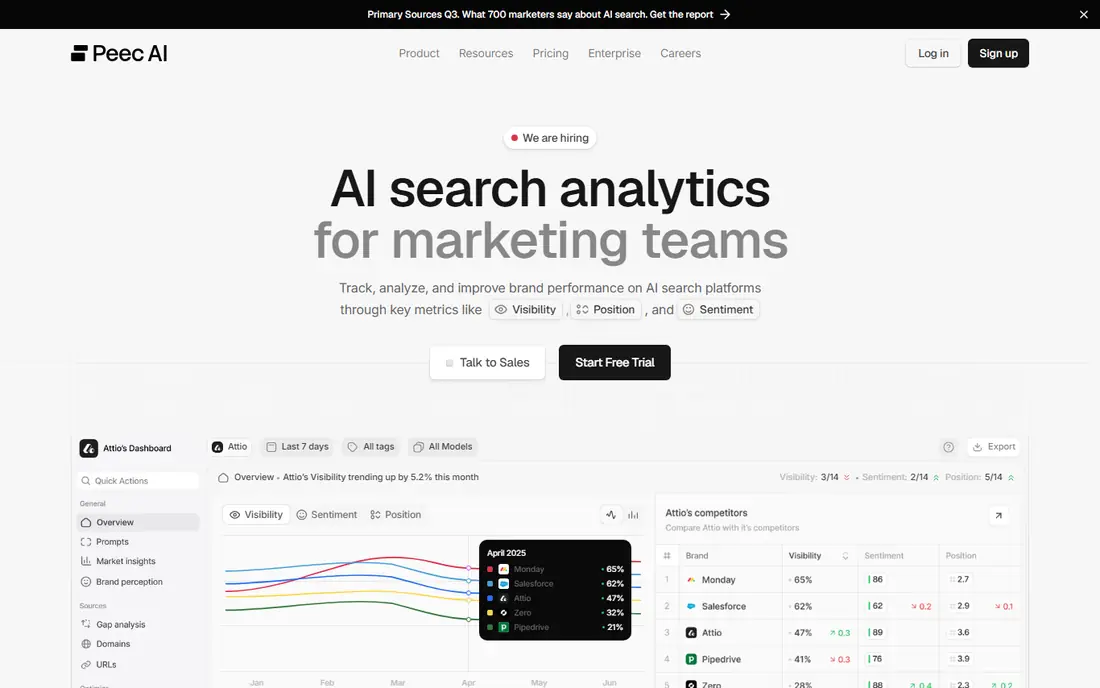
Peec AI stands out for teams that sell in more than one country or want to track a chosen set of engines rather than paying for all of them. Its reports put brand visibility, competitor mentions, and citation sources in one view, which makes the weekly review meeting shorter. Product teams can build prompts around real shopper questions, such as comparisons and best-for queries, and then watch which products get named.
One honest limit is that Peec AI reports what AI answers say, and it cannot fix weak product pages by itself. Teams still need to rewrite thin descriptions, add specs, and publish comparison content. Used that way, as a measuring tool paired with real content work, it is one of the stronger mid-market picks.
- Lets teams pick the AI models they track
- Gives readable share of voice reports
- Covers many languages
- Extra models cost more per month
- Product level detail depends on prompt design
Otterly is the sensible first step for a small store that wants to know if AI answers mention it at all. The entry plan is cheap enough to run for a few months while a team learns which prompts matter, and the reports are plain enough for a non-specialist to read. That simplicity is a real strength when one person handles marketing, product pages, and customer service.
The trade-off is depth. Otterly will not replace a full enterprise tracker for a large catalog, and teams that need many prompts or extra engines will outgrow the cheapest plan. For a first test, though, it gives a clear answer to the main question, which is whether shoppers can find your products through AI search today.
- Lowest entry price in this list
- Simple weekly snapshot reports
- Quick setup for small catalogs
- Fewer prompts on the entry plan
- Some engines cost extra as add-ons
Semrush AI Visibility Toolkit
Who it suits: Teams already using Semrush
Semrush makes sense for teams that already live in its dashboard for rankings, backlinks, and content gaps. Adding AI visibility there means one login, one report set, and AI mention data sitting next to the search data that explains it. That context helps a team see if a product is strong in classic search but invisible in AI answers, which is a common gap.
Cost is the main watch point. Because the toolkit is priced per domain, a company with several stores or brands should total the cost before committing. For a single brand that already pays for Semrush, however, it is often cheaper and simpler than buying a separate platform.
- Puts AI visibility next to SEO and competitor data
- Tracks several major engines
- Familiar reporting for Semrush users
- Priced per domain, so multi-brand costs add up
- It is an add-on, not a standalone plan
Ahrefs Brand Radar appeals to teams that already trust Ahrefs for link and content research. Seeing AI mentions next to that data helps explain why some products get cited and others do not, since cited pages often have stronger links and clearer content. The tool also helps teams find the pages and publishers that AI answers lean on in their category.
The weakness is pricing clarity. Because Brand Radar sits inside Ahrefs plans and add-ons, the total cost depends on the base plan a team already holds. Check the live pricing page for the exact combination before budgeting, and trial it on one product category first.
- Connects AI mentions with a large backlink and content dataset
- Useful for authority and citation research
- Strong reporting
- Pricing depends on the Ahrefs plan and add-ons
- Newer AI features have less history than dedicated trackers
SE Ranking is a practical pick for agencies and small marketing teams that manage several stores. It covers classic rank tracking and site health in the same account as AI search tracking, so a team does not need three tools to answer a client question about visibility. The plan structure is also easier to read than some enterprise quotes, which helps with client budgeting.
Product teams should still plan their prompts with care. Generic brand prompts tell you little about individual products, so build prompts around categories, comparisons, and use cases. Done well, SE Ranking gives a solid, affordable base for both classic search and AI search work.
- Combines rank tracking, site audits, and AI search tracking
- Transparent plan structure
- Suits agencies with many clients
- AI search features may sit on higher plans or as an add-on
- Product level prompts need careful setup
Scrunch goes a step past tracking by helping content teams act on what they find. When a product is missing from AI answers, the platform points to content gaps and publishing steps that could close them, which suits teams that publish often. That guidance is useful for stores with blogs, buying guides, and large category sections.
The price puts it out of reach for very small teams, and the setup is heavier than a simple tracker. It fits best where content production is already a weekly habit and someone owns the publishing calendar. In that setting, the extra cost buys action, not just another dashboard.
- Pairs monitoring with content and publishing guidance
- Tracks several engines
- Suits content heavy brands
- Entry price is high for small stores
- Setup takes more time than a simple tracker
Goodie treats AI search as its main job rather than an extra feature, and that focus shows in its prompt research and optimization actions. Teams can find the questions where their products are underrepresented and get concrete fixes, such as clearer facts, better structure, or stronger supporting pages. For brand teams that report to leadership, the attribution angle also helps link AI visibility to traffic and sales work.
The main limit is cost and tiering. Smaller teams may find the entry plan covers fewer engines than they want, and the price rises with coverage. It is best for brands that already treat AI search as a core channel and need reporting that stands up in a board meeting.
- Built for AI search from the start
- Offers prompt research and optimization actions
- Covers many answer engines on higher plans
- Pricing is high for small teams
- Full engine coverage sits on higher tiers
How we picked these
We compared official feature pages, pricing pages, and public product descriptions for AI visibility and product tracking tools, and we kept only tools that track mentions or citations across AI search or chat engines and that fit product focused businesses. We left out tools that only write content without tracking, tools that only cover classic search rankings, and tools with no clear product or brand tracking use. Prices shown here come from vendor pages and recent public pricing roundups, and where pricing was unclear or varied by plan, we wrote See website instead of guessing.
What to check before you pay
Start with a short list of real shopper prompts, not just your brand name. Include category questions, comparison questions, and best-for questions for your top products, because those are the prompts where AI answers influence a purchase. Run the same prompt set in each trial, and compare how each tool reports mentions, citations, and competitor products over at least two weeks.
Next, check the practical limits that change the bill. Prompt counts, engine counts, seat counts, and per-domain pricing all matter more than a headline price. A cheap plan that covers only one engine can cost more in the long run than a mid-priced plan that covers the engines your shoppers actually use.
Finally, fix the pages before you judge the tool. Make sure each top product has a clear title, price, specs, use cases, and answers to common questions, and make sure category pages link to those products. A tracker can show you the gap, but only better product content can close it.
Frequently asked questions
What is the best AI tool for optimizing product visibility?
There is no single winner for every store. Otterly suits small teams that want a low cost start, Peec AI and Profound suit teams that need deeper prompt tracking, and Semrush or Ahrefs suit teams already inside those suites. Pick based on catalog size, budget, and the engines your shoppers use.
Can these tools make AI answers recommend my product?
No tool can force an AI answer to name a product. These platforms measure mentions and citations and point to content gaps, but the product still needs clear facts, credible sources, and useful pages. Treat any vendor promise of guaranteed placement with caution.
How many prompts should I track for each product?
Start with 10 to 20 prompts per top category, covering comparisons, use cases, and buyer questions, rather than tracking every product at once. That gives a readable trend without burning through prompt limits in the first week.
Do I need a separate tool if I already use Semrush or Ahrefs?
Often not at first. Both suites now include AI visibility features, so trial those before buying a dedicated tracker. Move to a dedicated tool when you need more prompts, more engines, or reporting that the suite version does not provide.
How long does it take to see a change in AI visibility?
Expect weeks, not days, and expect movement to be uneven across engines. Publish clearer product content, wait for a full tracking cycle, and judge trends over a month rather than single answers, since AI answers change from run to run.
Sources we checked (8)

Online Jobs is an independent blog about careers, online work, learning new skills and the tools that help people earn. More about us.
Keep reading
All posts
n8n Alternatives
n8n alternatives compared for 2026, with Zapier, Make, Activepieces, and more, covering visual builders, code steps, self-hosting, and pricing models.

ZoomInfo Alternatives
The best ZoomInfo alternatives in 2026, compared on price, free plans, data coverage, and which tool fits small teams or large sales teams best in detail.
Zoom Alternatives for Webinars
Compare Zoom alternatives for webinars in 2026, from browser-based rooms to enterprise events, with prices, attendee limits, features and honest trade-offs.