Best AI Tools for Digital Marketing in 2026: 10 Tools Compared

How we put this together: we compare official feature and pricing pages, app store listings, privacy policies and public user reviews. Prices change, so check the provider's site before you pay.
Key takeaways
- Jasper suits content teams that need brand voice at scale, while Copy.ai suits teams that want marketing workflows and automation.
- HubSpot is the strongest pick for teams already using its CRM, because its AI tools sit inside existing contacts and campaigns.
- Surfer and Semrush serve different SEO jobs: Surfer optimizes individual pages, Semrush covers research and competitive analysis.
- Canva and AdCreative.ai cover visual output, while Zapier connects AI tools to the rest of your stack.
- Start with one clear job, such as blog drafting or email subject lines, before buying a suite of AI tools.
Quick comparison
| Name | Who it suits | Starting price | Free option | |
|---|---|---|---|---|
 Jasper | Brand-voice content at scale | See website | Free trial | Visit |
 Copy.ai | Marketing workflows | See website | Yes | Visit |
 HubSpot | CRM plus AI marketing | Free | Yes | Visit |
 Surfer | SEO content optimization | $79 per month | No | Visit |
 Semrush | SEO and competitive research | See website | Free trial | Visit |
 Canva | AI design and social visuals | Free | Yes | Visit |
 Zapier | Automation across apps | Free | Yes | Visit |
 AdCreative.ai | Ad creative generation | See website | Free trial | Visit |
 Writesonic | Fast content and SEO drafts | See website | Free trial | Visit |
 Hootsuite | Social management with AI help | See website | Free trial | Visit |
The best AI tools for digital marketing
AI marketing tools now cover writing, design, SEO, email, social, and automation, and no single tool does all of them well. The tools below are grouped by the job they do best, so you can pick the one that matches your bottleneck rather than buying the most advertised suite. Prices change often, so check the vendor's pricing page before committing.
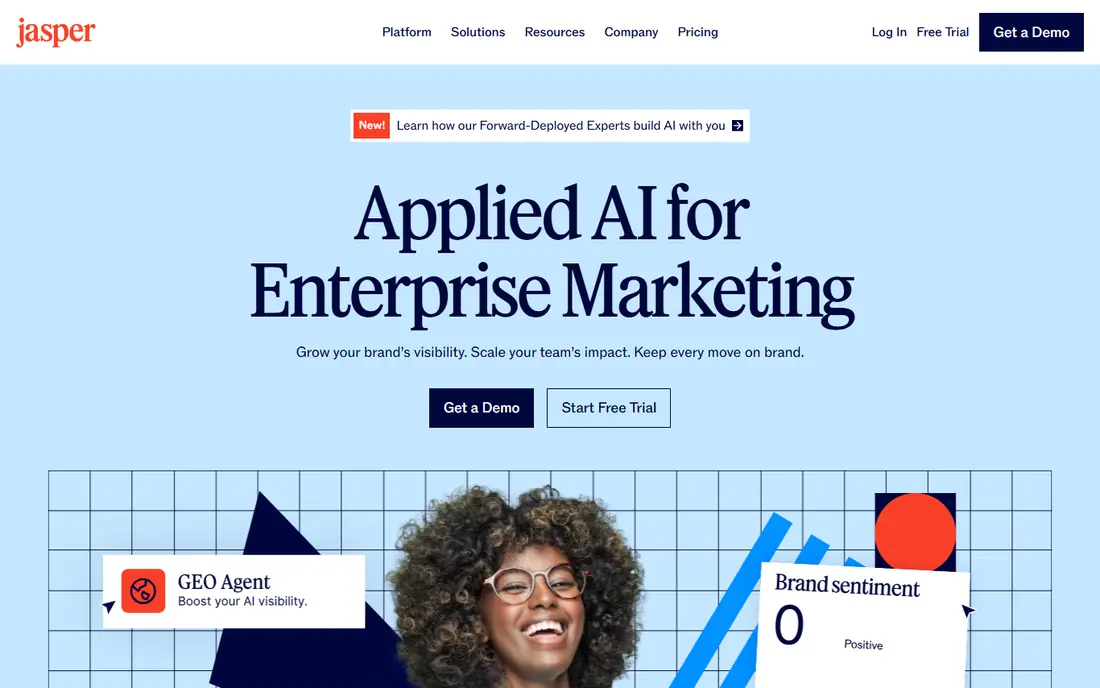
Jasper is built for content teams that produce blogs, landing pages, ads, and emails every week. Its brand voice feature learns tone and style from your existing content, which helps larger teams keep output consistent across writers. Templates and workflows cover common marketing formats, so a team can move from brief to draft faster.
Jasper does not replace editing. AI drafts can sound generic, invent facts, or miss brand nuance, so a human editor should check every piece before publishing. Jasper suits teams with a clear content volume problem and an editor to review output, not solo creators seeking a publish-and-forget tool.
- Brand voice controls for consistent tone
- Templates for blogs, ads, and email
- Workflows for teams
- No free plan, trial only
- Output still needs human editing and fact-checking
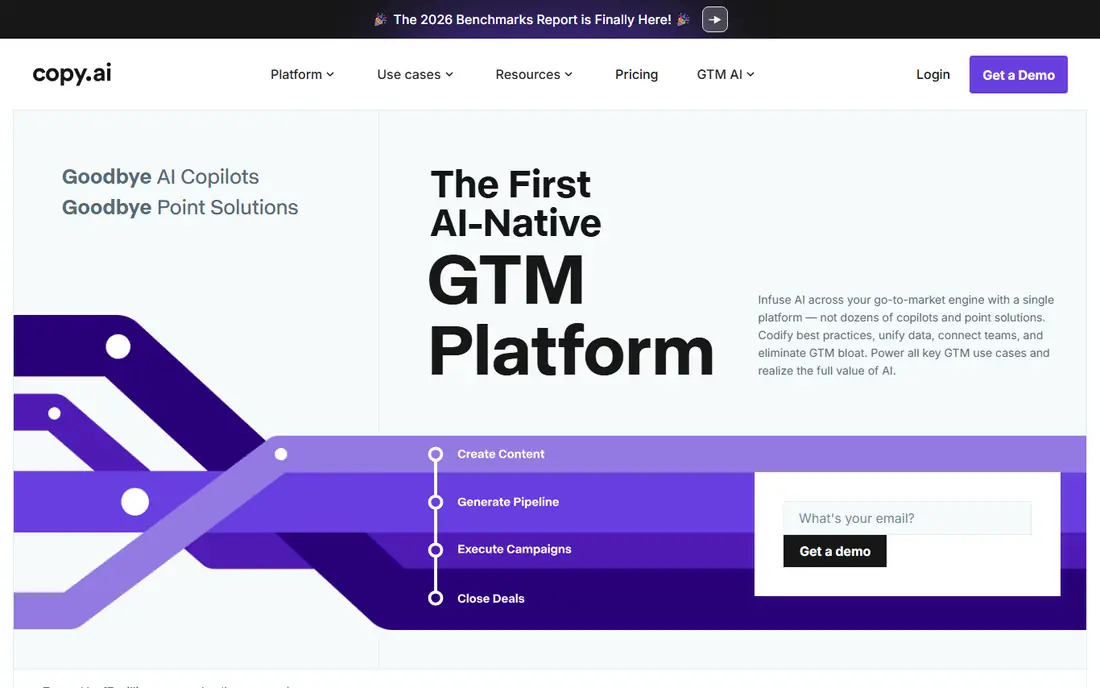
Copy.ai has shifted from simple copy generation toward workflows and AI agents that handle multi-step tasks, such as enriching leads, drafting outreach, and repurposing content. That workflow focus suits go-to-market teams that repeat the same steps across many leads or campaigns, and want AI to handle the routine parts.
The trade-off is setup time. A workflow that saves hours each week still needs careful prompts, data sources, and review steps to work reliably. Copy.ai suits teams with repeatable processes and someone to own the workflow, rather than users who only need an occasional blog draft.
- Workflows that automate multi-step marketing tasks
- Agents for prospecting and content
- Team collaboration
- Pricing and plan names have changed often
- Workflow setup takes time to get right
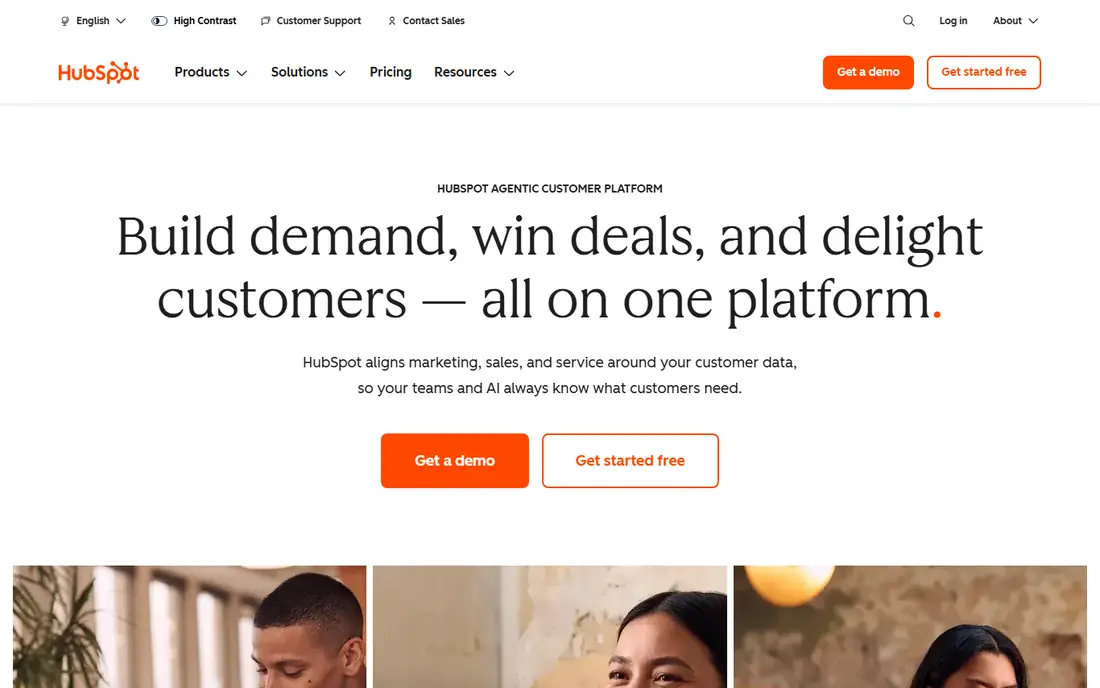
HubSpot's AI features, grouped under its Breeze tools, sit inside its CRM, marketing, sales, and service hubs. That placement matters: AI email drafts, content help, and prospecting use your actual contacts and campaign data, rather than working from a blank prompt. The free CRM tier lets small teams start without a subscription, with paid hubs adding automation and scale.
Cost grows with contacts and hub choice, so HubSpot is not the cheapest AI writing tool on its own. It earns its place for teams already on HubSpot, or for teams that want CRM, email, automation, and AI in one system rather than stitching several tools together.
- Free CRM tier
- AI content, email, and prospecting tools inside the CRM
- Strong automation and reporting
- Paid hubs get costly as contacts and features grow
- Best value only if you already use HubSpot
Surfer tells writers what to include to compete for a keyword. Its Content Editor analyzes top-ranking pages, suggests entities, headings, and word count ranges, and scores your draft as you write. That specific guidance suits content teams that publish SEO articles at volume and want a measurable optimization step before publishing.
There is no free tier, and the Essential plan starts at $79 per month on annual billing, with credit limits that can bind in busy months. Surfer suits teams with a clear SEO publishing cadence. Solo bloggers with a few posts a month may get more value from a general writing tool plus basic keyword research.
- Content Editor with real-time optimization score
- SERP analysis and entity guidance
- AI search tracking add-on
- No free tier
- Credit-based usage can run out in busy months
- Steep for solo bloggers
Semrush is a research platform first and a writing tool second. It covers keyword research, competitor analysis, backlink data, site audits, and rank tracking, with newer tools for tracking brand visibility in AI-generated answers. Marketing teams use it to decide what to write, who they compete against, and whether pages are gaining or losing ground.
Its price reflects that breadth, and teams that only need AI drafting will find cheaper options. Semrush suits teams that plan content from data, track performance over time, and want one research hub rather than several single-purpose tools.
- Deep keyword and competitor data
- Site audits and rank tracking
- AI visibility tools for search answers
- Higher price than single-purpose tools
- AI writing features are secondary to research
Canva's AI tools, grouped as Magic Studio, help social and content teams produce visuals without a designer for every post. Magic Design creates layouts from a prompt, background removal cleans up photos, and text tools add captions and headlines. The free plan covers many of these features, with Pro adding brand kits, premium assets, and bulk tools.
AI images still need a human eye, because hands, text, and logos can render incorrectly. Canva suits social teams, small businesses, and content marketers who need a high volume of good-looking visuals quickly, with a designer or editor checking output before publishing.
- Free plan with AI design tools
- Magic Studio for images, video, and text
- Templates for every social format
- AI image quality varies
- Brand and resize features are stronger on paid plans
Zapier connects marketing tools that do not natively integrate, moving leads, form submissions, and campaign data between apps without code. Its AI features add actions and agents that can draft, summarize, or route work based on triggers. A free tier covers simple automations, with paid plans scaling by task count.
Task volume is the cost driver, so a popular form or a busy campaign can use a monthly allowance faster than expected. Zapier suits teams with a varied app stack who want to automate handoffs between tools, rather than teams that live inside a single CRM.
- Connects thousands of apps
- AI agents and actions for marketing tasks
- Free tier for simple automations
- Costs grow with task volume
- Complex automations need careful testing
AdCreative.ai generates ad images and copy in formats for Facebook, Instagram, Google, and other platforms, and scores each creative for predicted performance. That scoring helps teams test more variants than they could design by hand, and focus budget on the strongest-looking options first.
Scores are predictions based on past data, not guarantees, so real campaign results still decide which creative wins. AdCreative.ai suits paid social and display teams that test many creatives each week, not teams that run a handful of ads a month.
- Generates ad creatives at scale
- Creative scoring to predict performance
- Formats for major ad platforms
- No free plan, trial only
- Scoring is a prediction, not a guarantee of ad results
Writesonic combines article writing, ad copy, and lightweight SEO tools in one platform. Its Article Writer produces structured drafts quickly, and its SEO features help teams check pages and build briefs. For small teams that need a lot of content fast, that combination is appealing.
As with all AI writers, drafts need fact-checking and editing, especially on technical or regulated topics. Writesonic suits small teams and freelancers who want speed and variety, and who have an editor to polish drafts before publishing.
- Fast article and ad drafting
- SEO features including audits and briefs
- Chat assistant for research
- Output quality varies by topic
- Paid plans needed for higher volume and advanced SEO tools
Hootsuite manages social publishing, scheduling, monitoring, and analytics across networks, with an AI assistant, OwlyGPT, that helps draft captions and generate ideas. Team workflows cover approvals and assignments, which suits marketing teams that publish across several accounts.
Hootsuite is priced above simple scheduling tools, so solo creators with one account may find cheaper options. It suits social teams that need scheduling, reporting, and collaboration in one place, with AI as a drafting aid rather than a replacement for strategy.
- Scheduling and analytics across social networks
- AI assistant for captions and ideas
- Team approval workflows
- Higher price than single-network tools
- AI features are helpers, not a full content strategy
How we picked these
We compared AI tools that are actively sold for digital marketing in 2026, checking their homepages, pricing pages, and feature lists. We weighted the specific marketing job each tool does best, ease of use for its target team, integration with common marketing stacks, and transparent pricing. We left out general chatbots with no marketing workflow, because this list is for marketers choosing a tool for a job, not for general AI chat.
We did not test output quality across every use case, because quality depends on prompts, brand inputs, and editing. The safest approach is a trial on a real task from your own backlog, with a human editor reviewing the result, before you buy a team plan.
How to choose an AI marketing tool
Start with the bottleneck. If writing speed is the problem, pick a writing tool such as Jasper or Writesonic. If SEO planning is the problem, pick Surfer or Semrush. If social output is the problem, pick Canva or Hootsuite. Buying a suite before naming the job usually leads to unused seats.
Next, check data and brand fit. Tools that learn your brand voice or use your CRM data will produce more usable drafts than generic tools, but they also need your data and review process to work well. Finally, set an editing rule: no AI output publishes without a human check for facts, tone, and claims, especially on pricing, health, finance, or legal topics.
Frequently asked questions
What is the best AI tool for digital marketing?
There is no single best tool, because digital marketing covers writing, SEO, design, email, social, and automation. Jasper is best for brand-voice content, HubSpot is best for CRM-led marketing, Surfer is best for SEO page optimization, and Canva is best for social visuals. Pick by job, not by headline.
What is the best AI digital marketing tool for small businesses?
HubSpot's free CRM tier and Canva's free plan are strong starting points for small businesses, because both cover real marketing jobs at no initial cost. Writesonic and Copy.ai also offer low-cost entry points for content. Start free, prove value on one job, then upgrade only when volume demands it.
Is there a best AI tool for digital marketing with a free plan?
Yes. HubSpot, Canva, Copy.ai, and Zapier all offer free tiers, though features and limits vary. Free plans suit testing and low-volume work, while team features, higher limits, and brand controls usually sit on paid plans.
Can AI tools replace a marketing team?
No. AI tools speed up drafting, design, research, and automation, but they do not set strategy, verify facts, or understand your customers the way a team does. The best results come from AI drafts plus human editing, strategy, and review.
How do I avoid generic AI marketing content?
Feed the tool your brand voice, examples of past content that worked, and specific facts about your product and audience. Edit every draft for tone, accuracy, and original insight, and add examples or data that only your team can provide. Generic prompts produce generic output.
Should I use AI for SEO content?
Yes, with care. Tools such as Surfer and Semrush help plan and optimize SEO content, but search engines reward helpful, accurate, original pages. Use AI for research and drafting, then edit for accuracy, add first-hand insight, and check that the page truly answers the searcher's question.
Sources we checked (10)

Online Jobs is an independent blog about careers, online work, learning new skills and the tools that help people earn. More about us.
Keep reading
All posts
Best Marketing Tools for Small Business
Looking for the best marketing tools for small business in 2026? We compare 9 platforms for email, automation, social, landing pages, design and growth.
9 Best Tools for Digital Marketing Teams
Compare the best tools for digital marketing, with HubSpot, Semrush, Ahrefs, Mailchimp, Canva, and analytics tools for search, email, social, and growth.

ZoomInfo Alternatives
The best ZoomInfo alternatives in 2026, compared on price, free plans, data coverage, and which tool fits small teams or large sales teams best in detail.