Best AI Tool for Precise Image Editing Sunglasses in 2026: 8 Tools Compared

How we put this together: we compare official feature and pricing pages, app store listings, privacy policies and public user reviews. Prices change, so check the provider's site before you pay.
Key takeaways
- No tool here is made only for sunglasses, so we judged AI image editors on precise controls that matter for product photos, such as masks, reflections, and color.
- Photoshop gives the finest pixel-level control for hero product shots, while Lightroom handles consistent color across a full catalog.
- Affinity Photo and GIMP offer strong manual control without a subscription, which suits small sellers.
- Capture One and DxO PhotoLab suit studio shoots where color accuracy and lens correction matter most.
- For sunglasses, check glare, lens tint, frame edges, and background cleanup at full zoom before you publish.
Quick comparison
| Name | Who it suits | Starting price | Free option | |
|---|---|---|---|---|
 Photoshop | Pixel-level product retouching | See website | Free trial | Visit |
 Lightroom | Consistent catalog color | See website | Free trial | Visit |
 Affinity Photo | Subscription-free editing | Free | Yes | Visit |
 Capture One | Studio color accuracy | See website | Free trial | Visit |
 DxO PhotoLab | Lens correction and RAW detail | See website | Free trial | Visit |
 ON1 Photo RAW | All-in-one photo editing | See website | Free trial | Visit |
 Pixelmator Pro | Mac editing with AI masks | See website | No | Visit |
 GIMP | Free manual retouching | Free | Yes | Visit |
The best AI tool for precise image editing sunglasses
Sunglasses product photos need careful work: clean frame edges, true lens color, controlled reflections, and a background that does not distract. These AI image editors give you masks, selections, retouching, and color tools precise enough for that job, without claiming a tool built only for sunglasses exists.
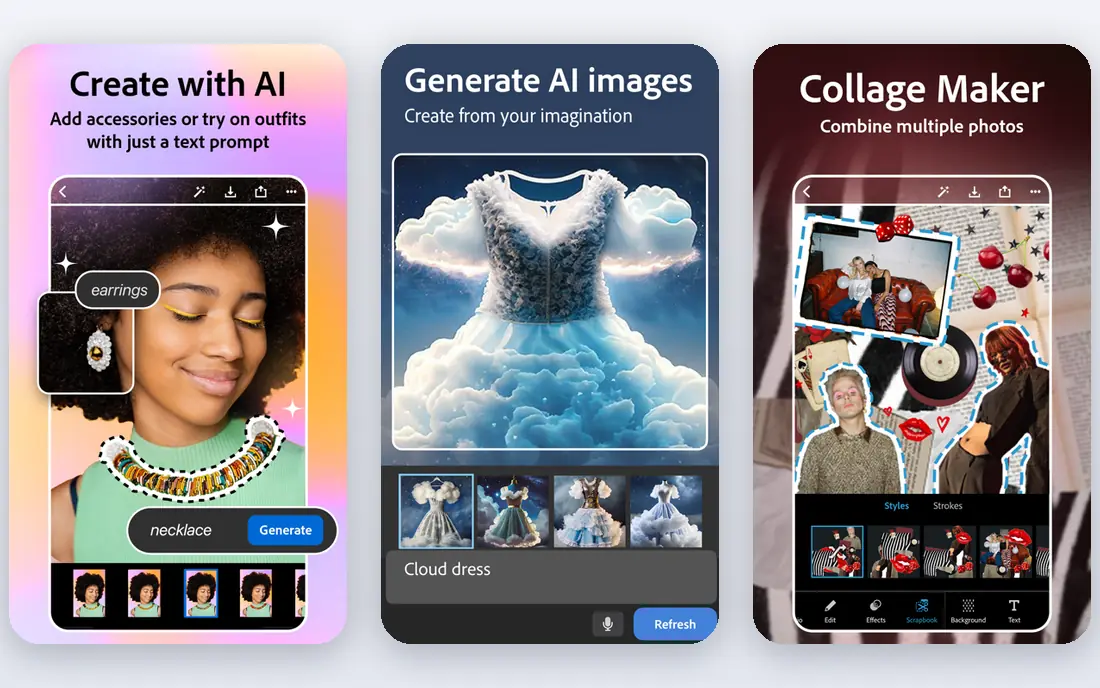
Photoshop is our pick for a hero sunglasses shot that must be flawless. Its AI selections can isolate frames, lenses, and arms, its layers keep each edit separate, and its Remove Tool can clean dust, cables, and background marks without harming the product. Generative Fill can extend a background or replace a distracting prop, while manual brushes handle the final edge cleanup. The catch is cost and time. Photoshop is a subscription product, and it rewards practice, so a beginner may spend longer than in a simpler editor. For a single catalog image that will appear large on a product page, that control is worth it. For bulk edits, pair Photoshop with Lightroom and send only the selects that need this level of work.
- Best masking and layer control
- Generative Fill and Remove Tool
- Precise color grading
- Subscription cost
- Steep learning curve for beginners
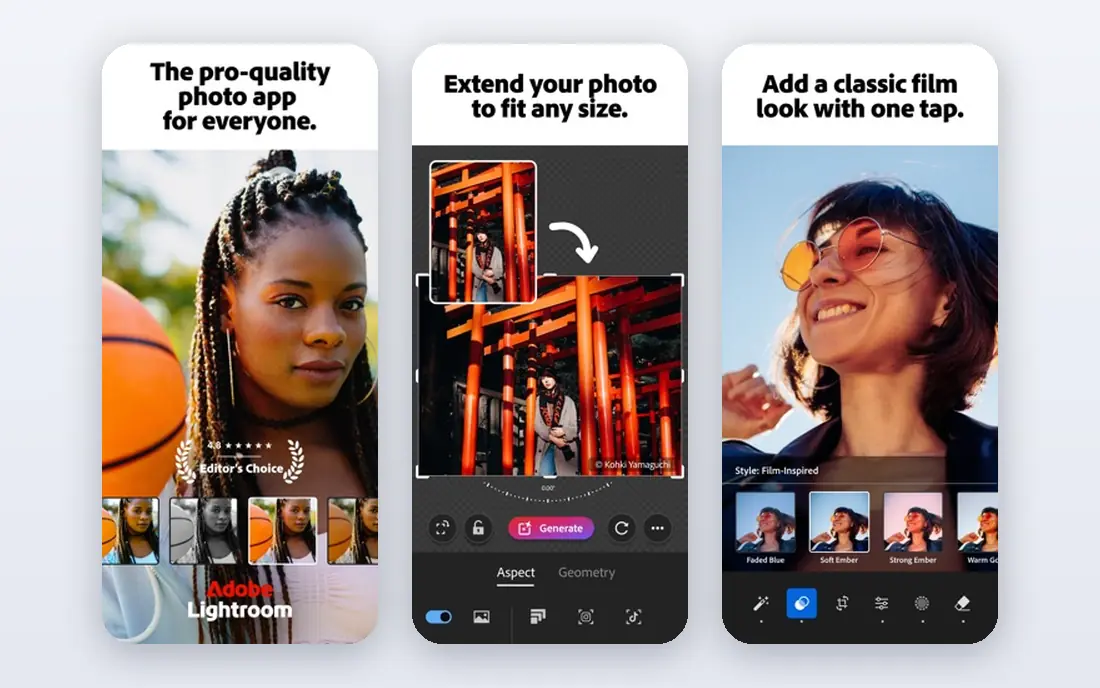
Lightroom suits sellers with many sunglasses styles to photograph in one shoot. Its AI masks can select a subject, background, or lens area, and its presets apply consistent exposure and color across the whole set. That consistency matters when a customer compares black, tortoiseshell, and clear frames side by side, because color shifts between listings can cause returns. The limit is retouching depth. Lightroom can remove spots and adjust local areas, but it will not replace Photoshop for complex frame repair or composite work. Use Lightroom to develop and organize the shoot, then move only the hero images to Photoshop for final cleanup. That split keeps bulk work fast and hero work precise.
- Non-destructive RAW editing
- AI masks for subject and sky
- Presets across a shoot
- Less pixel-level retouching than Photoshop
- Subscription cost
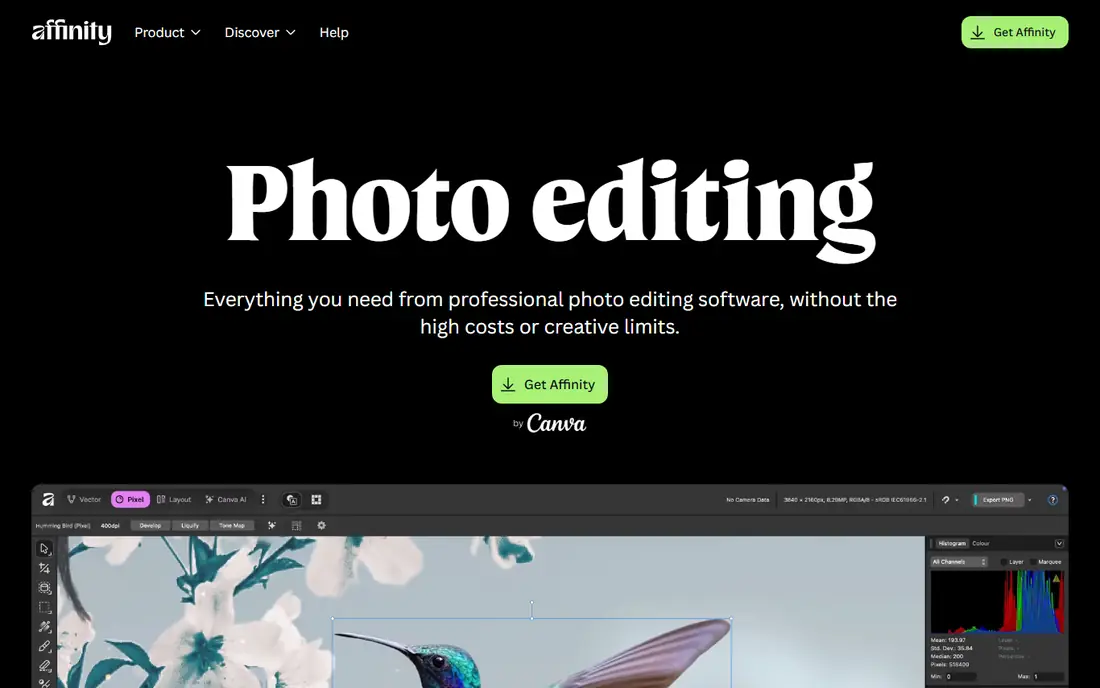
Affinity Photo is a strong choice for small sellers who want professional control without a monthly fee. It offers layers, masks, selections, and retouching tools that handle frame edges, lens cleanup, and background work well, and its RAW development covers studio shoots. Recent Affinity offers have made the apps free, so check the current Affinity site for terms before you rely on that price. The trade-off is AI depth. Affinity has selection and editing aids, but it does not match Photoshop for generative fill or AI masking in every case. If you need manual precision and a one-time or free model more than generative features, Affinity Photo is excellent value for product work.
- Strong layers and masks
- No subscription in current offer
- Good RAW support
- AI features are narrower than Adobe tools
- Smaller tutorial library
Capture One is favored in studios because its color tools are detailed and predictable. Tethered shooting lets you check a sunglasses photo on a large screen as you shoot, which helps you catch glare, color cast, and focus problems before the shoot ends. Its color editor and layers support precise adjustments to lens tint and frame color without shifting the whole image. The catch is that Capture One is a specialist tool, and its interface takes time to learn. It is also priced as a professional product, so confirm the current plan on its site. Choose Capture One when color accuracy and studio workflow matter more than quick generative edits.
- Excellent color editing
- Tethered studio shooting
- Detailed lens and color controls
- Higher learning curve
- Pricing needs checking on its site
DxO PhotoLab suits product photos shot in less than ideal light, where lens distortion and noise need correction before retouching. Its lens modules correct distortion and vignetting for specific camera and lens combinations, and its noise reduction preserves detail in shadow areas of dark frames. That clean starting file makes later mask and color work more accurate. The limit is compositing. PhotoLab is a RAW developer and editor, not a layered composite tool, so complex background swaps still belong in Photoshop or Affinity Photo. Use PhotoLab when your sunglasses shots need the cleanest possible RAW file, especially for close detail shots of hinges, logos, and lens coatings.
- Strong lens corrections
- DeepPRIME noise reduction
- Detailed RAW controls
- Less compositing than Photoshop
- Catalog features are narrower
ON1 Photo RAW combines RAW development, AI masking, layers, and effects in one app, which suits sellers who photograph sunglasses alongside lifestyle shots. Its AI masks can select subjects and skies, and its local adjustments help you darken a background, lift a frame, or correct a color cast without leaving the app. That breadth reduces the need to jump between tools for a standard listing. The trade-off is polish. The interface packs in many features, and performance depends on your computer, especially with large RAW files. For a seller who wants one app for most product and lifestyle work, ON1 is a practical middle path. For the finest hero retouching, Photoshop still leads.
- AI masking and portrait tools
- Layers and effects in one app
- Good for mixed shoots
- Interface can feel busy
- Performance varies by machine
Pixelmator Pro is a strong Mac-only option for precise product edits. Its machine learning tools can remove backgrounds, select subjects, and denoise images, and its layer tools handle frame cleanup and color work well. It runs fast on Apple silicon, which helps when you work through a batch of high-resolution product files. The limit is platform. If your team uses Windows, Pixelmator Pro is not an option, and its plugin and tutorial library is smaller than Photoshop. For a Mac-based seller who wants a fast, capable editor without an Adobe subscription, Pixelmator Pro is a good fit for sunglasses listings and social images.
- Fast on Apple silicon
- AI background removal
- Clean Mac interface
- Mac only
- Smaller plugin ecosystem than Photoshop
GIMP is the free, open source route to precise manual editing. It offers layers, masks, selections, clone and heal tools, and color curves that can handle frame edges, dust removal, and background cleanup. For a seller on a tight budget, GIMP can produce clean product photos if you are willing to learn its workflow. The catch is AI. GIMP does not offer the same built-in generative fill, AI masking, or one-click background tools as Adobe or ON1, so some jobs take more manual steps. Plugins can add features, but they vary in quality. Choose GIMP when budget matters most and you value manual control over speed.
- Free and open source
- Strong layers, masks, and brushes
- Many plugins
- No built-in AI generative fill like Photoshop
- Interface takes learning
How we picked these
We judged AI image editors on controls that matter for sunglasses product photos: precise selections and masks, lens and frame edge cleanup, reflection and glare handling, color accuracy, and background control. We checked official feature pages, pricing pages, and documentation for AI masking, generative tools, RAW support, and platform availability, and we listed See website where pricing was unclear. We did not claim hands-on testing, and we did not list a tool made only for sunglasses, because we found no credible tool with that narrow purpose.
Editing sunglasses product photos without overdoing it
Start with a clean capture: wipe lenses, check for dust on frames, and use soft, even light to reduce harsh reflections. In editing, mask the frame and lenses separately, so you can correct lens tint without shifting frame color, and check edges at full zoom for halos or rough selections. Remove dust and background distractions, but keep the product honest: do not change frame color, lens tint, or shape in a way that misleads a buyer. Next, keep color consistent across the listing. Use the same white balance and export settings for every angle, and view the final images on a phone as well as a computer, because most shoppers will see them on a small screen. Finally, keep the original file, export a web version for listings, and avoid over-sharpening, which can make plastic and metal look harsh and fake.
Frequently asked questions
What is the best ai tool for precise image editing sunglasses photos?
Photoshop is the best pick for precise hero shots, because its masks, layers, and Remove Tool handle frame edges and reflections at pixel level. Lightroom is better for consistent color across a catalog, while Affinity Photo and GIMP suit sellers who want manual control without a subscription. The right tool depends on whether you need one perfect image or many consistent ones.
Is there an AI tool made only for editing sunglasses photos?
No credible tool we found is made only for sunglasses. The task in this article is framed as AI image editors with precise controls suited to product photos such as sunglasses, not a sunglasses-only app. General editors like Photoshop, Lightroom, and Capture One cover the masks, color, and cleanup that sunglasses photos need.
How do I fix reflections in sunglasses lenses?
Use soft, diffused light when shooting to reduce harsh reflections, then use masks and local adjustments in editing to darken or clean the reflected area without changing lens tint. For strong reflections, Photoshop layers and cloning give the most control. Avoid removing a reflection entirely if it makes the lens look flat or unnatural.
Can AI background removal handle sunglasses well?
AI background removal works well for clear product shots, but check frame edges, thin arms, and transparent lenses at full zoom, because AI masks can miss fine details. Refine the mask manually around hinges and nose pads, and use a clean, consistent background for listings. A quick AI cutout is a starting point, not a finished image.
Should I edit sunglasses photos on a phone or a computer?
A computer gives you larger previews, precise masks, and better color control, which matters for product listings. Phone editors suit quick social posts, but they make it harder to spot edge errors and color shifts. Edit listings on a computer, then check the result on a phone before publishing.
How much editing is too much for a product photo?
Editing is too much when it changes the product a buyer will receive, such as altering frame color, lens tint, shape, or size. Cleaning dust, fixing exposure, and removing background distractions is normal product work. Keep the product true to life, and show multiple angles so buyers can judge fit and finish.
Sources we checked (8)

Online Jobs is an independent blog about careers, online work, learning new skills and the tools that help people earn. More about us.
Keep reading
All posts
Best Tools to Unblur Photos for Free
We compared the best tool to unblur photos for free, covering face repair, web tools, desktop apps, free limits, watermarks, and what blur cannot fix.

Best Photo Editor App
Best photo editor app guide: we compare 8 photo editors on editing control, presets, free plans, and pricing so you can pick the right app for photos.
Best Photo Editing Software for Beginners
The best photo editing software for beginners in 2026, compared on price, ease of use, and free plans, so you can start editing without confusion from day one.