Best AI Search Monitoring Tools for Agencies in 2026: 8 Tools Compared

How we put this together: we compare official feature and pricing pages, app store listings, privacy policies and public user reviews. Prices change, so check the provider's site before you pay.
Key takeaways
- Profound suits agencies that need brand visibility tracking across major AI answers engines at enterprise scale.
- Athena and Scrunch suit agencies that want prompt tracking, citations, and client-ready reporting in one place.
- Peec and Otterly suit smaller agencies that want a fast setup and clear visibility scores.
- Brandlight and Goodie add value for teams that need deeper analysis, while Nightwatch suits teams that already track search rankings.
Quick comparison
| Name | Who it suits | Starting price | Free option | |
|---|---|---|---|---|
 Profound | Enterprise AI visibility | See website | No | Visit |
 Athena | Agency prompt tracking | See website | Free trial | Visit |
 Scrunch AI | AI visibility and reporting | See website | Free trial | Visit |
 Peec AI | Fast AI visibility setup | See website | Free trial | Visit |
 Otterly.AI | Small agency tracking | See website | Free trial | Visit |
 Brandlight | Deep brand analysis | See website | No | Visit |
 Goodie | AI search visibility | See website | Free trial | Visit |
 Nightwatch | Rank plus AI tracking | See website | Free trial | Visit |
The best ai search monitoring tools for agencies
AI search monitoring tracks how often a brand appears, is cited, or is recommended in answers from AI tools such as ChatGPT, Perplexity, and Google AI Overviews. For agencies, the job is not just to watch one brand, but to track many clients, compare them with rivals, and report changes in a way clients understand. The tools below differ in prompt coverage, citation tracking, and reporting depth.
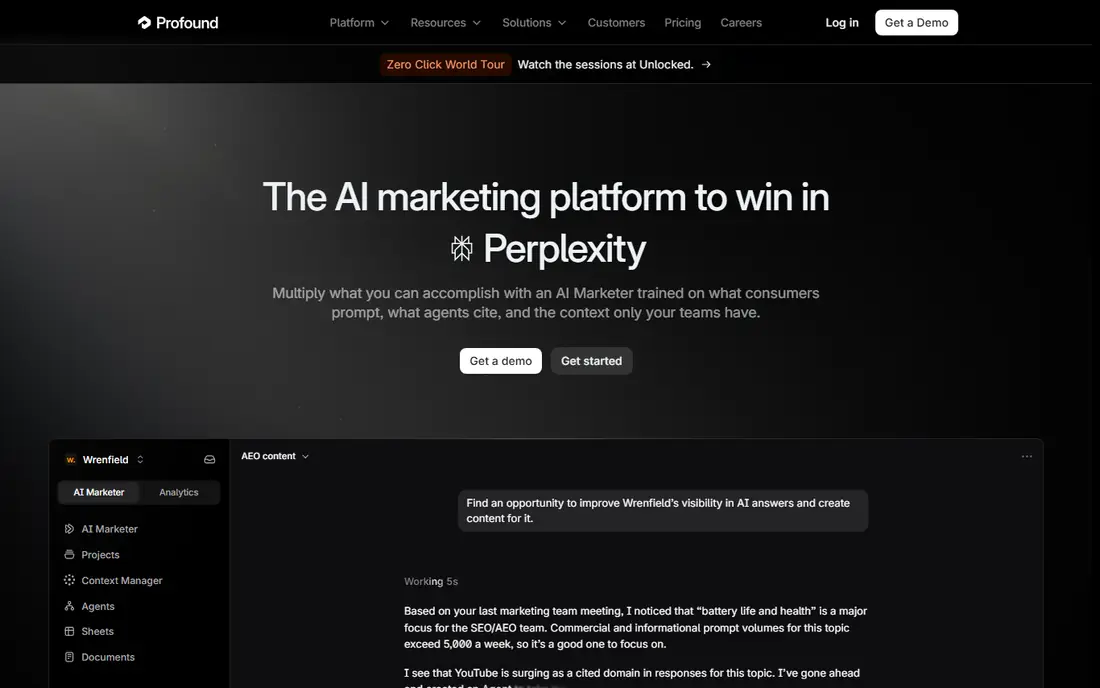
Profound is a leading choice for agencies serving large brands that need to track AI visibility at scale. It monitors how brands appear in AI-generated answers, which sources are cited, and how sentiment and share of voice change over time. Conversation-level data helps agencies see the exact prompts and answers behind a visibility score, rather than just a single number.
The main limit is cost and scope. Profound is priced for enterprise teams, so a small agency with a few local clients may find it hard to justify. It also works best when the agency defines a strong prompt set up front, covering brand, product, comparison, and buying questions. Without that prompt work, any AI monitoring tool will report noise rather than insight.
- Tracks brand presence across major AI platforms
- Conversation-level analysis
- Built for large brands and agencies
- Enterprise pricing can be high for small agencies
- Setup needs a clear prompt strategy
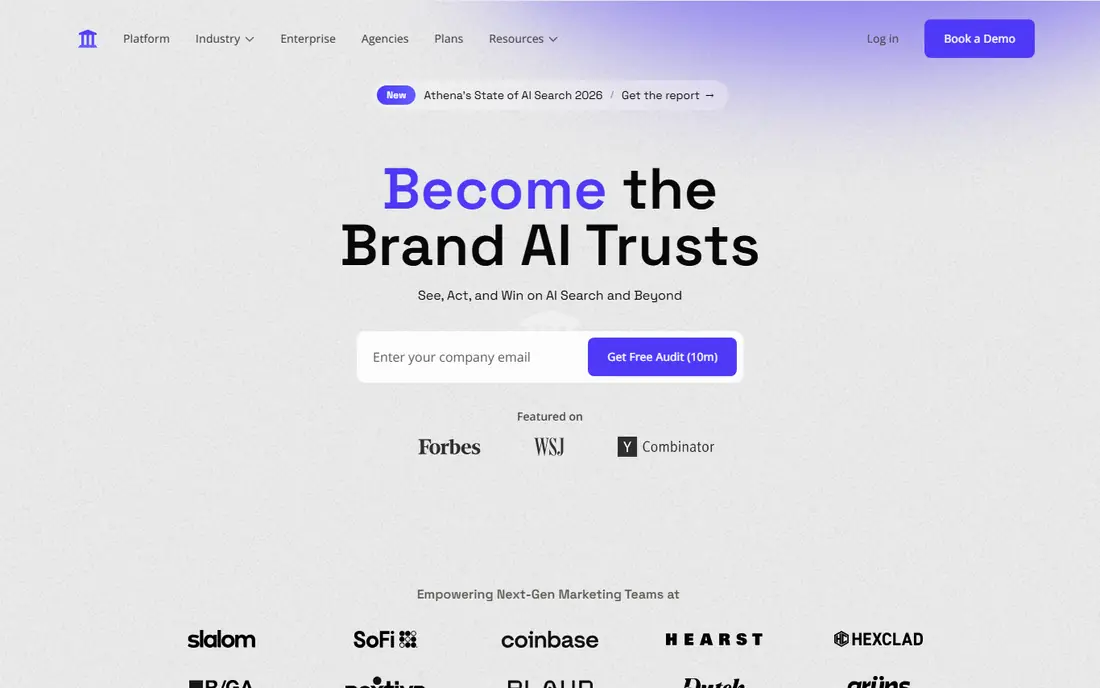
Athena, also known as Athena HQ, focuses on tracking brand visibility in AI answers with an agency workflow in mind. Agencies can set prompt sets per client, track rivals on the same prompts, and follow citation sources that AI tools use. Reporting is built to be shared with clients, which saves time on monthly decks.
Because AI search monitoring is still a young category, features and platform coverage change often, so check the current list of tracked AI tools before you commit. Prompt volume also drives cost, so plan prompt sets carefully. A tight set of high-value prompts usually gives clearer reporting than a very large set that no one reviews.
- Prompt tracking across AI platforms
- Competitor comparison
- Agency reporting features
- Newer category means features change quickly
- Pricing varies by prompt volume
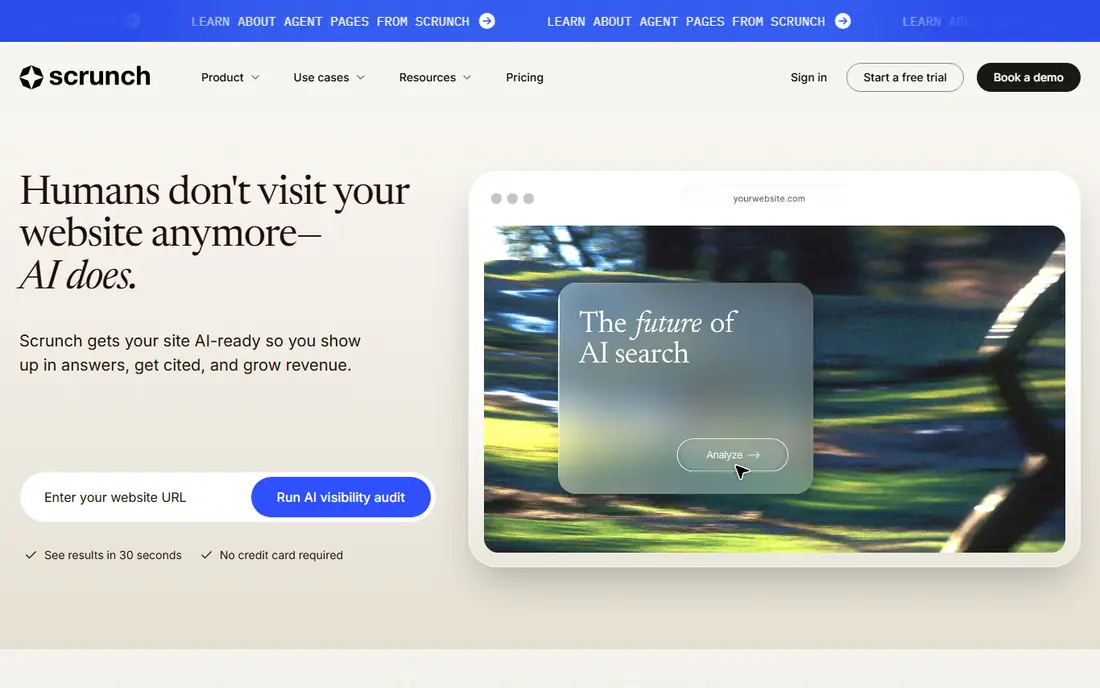
Scrunch AI helps agencies monitor how clients appear in AI answers and audit the content that AI tools cite. That audit angle matters, since AI answers often draw on help pages, reviews, and third-party articles rather than just a brand home page. Scrunch reports can show which sources are cited, where a client is missing, and what content changes might help.
The trade is scope. Some audit and reporting depth sits on higher plans, so a small agency should check which features are included in the plan it can afford. Use the trial to run a real client prompt set, compare results with a rival, and test whether the reports are clear enough to send to a client without heavy editing.
- Visibility tracking and audit features
- Competitor benchmarks
- Client reporting
- Audit depth varies by plan
- Smaller agencies may need only part of the feature set
Peec AI suits agencies that want to start AI monitoring quickly without a long setup project. You can add a brand, set prompts, add rivals, and see visibility scores and citations in a clean dashboard. That speed helps agencies that need to show a client a first AI visibility report within days, not weeks.
Depth is the trade. Peec is less of an enterprise analysis platform than Profound, and its value depends on prompt quality and on which AI platforms it tracks at the time. Keep prompt sets focused on buying and comparison questions, and re-check platform coverage each quarter, since AI tools change their answers, sources, and interfaces often.
- Quick setup
- Clear visibility scores
- Prompt and competitor tracking
- Less enterprise depth than Profound
- Coverage details change as AI platforms change
Otterly.AI is a practical choice for small agencies and freelancers that need core AI visibility tracking without enterprise cost. It tracks brand mentions and links in answers from major AI tools, and it presents results in a dashboard that is easy to explain to clients. Setup is quick, and prompt sets can be built around brand, product, and local search questions.
Report customization is lighter than on agency platforms built for large teams, so agencies that need white-label reports or deep data exports should test those features first. For a small agency that mainly needs to know whether clients appear in AI answers, and which sources are cited, Otterly covers the core job well.
- Simple dashboard
- Prompt tracking for ChatGPT, Perplexity, and Google AI Overviews
- Affordable entry point
- Fewer advanced analysis features than enterprise tools
- Report customization is lighter
Brandlight focuses on how AI tools present a brand, not just whether the brand appears. It tracks sentiment, positioning, and share of voice across AI answers, which helps agencies advise large clients on messaging and content gaps. That analysis depth suits brand teams that already track reputation and want AI answers included in the same view.
Pricing and setup reflect that enterprise focus, so Brandlight is less suited to a small agency that only needs basic prompt tracking. It works best when the agency has a clear brand strategy to test, with prompts that cover reputation, comparison, and category questions. Without that strategy, the extra analysis may go unused.
- Brand and sentiment analysis across AI answers
- Competitor and share-of-voice views
- Research depth
- Enterprise focus and pricing
- Setup benefits from a clear brand strategy
Goodie helps agencies track brand visibility in AI search and understand which content AI tools cite. That citation view is useful for content planning, since it shows whether a client own site, a review site, or a rival page is shaping AI answers. Reporting is built to be shared, which helps agencies that need to explain AI visibility to non-technical clients.
As with all tools in this list, coverage and features change as AI platforms evolve, so verify the current tracked platforms during a trial. Goodie fits agencies that want a clear visibility score plus citation insight, without paying for the deepest enterprise analysis. Test it with a client who already asks about AI search, since that client will give the most useful feedback on reports.
- AI visibility monitoring
- Content and citation insights
- Agency-friendly reporting
- Category is fast-moving, so coverage changes
- Smaller feature set than some rivals
Nightwatch started as a rank tracker, and it now adds AI visibility tracking alongside classic search rankings. That combination suits agencies that still report Google rankings but need to add AI answers to the same client report. Teams that already know Nightwatch can add AI prompts without learning a wholly new platform.
AI depth is newer than its rank tracking, so agencies that need only AI monitoring may find a dedicated tool like Profound or Athena deeper. Nightwatch is strongest for agencies in transition, where clients still ask about rankings and are starting to ask about AI answers. Use it to show both views side by side, and explain that AI visibility and classic rankings measure different things.
- Combines classic rank tracking with AI visibility features
- Agency reporting
- Familiar SEO workflow
- AI features are newer than its rank tracking
- Depth varies by plan
How we picked these
We reviewed official feature pages, pricing pages, and product documentation for each tool, and we kept only tools that are live and marketed for AI search monitoring in October 2026. We weighted AI platform coverage, prompt and citation tracking, competitor comparison, agency reporting, and pricing clarity. We listed pricing as See website where plans are quote based or vary by prompt volume, since a single price would mislead agencies with different client counts.
AI search monitoring is a fast-moving category, so platform coverage and scores can change month to month. The vendor pages in Sources are the current source for tracked platforms, prompt limits, and pricing. Treat any visibility score as a relative signal for tracking change over time, not as an absolute measure of brand strength.
How agencies should use AI monitoring
Start with prompts that reflect real customer questions. Include brand searches, product comparisons, best-of lists, and buying questions, plus local or category questions where relevant. Add rivals on the same prompts, so you can see share of voice rather than just your own visibility. Review citation sources each month, since those sources show which content shapes AI answers.
Next, link monitoring to content work. If AI tools cite a review site or a rival help page instead of your client, that is a content gap to fix, not just a score to report. Update help pages, product pages, and FAQs with clear facts, and make sure key facts appear in a form AI tools can cite. Finally, report change over time, not single scores. A client report should show visibility trend, top citations, rival comparison, and the next content actions, in plain language.
Setting up a client prompt set
Build 30 to 100 prompts per client, depending on budget, covering brand, category, comparison, and purchase stages. Keep prompts stable for at least a quarter, so trends are meaningful, and add new prompts only when a new product or market launches. Tag prompts by intent, so reports can separate brand defence from new customer discovery.
Frequently asked questions
What is AI search monitoring?
AI search monitoring tracks how a brand appears in answers from AI tools such as ChatGPT, Perplexity, and Google AI Overviews. It records mentions, citations, sentiment, and share of voice across a set of prompts, so agencies can see whether AI tools recommend, mention, or ignore a client. It is different from classic rank tracking, which measures positions in a list of web links.
Which AI platforms do these tools track?
Coverage varies by tool and changes over time, but most track ChatGPT, Perplexity, and Google AI Overviews, with some adding other AI answers engines. Check the vendor page for the current list before you buy, since a tool that covered a platform last quarter may have changed its coverage. Ask for a sample report for your client prompts during a trial.
Can AI monitoring improve my ranking in AI answers?
Monitoring alone does not improve visibility. It shows where you appear, which sources are cited, and where rivals are stronger. Improvement comes from content work, such as clear product facts, helpful FAQs, and credible third-party coverage, plus technical fixes that help AI tools read your site. Use monitoring to guide that work and to measure change.
How many prompts should an agency track per client?
A focused set of 30 to 100 prompts usually works well, covering brand, category, comparison, and buying questions. More prompts give broader coverage but cost more and create reports no one reads. Start small, prove the reporting value with one client, then expand prompt sets for clients who act on the data.
Are AI visibility scores comparable across tools?
No, not directly. Each tool uses its own prompt set, scoring method, and platform mix, so a score from one tool will not match another. Use one tool consistently per client, track trends over time, and compare clients and rivals inside the same tool. Do not present scores from different tools as if they were the same measure.
Should small agencies invest in AI monitoring now?
Yes, if clients are asking about AI search or if AI answers affect their category. Start with a lower-cost tool like Otterly or Peec, track a small prompt set for one or two clients, and expand only when reporting leads to content work. Agencies that wait until every client asks may miss early content gaps that rivals are already fixing.
Sources we checked (8)

Online Jobs is an independent blog about careers, online work, learning new skills and the tools that help people earn. More about us.
Keep reading
All posts
ZoomInfo Alternatives
The best ZoomInfo alternatives in 2026, compared on price, free plans, data coverage, and which tool fits small teams or large sales teams best in detail.
Workday Alternatives
We compared the best workday alternatives for HR, payroll, and global hiring, from BambooHR and Gusto to Rippling, Deel, and HiBob for growing teams in 2026.
Which SaaS Tools Have the Best Customer Support
Which SaaS tools have the best customer support? Compare eight popular tools on help centres, live help, response options and overall support quality.