Best AI SDR Tools in 2026: 8 Tools Compared

How we put this together: we compare official feature and pricing pages, app store listings, privacy policies and public user reviews. Prices change, so check the provider's site before you pay.
Key takeaways
- AiSDR is our pick for small teams that want clear pay-as-you-go pricing, since it charges per person contacted rather than per seat.
- Clay suits teams that already have a sales process and want to build their own enrichment and scoring workflows from many data sources.
- Apollo.io is the most practical starting point for teams that need a contact database and sequencing in one place at a lower entry cost.
- Fully autonomous options such as 11x and Artisan can take over more of the SDR job, but they need a larger budget, careful approval rules and close supervision.
- No AI SDR tool replaces good targeting and a clear offer, so check deliverability, data quality and reply handling before you commit to an annual plan.
Quick comparison
| Name | Who it suits | Starting price | Free option | |
|---|---|---|---|---|
 Clay | Custom enrichment workflows | See website | Free trial | Visit |
 Apollo.io | Database plus sequencing in one place | See website | Yes | Visit |
 AiSDR | Pay-as-you-go full outbound | $1.50 per person contacted | No | Visit |
 11x | Fully autonomous enterprise outbound | $36,000 per year | No | Visit |
 Artisan | Autonomous AI BDR for growing teams | See website | No | Visit |
 Regie.ai | AI prospecting with calling | See website | No | Visit |
 Outreach | Enterprise sales engagement with AI help | See website | No | Visit |
 Salesloft | Structured cadences for larger teams | See website | No | Visit |
The best ai sdr tools
An AI SDR tool is meant to do part of a sales development rep job: find prospects, research them, write outreach, send follow-ups and book meetings. Some tools only draft messages for a human to send, while others run the whole motion on their own. We compared official feature pages, pricing pages and public documentation to see which tools fit which kind of team, and where the honest limits sit.
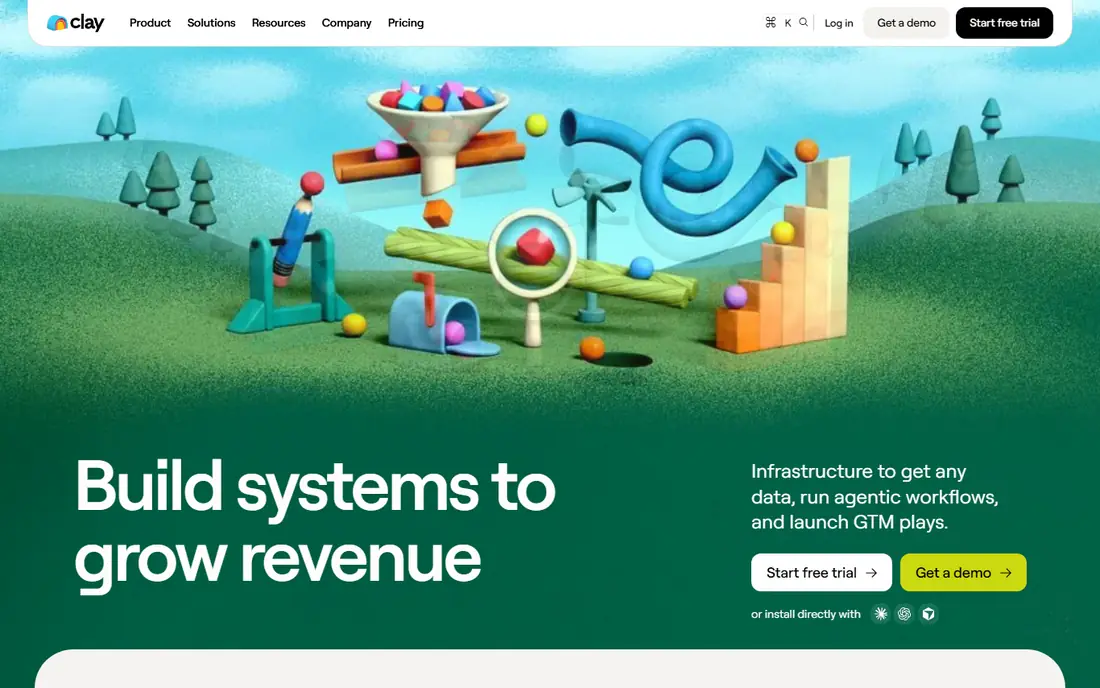
Clay is less of a ready-made SDR and more of a workbench for building one. You pull contacts into a table, enrich them from several providers, score them against your ideal customer profile and push the best records into outreach. That flexibility is the point. A team with a sharp list and a tested message can build a repeatable system that improves over time, rather than buying a black box and hoping the output is good.
The trade-off is effort. Clay will not write your strategy for you, and a messy workflow will produce messy outreach at scale. It also works best when someone on the team owns data quality and checks results each week. If you want a tool that runs itself from day one, look at the autonomous options below. If you want control over every step, Clay is hard to beat.
- Connects to many data providers in one workflow
- Flexible tables for scoring, routing and personalization
- Strong fit for teams with a defined process
- Needs setup time and clear data rules
- Can get costly as enrichment volume grows
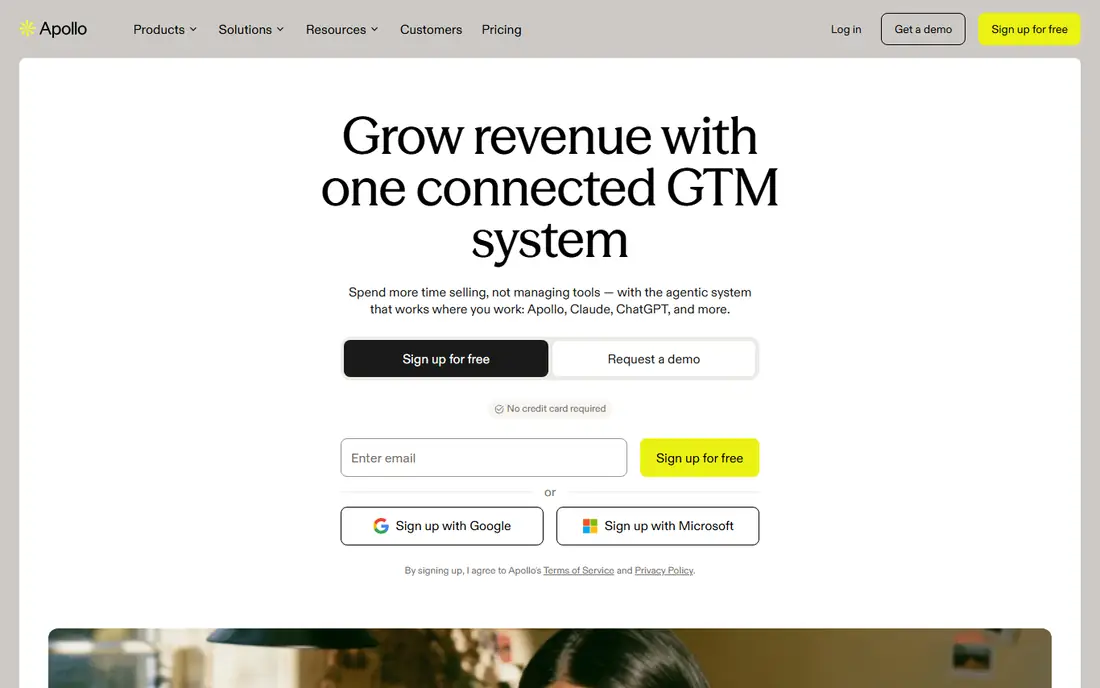
Apollo.io is our pick for most people starting out, because it covers the basics in one subscription. You can search for contacts, build a list, run sequences and track replies without stitching together four tools. The free plan is genuinely useful for testing whether cold outreach fits your business at all, which is a better first step than signing an annual deal with a specialist vendor.
The catch is the same as with any large database: not every record will be fresh, and niche markets may have thinner coverage. Plan to verify key contacts before a big campaign, and treat the first weeks as a test. Apollo rewards teams that run small, clean campaigns and learn from replies, rather than teams that blast the largest list they can export.
- Large contact database with filters
- Built-in sequences for email and calls
- Free plan lets small teams start without a contract
- Data accuracy varies by industry and region
- Advanced features sit on higher plans
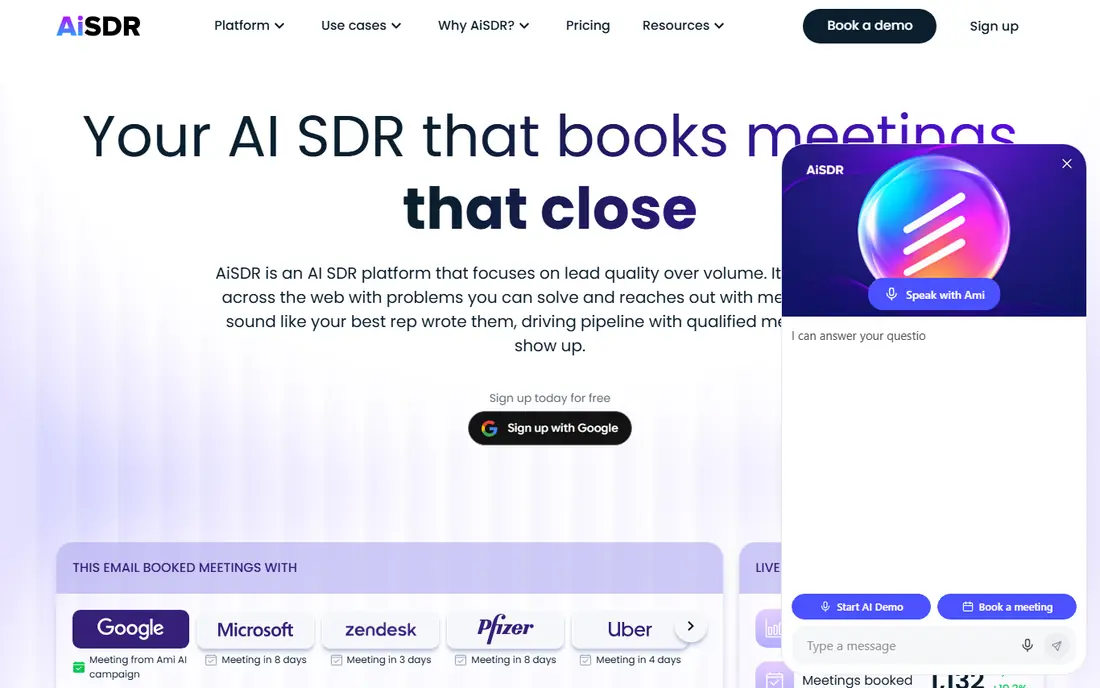
AiSDR takes a different pricing approach from most rivals, and that is its main appeal. You pay per person contacted, which makes the cost easy to compare with the meetings you actually get. The platform builds campaigns from your website and target criteria, finds prospects using live signals such as hiring and funding news, and handles replies and meeting booking. For a small team, that end-to-end scope matters, because it removes several separate subscriptions.
The limit is fit. AiSDR works best when you already know who you serve and what you sell, since the system still needs a good brief to write good outreach. Teams that are still working out their market may find the output generic, and there is no free plan to lean on for a long experiment. Start with a small batch, read the replies yourself and tighten the targeting before you scale.
- Clear per-person pricing with no seat charge
- Runs research, outreach, reply handling and booking in one flow
- Email and LinkedIn outreach with deliverability setup included
- No free plan for a long trial
- Best for teams with a clear offer and target market
11x is built for companies that want a digital worker rather than another tool for reps to operate. Its outbound agent, Alice, handles prospecting, personalized outreach and meeting booking, while a separate inbound agent can qualify website and chat leads. The Growth plan starts at $36,000 per year according to the vendor FAQ, which makes the cost easy to model against hiring, even if it rules out most small businesses.
That price also sets the bar for supervision. An autonomous agent will send a lot of messages in your name, so approval rules, suppression lists and regular message reviews are not optional extras. We would only consider 11x if you have a proven offer, a large addressable market and someone senior who can own the pilot. For everyone else, a cheaper, more hands-on tool is the safer first step.
- Alice runs outbound prospecting and booking with little daily input
- Bundles contact data, deliverability setup and CRM sync
- Annual pricing is published for the Growth plan
- High annual commitment for small teams
- Needs strong oversight of messaging and brand tone
Artisan sells Ava as an AI BDR that owns outbound from list building to booked meetings. You set the ideal customer profile and messaging preferences, and Ava researches prospects, writes sequences and handles replies, with controls that let you dial autonomy up or down. The built-in database is a real advantage, since it means you do not need a separate data vendor to get started.
The honest catch is the buying process. Pricing is custom, so you will need a sales conversation to get a firm number, and that makes it harder to compare with pay-as-you-go rivals. Artisan fits teams that have outgrown a basic sequencer and want more of the SDR job automated, but still want a human in the loop for the first campaigns. Run a tight pilot with clear meeting quality standards before you expand.
- Ava runs list building, outreach and booking end to end
- Built-in contact database reduces extra data subscriptions
- Adjustable autonomy so teams can approve more at first
- Pricing is custom and sales-led
- Email and LinkedIn are the main channels
Regie.ai stands out in this list because calling is a first-class channel, not an afterthought. Its AI agents research and prioritize prospects, draft outreach and support reps with a parallel dialer that can reach several numbers at once. For teams that still win deals on the phone, that combination can matter more than another email personalization feature.
The downside is cost structure. Regie is priced for larger teams, and add-ons such as dialer capacity and data packages can push the total well above the headline plan price. Ask for the full annual total, including seats, dialer and data, before you compare it with a simpler tool. It suits mid-market and enterprise teams with a phone-heavy motion, rather than a founder sending a first batch of cold emails.
- AI agents for prospecting plus a parallel dialer
- Signal-based prioritization from many sources
- Works with common CRMs and sales engagement tools
- Enterprise pricing with seat minimums on some plans
- Total cost rises quickly with add-ons
Outreach is not a pure AI SDR, and that is exactly why many larger teams pick it. It is a sales engagement platform where human reps run structured sequences across email, calls and social touches, with AI features that help write messages, surface the next best action and summarize activity. If you already have SDRs and want them to be more consistent, Outreach gives managers visibility and control that a fully autonomous tool does not.
The trade-off is scope and price. Smaller teams may find the setup heavy and the contract larger than they need, and the AI features support reps rather than replacing them. Choose Outreach when you have a team to manage, a CRM you want tightly connected and a need for reporting across the whole pipeline. Choose an autonomous tool instead if you have no SDR team at all.
- Mature sequencing, analytics and coaching features
- AI help for writing, prioritizing and summarizing
- Deep CRM integrations for larger revenue teams
- Priced and built for larger teams
- Needs admin time to set up well
Salesloft plays a similar role to Outreach, with an emphasis on disciplined cadences and coaching. Reps work through steps across email, phone and social, managers can review conversations, and AI features help with drafting and prioritization. For a growing sales team that needs everyone following the same playbook, that structure is a genuine advantage over a patchwork of point tools.
As with Outreach, the cost and setup fit larger teams better than solo founders. You will talk to sales for pricing, and you will need someone to own cadence design and reporting. Salesloft makes sense when consistency and coaching matter as much as volume. If you only need a few hundred personalized emails a month, a lighter tool will do the same job for less money and less admin.
- Well-tested cadence and coaching workflows
- Conversation intelligence for calls and meetings
- Strong integrations with major CRMs
- Custom pricing through sales
- Can be more platform than a small team needs
How we picked these
We compared official product pages, pricing pages and public documentation for tools that are live and actively sold in 2026. We favored tools that clearly fit the AI SDR category, meaning they use AI for prospecting, personalization or reply handling, rather than tools that only store contacts or only send bulk email. We also mixed price points, from a free starting tier to enterprise annual contracts, so readers at different stages can find a realistic option.
We did not claim hands-on testing, and we did not invent performance figures. Where a vendor did not publish a price, we wrote See website rather than guessing. Prices and plans change, so check the vendor pricing page before you buy, and ask for the full annual total when a plan has seat minimums or add-ons.
What to check before you buy an AI SDR tool
A good demo can hide a weak fit, so run your own checks before signing. Start with data and deliverability, then move to controls and cost.
Check data quality on your own market
Ask for a sample list in your exact niche and check a small batch by hand. Look for correct job titles, working emails and companies that match your ideal customer profile. A tool that shines on a broad tech list may struggle in a narrow vertical, and you will only learn that by testing your own accounts.
Set approval rules before you scale
Decide who reviews messages, which accounts are off limits and what happens when a prospect replies with a question or a complaint. Fully autonomous tools need tighter rules than drafting tools, because they send more messages with less human review. A short pilot with daily message checks will teach you more than a long feature comparison.
Compare the full annual cost
Add seats, data, dialer capacity, onboarding and any per-contact charges into one annual figure. A low monthly headline can hide a seat minimum, while a high annual price can look fair once it replaces two or three other subscriptions. Also check contract length, renewal terms and how easy it is to pause or reduce volume.
Frequently asked questions
Which AI SDR software is the best?
There is no single best choice, because the right tool depends on team size, budget and how much autonomy you want. Apollo.io is a strong starting point for small teams, AiSDR suits teams that want clear per-contact pricing, and 11x or Artisan fit larger teams that want a fuller autonomous motion. Pick the tool that matches your current motion, not the one with the longest feature list.
What is the best AI SDR platform for a small team?
A small team usually does best with Apollo.io or AiSDR. Apollo gives you a database and sequencing in one place with a free starting tier, while AiSDR runs the full outbound flow for a per-person price. Both let you test outreach without a large annual commitment, which matters when you are still proving your offer.
Are AI SDR tools worth it for outbound?
They can be, if you already have a clear target market and a message that gets replies. AI tools save time on research, list building and follow-up, but they cannot fix a weak offer or a bad list. Run a small pilot, measure reply quality and meeting quality rather than send volume, and only scale when the meetings are worth the cost.
Do AI SDR tools replace human SDRs?
In most teams they change the SDR job rather than remove it. AI handles research, first outreach and follow-up, while humans handle discovery calls, tricky objections and relationships. Fully autonomous tools go further, but they still need human oversight for messaging, targeting and quality control, especially in the first months.
What is the best AI SDR software for email and LinkedIn outreach?
Artisan and AiSDR both cover email and LinkedIn in one flow, with reply handling and booking built in. Clay and Apollo can also support that motion, but they need more manual setup or a separate sending setup. If LinkedIn is a core channel, check account safety rules, daily limits and approval controls before you commit.
Sources we checked (8)

Online Jobs is an independent blog about careers, online work, learning new skills and the tools that help people earn. More about us.
Keep reading
All posts
ZoomInfo Alternatives
The best ZoomInfo alternatives in 2026, compared on price, free plans, data coverage, and which tool fits small teams or large sales teams best in detail.
Workday Alternatives
We compared the best workday alternatives for HR, payroll, and global hiring, from BambooHR and Gusto to Rippling, Deel, and HiBob for growing teams in 2026.
Which SaaS Tools Have the Best Customer Support
Which SaaS tools have the best customer support? Compare eight popular tools on help centres, live help, response options and overall support quality.