Best AI Rank Tracker Software in 2026: 9 Products Compared


Teams that already track ranks in Semrush · Starting price: $99 per month
How we put this together: we compare official feature and pricing pages, app store listings, privacy policies and public user reviews. Prices change, so check the provider's site before you pay.
Key takeaways
- Semrush, SE Ranking and Ahrefs suit teams that want AI tracking beside classic rank data, rather than a separate AI only tool.
- Otterly.AI and Rankscale are the cheapest ways to track AI answers daily, with entry prices of $29 and $20 per month.
- Peec AI gives the cleanest daily AI rank view for mid-size teams, with sentiment and competitor share of voice included.
- Nightwatch is worth a look when local rank precision matters as much as AI mentions, but its euro pricing needs checking at checkout.
- AccuRanker remains a premium classic rank tracker first, with AI signals as a supporting layer, not the main product.
Quick comparison
| Name | Who it suits | Starting price | Free option | |
|---|---|---|---|---|
| Semrush AI Visibility Toolkit | Teams that already track ranks in Semrush | $99 per month | No | Visit |
 Ahrefs Brand Radar | AI share of voice and market ranks | $199 per month | No | Visit |
 SE Ranking | Agencies that want ranks and AI data together | $129 per month | Free trial (14 days) | Visit |
 Peec AI | Clean daily AI rank reporting | $95 per month | Free trial (7 days) | Visit |
 Otterly.AI | Small teams starting AI rank tracking | $29 per month | Free trial (7 days) | Visit |
 Rankscale | Tracking AI ranks across many engines cheaply | $20 per month | Free trial (7 days) | Visit |
 ZipTie | Seeing AI citations next to organic ranks | $69 per month | Free trial (14 days) | Visit |
 Nightwatch | Local rank precision plus AI mentions | See website | Free trial (14 days) | Visit |
 AccuRanker | Agencies tracking thousands of classic keywords | $249 per month | No | Visit |
The best AI rank tracker software
A classic rank tracker tells you where a page sits in a list of links. An AI rank tracker adds a second view: does ChatGPT, Perplexity, Google AI Overviews or Google AI Mode mention your brand, cite your pages, or recommend a competitor instead. The tools below do at least one of those jobs well, and we flag where AI tracking is the core product and where it is an add-on to classic rank tracking.
Semrush AI Visibility Toolkit
Who it suits: Teams that already track ranks in Semrush
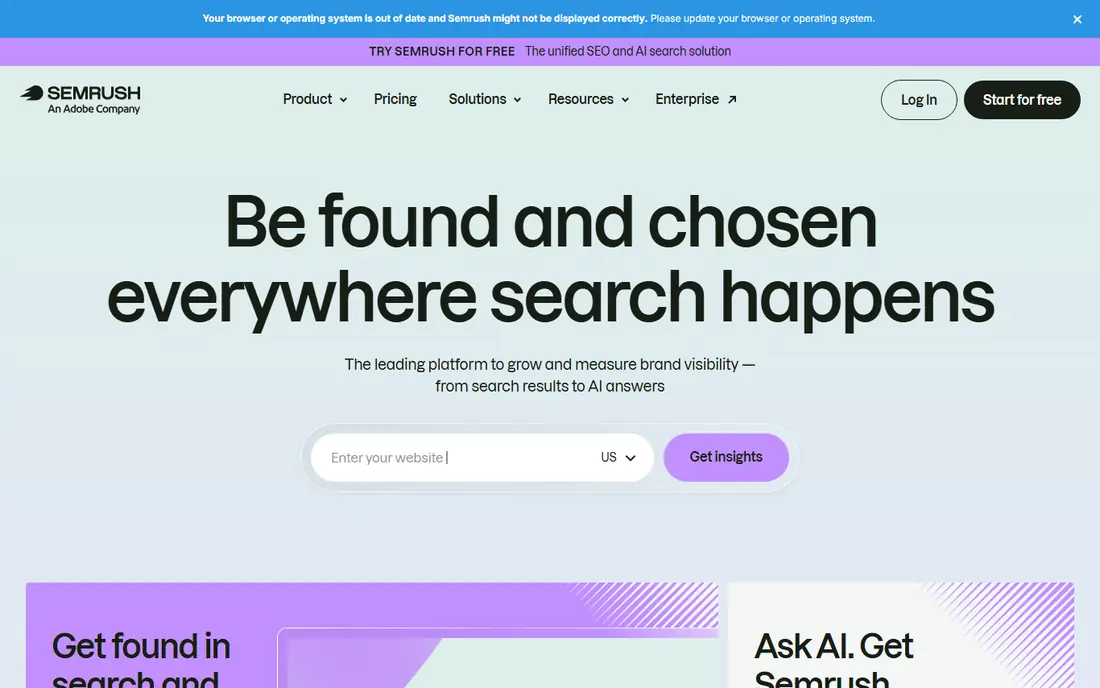
Semrush is a natural first stop if you already use Position Tracking for classic ranks. The AI Visibility Toolkit costs $99 per month per domain, with 25 prompts tracked daily, prompt research, competitor views, sentiment and an AI audit of 100 pages. Prompt tracking names ChatGPT and Google AI Mode, while brand reports cover additional surfaces including Perplexity, Gemini and AI Overviews.
The limit is prompt volume. Twenty-five prompts will not cover a large site, and each extra domain adds $99 per month. There is also no free trial for the standalone toolkit. Semrush suits one login reporting, and suits an agency with hundreds of AI prompts less well.
- AI Visibility Score
- Prompt research
- AI site audit
- Classic rank data in the same login
- Only 25 prompts standalone
- No free trial
- Per domain pricing
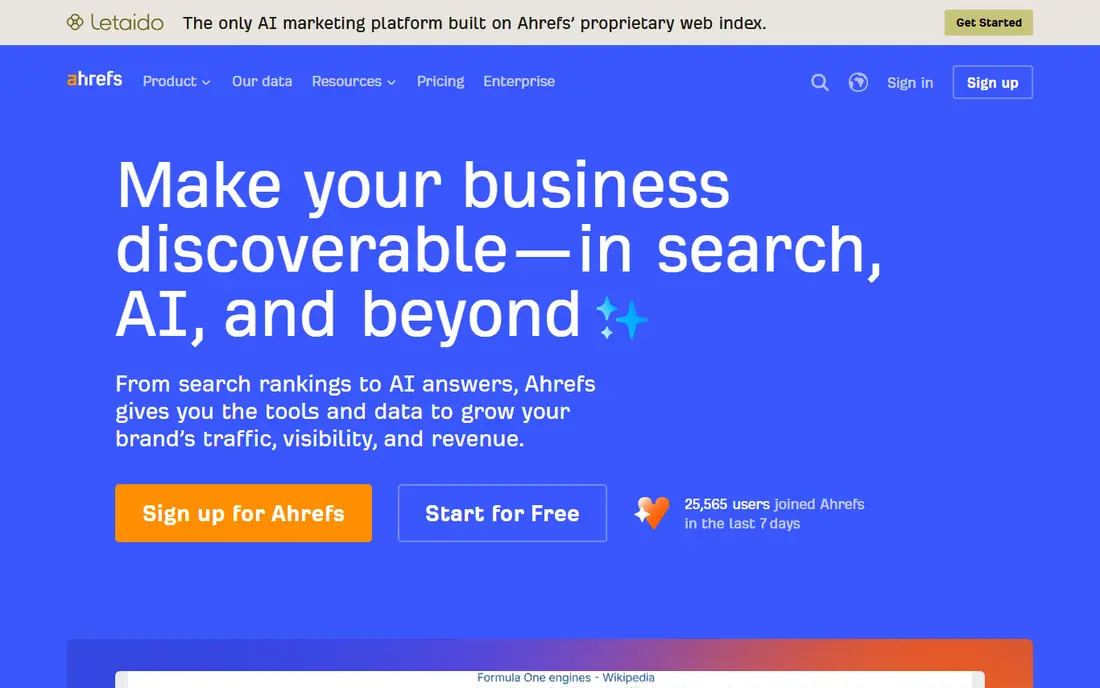
Ahrefs Brand Radar is less a daily rank tracker and more a research tool for AI share of voice. It uses prompts built from real search data, then shows mentions, citations, impressions weighted by search volume, and share of voice across Google AI Overviews, Google AI Mode, ChatGPT, Perplexity, Copilot and Gemini. Historical data back to 2025 helps a team show a trend, not just a snapshot.
Pricing is per AI index, starting at $199 per month for one index and $699 per month for all six. Custom prompts start at $50 per month for 2,500 checks, and different engines can use checks at different rates. Ahrefs also includes basic AI Overview detection in Rank Tracker on base plans, which is enough for a light check. Buy Brand Radar for market benchmarking, and a dedicated tracker for daily updates of your own prompts.
- Large prompt database
- Mention, citation and impression views
- Backlink context
- Priced per AI index
- Full set costs $699 per month
- Custom prompt checks cost extra
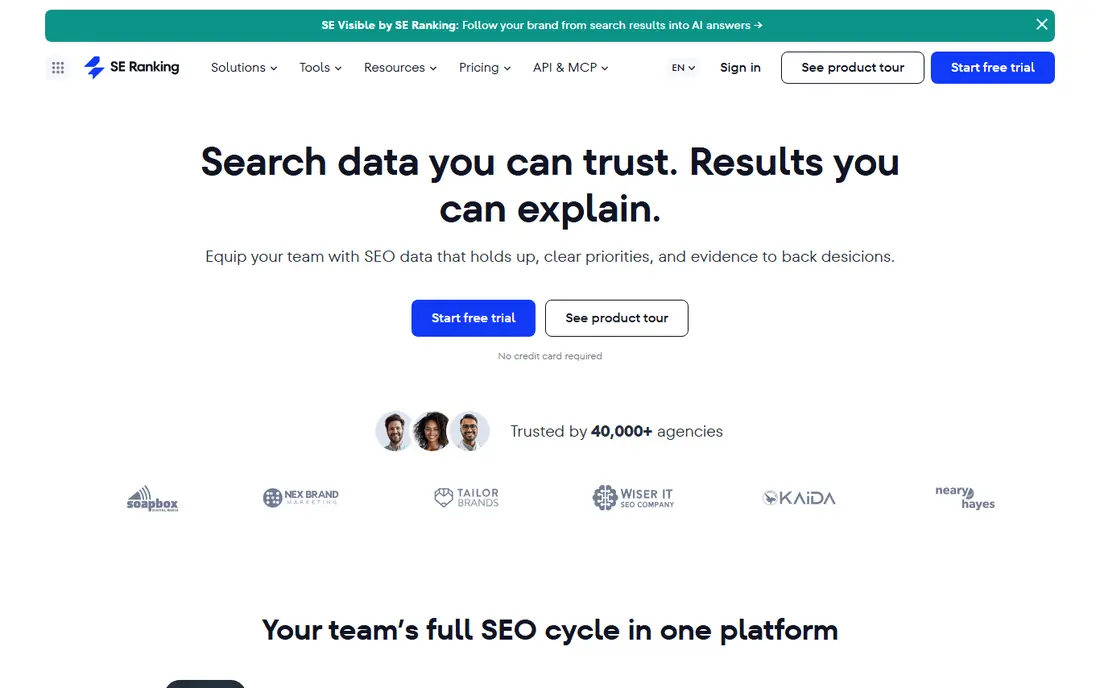
SE Ranking combines classic rank tracking with AI visibility in one subscription. Core costs $129 per month, or $103.20 per month billed annually, with 2,000 keywords tracked daily, 10 projects, site audits and backlink tools. The AI layer includes 100 AI prompts tracked daily on Core, with coverage for Google AI Overviews, Google AI Mode, ChatGPT, Perplexity and Gemini in its AI Results Tracker and SE Visible views.
A large AI prompt list will need Growth at $279 per month, or the AI Search add-on. The dashboard is also busy at first, because it holds research, audits, reporting and AI tools in one place. For an agency that already delivers SE Ranking reports, adding AI ranks to the same report is a clear win.
- Daily rank tracking
- AI Results Tracker
- Audits, backlinks and white label reports
- AI prompt limits are modest on Core
- Interface can feel dense
Peec AI is built to answer one question each morning: where did we rank in AI answers yesterday, and who ranked instead. Starter at $95 per month covers 50 prompts, three engines of your choice, unlimited users and daily tracking. You can see brand visibility, rank position, sentiment and cited sources, plus competitor share of voice, without building a custom dashboard.
The trade-off is scope on the entry plan. Three engines and one project suit a single brand with a focused market, but an agency with many clients will need Pro at $245 per month or Advanced at $495 per month. Extra engines also add cost. Peec AI fits a marketing team that wants a readable daily AI rank report and will handle content fixes itself, rather than a team that needs a full SEO suite in the same tool.
- Daily tracking
- Sentiment scoring
- Unlimited users
- Source gap analysis
- Starter covers three engines and one project
- Extra engines cost more
Otterly.AI is the cheapest way to start tracking AI ranks every day. Lite at $29 per month covers 15 prompts across ChatGPT, Google AI Overviews, Perplexity and Copilot, with a GEO audit and exports. Standard at $189 per month raises the limit to 100 prompts and adds API, MCP access and Looker Studio reporting, while Premium at $489 per month covers 400 prompts.
Fifteen prompts is a narrow sample, so most growing teams will outgrow Lite quickly. The jump to Standard is also steep, and AI Mode, Gemini and Claude cost extra on every plan, starting at $9 per month each on Lite for AI Mode and Gemini. Even with those limits, Otterly.AI is a sensible first AI rank tracker, because it proves whether AI answers matter for your brand before you spend several hundred dollars a month.
- Lowest entry price in this guide
- Unlimited team members
- Daily tracking
- Exports included
- Lite covers only 15 prompts
- AI Mode, Gemini and Claude are add-ons
Rankscale takes a credit based approach to AI rank tracking, which gives a small team wide coverage for $20 per month. Essentials includes 120 credits, about 480 AI responses on cheaper engines, and two brand dashboards. Pro at $99 per month includes 1,200 credits and 10 dashboards, with Looker Studio integration. Coverage includes ChatGPT, Gemini, Perplexity, Claude, DeepSeek, Mistral, Grok, Copilot and Google AI surfaces, with scheduling from hourly to monthly.
The catch is that credit cost varies by engine, so the same prompt list can cost more when you add Claude or other expensive models. Essentials also has no credit rollover, and API access sits on Enterprise and Agency Growth. Rankscale suits a team that wants to compare AI ranks across many engines on a budget, and that has someone willing to watch credit use each month.
- 17 or more engines
- Credit flexibility
- Sentiment and query fan-out views
- Credit maths takes time to learn
- No rollover on Essentials
- API on higher tiers
ZipTie focuses on the Google side of AI search, with AI Overviews, ChatGPT and Perplexity on its original platform, and AI Mode and other engines on its newer platform. Its AI Success Score combines mention frequency, citation presence, placement and sentiment, while citation share shows how often your brand is cited compared with competitors. Page level suggestions then point to the content changes most likely to earn a citation.
Pricing needs care. Older reviews list Basic at $69 per month for 500 checks, Standard at $99 and Pro at $159, but the current platform uses usage based pricing, so your total depends on prompt volume and engine mix. The 14-day trial helps you test real queries before you commit. ZipTie fits a content team that wants citation detail for Google surfaces, rather than a team that needs the widest engine list at a fixed price.
- AI Success Score
- Citation share
- Page level optimisation suggestions
- Real browser capture
- Older fixed plans are out of date
- Current pricing is usage based
- Single seat limits on older plans
Nightwatch is a classic rank tracker first, with AI visibility added to the same dashboard. It tracks daily ranks across Google, Bing, YouTube, DuckDuckGo and Yahoo, with location targeting down to local areas, and it adds brand mentions in ChatGPT, Claude, Gemini and Perplexity, with citation level sentiment on higher plans. That mix suits a local business or an agency with many locations, where a city level rank still drives calls and visits.
Pricing is the reason we list See website. Older listings show Starter at $32 per month, while current listings show €79 per month billed annually, or about €99 month to month, for 500 keywords and 50 AI prompts. Currency and plan structure have changed, so check the live pricing page before you budget. Nightwatch fits a team that already values its rank reports and wants a light AI layer, not a team that needs deep AI answer analysis.
- Strong local tracking
- AI mentions beside classic ranks
- Clean client dashboards
- Euro pricing in current listings
- AI engine coverage is narrower than dedicated tools
AccuRanker is included here as a classic rank tracker with AI related signals, not as a pure AI answer tracker. Professional starts at $249 per month for 2,000 keywords, or $224 per month billed annually, with daily updates, on-demand refreshes, competitor tracking and share of voice reports. Expert adds AI CTR, AI Search Volume, dynamic tagging and API access, while Enterprise adds BigQuery and raw SERP data.
The honest limit is scope. AccuRanker does not replace a dedicated AI visibility tool for prompt level ChatGPT or Perplexity answers, citation text and sentiment across many engines. It does give a team with a large keyword portfolio fast, trusted classic rank data, with AI signals to support reporting. Buy it when classic ranks are the deliverable. Pair it with Otterly.AI, Peec AI or Rankscale when AI answers need their own daily report.
- Fast daily rank updates
- On-demand refreshes
- Unlimited users
- Share of voice reports
- High entry price
- AI features are supporting, not core
- API sits on Expert
How we picked these
We started with vendor pricing pages, feature pages and help centres, then checked independent reviews published in 2026 for prompt limits, engine coverage and trial terms. We kept tools that track either classic ranks with a clear AI layer, or AI answers with rank style reporting, and we removed tools that only mention AI in marketing copy without a working AI tracking feature. We also mixed suites and dedicated trackers, because a small business and an agency with 5,000 keywords need different tools.
Prices are starting prices, and annual billing can lower the monthly figure. Vendors price by keywords, prompts, checks or credits, so compare the total for your real workload, not just the headline price.
How to use AI ranks without misreading them
AI answers are not stable like classic ranks. The same prompt can return a different brand, a different citation, or a different tone on different days, even when your pages have not changed. Treat a single day as noise, and look for patterns over two to four weeks. Compare share of voice, citation share and sentiment together, rather than chasing one mention.
Also keep classic ranks and AI ranks in separate columns in your report. A page can hold a top three classic rank and still be absent from AI answers, and a page can be cited in AI answers without ranking first. When both move together, you have a strong signal. When they diverge, check the page itself: is it clear, direct, crawlable, and does it answer the exact question the prompt asks.
A practical reporting setup
Pick 25 to 50 AI prompts and a classic keyword list that covers the same topics, then run both for a month. Record AI mentions, cited URLs and competitor mentions each week, plus classic positions and search console clicks. At month end, list prompts where competitors are cited and you are not, and match each one to a page you can improve.
Frequently asked questions
What is the best free AI rank tracker tool?
There is no strong permanent free AI rank tracker in this guide. AthenaHQ, covered in our general AI visibility guide, offers a free tier, while Ahrefs offers a free AI visibility checker for a one-off test. For ongoing daily tracking, Otterly.AI at $29 per month and Rankscale at $20 per month are the lowest cost paid routes.
How is an AI rank tracker different from a classic rank tracker?
A classic tracker reports a numbered position for a keyword. An AI tracker reports whether an AI answer mentions your brand, cites your pages, or recommends a competitor, often without a numbered position.
Which engines should an AI rank tracker cover?
At minimum, cover ChatGPT, Perplexity, Google AI Overviews and Google AI Mode, because those surfaces shape many buying and research questions. Add Gemini, Claude and Copilot when your buyers use them, or when your category shows different answers on those engines. Do not pay for engines you will not read in reports.
Do AI rank trackers replace Google Search Console?
No. Search Console shows real impressions, clicks and average positions from Google Search, while an AI tracker shows sampled AI answers for prompts you choose. Use Search Console for real searches and clicks, and an AI tracker for AI answers to similar questions.
How many keywords and prompts should I track?
Start with your top 200 to 500 classic keywords if you use a suite, and 25 to 50 AI prompts that mirror buyer questions. That range fits most entry tiers and gives enough data to spot patterns. Add keywords and prompts only when you have acted on the first set, or when you add a product, service or location.
Why do AI ranks change so much from day to day?
AI models, cited sources and prompt wording all affect the answer, and small changes can shift which brands appear. Model updates, news stories, new competitor pages and changes to your own pages can all move results. That is why weekly trends and citation patterns matter more than a single daily score, and why you should record full answer text when a big change appears.
Sources we checked (9)

Online Jobs is an independent blog about careers, online work, learning new skills and the tools that help people earn. More about us.
Keep reading
All posts
Workday Alternatives
We compared the best workday alternatives for HR, payroll, and global hiring, from BambooHR and Gusto to Rippling, Deel, and HiBob for growing teams in 2026.
Which SaaS Tools Have the Best Customer Support
Which SaaS tools have the best customer support? Compare eight popular tools on help centres, live help, response options and overall support quality.
Top AI Helpdesk Software
Searching for top AI helpdesk software in 2026? We compared 8 AI helpdesks on automation, pricing, channels and ease of setup for small and growing teams.