Best AI Overviews Checking Tools in 2026: 8 Tools Compared

How we put this together: we compare official feature and pricing pages, app store listings, privacy policies and public user reviews. Prices change, so check the provider's site before you pay.
Key takeaways
- ZipTie and Otterly.AI suit small teams that want dedicated AI Overview checks without buying a full SEO suite.
- SE Ranking and Semrush suit teams that already track rankings, since Overview data sits next to classic keyword data.
- Peec AI and Profound suit larger teams that track several AI surfaces, not just Google AI Overviews.
- Google Search Console is free and useful, but it does not show which queries triggered an Overview or which sites were cited.
Quick comparison
| Name | Who it suits | Starting price | Free option | |
|---|---|---|---|---|
 ZipTie | Dedicated Overview checks | $42.75 per month | No | Visit |
 Otterly.AI | Budget AI search tracking | $29 per month | No | Visit |
 SE Ranking | Rankings plus Overview data | See website | No | Visit |
 Semrush | Full SEO suite with Overview data | $139 per month | No | Visit |
 Peec AI | Daily prompt and citation tracking | See website | No | Visit |
 Profound | Enterprise AI visibility | See website | No | Visit |
 Ahrefs Brand Radar | Research tied to search data | See website | No | Visit |
 Google Search Console | Free outcome measurement | Free | Yes | Visit |
The best AI Overviews checking tools
Google AI Overviews appear above classic results for many queries, and they change which sites get clicks. A checking tool should record, for each query, whether an Overview appeared, which URLs it cited, and whether your brand or a competitor was included. We compared official feature pages, pricing pages, app store listings and public reviews to build this list.
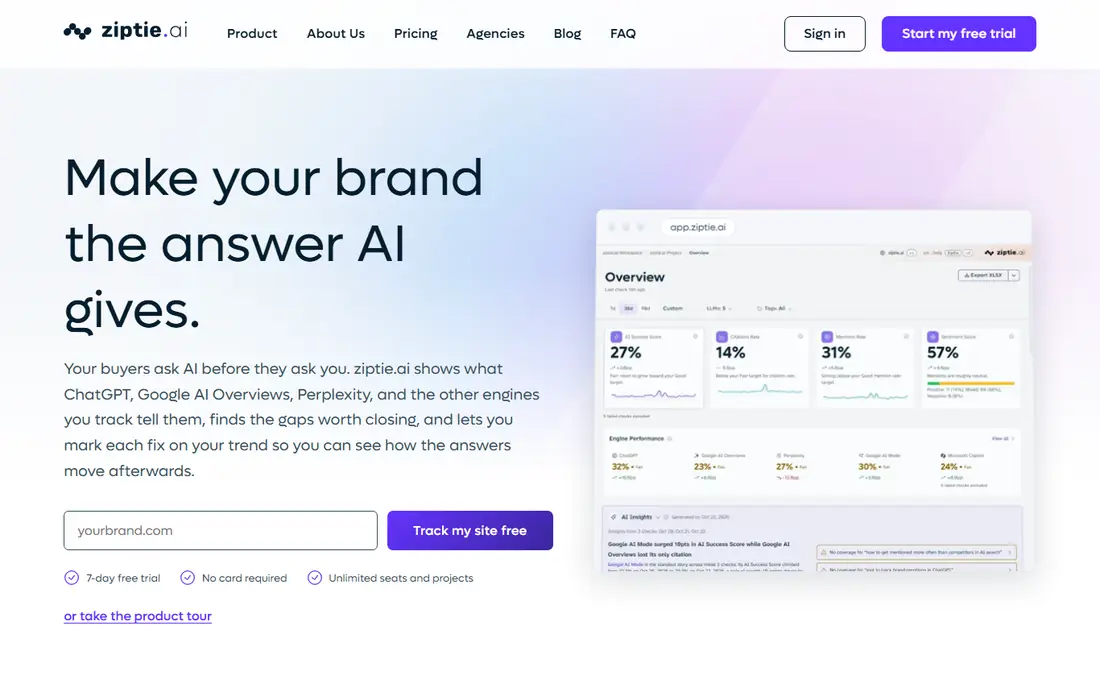
ZipTie is built for this job rather than adapted to it. Each check records the AI Overview answer together with the top organic results, so you can see whether your page was cited, ranked, both or neither. That pairing matters, because a page can hold a classic ranking and still lose the click to an Overview that cites a competitor.
The platform tracks brands across up to seven AI search engines, depending on country and plan, and lets you choose how often checks run. Pricing is usage-based, starting from around $42.75 per month for a smaller prompt set, so small teams can start narrowly and expand. If AI Overviews are your main question, ZipTie is the most focused answer here.
- Captures the Overview plus top organic results
- Daily to monthly check frequency
- Covers several AI engines
- Smaller feature set outside AI tracking
- Pricing depends on prompt and engine count
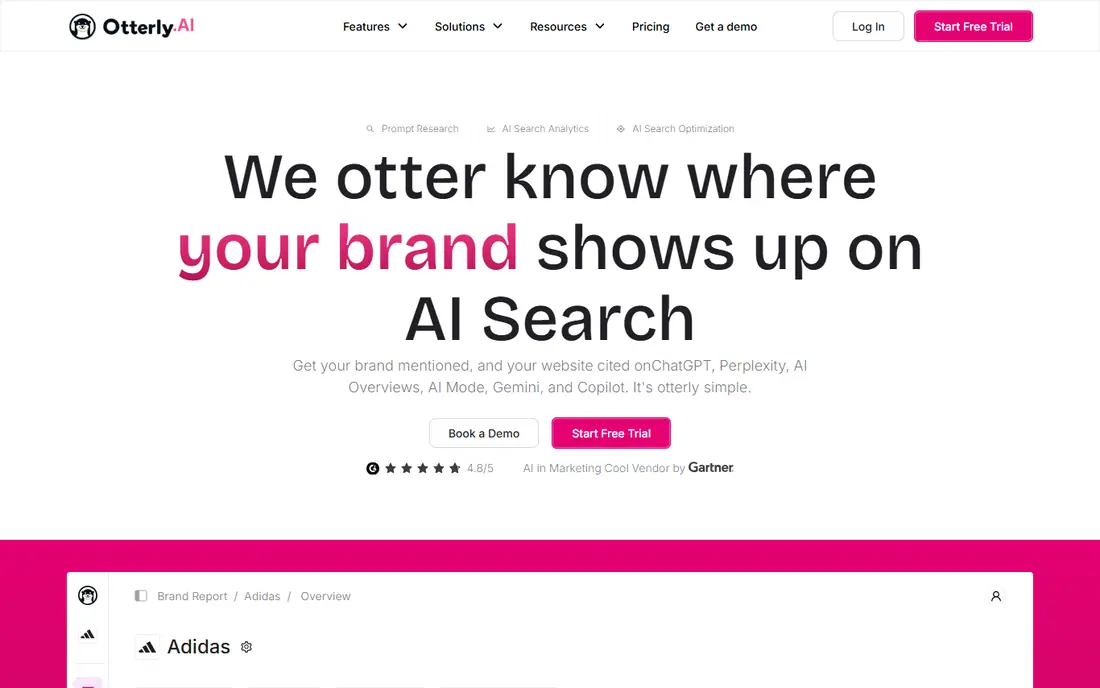
Otterly.AI is the budget entry point for AI search tracking. Its Lite plan, priced at $29 per month, covers 15 prompts across ChatGPT, Google AI Overviews, Perplexity and Copilot, with daily tracking and unlimited team members. That prompt count is small, but it is enough to watch a core set of money queries or brand queries.
Higher plans add more prompts and engines, including Claude, Gemini and Google AI Mode as add-ons or higher tiers. Otterly.AI also adds content audits and briefs that aim to turn a visibility gap into a page fix. If your budget is tight and your query list is short, start here and expand the prompt set as the case for AI tracking grows.
- Lowest entry price on this list
- Daily tracking on every plan
- Covers AI Overviews, ChatGPT, Perplexity and Copilot
- Small prompt allowance on the entry plan
- Add-ons needed for some engines
SE Ranking suits teams that already track keyword rankings and want Overview data in the same dashboard. Its AI search tools, sold under the SE Visible name, record Overview presence, citation overlap and competitor presence, alongside ChatGPT, Gemini and AI Mode coverage. Daily checks are the default, with adjustable frequency on some plans.
The catch is packaging. AI tracking may sit in an add-on or a higher tier rather than the base SEO plan, so confirm what your plan includes before budgeting. For agencies and in-house teams that already use SE Ranking, adding Overview checks there avoids a second subscription and keeps ranking and AI data in one report.
- AI Overview and AI Mode tracking next to rank tracking
- Daily checks
- Agency-friendly projects
- AI features may need an add-on
- Entry SEO plans are broader than AI tracking alone
Semrush adds AI Overview tracking to its Position Tracking tool, counting an Overview citation alongside classic rankings and SERP features. For teams already paying for Semrush, that integration is convenient: the same keyword list that drives ranking reports now shows Overview presence too. The separate AI Visibility Toolkit, priced per domain, adds deeper AI search reporting for teams that need it.
The entry Pro plan starts at $139 per month, which is hard to justify for Overview checks alone. Semrush earns its place for teams that also need keyword research, site audits, backlink data and competitor analysis. If you only need Overview checks, a dedicated tool such as ZipTie or Otterly.AI costs less.
- Overview data inside Position Tracking
- Huge keyword and backlink databases
- AI Visibility Toolkit as a dedicated add-on
- Entry price is high for AI tracking alone
- Toolkit pricing is per domain
Peec AI tracks how AI models answer your prompts, including which sources they cite and how sentiment around your brand reads. Its Starter plan covers 50 prompts daily across three models of your choice, with unlimited users, which suits small SEO teams that share reporting. Higher plans add more prompts, models and competitor tracking.
Pricing is the awkward part. Peec AI has published prices in euros in the past, around 85 euros per month for Starter, but its current public pricing is limited, so we list it as See website rather than quoting a figure that may have changed. Request a current quote and confirm prompt count, model choice and check frequency before comparing it against Otterly.AI or ZipTie.
- Daily prompt checks with source tracking
- Sentiment and position metrics
- Unlimited users on paid plans
- Public pricing is limited
- Entry tier covers a limited prompt set
Profound is the enterprise end of this category. Its trial runs 50 prompts a day for seven days across ChatGPT, Gemini and Google AI Overviews, which is enough to test the data quality. Enterprise plans expand coverage to up to nine answer engines, with deeper analytics, crawler data and agency workspaces on agency plans.
The trade-off is cost and complexity. There is no self-serve brand plan with a public price, so small teams will find the sales process slow compared with Otterly.AI or ZipTie. Profound fits large brands and agencies that need broad engine coverage, historical data and reporting at scale, and can support an enterprise budget.
- Broad engine coverage on Enterprise plans
- Free trial for testing
- Answer-engine insights and prompt volume data
- Enterprise pricing is quote-only
- Overkill for small teams
Ahrefs Brand Radar takes a different approach from live prompt trackers: it draws on large indexes of AI Overview prompts and keywords, alongside its search data, to show brand visibility. That makes it strong for research, baselines and spotting which queries trigger Overviews in a market. It also covers AI Mode and other surfaces in its index.
The catch is that Brand Radar is an add-on to an Ahrefs subscription, with prompt-based pricing, so the total cost depends on your base plan. It also updates on an index cycle rather than running your exact prompt list live every day. Use it to research a market and set a baseline, and pair it with a live tracker if you need daily change alerts.
- Large prompt and keyword indexes
- Overview data tied to Ahrefs search data
- Useful for research and baselines
- Priced as an add-on to an Ahrefs plan
- Tracking cadence differs from live prompt tools
Google Search Console is the free baseline every team should use, even if it buys a paid tracker. Its performance reports now include impressions and clicks from AI features, so you can see whether pages that appear in Overviews gain or lose traffic over time. That outcome data is something prompt trackers cannot give you on their own.
The limit is detail. Search Console does not show which queries triggered an Overview, which competitor URLs were cited, or the text of the answer. Treat it as the measurement of results, and a paid tracker as the record of what Google actually showed. Used together, they answer both what happened and why.
- Free
- Shows clicks and impressions for pages that appear in AI features
- No new subscription
- Does not separate Overview data by query or competitor
- No citation list
How we picked these
We compared official feature pages, pricing pages and public reviews for tools that record AI Overview presence, citations and competitor presence, rather than tools that only mention AI in marketing copy. We favoured tools with a clear Overview feature, stated check frequency, and transparent prompt or keyword limits, and we included both dedicated trackers and SEO suites. Where pricing was not public, we wrote See website instead of repeating a third-party estimate.
How to test an AI Overviews tool before you pay
Give every tool the same query list, country, device and date range during a trial. Include brand queries, competitor queries and non-brand money queries, because Overview behaviour differs across them. Then check whether each aggregate metric can be traced back to an observed answer and a citation URL.
What to check in the data
Confirm that the tool saves the full answer, not just a yes or no for Overview presence. Check whether it records the cited URLs, the position of your link, and how the answer changed over days. If a tool only reports a visibility score with no evidence behind it, you cannot act on it or explain it to a client.
How to use the results
Start with queries where an Overview appears but your site is not cited, and check whether a competitor page or a third-party source took the citation. Those gaps point to pages to improve, facts to add, or third-party coverage to earn. Re-check the same queries after changes, and judge the tool by whether it shows movement clearly.
Frequently asked questions
What is the best AI Overviews checking tool?
ZipTie suits teams that want dedicated Overview checks, Otterly.AI suits small budgets, and SE Ranking or Semrush suit teams that already track rankings. Profound and Peec AI suit larger teams tracking several AI surfaces. The best choice depends on your query count, budget and whether you already pay for an SEO suite.
Can Google Search Console track AI Overviews?
Search Console shows clicks and impressions for pages in AI features, but it does not separate Overview data by query or show cited competitor URLs. It is useful for measuring traffic outcomes, but not for recording what an Overview said or cited. Pair it with a dedicated tracker for the full picture.
How often should AI Overviews be checked?
Daily checks suit money queries and competitive markets, because Overviews and citations change often. Weekly or monthly checks suit broader brand monitoring where trends matter more than daily moves. ZipTie lets you choose frequency, while most dedicated tools default to daily checks.
Do these tools also track ChatGPT and AI Mode?
Many do. Otterly.AI, Peec AI, Profound and ZipTie cover several AI engines beyond Google AI Overviews, including ChatGPT, Perplexity, Gemini and Google AI Mode, depending on plan. Check engine coverage at your exact tier, since headline engine lists often include engines that only appear on higher plans.
How many prompts do I need to track?
Start with 15 to 50 prompts covering brand terms, competitor terms and your most valuable non-brand queries. That range fits entry plans from Otterly.AI, Peec AI and ZipTie. Expand only when you have acted on the first set, since a large prompt list that nobody reviews adds cost without insight.
Are AI visibility scores reliable?
Treat visibility scores as directional trends, not exact measurements. AI answers vary by prompt wording, location and time, so two tools can report different scores for the same brand. Judge a tool by whether it saves the underlying answers and citations, so you can verify any score it reports.
Sources we checked (8)

Online Jobs is an independent blog about careers, online work, learning new skills and the tools that help people earn. More about us.
Keep reading
All posts
Best White Label SEO Companies
We compare the best white label SEO companies and tools in 2026 for agencies, from fulfilment services to branded reporting platforms, margins and prices.
Best Webinar Software
We compared the best webinar software for 2026 on price, attendee limits, automation and ease of use, to help you host better live sessions with confidence.
Best Web Scraping Tools
Compare the best web scraping tools in 2026, from no-code Octoparse and Browse AI to Apify, Firecrawl, Bright Data, Zyte, ScraperAPI and free Scrapy, with prices.