Best AI Mode SEO Rank Tracking Software in 2026: 8 Tools Compared

How we put this together: we compare official feature and pricing pages, app store listings, privacy policies and public user reviews. Prices change, so check the provider's site before you pay.
Key takeaways
- Google AI Mode has no classic ranking position, so good tools track mentions, citations, and source URLs instead of a single rank number.
- Peec AI and SE Ranking are the clearest all-round picks for teams that want AI Mode alongside other AI engines.
- Otterly and Rankscale are the most accessible entry points for small teams and solo SEOs.
- Rankshift stands out for citation gap analysis, showing which competitors get cited where you do not.
- Nightwatch and Rankability suit SEO teams that want AI Mode data next to traditional rank tracking.
Quick comparison
| Name | Who it suits | Starting price | Free option | |
|---|---|---|---|---|
 Peec AI | All-round AI Mode tracking | See website | No | Visit |
 Otterly | Low-cost AI Mode entry | See website | No | Visit |
 SE Ranking | All-in-one SEO plus AI tracking | See website | No | Visit |
 Rankshift | Citation gap analysis | See website | No | Visit |
 Rankscale | Budget engine coverage | See website | No | Visit |
 Nightwatch | Precision SEO plus AI Mode | See website | No | Visit |
 Rankability | AI Mode and traditional ranks together | See website | No | Visit |
 Keyword.com | Flexible, accurate rank checks | See website | No | Visit |
The best AI Mode SEO rank tracking software
Google AI Mode is a conversational search experience, not a list of ten blue links, so tracking it needs a different method from classic rank tracking. A good AI Mode tracker records whether your brand is mentioned, which pages are cited as sources, how competitors appear in the same answer, and how those answers change over time. We compared official feature pages, pricing pages, and public reviews, and we focused on AI Mode coverage in the base plan, citation detail, refresh frequency, and price fit.
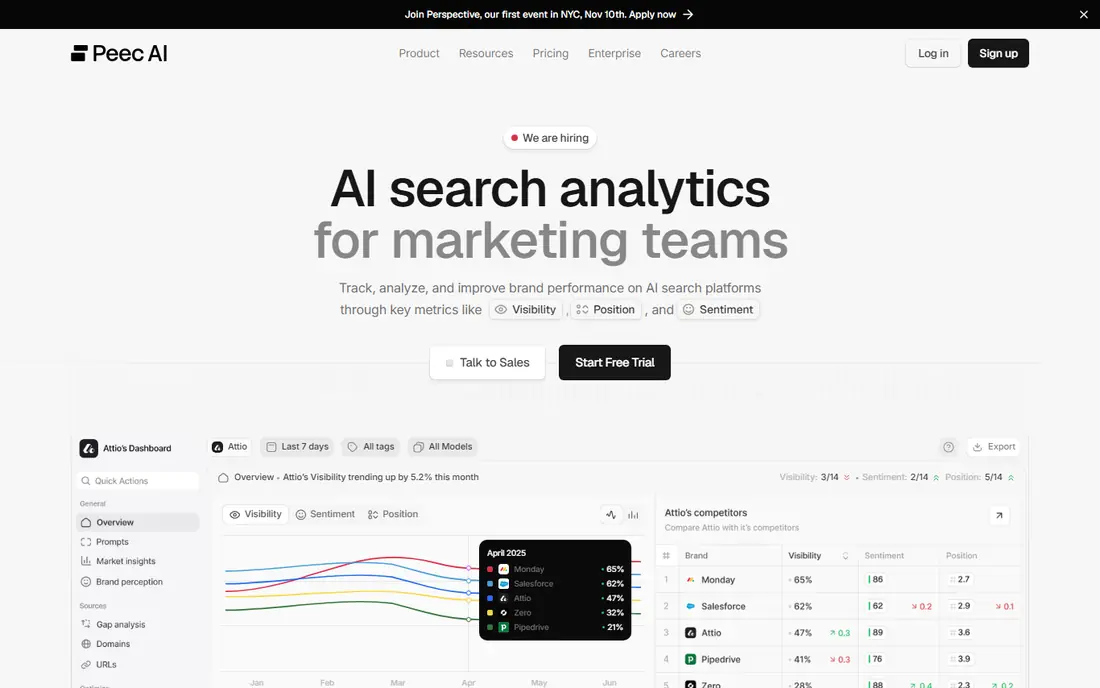
Peec AI is a strong all-round AI Mode tracker because it includes AI Mode in its base plan and refreshes daily, rather than treating it as an enterprise add-on. Its dashboards show inclusion, mentions, citations, and competitor share in a form a non-technical team can read, which matters when you need to explain AI visibility to a client or a manager.
Prompt and engine limits still need checking on your plan, since some engines are paid add-ons, and US buyers should confirm dollar pricing. For a marketing team or agency that wants reliable AI Mode tracking without an enterprise contract, Peec AI is one of the safest starting points.
- AI Mode in the base plan
- Daily tracking
- Clear mention, citation, and competitor views
- Extra engines can cost more
- Prompt limits vary by plan
- Euro pricing needs checking for US buyers
Otterly is the cheapest credible way into AI Mode tracking for many small teams, with a low monthly entry price and coverage across many countries and languages. It tracks citations, sentiment, and content issues, and it adds recommendations for improving the pages AI engines cite, which helps a small team act on the data rather than just reading it.
AI Mode coverage needs careful checking, because it has been offered as a paid add-on on some Otterly tiers, with the add-on price varying by plan. Entry prompt limits are also tight. If your budget is small and you mainly need to know whether AI Mode mentions you at all, Otterly is still the best value first step, as long as you confirm AI Mode is included on your chosen plan.
- Low entry price
- Broad country and language coverage
- Content audit and recommendations
- AI Mode may need a paid add-on on some tiers
- Prompt limits on entry plans
- Less depth than enterprise tools
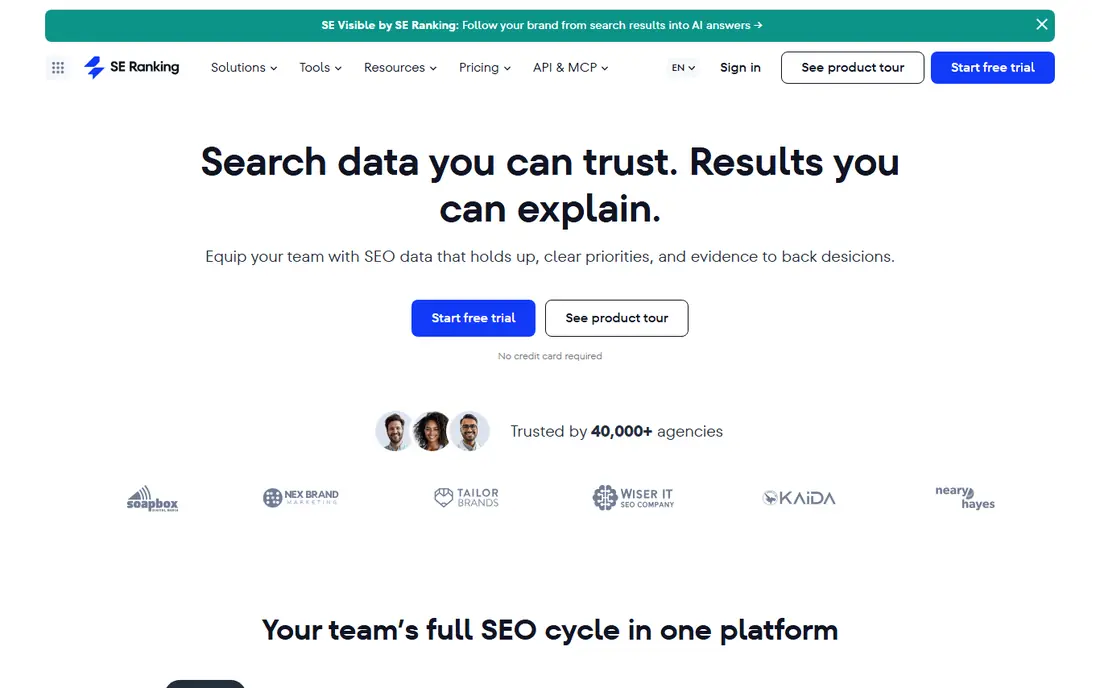
SE Ranking, through its SE Visible AI Search add-on, suits teams that want AI Mode data inside a familiar SEO platform. You get traditional rank tracking, site audits, and backlink data next to AI visibility, with daily updates and agency-friendly reporting. That single-login view saves time for a team that already reports on classic SEO.
The pricing model needs attention: AI Search is an add-on to a core SE Ranking plan, and it uses per-check pricing, where one check equals one prompt on one engine. A five-engine prompt therefore uses five checks, so a large prompt set can cost more than the headline add-on price suggests. For SE Ranking users, it is still the natural choice. For others, compare it with a dedicated tracker first.
- AI Mode alongside classic SEO tools
- Daily AI visibility updates
- White-label reporting for agencies
- AI Search is an add-on to a core plan
- Per-check pricing needs care
- Total cost rises with prompt volume
Rankshift is built for teams that want to know not just whether they appear in AI Mode, but where competitors are cited instead of them. Its citation gap analysis highlights the prompts and sources where a rival wins the citation, which gives content teams a concrete fix list rather than a vague visibility score. All engines, including AI Mode, sit on every plan, which simplifies comparison.
Pricing is credit-based, so you need to watch prompt volume and scheduling frequency, and higher prompt counts move you to higher tiers. For an agency or a content team that lives on citation wins, Rankshift is a strong, focused pick. For a team that only needs a simple weekly mention count, a cheaper tracker may be enough.
- All engines on every plan
- Citation gap analysis
- No seat or project limits on plans
- Credit-based limits need monitoring
- Newer brand than Semrush or Ahrefs
- Agency pricing varies by prompt volume
Rankscale is the budget pick for teams that want wide engine coverage without paying for an enterprise platform. AI Mode sits on every plan, alongside ChatGPT, Perplexity, Gemini, Claude, Copilot, and more, and credit-based pricing lets you schedule checks hourly, daily, weekly, or monthly to fit your budget. That flexibility suits analysts who track different prompt sets at different frequencies.
Credit-based pricing also makes direct comparison harder, because one credit does not always equal one answer in the same way across tools. Rankscale's interface leans analyst-first rather than executive-summary-first, so it suits SEO teams more than non-technical managers. For a budget-conscious team that wants many engines, it is hard to beat on coverage per dollar.
- Wide engine list including AI Mode on every plan
- Credit-based flexible pricing
- Hourly to monthly scheduling
- Credit math takes care to compare fairly
- Smaller brand with less public history
- Interface is more analyst-focused
Nightwatch appeals to SEO teams that already care about precise rank data and want AI Mode added to the same workflow. It combines traditional rank tracking with AI Mode monitoring and daily refresh, so you can see classic positions and AI answers side by side without switching tools. Reporting is solid for client work and internal reviews.
Dedicated GEO tools offer deeper AI analysis, including persona views and richer citation workflows, than Nightwatch. If AI Mode is your main job, a dedicated tracker may serve you better. If classic SEO is your main job and AI Mode is a growing second view, Nightwatch is a practical, well-priced bridge between the two.
- Precise traditional rank tracking plus AI Mode
- Daily refresh
- Good reporting for SEO teams
- AI Mode depth is less than dedicated GEO tools
- Prompt limits vary by plan
- Best for SEO-led teams
Rankability focuses on the detail that matters most in AI Mode: which source URLs Google actually cites. Its tracker records brand mentions, citations, and source links over time, alongside AI Overviews, ChatGPT, Perplexity, Gemini, and traditional organic results, so you can see which of your pages earn citations and which competitor pages replace them.
As a smaller, tracker-first tool, Rankability does not offer the full SEO suite of Semrush or SE Ranking, and you should confirm pricing and prompt limits directly with the vendor. For a team whose main AI Mode question is "which pages get cited, and why", Rankability gives a clear, source-level answer without enterprise complexity.
- Source-level citation data for AI Mode
- Tracks AI Overviews and traditional results too
- Automated scheduled scans
- Smaller brand than the big SEO suites
- Pricing and prompt limits need a direct check
- Interface is tracker-first
Keyword.com is a rank tracking specialist that has added AI Mode coverage to a flexible, accuracy-focused platform. Scheduling from hourly to weekly lets agencies check high-value keywords often and lower-value ones rarely, which controls cost better than a flat daily schedule for every prompt. That flexibility is its main advantage.
Keyword.com is a rank tracker first, so its GEO analysis is less deep than a dedicated AI visibility platform. If you need persona analysis or brand sentiment workflows, look at a dedicated tool. If you need reliable, flexible rank and AI Mode checks across many clients, Keyword.com is a strong, practical choice.
- Flexible scheduling from hourly to weekly
- Accurate rank verification
- Useful for agencies with many clients
- AI Mode features are part of a broader rank tool
- Prompt and engine limits vary
- Less GEO analysis depth
How we picked these
We compared official feature pages, pricing pages, and public reviews, and we required each tool to offer real AI Mode tracking, not just AI Overviews or ChatGPT alone. We checked whether AI Mode sits in the base plan or behind an add-on, how often data refreshes, and whether the tool records source citations rather than only a visibility score. Prices change often and are often credit-based, so we wrote See website where a single figure would mislead.
How to track Google AI Mode properly
Start by defining what counts as a win. In AI Mode, a win is not position one, it is a mention, a citation, or a recommended link in an answer, and different prompts produce different answer shapes. Track all three: mention, citation, and source URL, because a mention without a citation sends you no traffic, and a citation to a weak page is a content fix waiting to happen.
Next, track competitors on the same prompts. AI Mode answers often recommend one brand over another, so your visibility only makes sense next to rivals. A citation gap report, like the one Rankshift offers, turns that comparison into a work list: which prompts you lose, which competitor pages win, and what content you need to improve.
Finally, save snapshots over time. AI Mode changes quickly, and a single week's data can mislead you. Weekly or daily snapshots let you see whether a content change actually moved citations, or whether Google simply changed the answer format. Without that history, you cannot tell a real improvement from a random variation.
Frequently asked questions
What is Google AI Mode rank tracking?
Google AI Mode rank tracking records how your brand appears in Google's conversational AI Mode answers, including mentions, citations, and source links. Because AI Mode does not show a classic ranked list, trackers measure inclusion and citation quality instead of a single position number.
Which tool is best for tracking Google AI Mode?
Peec AI is the best all-round pick, because AI Mode sits in its base plan with daily tracking and clear competitor views. SE Ranking suits teams already using that SEO suite, while Otterly and Rankscale are the best low-cost entry points for smaller teams.
Is AI Mode tracking the same as AI Overviews tracking?
No, AI Mode is a separate conversational experience from AI Overviews, with different answer formats and citation behaviour. A good tracker should cover both, and you should confirm AI Mode specifically is included on your plan, since some tools offer AI Overviews without AI Mode.
How often should AI Mode data refresh?
Daily refresh suits most teams, because AI answers change often and weekly data can miss short-lived changes. Hourly checks suit high-value prompts or competitive launches, while weekly checks suit large prompt sets where daily cost would be wasteful.
Can AI Mode tracking improve my visibility?
Tracking alone cannot improve visibility, but it shows which prompts you lose, which pages get cited, and which competitor pages win instead. Improvement comes from clearer, better-sourced content that directly answers those prompts, plus technical fixes so AI crawlers can read your pages.
Do I need a separate tool if I already use Semrush or Ahrefs?
Not always. Semrush and Ahrefs both offer AI visibility features, and they suit teams already invested in those suites. A dedicated AI Mode tracker is worth it when you need deeper citation analysis, wider engine coverage, or a lower cost for a large AI prompt set.
Sources we checked (8)

Online Jobs is an independent blog about careers, online work, learning new skills and the tools that help people earn. More about us.
Keep reading
All posts
ZoomInfo Alternatives
The best ZoomInfo alternatives in 2026, compared on price, free plans, data coverage, and which tool fits small teams or large sales teams best in detail.
Workday Alternatives
We compared the best workday alternatives for HR, payroll, and global hiring, from BambooHR and Gusto to Rippling, Deel, and HiBob for growing teams in 2026.
Which SaaS Tools Have the Best Customer Support
Which SaaS tools have the best customer support? Compare eight popular tools on help centres, live help, response options and overall support quality.