Best AI Mode Analysis Software in 2026: 8 Tools Compared

How we put this together: we compare official feature and pricing pages, app store listings, privacy policies and public user reviews. Prices change, so check the provider's site before you pay.
Key takeaways
- Google AI Mode is a conversational search surface, not a standard list of links, so these tools run prompts and record mentions, citations, and sentiment instead of only tracking link positions.
- Dedicated AI visibility tools give deeper prompt level detail, while Semrush, Ahrefs, and SE Ranking suit teams that want AI data next to regular search data.
- Prompt choice matters more than tool choice at the start, so pick the real questions buyers ask and track those before expanding to hundreds of prompts.
- Pricing is often custom or prompt based, so compare prompt limits, engines covered, and update frequency before comparing headline prices.
Quick comparison
| Name | Who it suits | Starting price | Free option | |
|---|---|---|---|---|
 Profound | Large brands and agencies | See website | Free trial | Visit |
 Peec AI | Small teams that want clear reporting | See website | Free trial | Visit |
 Otterly.AI | Freelancers and small businesses | See website | Free trial | Visit |
 Semrush | Teams already using an SEO suite | See website | Free trial | Visit |
 Ahrefs Brand Radar | SEO teams using Ahrefs | See website | Free trial | Visit |
 LLM Pulse | Dedicated AI Mode tracking on a budget | See website | Free trial | Visit |
 SE Ranking | Small businesses and agencies on a budget | See website | Free trial | Visit |
 Nightwatch | Rank tracking with AI visibility added | See website | Free trial | Visit |
The best AI mode analysis software
Google AI Mode answers questions in conversation form, and it may cite a brand, mention it without a link, or leave it out entirely. The tools below help you see which of those outcomes you are getting, and how that changes over time.
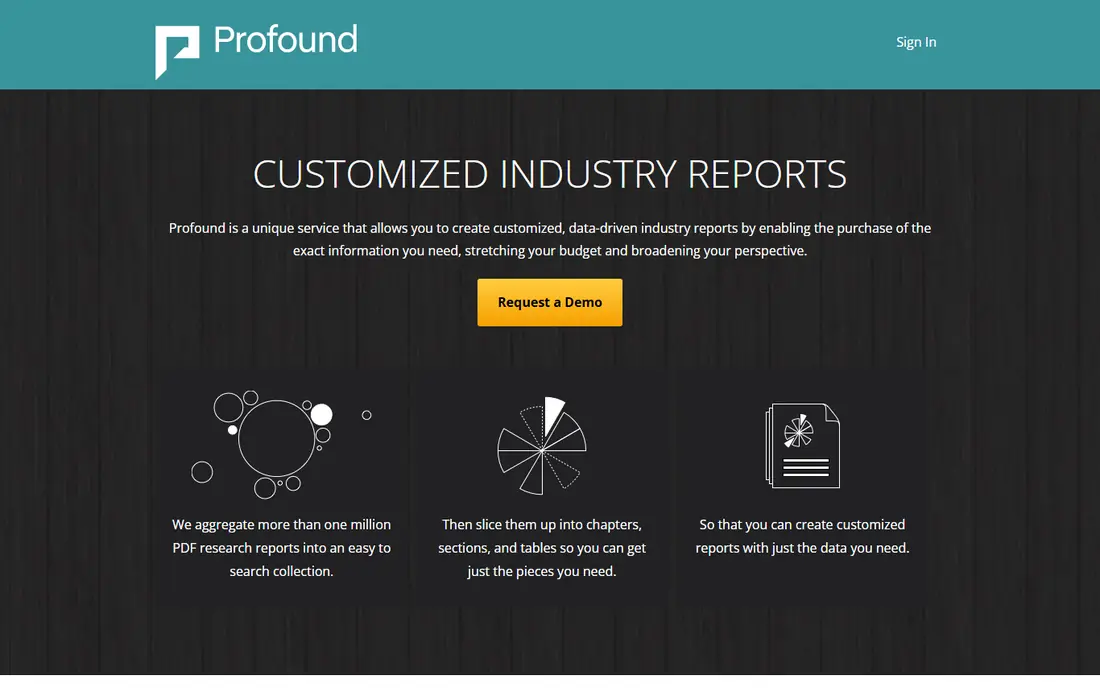
Profound is built for companies that treat AI search as a main channel rather than a side report. It tracks how brands appear across AI answers, including Google AI Mode, and it breaks results down by prompt, competitor, and topic. That structure helps a larger team see where it is winning and where a rival is cited instead.
The trade off is cost and complexity. Smaller sites may find the setup and the sales led pricing harder to justify, especially when a short prompt list would do. For a brand with many product lines or markets, though, the depth is the point, and the reporting saves time that would otherwise go into manual checks.
- Broad engine coverage
- Conversation level detail
- Reporting built for larger teams
- Pricing is custom
- May be more than a small site needs
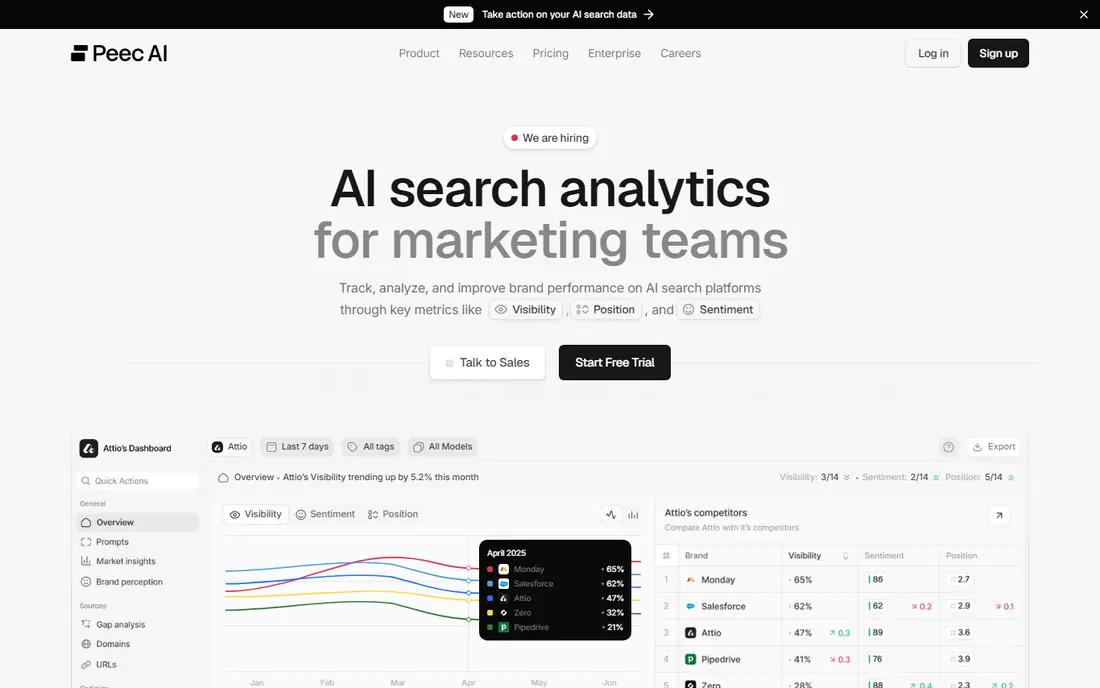
Peec AI keeps the workflow short: add prompts, add competitors, and watch mentions and citations over time. Teams that do not have a dedicated SEO analyst often prefer this shape, because the dashboard answers the basic question fast, namely whether the brand showed up and in what context.
The limit to watch is scale. A team that wants to track thousands of prompts across many regions will hit plan limits sooner than it would with an enterprise platform. For a focused list of buying intent questions, Peec AI covers the job well and keeps reporting readable for non specialists.
- Simple prompt tracking
- Competitor comparison
- Easy to read reports
- Prompt limits on lower plans
- Fewer enterprise controls
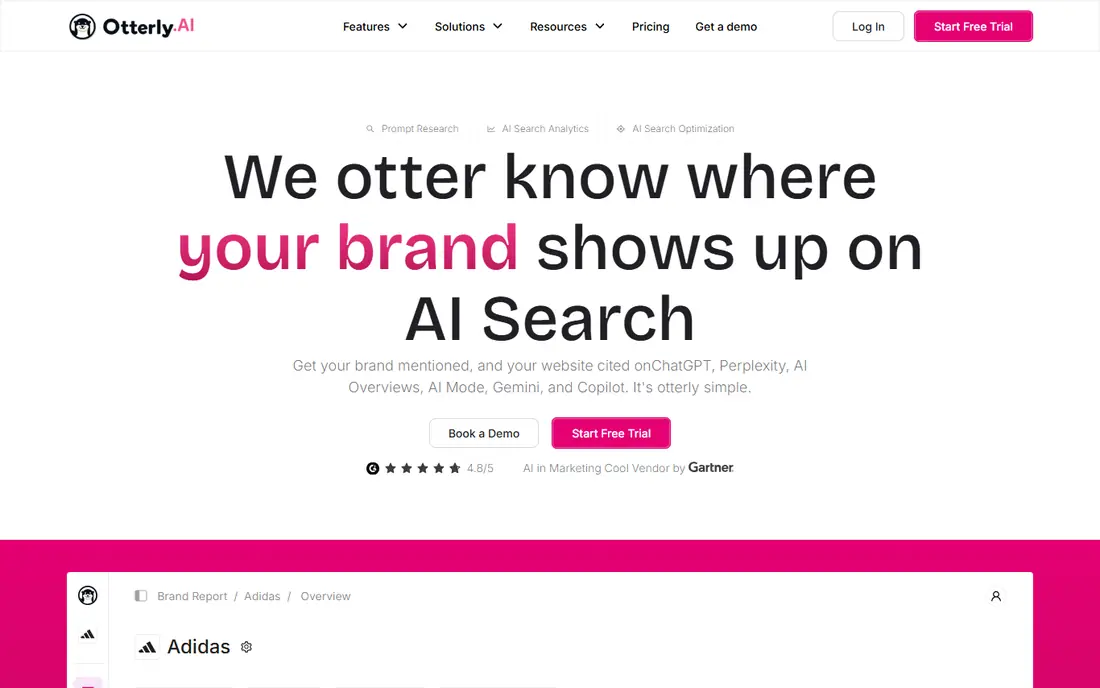
Otterly.AI suits a solo marketer or a small business that wants a weekly view of AI visibility without a large contract. It monitors brand mentions across AI search surfaces, including Google AI Mode on supported plans, and it presents trends in a way that does not need a tutorial to read.
The catch is that entry plans are built for small prompt sets, so a business with many services will need to prioritise. If you can name your twenty most important questions, Otterly.AI is a practical starting point. If you need deep segmentation by region or product line, a larger platform may fit better.
- Low entry point for small prompt lists
- Covers major AI engines
- Simple setup
- Smaller prompt allowance at entry level
- Less depth for enterprise reporting
Semrush is the sensible pick when AI Mode data needs to sit next to the rest of your search work. Its AI visibility features track brand presence and sentiment across AI surfaces, and they connect to the keyword, audit, and competitor data many teams already use. That single login matters when reporting goes to a wider team.
The honest limit is depth. A dedicated AI tracker may offer richer prompt level conversation data than a suite add on. If your team already pays for Semrush, though, starting there avoids a second subscription and a second set of reports while you learn what AI visibility means for your traffic.
- AI visibility next to keyword and site data
- Large keyword database
- Familiar reporting
- AI detail can be lighter than dedicated tools
- Pricing rises with add ons
Ahrefs Brand Radar adds AI visibility tracking to a platform known for backlink and keyword data. For an SEO team, that combination is useful, because an AI citation often relates to pages that already rank well or earn links. Seeing both sides in one place makes it easier to decide which pages to improve first.
The downside is price and scope. A small site that only wants AI Mode tracking may pay for a much larger SEO toolkit than it uses. Teams already inside Ahrefs, however, get a natural extension to their workflow, and the brand metrics are presented in a form SEO reporting already understands.
- Strong link and search data alongside AI visibility
- Clear brand metrics
- Trusted SEO data
- AI features sit inside a larger suite
- Entry cost can be high for small sites
LLM Pulse was built for AI answer tracking rather than adapted from classic rank tracking. It runs prompts across supported engines, including Google AI Mode, and it parses mentions, citations, and sentiment from the answers. That focus shows in the detail, which is prompt first rather than keyword position first.
For agencies, white label reporting and API access are practical extras, since client reports need to look clean without manual rebuilding. The limit is that LLM Pulse does not replace a full SEO suite, so teams still need separate tools for technical audits and link work. As a dedicated AI visibility layer, it is a strong value option.
- Built for AI visibility from the start
- Sentiment analysis
- Agency friendly reporting
- Less general SEO data than a full suite
- Pricing varies by prompt volume
SE Ranking appeals to teams that want one affordable platform for both classic search tracking and AI visibility. It tracks AI Overview and AI Mode related presence alongside regular rankings, which helps a small agency show clients a fuller picture without buying two platforms.
The compromise is coverage depth. Specialist tools may track more engines or give richer conversation level detail. If budget is the main constraint and the prompt list is moderate, SE Ranking gives a workable balance, and its agency features help when the same account serves several clients.
- Lower cost than many suites
- AI tracking alongside rank tracking
- Agency tools
- AI coverage may be narrower than specialist tools
- Limits vary by plan
Nightwatch started as a rank tracker, and its AI visibility features extend that strength into AI answers. Teams that already report rankings to clients can add AI Mode and AI Overview signals without changing their whole stack. The interface stays focused on trends, which suits regular reporting.
The honest catch is maturity. AI answer tracking is a newer part of Nightwatch than it is for a dedicated platform, so prompt level analysis may feel thinner. For a team that mainly needs to know whether visibility is rising or falling, and which competitors appear most, Nightwatch is a practical and lower friction choice.
- Clean rank reports
- AI visibility features for existing users
- Good for agencies
- AI Mode detail is newer and less deep than specialist platforms
- Plan limits apply
How we picked these
We compared official feature pages, pricing pages, and public product descriptions for tools that state they track Google AI Mode or closely related AI answer surfaces. We favoured tools that record mentions and citations at prompt level, cover more than one AI engine, and offer reporting a small team can actually use. We left out generic rank trackers that only report link positions, and we did not count a tool as an AI Mode tracker on the basis of a marketing claim alone when its own pages described only AI Overviews. Prices change often and many of these vendors use custom or prompt based pricing, so we used See website where a stable public starting price could not be confirmed from the vendor site at the time of writing.
What to check before you buy
Start with your prompt list, not the vendor demo. Write down the questions a buyer would ask before choosing a business like yours, including comparison questions, price questions, and problem questions. A tool is only useful if it tracks those exact prompts, in the right location, on a schedule you can act on. A long list of generic prompts produces noise, while a short list of real buying questions produces decisions.
Next, check what counts as a win in each tool. Some tools count a mention, some count a citation with a link, and some track sentiment around the mention. Those are different outcomes, and a brand can be mentioned in a negative context or as a passing example. Ask for a sample report and look at how citations, competitors, and sentiment are shown before you commit.
Finally, plan who will act on the data. AI visibility work usually means improving pages that AI answers cite, adding clear facts and structured data, and fixing pages that give outdated or thin answers. If no one owns that follow up work, even the best dashboard becomes a monthly chart that no one uses. Pick the tool your team will open weekly, and set one simple routine: review new citations, note competitor gains, and update the weakest cited page.
Frequently asked questions
What is the best AI mode analysis tool?
There is no single winner for every team. Large brands often suit Profound, small teams often suit Peec AI or Otterly.AI, and teams already paying for an SEO suite often suit Semrush, Ahrefs, or SE Ranking. Start with your prompt list and budget, then trial two tools on the same prompts before choosing.
What is the difference between AI Mode tracking and AI Overview tracking?
AI Overviews are short AI summaries shown above regular search results, while AI Mode is a fuller conversational search experience inside Google. A tool may track one, both, or neither in depth, so check the vendor page for AI Mode by name rather than assuming all AI tracking covers it.
Can a free AI mode analysis tool do the job?
A free trial can test a short prompt list, but most tools charge by prompts, engines, or seats once you need regular tracking. Free tools and one off checkers suit an audit, while ongoing tracking needs a paid plan with scheduled runs and history.
How many prompts should I track?
Start with 20 to 50 prompts that reflect real buying questions, then expand only when you act on the first set. Tracking hundreds of prompts before you have a routine for fixing weak pages adds cost without adding decisions.
Do AI mode analysis tools improve rankings directly?
No, they measure visibility and show which pages get cited. Improvement comes from the follow up work, such as clearer product pages, accurate facts, better structured data, and content that directly answers the prompt. The tool shows where to work, it does not do the work itself.
Sources we checked (8)

Online Jobs is an independent blog about careers, online work, learning new skills and the tools that help people earn. More about us.
Keep reading
All posts
Workday Alternatives
We compared the best workday alternatives for HR, payroll, and global hiring, from BambooHR and Gusto to Rippling, Deel, and HiBob for growing teams in 2026.
Which SaaS Tools Have the Best Customer Support
Which SaaS tools have the best customer support? Compare eight popular tools on help centres, live help, response options and overall support quality.
Top AI Helpdesk Software
Searching for top AI helpdesk software in 2026? We compared 8 AI helpdesks on automation, pricing, channels and ease of setup for small and growing teams.