Best AI Lead Generation Tools in 2026: 9 Tools Compared


All-in-one prospecting for small teams · Starting price: $49 per user per month
How we put this together: we compare official feature and pricing pages, app store listings, privacy policies and public user reviews. Prices change, so check the provider's site before you pay.
Key takeaways
- Apollo suits small teams that want prospecting, enrichment, and outreach in one place with a free plan.
- Clay suits operations teams that need flexible enrichment workflows from many data sources.
- Seamless.AI suits high-volume contact search, with a free credit tier to test coverage.
- ZoomInfo and Cognism suit larger teams that need deep enterprise data and verified phones, at enterprise prices.
- Instantly, Lusha, Hunter, and HubSpot cover sending, quick lookups, email finding, and CRM follow-up.
Quick comparison
| Name | Who it suits | Starting price | Free option | |
|---|---|---|---|---|
| Apollo.io | All-in-one prospecting for small teams | $49 per user per month | Yes | Visit |
 Clay | Flexible enrichment workflows | See website | Yes | Visit |
 Seamless.AI | High-volume contact search | See website | Yes | Visit |
 ZoomInfo | Enterprise B2B data and intent | See website | Free trial | Visit |
 Lusha | Quick contact enrichment from LinkedIn | See website | Yes | Visit |
 Instantly | Cold email sending at scale | See website | Free trial | Visit |
 HubSpot | CRM, lead scoring, and follow-up | Free | Yes | Visit |
 Cognism | Verified phones and European data | See website | No | Visit |
 Hunter.io | Email finding and verification | See website | Yes | Visit |
The best ai lead generation tools
AI lead tools fall into three jobs: finding contacts, enriching them with accurate details, and reaching out without burning your domain. No single tool does all three equally well, so most teams use a small stack. The nine tools below cover each job, from free solo prospecting to enterprise data.
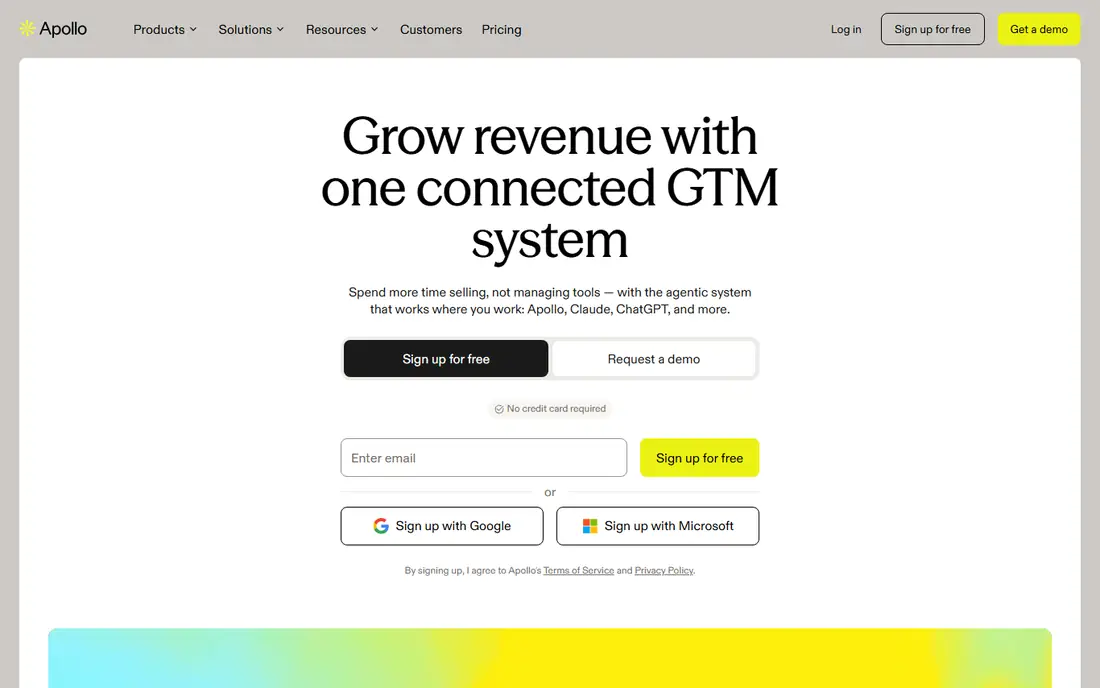
Apollo is the easiest starting point for a small sales team. You can filter a large database by title, industry, company size, and location, build a list, enrich contacts, and send sequences from the same platform. AI writing helps draft first emails, though you should still edit them for relevance.
The free plan is useful for testing, with limited credits, and published paid plans start at 49 dollars per user per month billed annually. That all-in-one scope saves the cost and hassle of stitching together separate data, enrichment, and sending tools.
The catch is data quality. Apollo is broad, but niche industries and smaller companies may have thinner or older records. Verify key contacts before a large campaign, and treat Apollo as a strong first layer rather than a perfect source.
- Large contact database with filters
- Built-in sequences and AI email writing
- Free plan to test list building
- Data accuracy varies by niche
- Credits expire monthly on many plans
- Costs rise per seat
Clay is built for teams that want control over enrichment. Instead of one database, you build workflows that pull from many sources, verify emails, find phones, research companies, and score leads in steps. AI agents can fill gaps, such as finding a tech stack or a recent hiring signal, without manual research.
That flexibility suits revenue operations and growth teams with a clear ideal customer profile. You can test different data sources, compare results, and keep only the steps that improve accuracy.
Clay is not a simple list tool. It takes time to learn, and credit use can grow quickly if workflows run on large lists without limits. Start with a small list, measure bounce rates, and scale only the steps that pay off.
- Combines many data sources in one workflow
- AI agents can research and enrich lists
- Strong for operations teams
- Learning curve is steeper than Apollo
- Credit costs can grow fast
- Needs clear data rules to avoid waste
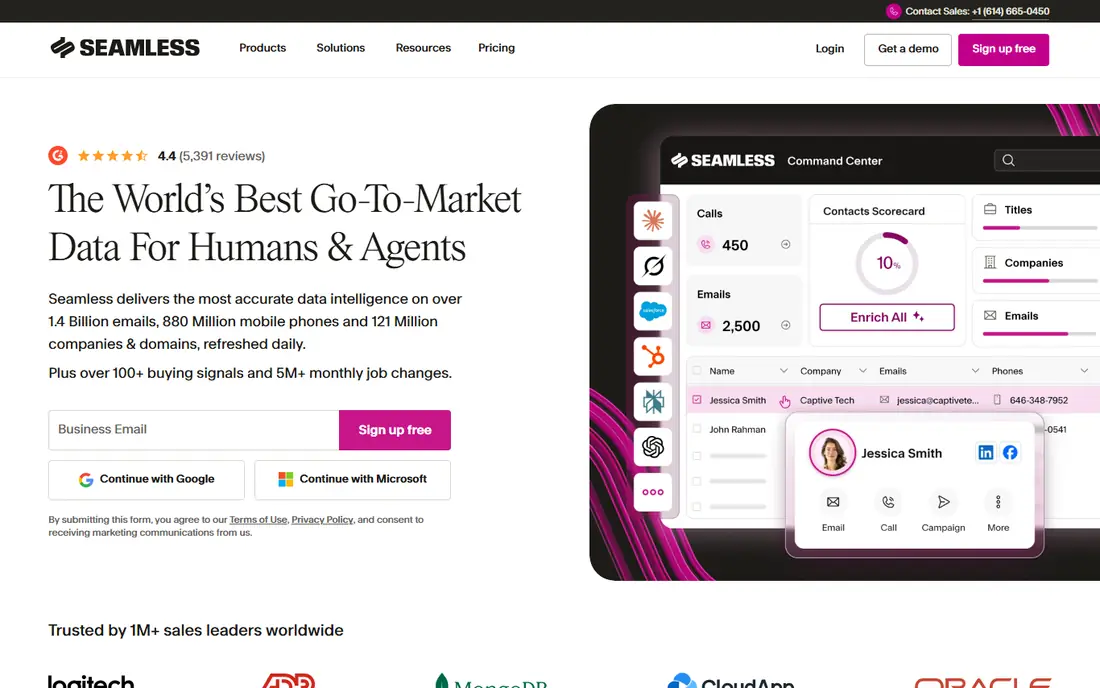
Seamless.AI focuses on finding contacts fast. Search by company, title, or industry, and get emails and phones in seconds, with a browser extension for LinkedIn and company sites. For reps who need volume, that speed is the main appeal.
The free tier offers limited credits, which is enough to test coverage in your niche. Published comparisons list paid plans by quote or per user, so check the vendor site for current pricing before budgeting.
As with any large database, verify emails before sending at scale. Seamless.AI is best as a prospecting layer feeding a verified sending tool, not as a send-and-forget source.
- Very large contact coverage
- Fast real-time search
- Free credits to test fit
- Accuracy varies and needs verification
- Paid plans are quote-based in many cases
- Outreach features are lighter than Apollo
ZoomInfo is the enterprise benchmark for B2B data. It offers verified contacts, company hierarchies, technographics, and intent signals that help larger teams prioritize accounts. Integrations with major CRMs keep data flowing into sales workflows.
For teams with large deal sizes and a dedicated sales operation, that depth can justify the cost. Published comparisons place enterprise pricing in the tens of thousands per year, with plans quoted by the vendor, so it is not a casual purchase.
Solo founders and small teams will likely get better value from Apollo, Lusha, or Clay. ZoomInfo fits when data depth, intent, and scale matter more than low monthly cost.
- Deep company and contact data
- Intent signals and buying insights
- Strong CRM integrations
- Enterprise pricing with annual contracts
- Overkill for solo sellers
- Setup needs admin time
Lusha suits reps who work mainly from LinkedIn and company sites. The extension shows contact details on a profile, enriches a list, and syncs to a CRM without switching tools. That speed helps when you find a good prospect and want details at once.
Free credits let you test coverage in your market, and paid plans add more credits and signals. Published comparisons list paid plans from around 37 dollars per month billed annually, though current pricing should be checked on the vendor site.
Lusha is a lookup tool first, not a full outreach platform. Pair it with a sending tool such as Instantly and a CRM such as HubSpot for a complete workflow.
- Simple browser extension for quick lookups
- Buying signals and enrichment
- Free credits to start
- Credit limits can feel tight
- Phone coverage varies by region
- Less full-featured than Apollo for sequences
Instantly is a sending platform, not a database. It helps teams send cold email campaigns with multiple inboxes, warmup, rotation, and analytics to protect deliverability. For teams that already have a verified list, it is one of the most cost-effective ways to send at volume.
Published comparisons list paid plans from around 30 dollars per month, with higher tiers for larger volume and more features. Flat-style pricing suits teams that send often, since cost does not rise per contact in the same way as credit-based data tools.
Instantly will not fix bad data. Bounces and spam complaints will still hurt deliverability, so verify emails with Apollo, Clay, or Hunter first. Used with clean data, it is a strong sending layer.
- Inbox rotation and warmup tools
- Campaign analytics
- Flat pricing that suits high volume
- Needs clean, verified data to work well
- No large built-in database
- Deliverability still needs care
HubSpot is the follow-up layer that turns a lead list into a pipeline. The free CRM stores contacts, tracks emails, manages deals, and shows who opened or clicked. Paid hubs add AI scoring, sequences, and enrichment, which help teams prioritize the right leads.
For small teams, the free CRM is a genuine starting point, not just a trial. You can import a list from Apollo or Clay, assign owners, and track follow-up without paying at once.
HubSpot is not a prospecting database. Its strength is organization, scoring, and marketing follow-up after you have found leads. Pair it with a data tool for finding contacts, and use HubSpot to work them properly.
- Free CRM with contacts, deals, and email tracking
- AI lead scoring on paid hubs
- Strong integrations
- Paid hubs get expensive as features grow
- Data enrichment is not as deep as Apollo or ZoomInfo
Cognism suits teams that sell by phone, especially in Europe. Its Diamond Data verification focuses on phone numbers, which helps reps reach decision makers rather than chasing dead numbers. Intent signals add timing, so teams can prioritize accounts showing buying activity.
Pricing is quote-based, with published comparisons placing plans well above self-serve tools. That makes Cognism a poor fit for a solo seller, but a sensible choice for a team where phone outreach drives revenue.
If your team sells mainly by email in the US, Apollo or Lusha will be cheaper and simpler. If phone accuracy in Europe is the bottleneck, Cognism is worth a demo and a quote.
- Phone-verified contact data
- Strong European coverage
- Intent signals and compliance focus
- Quote-based enterprise pricing
- No free plan
- Overkill for small US-only teams
Hunter is a focused tool for one job: finding and verifying work emails. Enter a company domain, see likely email patterns, verify an address, and avoid bounces before you send. That simplicity makes it useful for freelancers, journalists, and small sales teams.
The free tier offers limited searches per month, which is enough to test coverage for a niche. Paid plans add more searches and verifications, with pricing listed on the vendor site.
Hunter will not build a full prospect list or run sequences on its own. Use it to verify a short list, or as a low-cost finder alongside Apollo and Instantly.
- Simple domain search and email finder
- Verification to reduce bounces
- Free searches to test
- Smaller database than Apollo or ZoomInfo
- No full sequence platform
- Phone data is limited
How we picked these
We compared official feature pages, pricing pages, and public reviews for AI lead tools still available in October 2026. We favored tools with a clear data source, verification features, and a usable free tier, trial, or quote path. We left out tools that had shut down, tools with no official homepage, and tools that only offered a generic AI chatbot with no prospecting data.
What to look for before you choose
Start with your bottleneck. If you lack contacts, pick a database such as Apollo or Seamless.AI. If you have contacts but poor data, pick Clay or Lusha for enrichment. If you have good data but weak follow-up, pick Instantly for sending and HubSpot for CRM.
Check compliance and data quality together. Cold outreach rules differ by region, and verified data reduces bounces and complaints. Test a small list first, measure bounce rate and reply rate, and only then scale spend.
Finally, watch credit models. Some tools charge per lookup, some per seat, and some per email sent. A cheap monthly plan can become expensive if credits expire or if enrichment runs on every row. Set limits, verify before sending, and review usage monthly.
Frequently asked questions
What is the best ai tool for lead generation for small teams?
Apollo is our pick for small teams, because it combines prospecting, enrichment, and outreach with a free plan. Lusha and Hunter are good low-cost add-ons for lookups and verification.
What is the best ai lead generation software for enrichment?
Clay suits teams that need flexible enrichment from many sources, with workflows that verify and research leads in steps. Apollo also offers enrichment, but Clay gives more control over sources and rules.
Is Seamless.AI a good lead generation tool?
Seamless.AI suits high-volume contact search, with a large database and a free credit tier. Verify emails before sending at scale, since accuracy varies by niche, and pair it with a sending tool for best results.
What is the best lead generation ai tool for enterprise teams?
ZoomInfo suits enterprise teams that need deep data and intent signals, while Cognism suits teams that need verified phones, especially in Europe. Both are quote-based, so request a demo and compare total contract cost.
Can AI lead generation tools replace manual prospecting?
No, they speed up research and list building, but human review still matters. Check that contacts fit your ideal customer, edit AI-written emails for relevance, and follow up personally with warm replies.
What is the best free ai lead generation tool?
Apollo, Lusha, Hunter, and HubSpot all offer free tiers that cover list building, lookups, verification, and CRM follow-up. Start free, test data quality in your niche, and pay only when volume or features require it.
Sources we checked (9)

Online Jobs is an independent blog about careers, online work, learning new skills and the tools that help people earn. More about us.
Keep reading
All posts
ZoomInfo Alternatives
The best ZoomInfo alternatives in 2026, compared on price, free plans, data coverage, and which tool fits small teams or large sales teams best in detail.
Workday Alternatives
We compared the best workday alternatives for HR, payroll, and global hiring, from BambooHR and Gusto to Rippling, Deel, and HiBob for growing teams in 2026.
Which SaaS Tools Have the Best Customer Support
Which SaaS tools have the best customer support? Compare eight popular tools on help centres, live help, response options and overall support quality.