Best AI Governance Platforms in 2026: 8 Platforms Compared

How we put this together: we compare official feature and pricing pages, app store listings, privacy policies and public user reviews. Prices change, so check the provider's site before you pay.
Key takeaways
- AI governance platforms differ in focus, with some built for inventory and approvals, others for model monitoring, and others for privacy-led compliance.
- Credo AI leads for policy-driven governance, while IBM watsonx.governance leads for governing models across many providers and clouds.
- OneTrust suits organisations already using OneTrust for privacy, because AI governance joins the same platform and workflows.
- Most enterprise platforms use custom pricing, so budget planning needs a vendor quote based on use cases, models and users.
- A platform alone does not create governance, because owners, risk thresholds and approval rules must be agreed before software can enforce them.
Quick comparison
| Name | Who it suits | Starting price | Free option | |
|---|---|---|---|---|
 Credo AI | Policy-driven governance | See website | No | Visit |
 IBM watsonx.governance | Multi-provider model governance | See website | Free trial | Visit |
 OneTrust AI Governance | Privacy-led governance | See website | No | Visit |
 Holistic AI | Bias testing and auditing | See website | No | Visit |
 Collibra AI Governance | Data-led AI governance | See website | No | Visit |
 ServiceNow AI Control Tower | Governance inside ServiceNow | See website | No | Visit |
 Monitaur | Model risk management | See website | No | Visit |
 Saidot | AI inventory and risk registers | See website | Free trial | Visit |
The best AI governance platforms
We compared AI governance platforms on inventory, risk assessment, framework mapping, policy enforcement, monitoring and audit evidence, favouring platforms that link those pieces into one system of record.
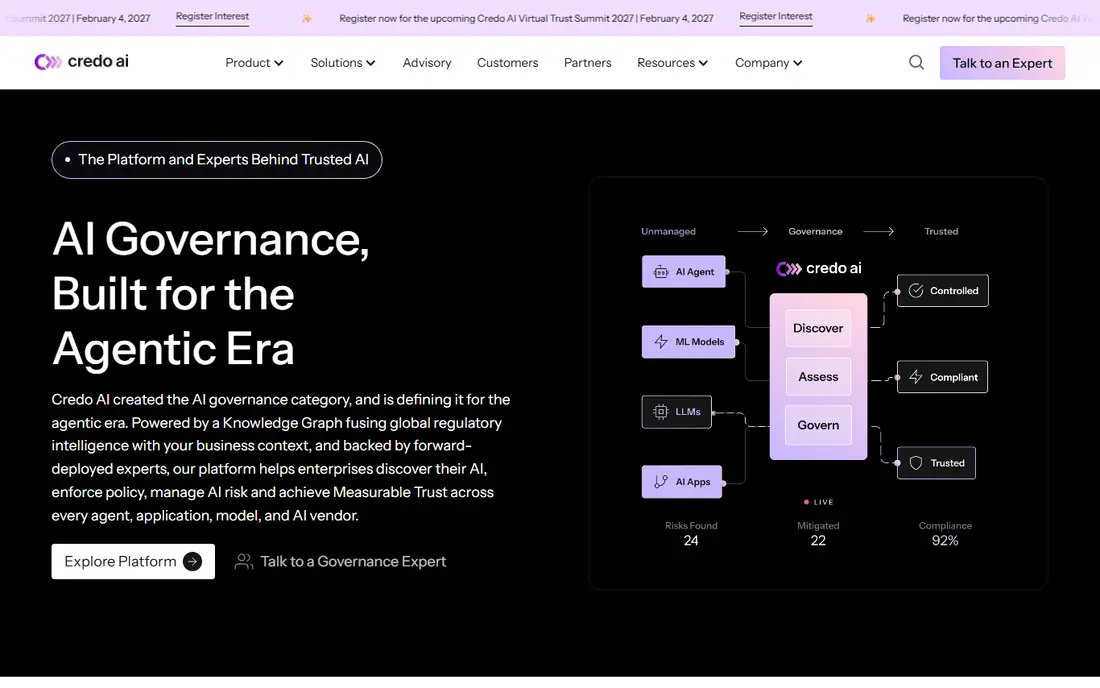
Credo AI is our pick for organisations that want regulation turned into workable controls. Its policy packs map frameworks such as the EU AI Act, the NIST AI Risk Management Framework and ISO/IEC 42001 to specific controls and evidence, so a compliance team can see what is required for each use case. The AI registry gives one record for models, vendors and deployments, which stops governance from living in spreadsheets.
The drawback is scale and price. Credo AI is priced for enterprises, and it works best when an organisation already has named owners for AI risk, because the platform enforces decisions rather than making them. Smaller teams with a handful of AI tools will find a lighter inventory tool, such as Saidot, easier to start with.
- Policy packs that map regulations to controls
- An AI registry for use cases, models and vendors
- Audit evidence linked to risk assessments
- Enterprise pricing with no public starting price
- Implementation needs governance owners in place
- Smaller teams may find it heavy
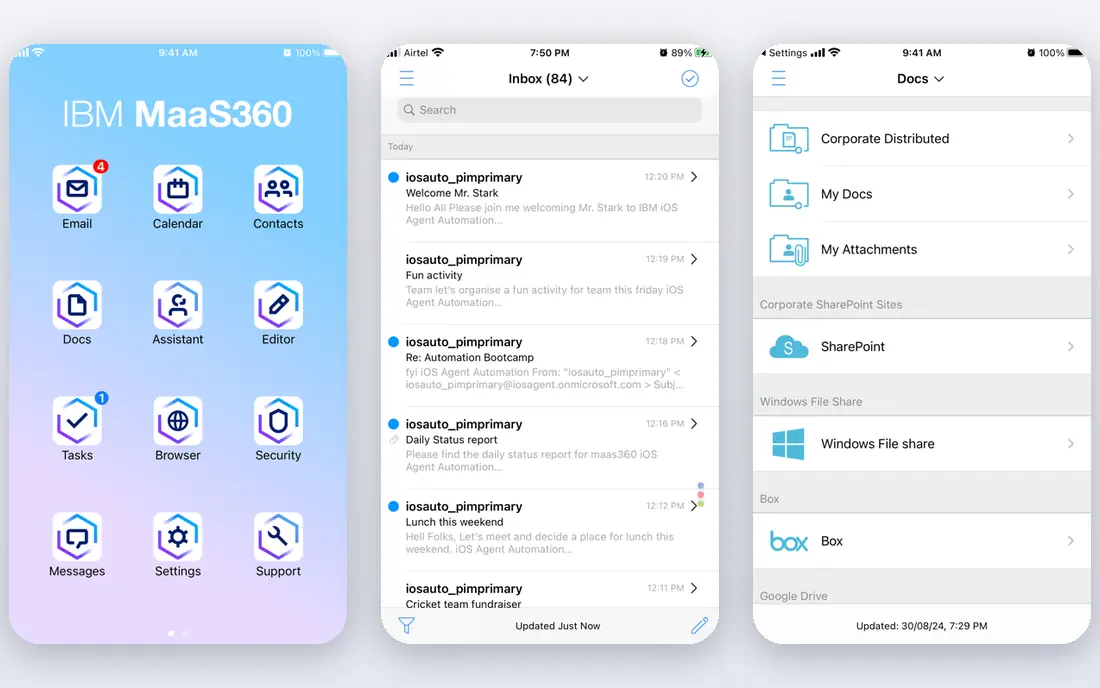
IBM watsonx.governance suits large enterprises governing models and agents built on different clouds and model providers. Model factsheets record purpose, data, performance and risk in one place, workflows route approvals to the right owners, and monitoring watches for drift and bias in production. Compliance accelerators for the EU AI Act and other frameworks speed up documentation for regulated teams.
The trade-off is complexity. The platform shows its full value inside the IBM stack, and standalone buyers should check integration effort for their existing models. Pricing is enterprise-grade, and implementation needs data, model and compliance owners working together. For a large, multi-provider estate, that depth is exactly what governance requires.
- Model factsheets and lifecycle workflows across providers
- Monitoring for drift and risk
- Compliance accelerators for major frameworks
- Deepest value inside the IBM and watsonx stack
- Enterprise pricing and setup
- Smaller buyers may find it complex
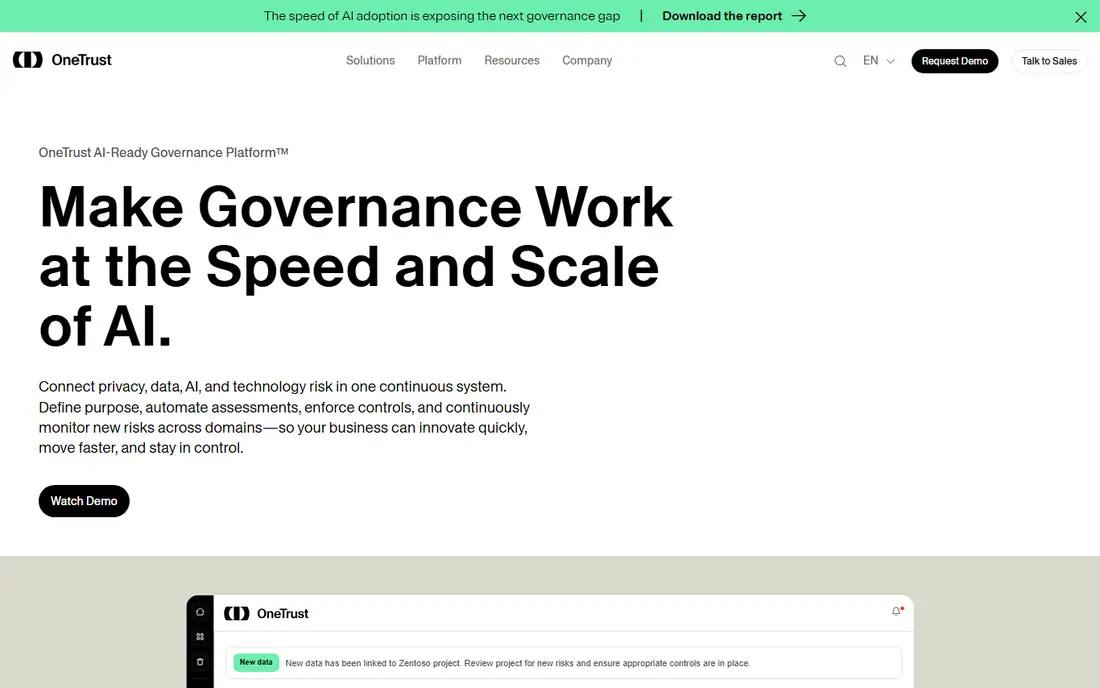
OneTrust AI Governance is the pick for organisations already running privacy, third-party risk or general compliance on OneTrust. AI use cases join the same inventory, assessment and workflow system, so privacy teams do not need a separate tool to review AI vendors and data uses. That shared record helps when a single AI system raises both privacy and AI risk questions.
Standalone buyers get less immediate value, because the strength is integration with the wider OneTrust platform. Pricing is custom, and deep model monitoring may still need a specialist observability tool alongside it. For privacy-led organisations, though, the single platform argument is strong.
- AI inventory and risk assessment joined to privacy workflows
- Strong framework coverage for the EU AI Act and NIST
- Vendor risk links for third-party AI
- Best value for existing OneTrust customers
- Custom pricing
- Some AI-specific monitoring needs a companion tool
Holistic AI stands out for testing, rather than just recording, AI systems. Its bias and fairness checks, red-teaming and independent auditing give teams evidence that a model was actually examined, not just listed in a register. That verification focus suits regulated industries, where a claim of fairness needs proof behind it.
The cost is pace and price. Deep testing takes time, and custom pricing puts it in the enterprise bracket. Teams that mainly need an inventory and approval workflow may find Credo AI or Saidot simpler, while teams that need credible audit evidence for high-risk systems will value Holistic AI most.
- Deep bias, fairness and red-teaming tests
- Independent auditing and verification
- Continuous risk monitoring across the lifecycle
- Custom pricing
- Auditing depth can slow fast-moving teams
- Inventory features are thinner than registry-first rivals
Collibra AI Governance suits organisations that already govern data in Collibra and want AI to follow the same rules. Models and agents link to the data assets they use, lineage shows where training and input data came from, and policies apply consistently to data and AI. That connection matters, because many AI risks start with data quality, consent or lineage gaps.
Buyers outside Collibra should weigh the effort of adopting a data platform to govern AI, since the value depends on that existing investment. General shadow AI discovery is also thinner than at discovery-led tools. For data-mature organisations, however, extending Collibra into AI is more coherent than buying a separate register.
- AI governance built on a data catalog and lineage
- Shared records for data assets and models
- Strong policy mapping for data teams
- Best value for existing Collibra customers
- General AI discovery is thinner than specialist tools
- Enterprise pricing
ServiceNow AI Control Tower
Who it suits: Governance inside ServiceNow
ServiceNow AI Control Tower suits large enterprises already standardised on ServiceNow for IT, risk and workflows. AI use cases, risks and investments appear in the same system where IT requests and risk items already live, so governance joins existing approval habits rather than asking teams to learn a new tool. That familiarity can raise adoption, which is often the hardest part of governance.
The limit is maturity and fit. Its governance automation is newer than at Credo AI or IBM, and organisations outside ServiceNow gain little from it. Pricing follows ServiceNow licensing, so a quote needs a full platform discussion. For ServiceNow-centred enterprises, it is a practical, integrated choice.
- AI inventory and risk visibility inside ServiceNow workflows
- Investment tracking alongside risk
- Familiar workflows for IT teams
- Enterprise pricing tied to ServiceNow licensing
- Governance automation is newer than specialist rivals
- Best for ServiceNow shops
Monitaur suits finance, insurance and other model-risk-heavy sectors, where governance centres on models rather than every AI experiment. Its lifecycle controls track models from development through validation to retirement, with records that suit regulatory review. Advisory support alongside the platform helps teams that are building model risk practices as they buy software.
The trade-off is breadth. Monitaur is less of a general AI inventory and policy platform than Credo AI, so organisations with many vendor AI tools and agents may need a second tool for that wider estate. Its vendor footprint is also smaller than the largest rivals, so buyers should check references in their sector before committing.
- Model lifecycle governance for finance and insurance
- Risk controls tied to model records
- Advisory support alongside the platform
- Narrower focus than full AI governance suites
- Custom pricing
- Smaller vendor footprint than IBM or OneTrust
Saidot is the most approachable starting point on this list, especially for public-sector bodies and mid-size organisations that need a proper register without enterprise complexity. Its AI system register, risk assessment flow and transparency records give a team a credible governance record quickly, and the trial lets buyers test the workflow before a larger commitment.
The limit is depth. Production monitoring, bias testing and runtime guardrails are thinner than at Holistic AI, Fiddler AI or Arize AI, so Saidot works best as the system of record, paired with monitoring tools where needed. For teams starting governance from spreadsheets, that clarity and speed are a genuine advantage.
- A clear AI system register and risk assessment flow
- A lighter starting point than enterprise suites
- Public-sector friendly design
- Monitoring depth is thinner than specialist observability tools
- Enterprise features need a paid tier
- Smaller ecosystem than larger rivals
How we picked these
We compared official feature pages, framework coverage and public reviews for AI governance platforms, and we kept only platforms still available and working in October 2026. We favoured a clear system of record, risk assessment, framework mapping and audit evidence, and we noted where a platform focuses on inventory, monitoring or privacy rather than covering everything. We did not claim hands-on testing, and prices we could not verify on a vendor site are shown as See website.
How to choose the right platform
Start by naming what you need to govern, because the term AI governance covers several jobs. Count AI use cases, models, agents and vendor tools, and note which ones are high risk under the EU AI Act or your sector rules. A team with twenty vendor tools needs inventory and approvals first, while a team with five production models needs monitoring and bias testing first.
Next, check who will own the work. A platform needs named owners for each use case, agreed risk thresholds, and an approval route that teams will actually use. Pilot with ten to twenty use cases, run one full risk assessment cycle, and check whether audit evidence exports cleanly for reviewers. Finally, get a quote based on that pilot scope, not on a vendor's standard package, since user counts and model counts change enterprise pricing sharply.
Inventory, monitoring and guardrails are different jobs
Many buyers confuse three layers. Inventory and approvals answer what AI you have and whether it may be used. Monitoring answers whether a live model is drifting, biased or failing. Guardrails answer what a model may do at runtime. One vendor may cover all three, but many cover one well and the others lightly, so check each layer separately during a trial and plan for a second tool where the gap matters.
Frequently asked questions
What is the best AI governance platform?
Credo AI is our pick for policy-driven enterprise governance, and IBM watsonx.governance leads for multi-provider model estates. OneTrust suits privacy-led organisations, while Saidot suits teams starting from spreadsheets. The best platform depends on whether your main need is inventory, model monitoring, privacy or audit evidence.
What are the best AI governance tools for the EU AI Act?
Credo AI, IBM watsonx.governance, OneTrust and Holistic AI all offer EU AI Act mapping, risk assessment and documentation support, with different strengths in policy packs, model factsheets, privacy workflows and auditing. No tool alone makes an organisation compliant, because human oversight, risk classification and documentation duties still need owners. Use the platform to organise evidence, and get legal review for high-risk classifications.
How much does AI governance software cost?
Most enterprise platforms use custom pricing based on use cases, models, users and modules, so we show See website where no public starting price could be verified. Smaller inventory tools may offer trials or lower entry tiers, while full enterprise suites are a significant annual investment. Get a quote after a pilot, with your real use case count, to avoid under-budgeting.
What is the difference between AI governance and AI observability?
Governance covers inventory, risk assessment, approvals, policy and audit evidence for AI systems. Observability covers live monitoring of model performance, drift, traces and outputs. Some platforms cover both, but many focus on one, so a complete programme often pairs a governance system of record with an observability tool for production models.
Do small companies need an AI governance platform?
A small company with a few AI tools may only need a register, risk notes and clear approval rules, which Saidot or a well-kept internal record can provide. A platform becomes valuable when AI use grows, when regulated work is involved, or when auditors and customers ask for evidence. Start with inventory and owners, and add platform depth as the estate grows.
Sources we checked (8)

Online Jobs is an independent blog about careers, online work, learning new skills and the tools that help people earn. More about us.
Keep reading
All posts
n8n Alternatives
n8n alternatives compared for 2026, with Zapier, Make, Activepieces, and more, covering visual builders, code steps, self-hosting, and pricing models.

ZoomInfo Alternatives
The best ZoomInfo alternatives in 2026, compared on price, free plans, data coverage, and which tool fits small teams or large sales teams best in detail.
Zoom Alternatives for Webinars
Compare Zoom alternatives for webinars in 2026, from browser-based rooms to enterprise events, with prices, attendee limits, features and honest trade-offs.