Best AI Copywriting Tools in 2026: 9 Tools Compared

How we put this together: we compare official feature and pricing pages, app store listings, privacy policies and public user reviews. Prices change, so check the provider's site before you pay.
Key takeaways
- Jasper is the strongest pick for marketing teams that need consistent brand voice across long-form copy and campaigns.
- Copy.ai is the better value for short-form marketing copy and repeatable workflows, with a low entry price for up to five seats.
- Rytr is the cheapest usable paid tool, while Grammarly and QuillBot are better for editing and rewriting drafts than for writing from scratch.
- Surfer SEO and Frase suit search-facing content, because they check drafts against ranking pages instead of writing blind.
- Every tool still needs human editing, fact-checking, and a final read for tone, since AI copy can sound generic and can state facts wrong.
Quick comparison
| Name | Who it suits | Starting price | Free option | |
|---|---|---|---|---|
 Jasper | Brand voice and long-form team copy | $69 per month | Free trial | Visit |
 Copy.ai | Short-form marketing copy and workflows | $29 per month | No | Visit |
 Writesonic | SEO articles and AI search visibility | See website | Free trial | Visit |
 Rytr | Budget short-form copy | $9 per month | Yes | Visit |
 Anyword | Ad and landing page copy scoring | $49 per month | Free trial | Visit |
 Surfer SEO | Optimizing drafts for search | $49 per month | Free trial | Visit |
 Frase | Research-led content briefs | See website | Free trial | Visit |
 Grammarly | Editing, grammar, and tone | $30 per month | Yes | Visit |
 QuillBot | Paraphrasing and summarizing | $19.95 per month | Yes | Visit |
The best ai copywriting tools
Good copywriting tools do different jobs, so the best pick depends on whether you need ads, emails, product descriptions, or long articles. We compared official pricing pages, free plans, and each tool's main strength, and we kept the focus on tools that are current and widely used in 2026.
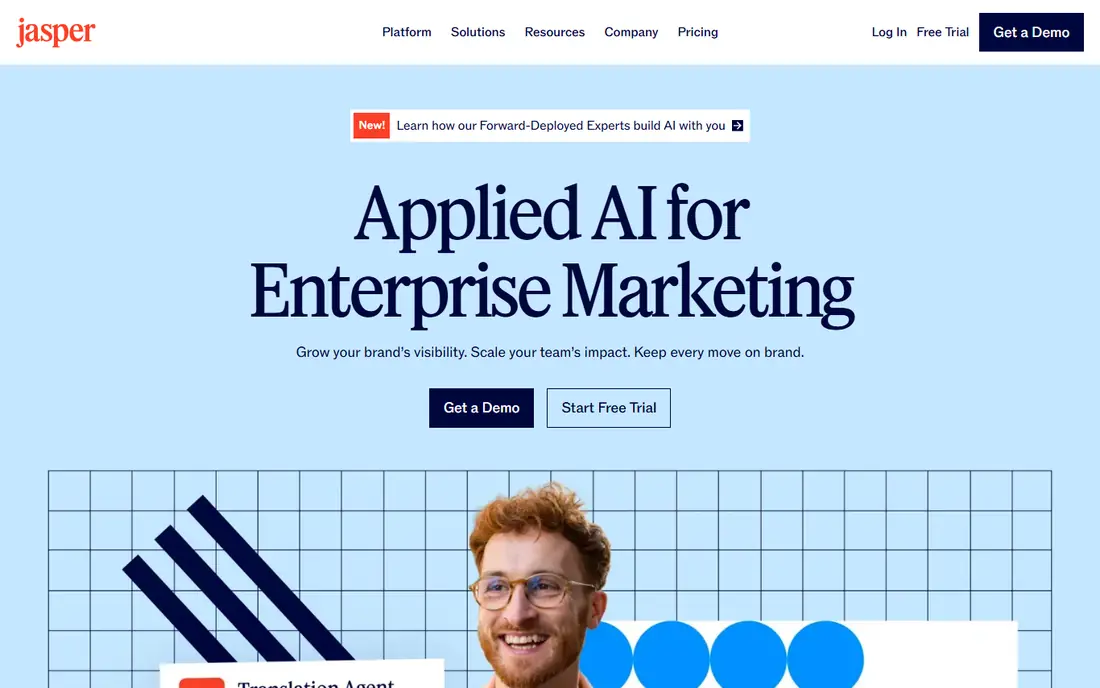
Jasper is our pick for marketing teams that publish a lot of on-brand copy. Its brand voice feature learns from samples you provide, and its canvas workspace helps a team plan campaigns, drafts, and revisions in one place. For long-form pages, blog posts, and email sequences that must sound like one company rather than one writer, that control matters.
The catch is cost. At $69 per month per seat, a team of five pays far more than it would for a single-seat tool, and there is no permanent free plan. Solo writers and small shops should test the trial with a real project first, and compare the output with a cheaper tool, before committing to a per-seat plan.
- Strong brand voice controls
- Long-form drafting and campaign workflows
- Team workspace with shared knowledge
- High price per seat
- No free plan, only a trial
- Overkill for a solo writer who only needs short copy
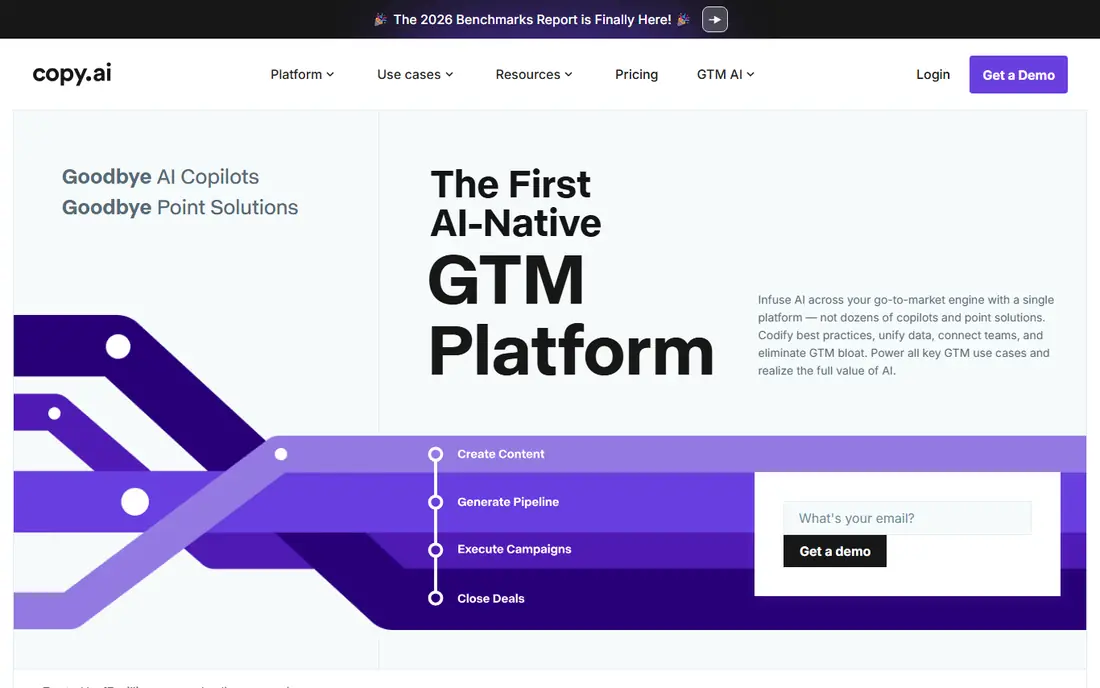
Copy.ai has shifted toward go-to-market workflows, which means outbound sequences, prospect research, and repeatable short copy rather than long articles. For a small team that needs many ads, subject lines, and social posts each week, the $29 per month chat plan covering five seats is hard to beat on price. It is a practical tool for volume work.
The honest limit is depth. Long-form copy often needs more editing than Jasper output, and the next paid tier is priced far above the entry plan, so teams that outgrow the chat plan face a big jump. Check which tier your workflows actually need before you build your whole process around the entry price.
- Low entry price covering five seats
- Strong short-form templates
- Workflow tools for sales and marketing teams
- Long-form drafts are less polished than Jasper
- Next tier jumps sharply in price
- Free tier is no longer offered
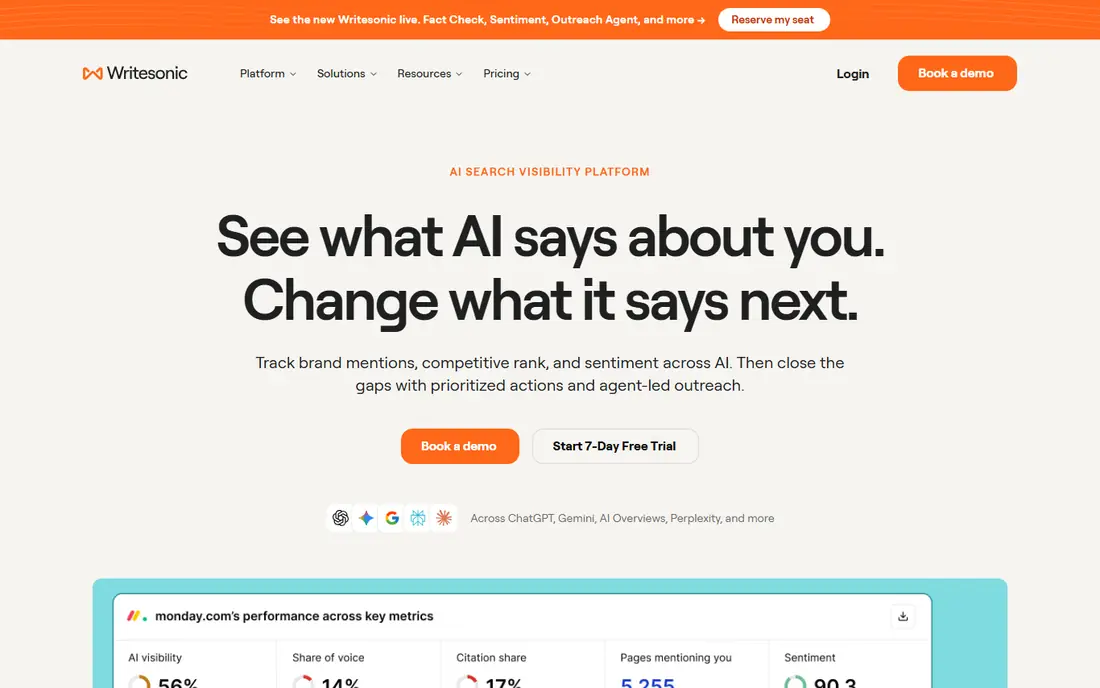
Writesonic suits teams that publish search-facing articles at volume and want to track how that content shows up in AI search results as well as classic search. The article workflow is structured, which helps when you need a consistent format across many posts. Agencies that manage several clients can benefit from that repeatability.
The catch is price clarity. Writesonic has repriced its plans during 2026, so the figure you see in an old roundup may not match the current pricing page. Visit the pricing page before budgeting, and use the trial to check whether the articles it produces match your quality bar after editing.
- Bundles articles with SEO and AI-search visibility tracking
- Fast drafting for structured articles
- Useful for brands and agencies
- Pricing has moved upward and varies by plan
- Output still needs editing for accuracy and voice
Rytr is the best pick if budget is the deciding factor. The free plan gives 10,000 characters per month, which is enough to test the tool on real short copy, and the paid unlimited plan costs $9 per month on monthly billing, or $7.50 per month on annual billing. For freelancers and side projects, that price is easy to justify.
Quality is where you feel the savings. Rytr handles short ads, emails, and product blurbs well, but longer pieces need heavier editing, and the tool offers fewer team controls than Jasper or Copy.ai. Treat it as a fast first-draft tool, not a finished-copy machine, and it earns its place.
- Permanent free plan with 10,000 characters per month
- Very low paid price
- Simple interface for beginners
- Output quality trails pricier tools
- Limited long-form control
- Fewer workflow features for teams
Anyword stands out because it tries to predict how copy will perform before you run it. For paid ads and landing pages, where each variant costs real money, a performance score can help you shortlist options instead of guessing. That makes it a sensible pick for performance marketers rather than general bloggers.
The limit is scope. Anyword is built for conversion copy, not for research-heavy articles or brand storytelling, so a team that needs both will still need another tool. The $49 per month starting price also means casual users should test the trial on a live campaign before subscribing.
- Scores copy against performance data before you spend on ads
- Strong for ads and landing pages
- Brand voice controls
- Less useful for long articles
- Trial is limited
- Price is high for casual use
Surfer SEO is not mainly a writer; it is a checker that improves what a writer produces. Its editor scores a draft against the pages already ranking for a topic, and it flags missing terms, length gaps, and structure issues. For content teams that live or die by search traffic, that feedback loop is valuable.
The catch is that a high score does not mean a good article. Surfer can push writers toward keyword coverage at the cost of a clear argument or an original point of view. Use it after you have a solid draft and a real angle, and treat the score as guidance, not as a grade that must reach 100.
- Grades drafts against live ranking pages
- Clear content score and keyword guidance
- Useful editor for search teams
- No permanent free plan
- Focused on optimization, not original ideas
- Needs a writer to supply the argument
Frase helps at the start of the writing process, not just at the end. It pulls together what ranking pages cover, which questions readers ask, and how a topic is structured, so a writer can build a brief before drafting. That research step is where many AI-written articles fail, since they repeat generic points without checking what the topic actually requires.
The honest limit is that a good brief does not write itself into a good article. Frase output still needs a writer who can judge sources, add original insight, and cut filler. Check the current pricing page, since plan names and prices have changed over time, and use the trial on a real brief first.
- Builds research briefs from ranking pages
- Helps writers cover questions readers actually ask
- Speeds up outlining
- Pricing is not fixed in older roundups, so check the site
- Still needs a skilled writer for the final draft
Grammarly belongs on this list because most copy improves more from editing than from faster drafting. Its free plan covers grammar and basic clarity, and the Pro plan adds tone, full-sentence rewrites, and more AI prompts. It works where you already write, which means it polishes emails, ads, and articles without a separate workflow.
The catch is price on monthly billing. Pro costs $30 per month if you pay monthly, but $12 per month if you pay annually, so the billing choice matters a lot. Grammarly also will not invent a campaign idea or a strong angle for you. Pair it with a drafting tool if you need both generation and polish.
- Works across browsers, docs, and email
- Free plan covers basics
- Tone and clarity suggestions help every draft
- Not a full copywriting tool
- Monthly billing at $30 is steep compared with the $12 annual rate
- AI suggestions need review
QuillBot is the best pick when your job is reworking existing text rather than writing from a blank page. Its paraphraser offers different modes, from formal to creative, and its summarizer helps turn long reports into usable notes. Students, researchers, and editors who rework drafts daily will get real value from it.
The limit is originality. Rewriting a paragraph is not the same as writing persuasive copy, and heavy paraphrasing can strip out voice and produce bland text. Use QuillBot to vary sentences and tighten drafts, and keep the ideas, claims, and structure as your own work. The free plan limits paraphrase length, so test it before paying.
- Strong paraphraser with several rewrite modes
- Summarizer for long source material
- Free plan for basic use
- Paraphrasing is not original copywriting
- Premium costs $8.33 per month only on annual billing
- Output can sound flat if overused
How we picked these
We compared official pricing pages, free plans, and each tool's stated focus, and we checked recent October 2026 roundups that read prices from those same vendor pages. We favored tools that are current, widely used, and clearly aimed at copywriting tasks, and we included editing and optimization tools because most copy work involves both drafting and revision. Prices change often in this category, so confirm the current price on the vendor site before subscribing.
How to choose the right copywriting tool
Start with the job, not the brand. A team writing ads needs scoring and templates, a team writing search articles needs research and optimization, and a solo writer needs a low price and a simple workflow. Buying a team platform for solo short-form work wastes money, while buying a budget tool for a team campaign wastes time on editing.
Match the tool to the copy type
For ads and landing pages, shortlist Anyword and Copy.ai, since both are built for conversion copy and variants. For blog posts and search articles, pair a drafting tool such as Jasper or Writesonic with Surfer SEO or Frase for research and optimization. For emails and social posts at volume, Copy.ai or Rytr will cover most needs at a lower cost.
Test with a real project, not a demo prompt
Run each trial on copy you actually need to publish, and judge the result after editing, not before. Time how long editing takes, check facts and claims, and read the draft aloud for tone. A tool that saves 30 minutes of drafting but adds 45 minutes of fixing is not saving you anything.
Watch the total cost
Per-seat pricing multiplies fast, and annual billing can cut the monthly rate sharply, as with Grammarly and QuillBot. Check seat limits, word or credit caps, and what happens when you exceed them. A low entry price that jumps to a far higher tier, as with Copy.ai, can change the budget in year two.
Frequently asked questions
What is the best AI copywriting tool?
Jasper is the best all-round pick for marketing teams that need brand voice and long-form copy, while Copy.ai is the best value for short-form copy. Solo writers on a budget should start with Rytr, and search teams should add Surfer SEO or Frase. There is no single best tool for every kind of copy.
What is the best free AI copywriting tool?
Rytr has the most useful free plan for drafting, with 10,000 characters per month, and Grammarly and QuillBot offer free plans for editing and paraphrasing. ChatGPT and Claude also offer free tiers for general drafting, but they lack the templates, brand voice, and workflow features of paid copywriting tools. Free plans are best for testing, not for high-volume publishing.
Is AI copywriting good for SEO?
AI copy can rank if it is accurate, original, and genuinely useful, but generic AI text that repeats what ranking pages already say rarely stands out. Use Frase for research, write a clear angle, and use Surfer SEO to check coverage, then edit for facts and voice. Search engines reward helpful content, not just keyword coverage.
Can AI copywriting replace a human copywriter?
No, not for work that needs strategy, original insight, or careful claims. AI tools speed up first drafts, variants, and routine copy, but a human still needs to set the message, check facts, and judge tone. The best setup in 2026 is a human writer using AI as a drafting and editing aid.
What is the best AI tool for copywriting ads?
Anyword is the strongest pick for ads because it scores copy against performance data before you spend. Copy.ai is a good lower-cost option for many ad variants and short-form workflows. Test several variants with real ad spend, since a score is a prediction, not a guarantee of results.
How much does AI copywriting software cost?
Entry prices in this list range from free plans at Rytr, Grammarly, and QuillBot to $9 per month at Rytr and $29 to $69 per month at Copy.ai and Jasper. Team plans, per-seat pricing, and annual billing change the total a lot, so check the vendor pricing page for your team size before budgeting.
Sources we checked (9)

Online Jobs is an independent blog about careers, online work, learning new skills and the tools that help people earn. More about us.
Keep reading
All posts
n8n Alternatives
n8n alternatives compared for 2026, with Zapier, Make, Activepieces, and more, covering visual builders, code steps, self-hosting, and pricing models.

ZoomInfo Alternatives
The best ZoomInfo alternatives in 2026, compared on price, free plans, data coverage, and which tool fits small teams or large sales teams best in detail.
Zoom Alternatives for Webinars
Compare Zoom alternatives for webinars in 2026, from browser-based rooms to enterprise events, with prices, attendee limits, features and honest trade-offs.