Best AI Content Optimization Tools in 2026: 8 Tools Compared

How we put this together: we compare official feature and pricing pages, app store listings, privacy policies and public user reviews. Prices change, so check the provider's site before you pay.
Key takeaways
- The best ai content optimization platform for most small teams is one that pairs a clear content score with a workable brief, not the longest feature list.
- Tools differ mainly in how they handle briefs, scoring, internal links, and refreshes, so pick for the job you do most often.
- The best ai tools for content optimization still need a human editor to check facts, tone, and whether the draft answers the search intent.
- Pricing and limits change often, so check the vendor pricing page before you commit to a plan.
Quick comparison
| Name | Who it suits | Starting price | Free option | |
|---|---|---|---|---|
 Surfer | Data-led content scores | See website | No | Visit |
 Clearscope | Clear briefs and grading | See website | No | Visit |
 Frase | Fast briefs and outlines | See website | No | Visit |
 MarketMuse | Content audits and planning | See website | No | Visit |
 PageOptimizer Pro | Page-level on-page checks | See website | No | Visit |
 Dashword | Simple briefs for small teams | See website | No | Visit |
 WriterZen | Keyword clusters and briefs | See website | No | Visit |
 NeuronWriter | Budget-friendly optimization | See website | No | Visit |
The best ai content optimization tools
Content optimization tools help writers turn a rough draft into a page that covers a topic well. They compare top-ranking pages, suggest related terms, and score a draft against a target. The best ai content optimization tool for your team depends on whether you write new posts, refresh old ones, or manage many writers.
We compared official feature pages, pricing pages, and public documentation for the tools below. We did not claim hands-on testing. Use the scores as a guide, and keep your own judgment about quality, accuracy, and reader value at the center of the edit.

Surfer is a natural first look for teams that want a number to work toward. Its content editor gives a score, suggests terms, and shows structure from competing pages. For a new writer, that structure can remove a lot of guesswork about headings and coverage.
The catch is that a high score is not the same as a helpful article. Use Surfer to spot gaps, then cut anything that does not serve the reader. Teams that edit with that discipline tend to get more from it than teams that treat the score as a target to hit at any cost.
- Clear content score
- Strong brief and outline tools
- Useful audit features for existing pages
- Scores can tempt writers to chase terms instead of clarity
- Pricing can rise quickly for larger teams
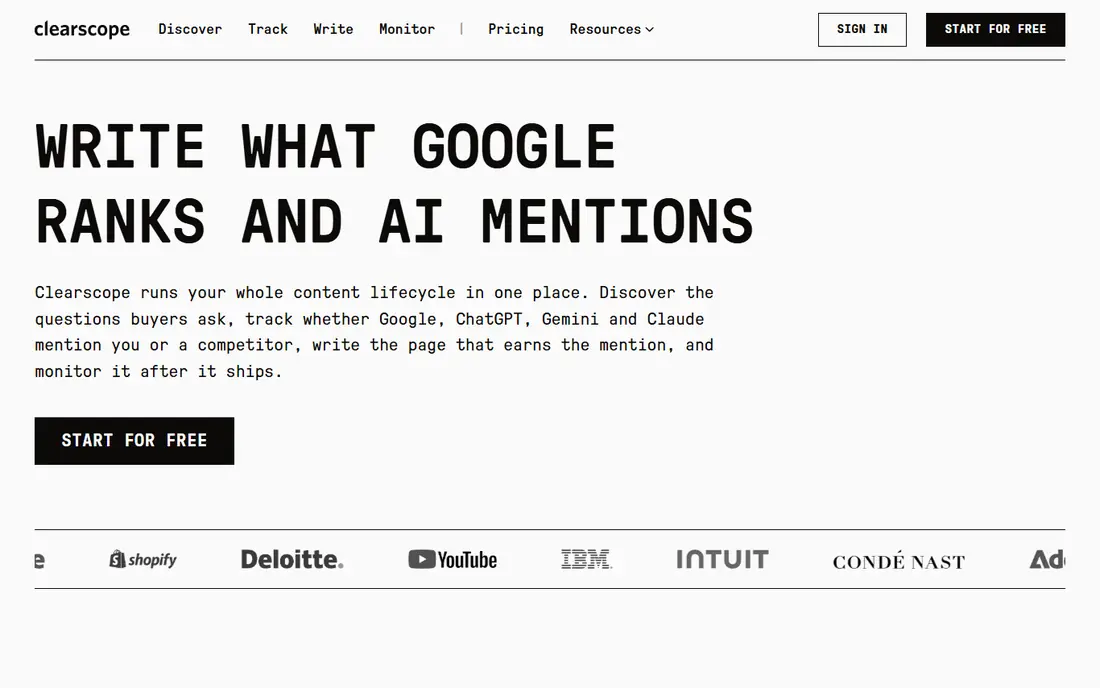
Clearscope keeps the workflow simple. A report shows relevant terms, their importance, and how a draft measures up. Writers who dislike busy dashboards often prefer this calmer view, and editors can share the same grading standard across freelancers.
Its limits show up when you want drafting, planning, and publishing in one place. Clearscope is mainly a briefing and grading tool, so pair it with your usual editor and content calendar. If brief quality matters more than an all-in-one suite, that trade-off is easy to accept.
- Clean reports that writers can follow
- Clear term relevance grades
- Helpful for consistent briefs
- Less of a full writing suite than some rivals
- Costs can add up for high-volume teams
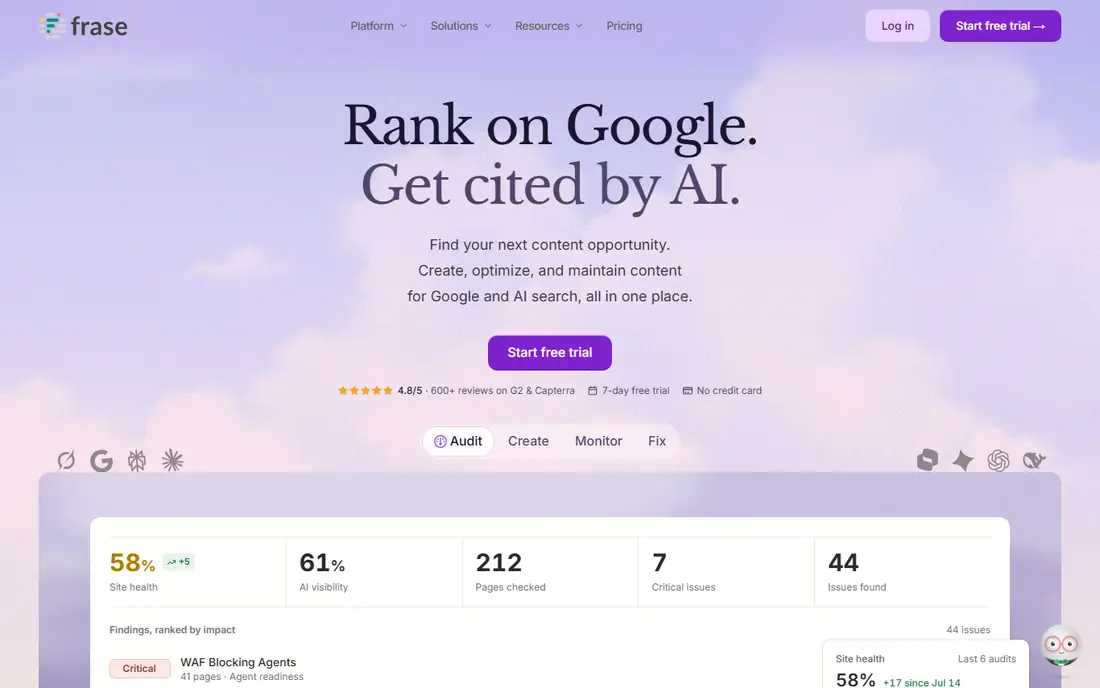
Frase suits teams that produce a lot of briefs in a week. It pulls questions, headings, and related topics from search results, which helps a writer start with a sensible structure instead of a blank page. That speed matters when deadlines are tight.
Do not let speed replace judgment. Frase output can be generic if you accept the first outline without shaping it for your audience. Add your own angle, examples, and checks before you publish, and treat its drafts as a starting point rather than a finished piece.
- Quick brief creation
- Outline building from search results
- Useful for question-based research
- Draft quality still needs careful editing
- Some features suit research more than final writing
MarketMuse stands out for planning. Instead of scoring one page at a time, it can help you see which topics a site covers well, where gaps sit, and which pages deserve a refresh. That view helps larger blogs avoid writing near-duplicates.
Smaller sites may find it more than they need at first. The value grows as your library grows, because the inventory and gap views become more useful with more pages to compare. Start here if audits and strategy are your main problem, not single-article scoring.
- Strong site-wide inventory and gap analysis
- Useful topic authority views
- Good for planning refreshes
- More complex than a simple editor
- Better suited to teams with a larger content library
PageOptimizer Pro takes a narrower, practical approach. It focuses on what a single page should include, how headings and terms line up, and what to change for a refresh. That focus can be refreshing when broader tools bury the next step in reports.
The trade-off is scope. It will not plan your whole content calendar or write long drafts for you. Use it when you have a page that already ranks nearby and needs a careful, targeted improvement rather than a full rewrite.
- Focused on-page recommendations
- Useful for single-page improvements
- Clear before-and-after checks
- Narrower scope than full content suites
- Less help with topic planning
Dashword appeals to small teams that want briefs without a steep learning curve. A writer can open a brief, see the terms and structure, and start writing without a long training session. That simplicity also helps when you hand work to freelancers.
Advanced users may miss deeper audit views and integrations. If your main need is clean, repeatable briefs for a handful of writers, Dashword covers it well. If you need site-wide strategy, pair it with a planning tool or choose a broader platform.
- Straightforward brief workflow
- Easy for new writers to learn
- Useful monitoring for tracked pages
- Fewer advanced planning features
- Smaller ecosystem than leading suites
WriterZen is useful when you plan in clusters rather than single keywords. It groups related terms so you can plan several linked posts around one topic, then build a brief for each one. That structure helps readers find related help and helps editors avoid overlap.
The learning curve is real, especially if you only need one quick score. Spend time on the clustering step, because a messy cluster leads to messy briefs. For teams that publish topic groups on a regular schedule, the extra setup pays off.
- Keyword clustering for topic groups
- Brief tools for structured posts
- Useful for planning related articles
- Interface takes time to learn
- Some tools overlap with a general SEO suite
NeuronWriter is worth a look when budget is the main constraint. It offers content scoring, term suggestions, and an editor view that keeps the task clear. Small blogs and solo writers can use it to improve drafts without paying for a large suite.
It does not match the largest platforms on every planning feature. Check the current plan limits for projects, queries, and users before you buy, and confirm that its editor fits your workflow. For straightforward optimization at a lower cost, it is a solid pick.
- Content scoring at a lower entry cost
- Useful recommendations for drafts
- Straightforward editor view
- Fewer enterprise features
- Support and integrations vary by plan
How we picked these
We started with tools that are built for content optimization, not general writing apps with a small SEO add-on. We checked official feature pages, pricing pages, and public help material, and we favored tools that explain their scoring, briefs, and audit features in plain terms. We also looked for a mix of prices and team sizes, from solo writers to larger editorial teams.
We left out tools that no longer appear to be actively sold, tools that focus only on generic text generation, and tools whose homepage did not clearly match the product. Scores and suggestions from any tool on this list should support an editor, not replace one. Check facts, sources, and tone before publishing.
What to check before you pay
Start with the job, not the dashboard. If you mostly refresh old posts, favor audit and comparison features. If you mostly brief freelancers, favor clear briefs and a consistent score. If you plan topic groups, favor clustering and planning views. A tool that fits one job well beats a broad suite you rarely open.
Check limits that affect real work. Look at the number of content editor queries, projects, users, and tracked pages on the plan you would actually buy. Also check whether the tool supports your language, your content management workflow, and exports your team can use. A short trial or a single paid month is often enough to learn whether writers will use it daily.
Watch for score chasing. Terms suggested by a tool show what competing pages mention, not what your reader needs. Keep sentences clear, answer the main question early, and remove filler even if it would raise a score. The best result is a page a reader trusts and finishes, not a page that ticks every suggested term.
A simple workflow that works
Build the brief first, write the draft in your own voice, then run the optimization check as an edit pass. Note gaps, add missing facts with sources, and tighten headings. After publishing, set a review date for pages that matter most, and use audit features to decide which ones need a refresh rather than rewriting everything at once.
Frequently asked questions
What is the best ai content optimization platform for a small team?
For most small teams, a tool with clear briefs and a simple score, such as Surfer, Clearscope, or Frase, is easier to adopt than a complex planning suite. Pick the one your writers will actually open, and test it on a few real drafts before you commit to a yearly plan.
What are the best ai tools for content optimization if I mainly refresh old posts?
Tools with audit and comparison features, such as MarketMuse, Surfer, and PageOptimizer Pro, suit refresh work. They help you compare a current page with competing pages and decide what to add, cut, or update, rather than starting from scratch each time.
Are the best ai content optimization platforms a replacement for an editor?
No. These tools suggest terms, structure, and gaps, but they do not verify facts, judge tone, or know your reader. An editor should still check claims, sources, and whether the article answers the question in a useful way.
Which tool is best for briefs for freelance writers?
Clearscope and Dashword are strong for briefs because their reports are easy to follow and give writers a shared standard. Frase also works well when you need many briefs quickly. Share an example of a good finished post along with the brief so freelancers can see the standard you expect.
How do I choose between the best ai content optimization tool options on a tight budget?
List the features you will use every week, then compare the lowest plan that includes them, including limits on projects and editor queries. NeuronWriter and Dashword are worth checking for lower-cost entry points, while larger suites may suit teams with higher volume.
Do content scores guarantee higher rankings?
No. A score reflects coverage against a set of competing pages at one point in time. Rankings also depend on site authority, page experience, links, and whether readers find the page useful. Use scores to improve coverage, not as a promise of a ranking.
Sources we checked (8)

Online Jobs is an independent blog about careers, online work, learning new skills and the tools that help people earn. More about us.
Keep reading
All posts
n8n Alternatives
n8n alternatives compared for 2026, with Zapier, Make, Activepieces, and more, covering visual builders, code steps, self-hosting, and pricing models.

ZoomInfo Alternatives
The best ZoomInfo alternatives in 2026, compared on price, free plans, data coverage, and which tool fits small teams or large sales teams best in detail.

Zoom Alternatives for Webinars
Compare Zoom alternatives for webinars in 2026, from browser-based rooms to enterprise events, with prices, attendee limits, features and honest trade-offs.