Best AI Companies in 2026: 9 Companies Compared

How we put this together: we compare official feature and pricing pages, app store listings, privacy policies and public user reviews. Prices change, so check the provider's site before you pay.
Key takeaways
- OpenAI, Anthropic, and Google DeepMind lead on frontier models, with ChatGPT Plus and Claude Pro each at 20 dollars per month and Google AI Pro at 19.99 dollars.
- NVIDIA powers much of the AI industry with the chips and software that train and run large models.
- Microsoft and Amazon turn AI into business products through Copilot, Azure, and AWS, while Meta AI gives away capable models free.
- IBM and Cohere focus on enterprise deployments, with an emphasis on governance, security, and business use cases.
- For most readers, the best AI company is the one behind the product you already use daily, since model quality gaps matter less than workflow fit.
Quick comparison
| Name | Who it suits | Starting price | Free option | |
|---|---|---|---|---|
 OpenAI | Everyday AI assistant | $20 per month | Yes | Visit |
 Anthropic | Careful, long-form AI | $20 per month | Yes | Visit |
 Google DeepMind | Search and multimodal AI | $19.99 per month | Yes | Visit |
 Microsoft AI | Business productivity | $20 per month | Yes | Visit |
 NVIDIA | AI infrastructure | See website | No | Visit |
 Meta AI | Free open models | Free | Yes | Visit |
 Amazon AI | Cloud AI services | See website | No | Visit |
 IBM | Enterprise AI governance | See website | No | Visit |
 Cohere | Business language models | See website | No | Visit |
The best AI companies
The best AI companies are judged by their models, their products, and their infrastructure, not by hype alone. The companies below lead on at least one of those fronts. We compared official product pages, pricing pages, and documentation to sort frontier labs from infrastructure providers and enterprise specialists.
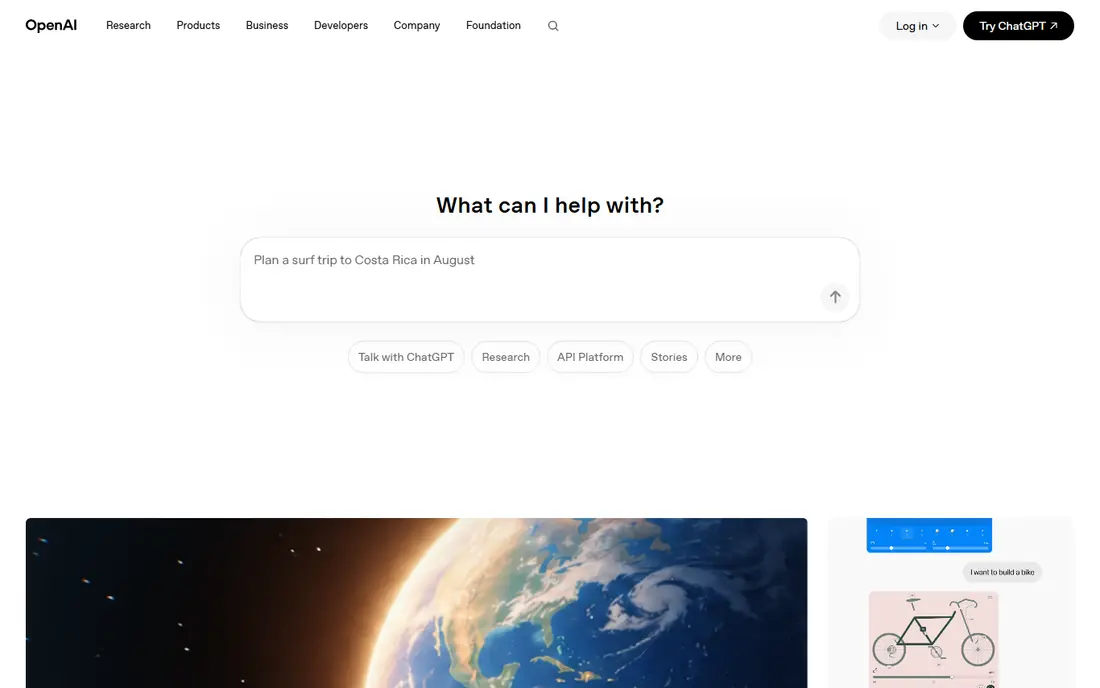
OpenAI remains the company most people mean when they say AI. ChatGPT offers a free tier, with Plus at 20 dollars per month and a Pro tier for heavy users, while the API serves developers building on its models. Its models lead on general reasoning, coding help, and multimodal tasks, and its product range spans chat, search, image generation, and agents.
The pace of change is the catch. Features, pricing, and model names shift often, and heavy API use can cost far more than the consumer subscription. For an everyday assistant and a developer platform in one company, OpenAI is still the default.
- ChatGPT is the most widely used AI assistant
- Strong reasoning and multimodal models
- Broad developer platform
- Pricing for heavy API use adds up
- Product direction shifts quickly
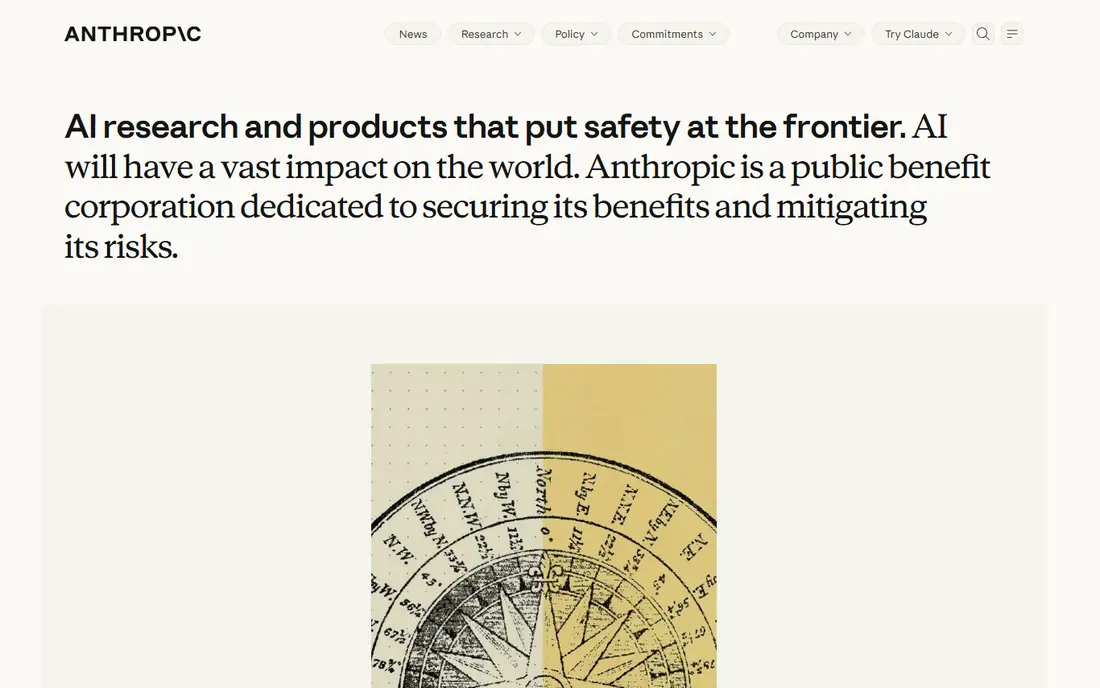
Anthropic's Claude is our pick for long, careful work. It handles large documents, follows nuanced instructions well, and explains its reasoning clearly, which suits writing, analysis, and coding reviews. Claude Pro costs 20 dollars per month, with a free tier for lighter use, and the API serves developers who need Claude's models in their own products.
The product range is narrower than OpenAI's, with fewer consumer features like image generation. For readers, writers, and analysts who value accuracy and long context over breadth, Anthropic is the strongest alternative to OpenAI.
- Claude excels at long documents and careful reasoning
- Strong safety focus
- Generous context windows
- Smaller product range than OpenAI
- Fewer consumer features
Google DeepMind builds the Gemini models that power Google's AI features across Search, Android, and Workspace. Google AI Pro costs 19.99 dollars per month, with a free tier for Gemini, and the models handle text, images, video, and audio in one system. DeepMind's research record, from protein folding to game-playing systems, remains unmatched in breadth.
Google's product naming and regional rollouts can confuse, with features arriving at different times in different countries. For a user already inside Google's ecosystem, DeepMind's models are the most convenient frontier AI available.
- Gemini models span text, image, video, and audio
- Deep Search and Android integration
- Strong research record
- Product naming changes often
- Some features roll out unevenly by region
Microsoft turns AI into workplace products. Copilot Pro costs 20 dollars per month for consumers, while business Copilot plans integrate with Microsoft 365 apps, Teams, and GitHub, where Copilot assists developers directly in code editors. Azure provides the cloud infrastructure for companies building their own AI systems, with enterprise compliance and security controls.
Copilot costs stack across products, and the consumer version sometimes lags dedicated assistants on creative tasks. For a business already on Microsoft 365, Microsoft's AI is the most practical path to AI-assisted work.
- Copilot across Office, Windows, and GitHub
- Azure AI infrastructure
- Enterprise trust and compliance
- Copilot pricing stacks across products
- Consumer Copilot lags rivals on some tasks
NVIDIA does not sell a chatbot, but it powers most of the AI industry. Its GPUs train and run the large models from OpenAI, Anthropic, Google, and Meta, and its CUDA software ecosystem keeps developers building on its hardware. Data center platforms, networking, and robotics extend its reach beyond chips alone.
For a reader choosing an AI product, NVIDIA matters indirectly: the company behind the hardware shapes what models cost and how fast they improve. For investors and builders, NVIDIA is the infrastructure bet on AI itself.
- Dominant AI chips and software stack
- CUDA ecosystem
- Data center and robotics platforms
- Not a consumer AI product
- Hardware prices reflect its dominance
Meta AI takes the open route. Its Llama models are freely available for developers and researchers to download, adapt, and deploy, making them the most widely used open models in the industry. The Meta AI assistant is free inside Facebook, Instagram, WhatsApp, and Messenger, bringing AI to billions of users at no cost.
Open models need technical skill to run well, and the consumer assistant sometimes lags dedicated rivals on complex tasks. For developers who want to build on AI without API bills, and for users who want a free assistant, Meta AI is the most generous company on this list.
- Llama models are open and widely used
- Meta AI assistant is free in its apps
- Strong research output
- Open models need technical skill to run well
- Consumer assistant lags on some tasks
Amazon's AI story runs through AWS and its consumer products. Bedrock lets businesses use models from Anthropic, Meta, Mistral, and Amazon's own Titan family through one cloud service, while Alexa brings voice AI to homes and Rufus assists shoppers. AWS's scale gives enterprises a trusted path to deploy AI with familiar cloud controls.
There is no single flagship assistant to rival ChatGPT or Claude, and the service catalog sprawls across AWS. For a business building on AWS, Amazon's AI services are the natural choice. For a consumer, Amazon's AI shows up inside shopping and Alexa rather than as a standalone product.
- AWS Bedrock offers many models in one place
- Alexa and retail AI at scale
- Enterprise cloud reach
- No single flagship consumer assistant
- Services sprawl across AWS
IBM's watsonx platform targets enterprises that need governed, explainable AI. It covers model training, deployment, and governance, with consulting services to implement AI in regulated industries like banking and healthcare. IBM's hybrid cloud approach suits companies that keep data on-premises as well as in the cloud.
Consumer presence is minimal, and pricing is enterprise-only, so individual users get little from IBM directly. For a large company that needs AI with audit trails and compliance controls, IBM's governance focus is a genuine differentiator.
- Watsonx platform for governed enterprise AI
- Strong consulting and hybrid cloud
- Research heritage
- Consumer presence is minimal
- Pricing is enterprise-only
Cohere builds language models for business use, with strengths in retrieval-augmented generation, semantic search, and multilingual support. Its Command models and Embed models serve companies that need AI over their own documents, with deployment options across major clouds and private environments.
The brand is smaller than OpenAI or Anthropic, and consumer products are minimal. For a business that needs AI grounded in its own documents rather than a general chatbot, Cohere's enterprise focus makes it a strong specialist choice.
- Models built for business use cases
- Retrieval and search strengths
- Multilingual coverage
- Smaller brand than frontier labs
- Consumer products are minimal
How we picked these
We compared official product pages, pricing pages, and documentation for companies shaping AI today. We favored companies with shipping products and real users over pure research labs, and we included infrastructure, consumer, and enterprise players rather than only chatbot makers. Prices are the standard published consumer rates from each company's own site, and where pricing is enterprise-only we say so rather than guessing.
What to check before you choose
Start with what you actually use AI for. A daily assistant, a coding helper, a business deployment, and a research project point to different companies. Model benchmarks matter less than whether the product fits your daily workflow.
Compare the subscription you would actually buy
ChatGPT Plus, Claude Pro, and Google AI Pro each cost around 20 dollars per month, while Copilot Pro also sits at 20 dollars. Try each free tier for a week on your real tasks before paying, since strengths differ by task type more than by headline benchmark.
Check data and privacy terms
Enterprise users should check data retention, training opt-outs, and compliance certifications before deploying any AI product. Consumer users should check what happens to conversation history. Terms differ more across companies than model quality does.
Think about lock-in
Building workflows around one company's models, plugins, or file formats creates switching costs. Favor tools that export your data and prompts, and keep critical documents outside any single AI product.
Frequently asked questions
What is the best AI company?
OpenAI leads on general assistants and developer platforms, Anthropic leads on careful long-form work, and Google DeepMind leads on multimodal and search integration. NVIDIA leads on infrastructure, while Microsoft leads on business productivity. The best company depends on what you use AI for.
What is the best AI company right now?
As of 2026, OpenAI, Anthropic, and Google DeepMind form the frontier trio, with Meta AI leading open models and NVIDIA leading infrastructure. Rankings shift with each model release, so judge by the product you use daily rather than by headlines.
Which AI companies are the best for business?
Microsoft, IBM, Amazon, and Cohere lead for business use, with Microsoft strongest inside Office workflows, IBM strongest on governance, Amazon strongest on cloud deployment, and Cohere strongest on document-grounded AI. Anthropic and OpenAI also serve businesses through their APIs and team plans.
What is the best AI software company?
The best AI software company for most readers is the one behind their daily assistant: OpenAI for ChatGPT, Anthropic for Claude, or Google for Gemini. For builders, NVIDIA's software stack and Microsoft's GitHub Copilot matter more than any chatbot.
Is Meta AI a good company for AI?
Meta AI is strong on open models and free consumer access, with Llama models widely used by developers. Its consumer assistant is convenient inside its apps, though it lags dedicated rivals on some complex tasks. For open-source AI work, Meta AI is the leading choice.
Which company leads in AI research?
Google DeepMind has the broadest research record, from game-playing systems to protein folding, while OpenAI and Anthropic lead on large language model research. Meta AI also publishes significant open research. Research leadership and product leadership do not always sit in the same company.
Sources we checked (9)

Online Jobs is an independent blog about careers, online work, learning new skills and the tools that help people earn. More about us.
Keep reading
All posts
Workday Alternatives
We compared the best workday alternatives for HR, payroll, and global hiring, from BambooHR and Gusto to Rippling, Deel, and HiBob for growing teams in 2026.
Which SaaS Tools Have the Best Customer Support
Which SaaS tools have the best customer support? Compare eight popular tools on help centres, live help, response options and overall support quality.
Top AI Helpdesk Software
Searching for top AI helpdesk software in 2026? We compared 8 AI helpdesks on automation, pricing, channels and ease of setup for small and growing teams.