Best Agentic AI Platform We Can Run on Premises in 2026: 9 Platforms Compared

How we put this together: we compare official feature and pricing pages, app store listings, privacy policies and public user reviews. Prices change, so check the provider's site before you pay.
Key takeaways
- On-premises here means you control the runtime, the data paths, and the model connections, not just that a vendor offers a private cloud option.
- Dify is our pick for most teams, because it pairs a visual builder with agent workflows and a self-hosted edition.
- Code-first teams should start with LangGraph or CrewAI, while operations teams that live in workflows should start with n8n.
- Licence terms matter as much as features: some self-hosted editions limit commercial redistribution, so read the licence before you build a product on top of one.
- Plan for upgrades, backups, model access, and human approval steps from the start, because self-hosting moves those duties from the vendor to your team.
Quick comparison
| Name | Who it suits | Starting price | Free option | |
|---|---|---|---|---|
 Dify | Visual agent and RAG apps | Free | Yes | Visit |
 n8n | Workflow agents across business apps | Free | Yes | Visit |
 LangGraph | Code-first stateful agents | Free | Yes | Visit |
 CrewAI | Role-based multi-agent teams | Free | Yes | Visit |
 Langflow | Visual LangChain-style agent graphs | Free | Yes | Visit |
 AutoGen | Conversational multi-agent research | Free | Yes | Visit |
 AnythingLLM | Private document agents | Free | Yes | Visit |
 UiPath | Enterprise governed agents | See website | Free trial | Visit |
 IBM watsonx Orchestrate | Enterprise agents with governance | See website | Free trial | Visit |
The best agentic ai platform we can run on premises
We kept only platforms that offer a genuine self-hosted or on-premises deployment path in 2026, and we note where an enterprise licence or vendor help is needed. We excluded Flowise for new projects, because it reached end of life in August 2026. Every platform below can connect agents to tools, documents, and business systems, but they differ sharply in how much code they need.
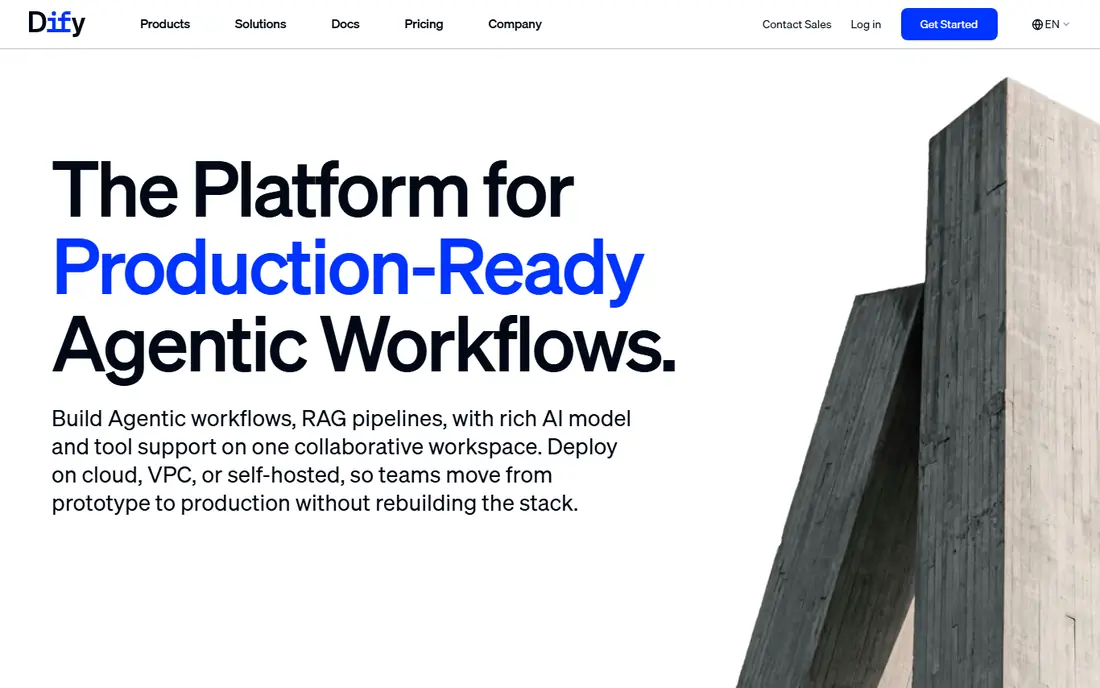
Dify is the easiest starting point for a team that wants an internal agent without writing a full application first. You can build a chat agent, connect a knowledge base from your documents, add tools, and publish the result as a web app or an API. The visual canvas keeps the flow readable for non-developers, while the self-hosted edition lets you run the same system on your own infrastructure.
The licence needs attention. Dify's self-hosted edition is available for internal and commercial backend use, but multi-tenant resale has separate terms, and branding rules apply to the console. Larger deployments also need proper database, vector storage, and backup planning, which is normal for self-hosting but not free work. For an internal assistant or document agent, Dify is the most complete visual option here.
- Visual builder for agents and workflows
- Built-in knowledge bases for document search
- Self-hosted edition with Docker
- Licence limits multi-tenant resale
- Larger deployments need database and storage planning
- Hosted features may differ from self-hosted
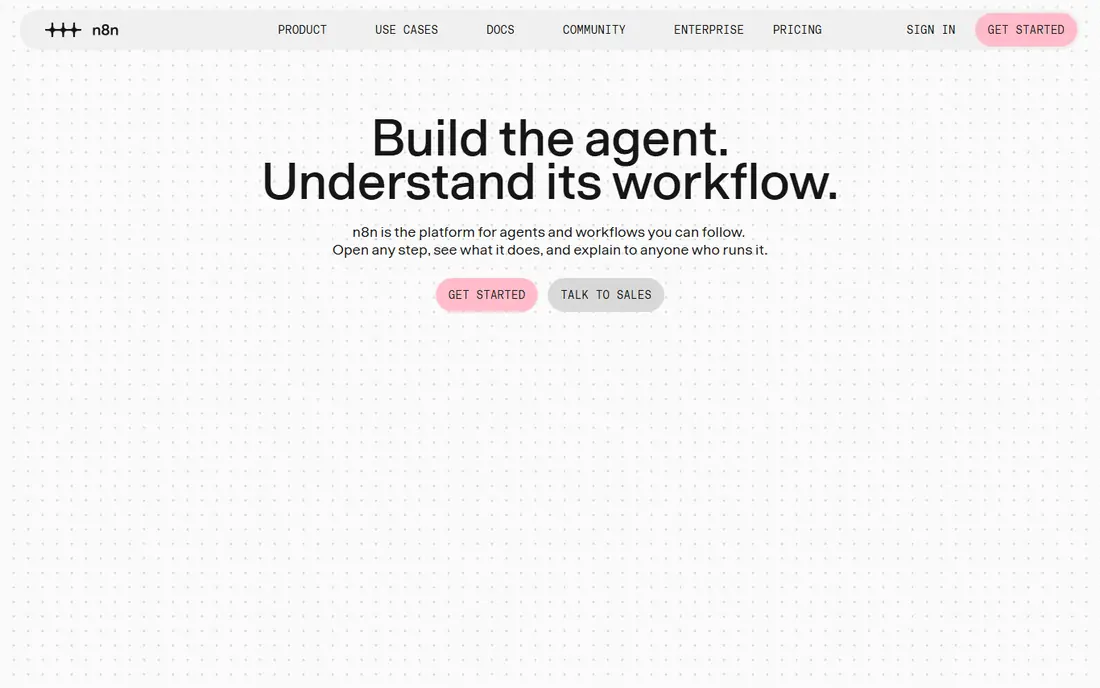
n8n is a workflow automation platform with AI agent nodes, which makes it a natural fit for agents that act across business apps. An agent can read email, check a CRM, call a model, wait for human approval, and then update a ticket, all inside one workflow. The connector library covers many common SaaS tools, and webhooks and schedules handle triggers cleanly.
The licence is source-available rather than fully open source, and it limits commercial redistribution, so internal business use is the clear case. Very large agent workflows can also become hard to follow, and scaling needs database and queue planning. For operations teams that already think in workflows, n8n is a practical on-premises agent platform.
- Large connector library
- AI agent nodes and human approval steps
- Self-hosted with Docker
- Licence limits commercial redistribution
- Agent logic can get complex in large workflows
- Scaling needs care
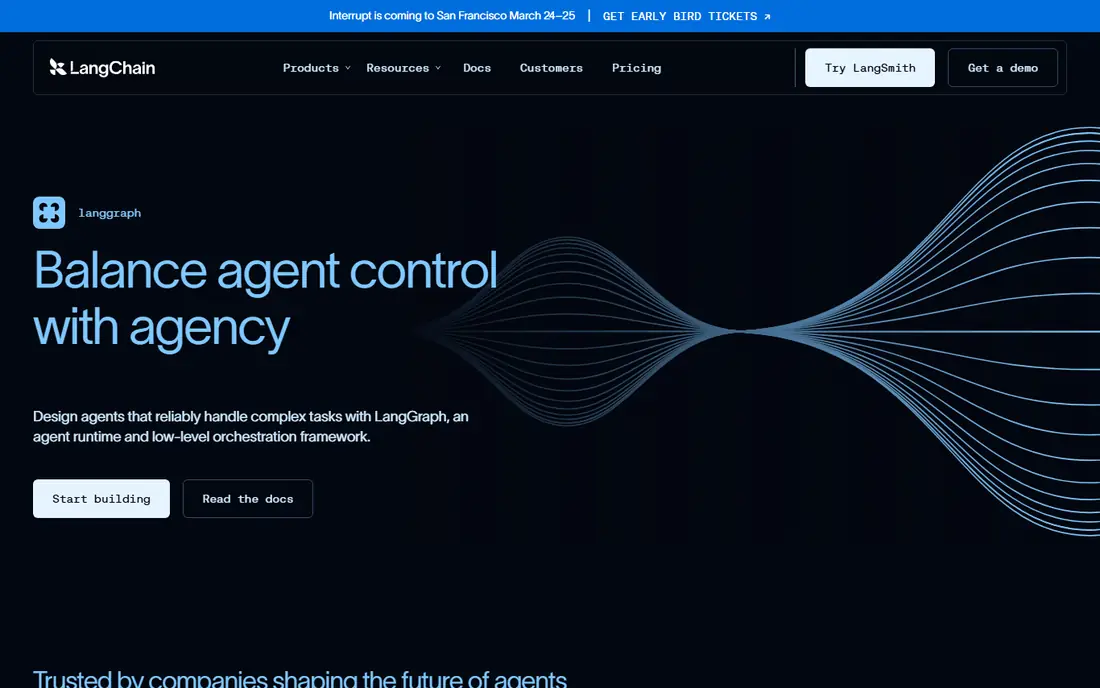
LangGraph, from LangChain, models an agent as a graph of steps with explicit state, conditional branches, and checkpoints. That control matters when an agent must pause for human approval, resume after an error, or rewind a step, rather than running as a single opaque chain. Developers can test each node, log each transition, and keep a clear record of what the agent did.
The trade-off is skill. LangGraph is a framework, not a finished product, so your team writes the code, builds the interface, and handles deployment. Non-developers will not build agents in it directly. For engineering teams that need auditable, stateful agents on their own runtime, it is one of the strongest foundations available.
- Explicit control over agent state and steps
- Pause, resume, and human approval support
- Strong Python ecosystem
- Needs Python development skills
- No visual builder for non-developers
- You build the interface yourself
CrewAI organises agents by role, goal, and backstory, then lets them collaborate through a defined process, such as research, draft, critique, and approve. That model fits jobs that naturally split across roles, like research plus writing plus review. Flows add deterministic control when a step must run in a fixed order, which helps keep multi-agent work predictable.
Multi-agent systems need more testing than single agents, because agents can loop, disagree, or produce uneven quality. Your team also handles deployment, monitoring, and model costs. CrewAI is best for development teams that want a clear multi-agent structure on their own infrastructure, with room to add human review at each handoff.
- Role, goal, and task model for agent teams
- Sequential and parallel flows
- Open source core
- Multi-agent behaviour needs testing and tuning
- Enterprise features are separate
- You handle deployment and monitoring
Langflow gives developers a visual canvas for building LangChain-style component graphs, with editable Python components underneath. That mix suits teams that want to prototype visually and then refine the code, rather than choosing strictly between a builder and a framework. Each project can be exposed as an API, which makes it easier to connect an agent to an existing application.
Production use still needs work: authentication, scaling, monitoring, and backups are your responsibility in a self-hosted deployment. Governance features are lighter than enterprise platforms such as UiPath or IBM watsonx Orchestrate. For a development team that wants a visual start with code-level control, Langflow is a flexible and openly licensed choice.
- Visual canvas for LangChain components
- MIT licence
- Projects can be exposed as APIs
- Needs technical setup for production
- Smaller enterprise governance set
- Performance tuning is your job
AutoGen, from Microsoft, centres on agents that solve problems by talking to each other, with human participation, termination conditions, and state handling. That conversational pattern suits research tasks, where one agent gathers material, another checks it, and a human steps in when the result is unclear. It is a framework for building agents, with patterns you adapt to your own systems.
As with LangGraph, you build the product around it, including the interface, deployment, and monitoring. The project has also evolved over time, so check the current docs for the version you plan to use. For research-heavy teams with engineering capacity, AutoGen offers a well-studied conversational agent model to run on your own infrastructure.
- Conversational agent framework from Microsoft research
- Human participation built in
- Flexible agent patterns
- Framework, not a finished product
- Setup and integration take engineering time
- Documentation changes as the project evolves
AnythingLLM is a good choice when the main job is a private assistant over your own documents. Install it with Docker, upload documents or connect a folder, choose a model provider or a local model, and ask questions with citations back to the source material. Agent tools extend it beyond simple chat, while the setup stays simpler than a full enterprise platform.
The agent features are simpler than Dify, LangGraph, or CrewAI, and governance controls are lighter, so it is less suited to complex multi-step business processes. Scaling and backups are also your responsibility. For a small team that wants a private document agent quickly, AnythingLLM is one of the fastest self-hosted starts.
- Simple self-hosted setup with Docker
- Document chat and agent tools
- Keeps documents on your own system
- Agent features are simpler than Dify or LangGraph
- Enterprise controls are limited
- Scaling is your job
UiPath is an enterprise automation platform that has added agent building alongside its established robotic process automation tools. That background shows in governance: audit trails, access controls, human approval steps, and monitoring are central, not add-ons. On-premises deployment is offered for enterprise customers, subject to the vendor's current deployment terms, so confirm the exact option with UiPath before committing.
The cost is enterprise complexity and pricing. Implementation planning, licensing, and training take time, and a small team with one simple agent will find it heavy. For a larger organisation that already automates processes and needs agents to meet compliance and audit rules, UiPath is a serious on-premises contender.
- Strong governance, audit, and human approval controls
- Large automation ecosystem
- On-premises deployment options for enterprise customers
- Enterprise pricing and complexity
- Needs implementation planning
- Smaller teams may find it heavy
IBM watsonx Orchestrate
Who it suits: Enterprise agents with governance
IBM watsonx Orchestrate is built for enterprises that want agents to work across business applications with governance and audit controls. It integrates with IBM's wider watsonx platform and with enterprise systems, and IBM positions deployment options for regulated environments. For organisations in finance, healthcare, or public sector work, that governance story matters more than a visual builder alone.
Pricing is enterprise level, and many deployments need vendor or partner implementation help. The exact on-premises scope, including which components run on your infrastructure and which use IBM services, should be confirmed in writing before purchase, because enterprise deployment terms change. For regulated enterprises, watsonx Orchestrate is worth a formal evaluation alongside UiPath.
- Enterprise agent orchestration
- Governance and IBM ecosystem integration
- Deployment options for regulated environments
- Enterprise pricing
- Implementation needs IBM or partner help for many teams
- Confirm on-premises scope before buying
How we picked these
We compared official documentation, deployment guides, and licence pages, and we kept only platforms with a stated self-hosted or on-premises path in 2026. We excluded Flowise for new projects because it reached end of life in August 2026. We favoured platforms with a distinct deployment model, from visual builders to code frameworks to enterprise suites, and we noted licence limits where they affect commercial use. We did not claim hands-on deployment testing.
What to check before you deploy on premises
Start with the data path, not the demo. Where do prompts, documents, and tool results travel, which model provider is called, and what leaves your network? A platform can be self-hosted while still calling an external model API, which may be fine, but it is not the same as a fully local deployment. Decide which level your compliance rules require before you choose.
Next, plan the operations work. Self-hosting means your team handles upgrades, backups, database and vector storage, TLS certificates, monitoring, and incident response. Budget for that time honestly, and test a restore before you put a production agent live. Also build human approval into any agent that changes data, sends messages, or spends money, because an agent that acts without a checkpoint will eventually act wrongly at scale.
Finally, test with a narrow job first. Pick one internal process with clear inputs, clear outputs, and a human reviewer, and run it for a few weeks. Measure accuracy, cost, and review time, and only then widen the scope. A small agent that works reliably on your own infrastructure is worth more than a broad agent that no one trusts.
Frequently asked questions
What is the best agentic ai platform we can run on premises?
Dify is our pick for most teams because it combines a visual builder, document search, and a self-hosted edition. Code-first teams should look at LangGraph or CrewAI, operations teams at n8n, and regulated enterprises at UiPath or IBM watsonx Orchestrate.
Can we run agents fully offline?
It depends on the model. The platform can run on your servers, but many setups still call an external model API. Fully offline use needs a local model as well, plus local embeddings and storage, so confirm the whole stack, not just the platform, before promising offline operation.
Is self-hosting cheaper than cloud?
Licence costs can be lower, but total cost includes servers, storage, model calls, and your team's operations time. For a single small agent, cloud is often cheaper overall. Self-hosting pays off when data control, compliance, or sustained volume matters more than the lowest setup cost.
Do we need developers to run an agentic platform on premises?
Visual builders such as Dify, n8n, and AnythingLLM let non-developers build simple agents, but production deployment still needs technical help for security, backups, and scaling. Code frameworks such as LangGraph and CrewAI need developers from the start.
What happened to Flowise?
Flowise reached end of life in August 2026, so we do not recommend it for new projects. Existing Flowise users should plan a migration to a maintained platform such as Dify, Langflow, or a code framework, and pin or fork the old code only as a short-term bridge.
Sources we checked (9)

Online Jobs is an independent blog about careers, online work, learning new skills and the tools that help people earn. More about us.
Keep reading
All posts
ZoomInfo Alternatives
The best ZoomInfo alternatives in 2026, compared on price, free plans, data coverage, and which tool fits small teams or large sales teams best in detail.

Workday Alternatives
We compared the best workday alternatives for HR, payroll, and global hiring, from BambooHR and Gusto to Rippling, Deel, and HiBob for growing teams in 2026.
Which SaaS Tools Have the Best Customer Support
Which SaaS tools have the best customer support? Compare eight popular tools on help centres, live help, response options and overall support quality.