Best 3PL Companies in 2026: 8 Fulfillment Partners Compared

How we put this together: we compare official feature and pricing pages, app store listings, privacy policies and public user reviews. Prices change, so check the provider's site before you pay.
Key takeaways
- The best 3PL company for you depends on product size, order volume, and where your customers live, not on a single headline pick and pack rate.
- ShipBob is a strong default for lightweight direct to consumer brands that need broad warehouse coverage.
- ShipMonk suits startups and subscription boxes that need low minimums and kitting help.
- Red Stag is the pick for heavy, bulky, or high value goods where accuracy and damage control matter most.
- Always compare total cost per order, including storage, receiving, materials, and shipping, before you sign.
Quick comparison
| Name | Who it suits | Starting price | Free option | |
|---|---|---|---|---|
 ShipBob | Lightweight DTC brands at scale | See website | No | Visit |
 ShipMonk | Startups and subscription boxes | See website | No | Visit |
 Red Stag Fulfillment | Heavy and high value goods | See website | No | Visit |
 ShipHero | Growing brands needing software control | See website | No | Visit |
 Deliverr | Fast delivery badges for marketplaces | See website | No | Visit |
 Amazon Multi-Channel Fulfillment | Existing Amazon sellers | See website | No | Visit |
 Flexport | Freight plus fulfillment in one system | See website | No | Visit |
 The Fulfillment Lab | Custom packaging and unboxing | See website | No | Visit |
The best 3PL companies
A third party logistics company, or 3PL, stores your inventory, picks and packs orders, and ships them to customers. The right partner can cut delivery times and free you from warehouse work. The wrong partner can raise costs through storage fees, receiving fees, and shipping surcharges that do not show up in a headline rate.
We compared warehouse coverage, minimums, specialty strengths, and pricing models from official pages and published guides. Most 3PLs price by custom quote, so we list starting price as See website where a public flat rate does not apply. Get quotes from two or three providers for your real order mix before you decide, and ship test orders to yourself first.
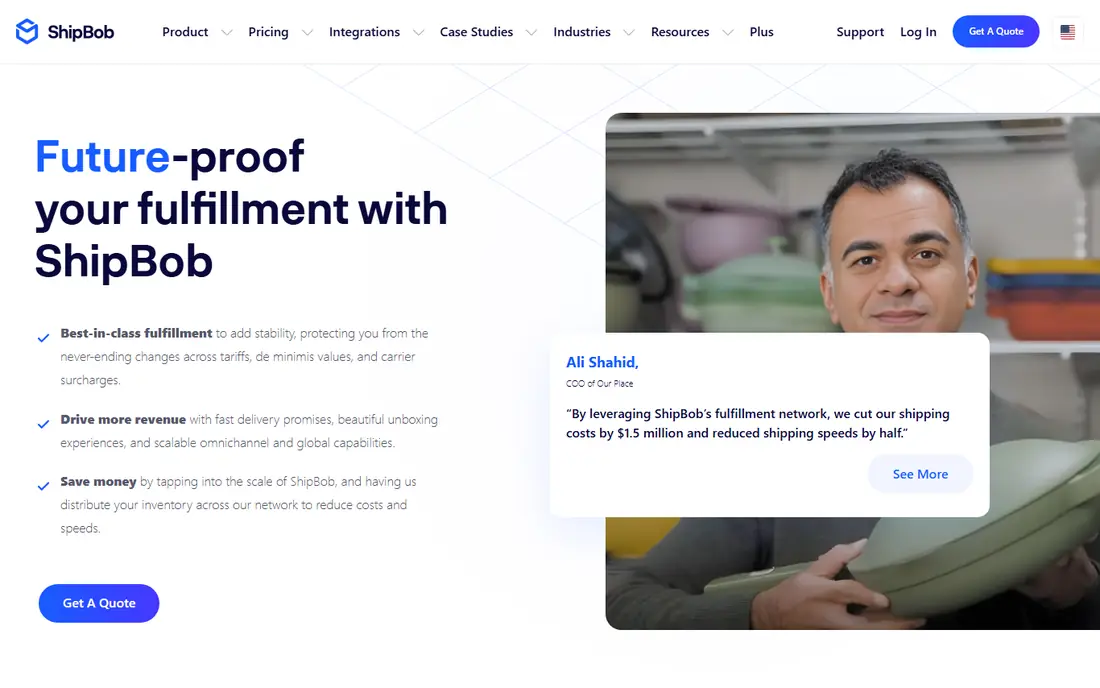
ShipBob is the default shortlist pick for many direct to consumer brands, and for good reason. Its warehouse network helps brands offer faster delivery to more of the country without splitting inventory across too many sites themselves. Integrations with Shopify, WooCommerce, and major marketplaces keep order flow simple, and the dashboard gives a clear view of stock levels.
The cost picture needs care. ShipBob uses itemized pricing, so pick and pack, storage, receiving, and materials each add up, and monthly minimums mean a slow month still costs money. Model a real month, including a slow month, before you sign. For brands shipping a steady volume of lightweight goods, ShipBob scale and software often justify that structure.
- Broad US and international warehouse network
- Strong Shopify and store integrations
- Modern dashboard for inventory
- Monthly minimums apply
- Onboarding and receiving costs need careful checking
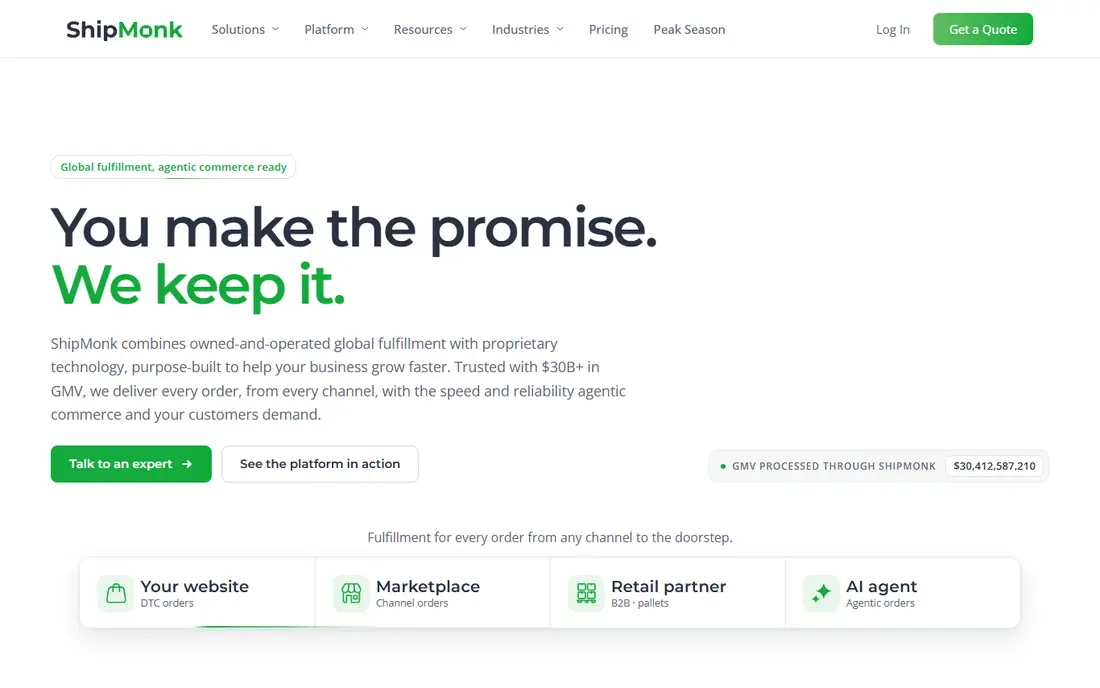
ShipMonk appeals to brands that are still growing, because minimums are lower than at many larger 3PLs and the team is used to subscription boxes, bundles, and kitting work. If your product needs assembly, inserts, or a monthly box build, ShipMonk workflows are built for that job rather than added as an afterthought.
The trade is billing clarity. Costs are split across several categories, so you need to audit the first few invoices line by line and ask questions early. Do that work in month one, and ShipMonk can be a good long term partner for a growing brand. Skip that audit, and small charges can add up unnoticed.
- Low minimums for many startups
- Strong kitting and subscription box workflows
- Dedicated support at lower tiers in many cases
- Billing can be complex with many line items
- Some merchants report billing disputes, so audit invoices early
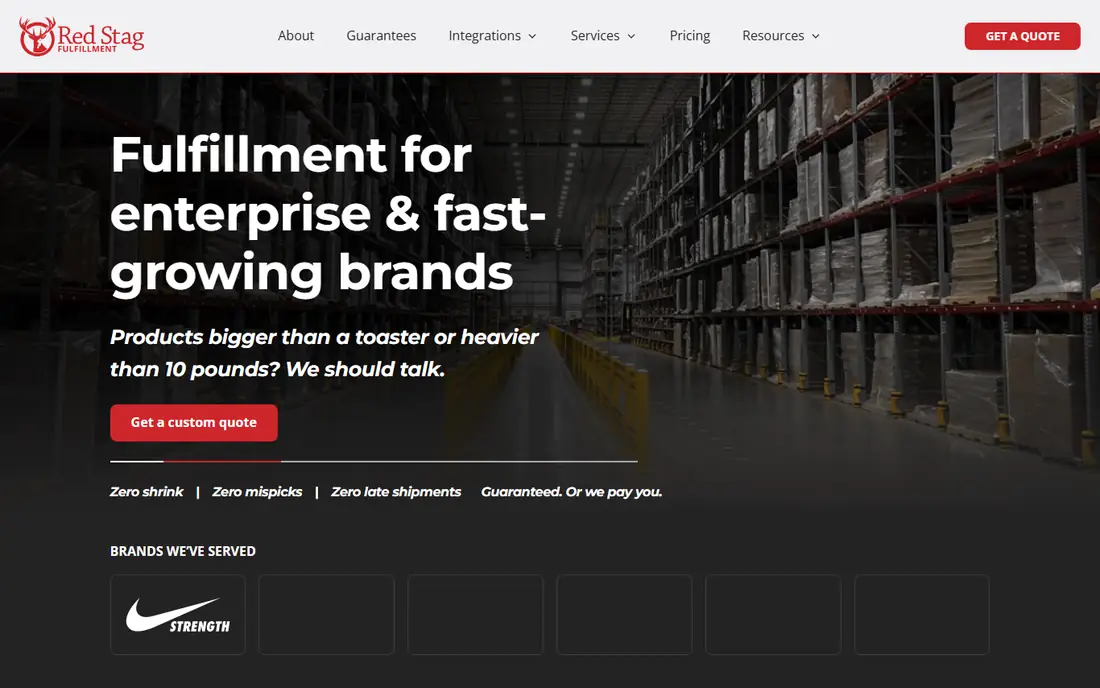
Red Stag is built for products that other 3PLs find awkward, such as furniture, fitness equipment, and high value goods where a mistake is costly. Its accuracy guarantees and handling processes are designed around that risk, and its warehouses are set up for bulky freight rather than only small parcels.
That specialty means Red Stag is not the cheapest pick for a lightweight t-shirt brand. For a heavy product, though, damage and error costs matter more than a small saving on pick and pack. If your product is over five pounds, fragile, or expensive, get a Red Stag quote alongside a generalist quote and compare total cost including damage and returns.
- Accuracy focus and guarantees for high value goods
- Experience with heavy and oversized items
- Two large US warehouses
- Less suited to tiny lightweight orders
- Custom quote only, so comparison takes more work
ShipHero combines fulfillment services with warehouse management software that many brands use even when they run their own warehouse. That software strength shows in inventory accuracy, order routing, and reporting, which matter more as volume grows and as you add sales channels.
Smaller brands may find the minimums and setup effort higher than at ShipMonk. ShipHero fits best once you have steady volume and you want control over how orders are processed, rather than handing every decision to a provider. Test the dashboard during a trial or demo, since you will live in it daily.
- Strong warehouse software
- Good for brands that want visibility and control
- Handles high order volumes
- Monthly minimums are higher than some startups want
- Setup needs more involvement
Deliverr, now under Flexport, became known for helping sellers earn fast delivery badges on Walmart and other marketplaces. That badge can lift conversion, since shoppers trust a fast delivery promise. Its network is designed to place inventory close to customers, which helps delivery speed without a brand building its own warehouse network.
The catch is change. Ownership and service details have shifted over time, so confirm current coverage, marketplace badge support, and pricing in writing before you commit. For a marketplace heavy seller, Deliverr can still be worth a quote. For a brand that sells mainly on its own site, a generalist like ShipBob may be simpler.
- Fast shipping badges on major marketplaces
- Broad warehouse coverage
- Simple onboarding for many sellers
- Now part of a larger logistics group, so service details can change
- Pricing is quote based
Amazon Multi-Channel Fulfillment
Who it suits: Existing Amazon sellers
Amazon Multi-Channel Fulfillment, often called MCF, lets sellers who already use Fulfillment by Amazon ship orders from other channels through Amazon warehouses. That is convenient if your stock already sits with Amazon, and delivery speed is strong in many regions.
The downsides are branding and cost control. Packaging is Amazon branded by default, which may not suit a brand that cares about unboxing, and fees for storage and oversized goods need careful modeling. MCF fits best as an add on for an existing Amazon seller, not as a first 3PL for a brand that has never used Amazon.
- Uses Amazon warehouse network
- Useful if you already store goods with Amazon
- Fast delivery for many regions
- Amazon branded packaging by default
- Fees can be high for slow moving or oversized goods
Flexport started in freight forwarding and expanded into fulfillment, which makes it a strong fit for brands that import goods and need both ocean or air freight and domestic fulfillment in one system. Visibility across freight and warehouse stages can help a brand plan inventory with fewer surprises.
For a small brand that buys domestically and ships a few hundred orders a month, Flexport can feel heavy. It fits best for importers and growing brands that want one logistics partner across the supply chain. Smaller brands should compare a simpler 3PL first and only move to Flexport when freight complexity justifies it.
- Combines freight forwarding with fulfillment
- Useful for importers
- Broad logistics visibility
- More complex and enterprise leaning
- May be more than a small brand needs
The Fulfillment Lab stands out for brands where the box itself is part of the product. Custom inserts, branded packaging, and retail ready builds are core services, not extras bolted on late. That matters for beauty, food, and lifestyle brands where unboxing drives repeat orders and social sharing.
Custom work costs more and takes longer to set up than a standard pick and pack service. If your packaging is simple, a generalist will be cheaper. If your unboxing is a selling point, The Fulfillment Lab is worth a quote, and you should send test boxes to yourself and to friends before you launch with it.
- Strong custom packaging and branding options
- Experience with subscription and retail brands
- Flexible solutions
- Monthly minimums apply
- Custom work adds cost and lead time
How we picked these
We compared warehouse coverage, minimums, specialty strengths, and pricing models from official provider pages and published fulfillment guides. We favored providers with a clear specialty, a track record with online sellers, and a service that a US small business can actually buy. We left out pure software tools that do not store and ship goods, since they do not replace a 3PL on their own.
How to compare 3PL quotes fairly
Never compare a single pick and pack rate in isolation. Ask each provider for a full quote on the same order mix, including receiving, storage per pallet or per cubic foot, pick and pack per order and per extra item, materials, account fees, and shipping. Then add a slow month and a peak month to the model, since minimums and storage change the answer in both cases.
Next, check the practical details that affect customers. Ask about cutoff times, carrier options, returns handling, inventory accuracy reporting, and how problems are escalated. Ship test orders to yourself and to a friend, and check packaging quality, delivery time, and tracking accuracy. A provider that looks cheap on paper but ships damaged boxes will cost more in refunds and lost customers.
Questions to ask every provider
Ask for the monthly minimum in writing, and what happens if you miss it. Ask how receiving is charged, how long onboarding takes, and whether you can leave without a long exit fee. Ask for references from brands in your product category and at your volume, and actually contact them.
When to stay in house
If you ship fewer than about 100 orders a month, or if your product needs very hands on packing, staying in house may still be cheaper and more flexible. A 3PL saves time, but minimums and onboarding costs can outweigh that saving at very low volume. Revisit the decision when volume is steady and packing takes time away from selling.
Frequently asked questions
What is the best 3PL company?
There is no single best 3PL company for every brand. ShipBob is a strong default for lightweight direct to consumer brands, ShipMonk suits startups and subscription boxes, and Red Stag suits heavy or high value goods. Match the provider to your product size, volume, and customer locations, then compare total cost per order.
How much does a 3PL cost?
Most 3PLs price by custom quote, with pick and pack, storage, receiving, materials, and shipping as separate lines. Published guides often put total cost before shipping in the range of a few dollars per order for standard goods, but your product size and volume change that figure. Get quotes on your real order mix, not on a generic example.
What is the best 3PL company for small businesses?
ShipMonk is often a good starting point for small businesses because minimums are lower than at many larger providers. ShipBob can also work once volume is steady. If you ship very few orders, compare the monthly minimum against your real volume before you sign, since a minimum can erase the saving from outsourcing.
Should I use Amazon MCF?
Amazon MCF makes sense if you already store goods with Amazon and want to ship other channel orders from the same stock. It makes less sense as a first 3PL for a brand that values custom packaging, since Amazon branded packaging is the default. Model storage and oversized fees carefully before you commit.
How do I switch 3PL providers?
Plan the switch around inventory, not around a contract date. Order a final shipment from the old provider, move stock in stages, and keep both systems running until test orders from the new provider pass. Confirm exit fees, stock return costs, and data handover in writing before you start the move.
Do 3PLs handle returns?
Most 3PLs handle returns, but the process and cost vary. Ask how returns are inspected, restocked, or disposed of, and how quickly return stock becomes available to sell again. For apparel and other high return categories, returns handling can matter as much as outbound shipping speed.
Sources we checked (8)

Online Jobs is an independent blog about careers, online work, learning new skills and the tools that help people earn. More about us.
Keep reading
All posts
n8n Alternatives
n8n alternatives compared for 2026, with Zapier, Make, Activepieces, and more, covering visual builders, code steps, self-hosting, and pricing models.

ZoomInfo Alternatives
The best ZoomInfo alternatives in 2026, compared on price, free plans, data coverage, and which tool fits small teams or large sales teams best in detail.
Zoom Alternatives for Webinars
Compare Zoom alternatives for webinars in 2026, from browser-based rooms to enterprise events, with prices, attendee limits, features and honest trade-offs.