Athenahealth Alternatives in 2026: 8 Systems Compared


Multi-specialty practices · Starting price: See website
How we put this together: we compare official feature and pricing pages, app store listings, privacy policies and public user reviews. Prices change, so check the provider's site before you pay.
Key takeaways
- Athenahealth, sold as athenaOne, charges on a percentage-of-collections model, so flat-rate alternatives can be easier to budget for smaller practices.
- eClinicalWorks and NextGen suit multi-specialty and multi-location practices that need broad templates and reporting.
- Tebra and Practice Fusion suit smaller practices that want simpler setup and clearer monthly pricing.
- DrChrono suits mobile-first practices, while AdvancedMD suits groups that want deep billing and revenue cycle tools.
- EHR pricing varies by provider count, modules and state, so always get a written quote for your exact practice shape.
Quick comparison
| Name | Who it suits | Starting price | Free option | |
|---|---|---|---|---|
| eClinicalWorks | Multi-specialty practices | See website | Free trial | Visit |
 Tebra | Independent practices | See website | Free trial | Visit |
 DrChrono | Mobile-first practices | See website | Free trial | Visit |
 NextGen Healthcare | Specialty and growing practices | See website | Free trial | Visit |
 AdvancedMD | Groups needing billing depth | See website | Free trial | Visit |
 Practice Fusion | Smaller practices wanting simplicity | See website | Free trial | Visit |
 Elation Health | Primary care practices | See website | Free trial | Visit |
 ModMed | Specialty practices | See website | Free trial | Visit |
The best athenahq alternatives
Athenahealth is a cloud EHR with managed billing services bundled in, which suits practices that want revenue cycle work handled for them. The alternatives below split that bundle in different ways, from flat-rate EHRs to specialty systems, so you can match the system to your practice size and billing model.

eClinicalWorks is one of the largest ambulatory EHR vendors, and its breadth is the main draw. Multi-specialty practices get templates, scheduling, billing and a patient portal in one system, plus telehealth and AI scribe add-ons for documentation. For a practice with several locations or specialties, that single-system coverage avoids stitching together separate tools.
The trade-off is complexity. The interface packs in a lot, and new users often need training before charting feels fast. Pricing is quote-led and varies by provider count and modules, so ask for a full breakdown including add-ons. If your practice needs breadth and can invest in setup, eClinicalWorks is a strong athenaOne alternative.
- Broad specialty templates
- Patient portal and telehealth
- AI scribe options
- Quote-led pricing
- Interface can feel busy
- Implementation takes planning
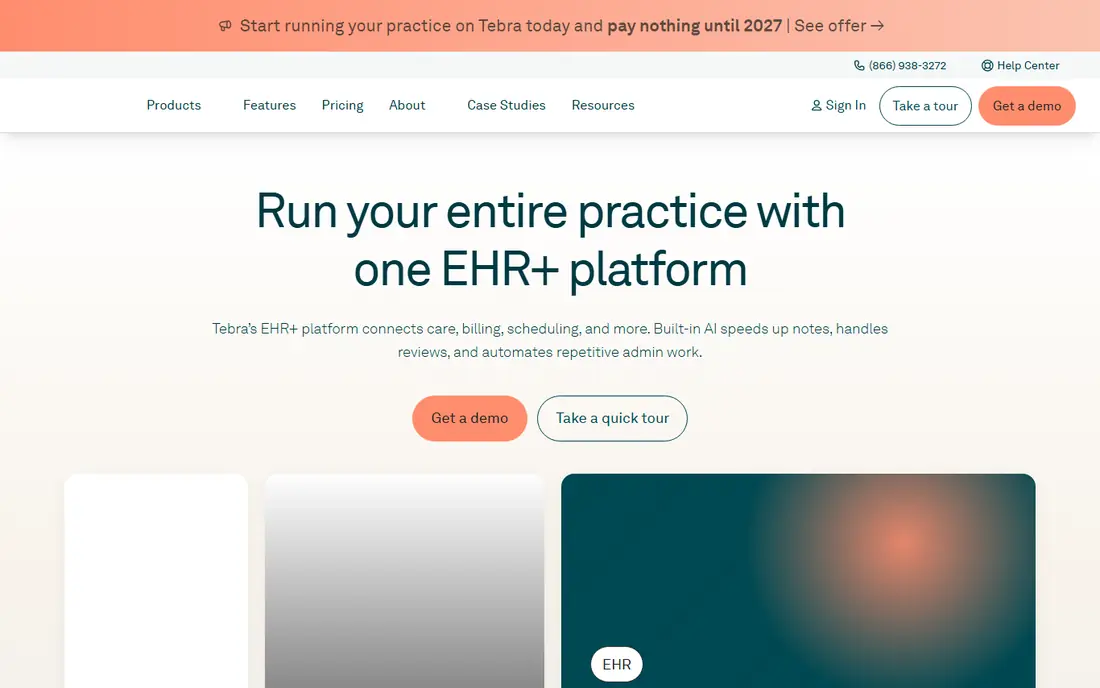
Tebra, formed from Kareo and PatientPop, combines an EHR with billing and patient acquisition tools. Independent practices get charting and billing alongside online scheduling, reputation management and patient messaging, which helps a small practice fill its diary as well as run it. AI note assistance is available as an add-on for documentation.
Pricing is the part to pin down. Bundles range widely by provider type and included tools, so two practices can pay quite different amounts for Tebra. Get a written quote for the exact bundle you need, and check which growth features are included versus paid extras. Tebra suits independent practices that want clinical and growth tools from one vendor.
- EHR plus practice growth tools
- Patient engagement features
- AI note assistance
- Pricing varies widely by bundle
- Some features need higher tiers
- Migration takes care

DrChrono is built around mobile charting, originally on iPad, which suits clinicians who chart at the point of care rather than at a desk. Templates can be customised by specialty, and billing, scheduling and patient messaging sit in the same platform. For a concierge or mobile practice, that workflow feels natural in a way a desktop-first EHR does not.
The limits are fit and price clarity. Pricing is quote-led, so small practices should ask for the total monthly cost including any scribe or billing add-ons. Specialties with heavy inpatient or hospital workflows may also find DrChrono lighter than a hospital-grade system. For ambulatory practices that value mobile charting, it is a distinctive alternative.
- IPad-centred charting
- Flexible templates
- Billing and scheduling included
- Quote-led pricing
- Mobile focus may not suit every specialty
- Add-on costs add up
NextGen Healthcare suits specialty practices and growing groups that need workflows shaped to their field, from orthopaedics to cardiology. Templates, reporting and billing can be configured in depth, which helps a practice that has outgrown a generic EHR. It also scales across locations, so a group adding providers does not need to switch systems quickly.
Configuration is both the strength and the cost. Getting templates and reports right takes implementation time, and smaller practices may find the system heavier than they need. Pricing is quote-led, so request a quote based on provider count and required modules. NextGen is the pick when specialty depth and growth headroom matter most.
- Configurable specialty workflows
- Strong reporting
- Scalable for growing groups
- Quote-led pricing
- Configuration takes time
- Smaller practices may find it heavy
AdvancedMD is an all-in-one platform with particular strength in billing and revenue cycle management, which makes it a natural alternative for practices that want to run billing in house rather than hand it to a managed service. Scheduling, charting, telehealth and performance analytics sit alongside billing, so a growing group can track both clinical and financial performance in one place.
Pricing varies widely by package, and AI documentation and other features may sit on higher tiers or as add-ons. Ask for the full package price for your provider count, and check training and support terms. AdvancedMD suits groups that want billing control and are ready to invest in learning a full platform.
- Deep billing and revenue cycle tools
- Scheduling and reporting
- Telehealth included
- Quote-led pricing with wide ranges
- Add-on costs
- Learning curve for new staff
Practice Fusion is the simpler end of this list, and that is its appeal. Smaller outpatient practices get cloud charting, e-prescribing and a patient portal without the weight of a large enterprise suite. Setup is faster, and the starting cost is lower than the big multi-specialty platforms, which helps a new or small practice get live quickly.
The trade-off is depth. Billing, reporting and customisation are lighter than in AdvancedMD or NextGen, so a growing multi-specialty group may outgrow Practice Fusion. For a small primary care or family practice with straightforward needs, though, simplicity is a feature, not a gap. Check current plans in writing, since pricing and tiers change.
- Simpler ambulatory charting
- Cloud-based
- Lower starting cost than large suites
- Fewer advanced features than large platforms
- Billing depth is lighter
- Customisation is limited
Elation Health is built for primary care, with a clean charting design that prioritises the clinical note over administrative clutter. Primary care clinicians often report faster charting here than in larger suites, and the system handles scheduling, messaging and referrals in a straightforward way. For a primary care practice, that focus matters every day.
Billing is the honest limit. Elation works best for practices that are happy to pair it with a billing partner or handle billing separately, rather than expecting full revenue cycle depth in the box. Pricing is quote-led, so confirm the total including any billing partner costs. Elation is the pick when clinical speed in primary care is the top priority.
- Clean clinical-first design
- Fast charting
- Good for primary care workflows
- Billing depth is lighter
- Best paired with a separate billing partner for some practices
- Quote-led pricing
ModMed, short for Modernizing Medicine, builds specialty EHRs with templates and workflows designed for fields such as dermatology, orthopaedics and ophthalmology. Its adaptive charting learns from the clinician's choices, which can speed up documentation in high-volume specialty clinics. Billing and coding are designed around specialty code sets, which helps accuracy.
The specialty focus is also the limit. A general primary care practice will get less value from ModMed than from Elation or Practice Fusion, and pricing is quote-led. ModMed suits a single-specialty practice that wants a system built for its field rather than adapted to it. Get a specialty-specific demo with your own visit types before you commit.
- Specialty-specific templates
- Adaptive charting
- Strong dermatology and orthopaedics coverage
- Quote-led pricing
- Specialty focus means less fit for general primary care
- Implementation takes time
How we picked these
We compared official feature and pricing pages, plus public reviews, and kept only EHR systems that are live and actively sold to US practices in October 2026. We covered ambulatory, specialty and primary care systems, since athenaOne serves a wide range of practices. Where a price could not be verified on the vendor's own page, we wrote "See website" rather than guessing. We did not claim hands-on testing; our comparison rests on published features, pricing and integrations.
What to check before you switch EHRs
Start with your billing model. Athenahealth's percentage-of-collections pricing rises with revenue, while flat-rate systems cost the same regardless of collections. Model both on your last year of collections to see which is cheaper for your practice, and check what billing work each quote actually includes.
Run a demo with your own workflows
Ask each vendor to demo with your visit types, your referral patterns and your billing codes, not just a generic script. Time a full chart, a prescription and a claim from start to finish. The system that handles your most common visit fastest, with the fewest clicks, will save more time than the system with the longest feature list.
Frequently asked questions
What are the best alternatives to athenahealth?
The best alternatives depend on practice size and specialty. eClinicalWorks and NextGen lead for multi-specialty groups, Tebra leads for independent practices, and DrChrono leads for mobile-first practices. Practice Fusion and Elation lead for smaller and primary care practices.
What is the best athenahealth alternative for small practices?
For small practices, Tebra and Practice Fusion are strong starting points because both offer simpler setup and clearer monthly pricing than large enterprise suites. Elation is a strong choice for small primary care practices that prioritise fast charting.
Does athenahealth charge a percentage of collections?
Athenahealth generally prices athenaOne as a percentage of practice collections, with exact terms set by agreement and services selected. That model can suit practices that want managed billing bundled in, but flat-rate alternatives may be easier to budget for smaller practices.
Is eClinicalWorks a good athenahealth alternative?
Yes, for multi-specialty and multi-location practices that need broad templates, a patient portal and telehealth in one system. It is quote-led and takes setup time, so get a written quote for your provider count and modules before you decide.
How long does it take to switch EHR systems?
Most ambulatory practices take several weeks to a few months, depending on data migration, template setup and staff training. Ask each vendor for a written implementation timeline, including data migration, training and go-live support, before you sign.
Sources we checked (8)

Online Jobs is an independent blog about careers, online work, learning new skills and the tools that help people earn. More about us.
Keep reading
All posts
n8n Alternatives
n8n alternatives compared for 2026, with Zapier, Make, Activepieces, and more, covering visual builders, code steps, self-hosting, and pricing models.

ZoomInfo Alternatives
The best ZoomInfo alternatives in 2026, compared on price, free plans, data coverage, and which tool fits small teams or large sales teams best in detail.

Zoom Alternatives for Webinars
Compare Zoom alternatives for webinars in 2026, from browser-based rooms to enterprise events, with prices, attendee limits, features and honest trade-offs.