Alternatives to OpenAI API in 2026: 9 APIs Compared


Coding, agents, and long documents · Starting price: See website
How we put this together: we compare official feature and pricing pages, app store listings, privacy policies and public user reviews. Prices change, so check the provider's site before you pay.
Key takeaways
- Anthropic Claude API is the closest all-round rival to OpenAI API for coding, agents, and long documents.
- Google Gemini API suits teams that need large context, multimodal input, and Google Cloud integration.
- Mistral, DeepSeek, and Meta Llama offer lower-cost or open-weight paths, with Mistral strong in Europe and DeepSeek strong on price.
- Cohere leads for enterprise retrieval, embeddings, and reranking, while Groq and Together AI lead for fast or open-model inference.
- Most of these APIs charge by token, so compare input and output rates on your real prompts, not on headline model names alone.
Quick comparison
| Name | Who it suits | Starting price | Free option | |
|---|---|---|---|---|
| Anthropic Claude API | Coding, agents, and long documents | See website | Free trial | Visit |
 Google Gemini API | Large context and multimodal work | See website | Yes | Visit |
 Mistral AI | European hosting and cost control | See website | Free trial | Visit |
 Cohere | Enterprise retrieval and reranking | See website | Free trial | Visit |
 DeepSeek API | Low-cost reasoning at volume | See website | No | Visit |
 Meta Llama | Self-hosting and open weights | See website | Yes | Visit |
 Groq | Very fast inference | See website | Yes | Visit |
 Together AI | Open-model hosting and fine-tuning | See website | Yes | Visit |
 Amazon Bedrock | Multi-model access inside AWS | See website | No | Visit |
The best alternatives to OpenAI API
OpenAI API set the standard for developer access to frontier models, but it is no longer the only strong choice. Rivals now match or beat it on context length, speed, price, retrieval, or data control. We compared official API documentation, model pages, and pricing pages to sort the alternatives by the job each one does best.

Claude API is the default alternative most OpenAI developers try first. Its models handle long documents, multi-step coding tasks, and agentic workflows with careful instruction following, and its API supports tool use, batch processing, and prompt caching. Teams building customer support agents or document analysis pipelines often find Claude output needs less cleanup.
Claude is not a budget pick at flagship rates, so teams should test smaller Claude models for routine tasks and reserve flagship models for hard ones. Prompt caching and batch discounts can cut costs where the API supports them. If quality on coding and long reasoning matters more than the lowest token price, Claude is the strongest OpenAI API alternative.
- Strong coding and agentic performance
- Large context options
- Clear safety and instruction following
- Token rates for flagship models are not the cheapest
- Usage limits can affect heavy workloads
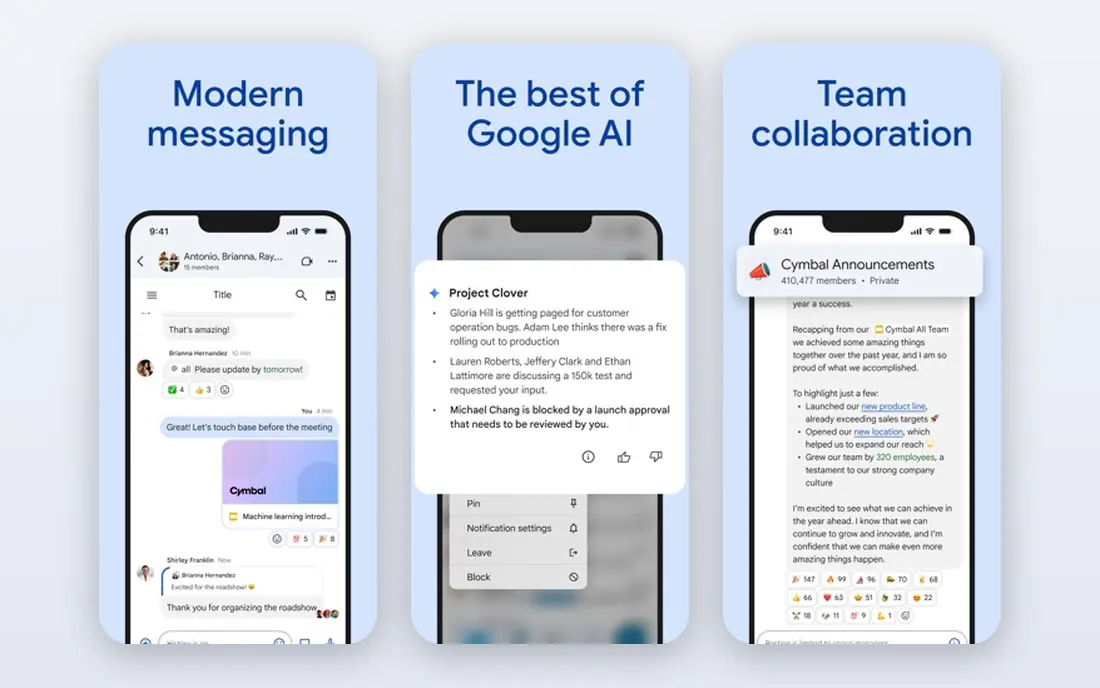
Gemini API suits teams that feed models large documents, long videos, or mixed text and images. Its larger models offer context windows that can hold whole codebases or long reports, and its smaller Flash models offer low latency for chat and mobile features. A free tier makes early testing cheap, which helps teams compare Gemini with OpenAI before committing.
Google updates model names and rates often, so check the current pricing page before you budget. Teams already on Google Cloud get the most value, since Gemini fits BigQuery, Vertex AI, and Workspace data. For multimodal and long-context work, Gemini is one of the strongest OpenAI API alternatives.
- Very large context windows
- Native multimodal input
- Free tier for testing and small apps
- Pricing and model naming change often
- Best value inside Google Cloud
Mistral AI, based in France, appeals to teams that need European hosting or a clear exit from a single vendor. Its API covers chat, coding, and reasoning models, and several of its models are open weight, so a team can self-host the same weights if it leaves the hosted API. Multilingual performance is a noted strength, which helps teams serving European languages.
Mistral's developer ecosystem is smaller than OpenAI's, so some frameworks and examples need adaptation. Model choice also matters, since Mistral offers a range from small, cheap models to larger flagship models. For European firms and cost-conscious teams that value hosting choice, Mistral is a strong pick.
- European data residency options
- Open-weight models you can self-host
- Multilingual strength
- Smaller ecosystem than OpenAI or Google
- Flagship rates vary by model
Cohere is less of a ChatGPT clone and more of a retrieval specialist. Its Command models handle chat and generation, but its real edge is Embed and Rerank, which help a retrieval system find the right documents before a model answers. That makes Cohere a strong pick for enterprise search, support knowledge bases, and document question answering.
Teams that only need general chat may find Claude or Gemini simpler, since Cohere shines when paired with a document store. Cohere also offers private and virtual private cloud deployments for regulated firms. If your OpenAI use is mostly retrieval-augmented generation, Cohere may improve answer quality more than a larger chat model would.
- Strong retrieval, embeddings, and rerank models
- Private deployment options
- Enterprise focus
- Less suited as a general chat replacement
- Flagship chat rates are not the lowest
DeepSeek API is the price leader in this list. Its models offer reasoning performance at token rates far below flagship rivals, and its API format is compatible with OpenAI-style calls, which makes migration easier for many codebases. High-volume teams that process many documents or run many agent steps can save a large share of inference cost.
DeepSeek is based in China, so firms with data residency, compliance, or policy rules should review where data is processed and whether that fits their requirements. Some teams address this by self-hosting open-weight DeepSeek models instead of using the hosted API. For cost-first teams without those constraints, DeepSeek is hard to ignore.
- Very low token rates
- OpenAI-compatible API format
- Strong reasoning models
- Data residency and policy questions need review
- Support and ecosystem are smaller than major rivals
Meta Llama is not a single API, but a family of open-weight models that many providers host. That openness is its main appeal. A team can fine-tune Llama on its own data, run it in its own cloud or on premises, and switch hosting providers without changing model weights. For firms with strict data control needs, that freedom matters.
Self-hosting shifts cost from tokens to infrastructure and engineering, including GPU capacity, scaling, and safety filtering. Teams that do not want that work can use a hosted Llama provider such as Together AI or Groq and pay per token instead. If control and fine-tuning matter more than a managed frontier API, Llama is the most flexible alternative.
- Open weights you can run anywhere
- Fine-tuning freedom
- No per-token vendor lock-in when self-hosted
- Self-hosting needs GPU capacity and engineering time
- Hosted quality varies by provider
Groq stands out on speed. Its custom inference hardware serves open models with very low latency, which makes it a good fit for real-time chat, voice agents, and interactive tools where waiting for tokens hurts the product. It hosts Llama, Qwen, and other open models, so teams can test several models on one fast platform.
Groq does not develop its own frontier models, so teams that need the latest proprietary reasoning model will still need Claude, Gemini, or OpenAI for that tier. Groq is best used as a fast inference layer for open models, or alongside a frontier API for latency-sensitive paths. For speed-critical apps, Groq is a clear alternative to consider.
- Extremely low latency inference
- Supports popular open models
- Free tier for testing
- Model catalog is narrower than full API platforms
- Not a frontier model developer itself
Together AI hosts a wide catalog of open models with serverless pricing, plus dedicated GPU clusters for teams that need guaranteed capacity. It also supports fine-tuning, which helps teams adapt an open model to their own data without building GPU infrastructure. That mix makes Together a practical home for Llama, Qwen, DeepSeek, and Mistral open models.
Open-model quality varies by task, so Together is not a drop-in replacement for a frontier model on every prompt. Teams should benchmark two or three models on their real tasks before choosing one. For teams standardizing on open models, Together offers a simpler path than self-hosting, with a free tier for early tests.
- Broad open-model catalog
- Serverless and dedicated options
- Fine-tuning support
- Usage pricing needs monitoring
- Open-model quality varies by task
Amazon Bedrock gives AWS teams access to models from Anthropic, Meta, Mistral, Cohere, and others through one service. That single contract and identity setup simplifies procurement, and Bedrock guardrails, knowledge bases, and agents help teams build governed applications. Data can stay inside AWS networking, which suits firms with strict cloud rules.
Bedrock model availability varies by region, and pricing differs by model, so a team must check both before designing an app. Bedrock also adds an AWS layer between the team and the model provider, which can delay access to the newest model versions. For AWS-standardized firms that want model choice without many vendor contracts, Bedrock is a strong OpenAI API alternative.
- One AWS service for many model providers
- Private networking and guardrails
- Fits AWS data and identity
- Model availability varies by region
- Pricing is per model and needs careful tracking
How we picked these
We compared official API documentation, model pages, and pricing pages for each provider, and we favored APIs that are actively maintained, support tool use or retrieval where relevant, and offer a clear migration path from OpenAI-style calls. We mixed frontier providers with open-model hosts and cloud platforms, so readers can match an API to their needs for quality, speed, price, or control. Where a provider does not publish a single starting price, we wrote See website, since token pricing varies by model.
How to switch from OpenAI API without breaking your app
Start by mapping every OpenAI feature you use, including function calling, structured output, streaming, vision, and embeddings, since no alternative matches all of them in the same way. Port one workload at a time, beginning with a low-risk internal tool, and compare output quality and cost on the same prompts. Watch for differences in instruction following, JSON reliability, and refusal behavior, which often matter more than benchmark scores.
Next, abstract the model layer in your code, so model names, endpoints, and token limits sit in configuration rather than scattered through prompts. That step makes a second switch far cheaper if pricing or policy changes again. Finally, set spend alerts and token budgets per model, since a cheaper rate can still produce a large bill if an agent loops or a prompt grows.
Frequently asked questions
What is the best alternative to OpenAI API?
Anthropic Claude API is the best all-round alternative for coding, agents, and long documents. Google Gemini API is better for large context and multimodal work, while DeepSeek API is better for low-cost volume. The best choice depends on your workload, so benchmark two providers on your real prompts before you commit.
Is Claude API better than OpenAI API?
Claude API is often better for long documents, careful instruction following, and coding workflows, while OpenAI API has a broader tooling ecosystem and model range. Neither is better for every task, and many teams use both, routing routine calls to a cheaper model and hard calls to a flagship model. Test both on your hardest prompts to decide.
Which OpenAI API alternative is cheapest?
DeepSeek API is usually cheapest for hosted reasoning at volume, followed by small open models hosted on Groq or Together AI. Self-hosted Llama can be cheapest at very high volume if you already have GPU capacity, but engineering cost must be counted. Compare total cost on your real token mix, not on a single input rate.
Can I use open-weight models instead of OpenAI API?
Yes. Meta Llama, Mistral open models, Qwen, and DeepSeek open models can replace OpenAI API for many tasks, especially when hosted on Groq, Together AI, or Bedrock. Open models need more testing for instruction following and safety, and fine-tuning may be needed for specialized tasks. Start with a hosted open model before committing to self-hosting.
How do I migrate from OpenAI API to another provider?
List every OpenAI feature and model you use, then pick a provider that covers those features, not just chat. Port one workload at a time, keep prompts in configuration, and compare quality and cost on identical inputs. DeepSeek and several open-model hosts support OpenAI-compatible endpoints, which can shorten migration for simple chat workloads.
Sources we checked (9)

Online Jobs is an independent blog about careers, online work, learning new skills and the tools that help people earn. More about us.
Keep reading
All posts
n8n Alternatives
n8n alternatives compared for 2026, with Zapier, Make, Activepieces, and more, covering visual builders, code steps, self-hosting, and pricing models.

ZoomInfo Alternatives
The best ZoomInfo alternatives in 2026, compared on price, free plans, data coverage, and which tool fits small teams or large sales teams best in detail.
Zoom Alternatives for Webinars
Compare Zoom alternatives for webinars in 2026, from browser-based rooms to enterprise events, with prices, attendee limits, features and honest trade-offs.