Best Alternatives to Next.js in 2026: 8 Tools Compared

How we put this together: we compare official feature and pricing pages, app store listings, privacy policies and public user reviews. Prices change, so check the provider's site before you pay.
Key takeaways
- Remix, now part of React Router, is the closest full-stack React alternative to Next.js.
- Astro suits content-heavy sites that need small JavaScript bundles and fast loads.
- SvelteKit and Nuxt suit teams that prefer Svelte or Vue over React.
- Gatsby suits data-driven static sites with a strong content and plugin system.
- Qwik, SolidStart, and TanStack Start suit teams that prioritise speed, reactivity, or type-safe routing.
Quick comparison
| Name | Who it suits | Starting price | Free option | |
|---|---|---|---|---|
 Astro | Content sites with minimal JavaScript | Free | Yes | Visit |
 Nuxt | Vue full-stack apps | Free | Yes | Visit |
 SvelteKit | Lean Svelte apps | Free | Yes | Visit |
 Remix | Full-stack React apps | Free | Yes | Visit |
 Gatsby | Data-driven static sites | Free | Yes | Visit |
 Qwik | Instant-loading interactive sites | Free | Yes | Visit |
 SolidStart | SolidJS full-stack apps | Free | Yes | Visit |
 TanStack Start | Type-safe React routing | Free | Yes | Visit |
The best alternatives to next.js
Next.js is a strong React framework, but it is not the only way to build a fast, server-rendered site. Some teams want less JavaScript, some prefer Vue or Svelte, and some want simpler data handling without React Server Components. The frameworks below are all open source and free to use, with costs coming from hosting and team time rather than licences.
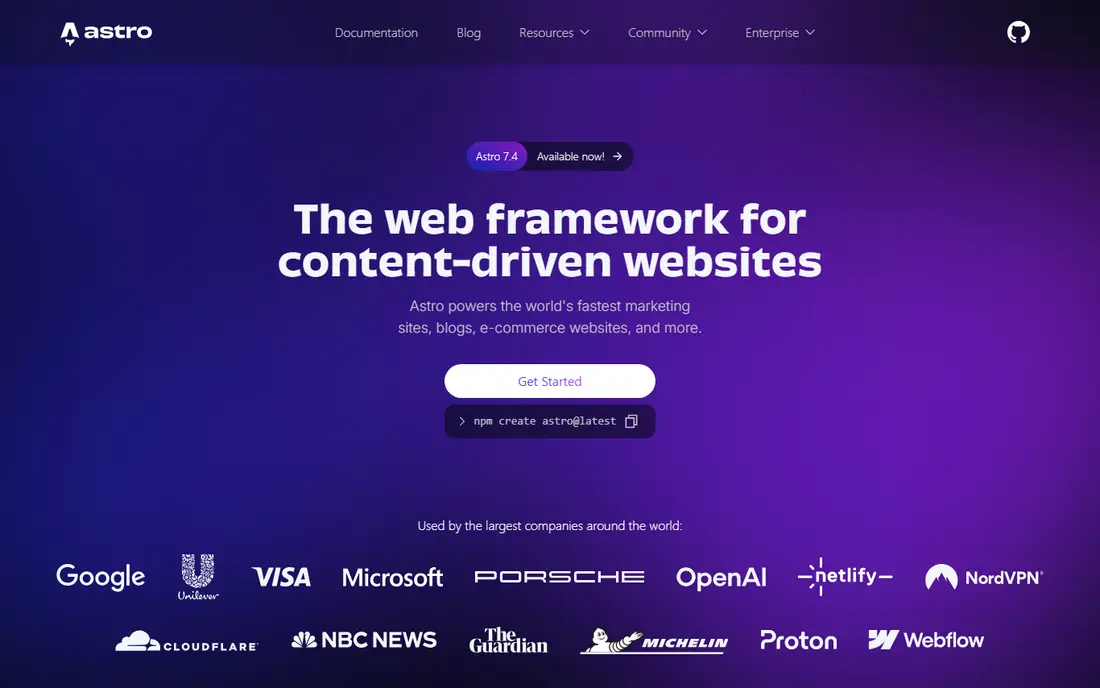
Astro is built for content-first sites. Pages render to static HTML by default, and interactive parts load only where you add them as islands, which keeps bundles small and pages fast. You can use React, Vue, Svelte, or plain HTML in the same project, which helps teams with mixed components. The trade-off appears in apps with heavy client-side state across many pages, where a full-stack framework may be simpler. Astro does support server rendering and actions, but content sites are its clear strength. For a blog, documentation site, or marketing site that must load fast, Astro is often the best Next.js alternative.
- Ships little or no JavaScript by default
- Works with React, Vue, Svelte, and other UI layers
- Strong for blogs, docs, and marketing sites
- Less suited to highly interactive apps
- Server features need extra setup
- Island approach takes learning
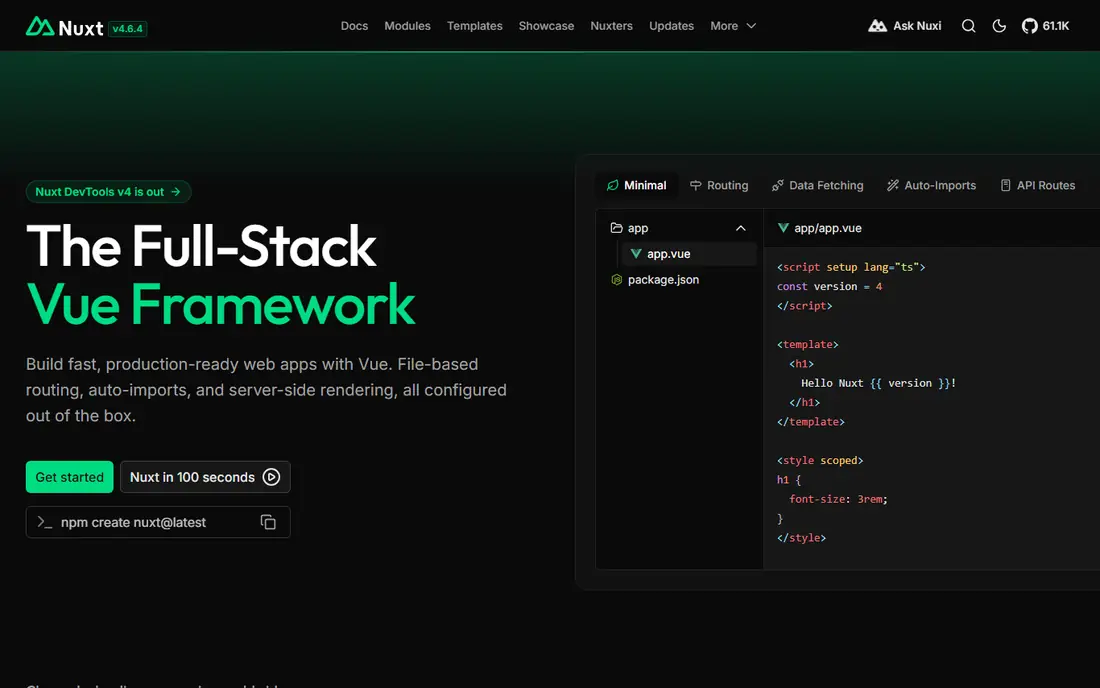
Nuxt is the Vue answer to Next.js. It provides file-based routing, server-side rendering, static generation, data fetching, and a module system for common needs such as images, content, and authentication. Vue teams can build a full-stack app without assembling routing, rendering, and build tools from scratch. The main condition is language and ecosystem commitment. If your team already uses Vue, Nuxt feels natural and productive. If your team is React-based, moving to Nuxt means learning Vue as well as a new framework. For Vue teams that want a complete, opinionated framework, Nuxt is the direct equivalent of Next.js.
- Full Vue framework with routing and server rendering
- Strong module system
- Clear file-based structure
- Requires Vue commitment
- Ecosystem is smaller than React
- Some patterns differ from Next.js
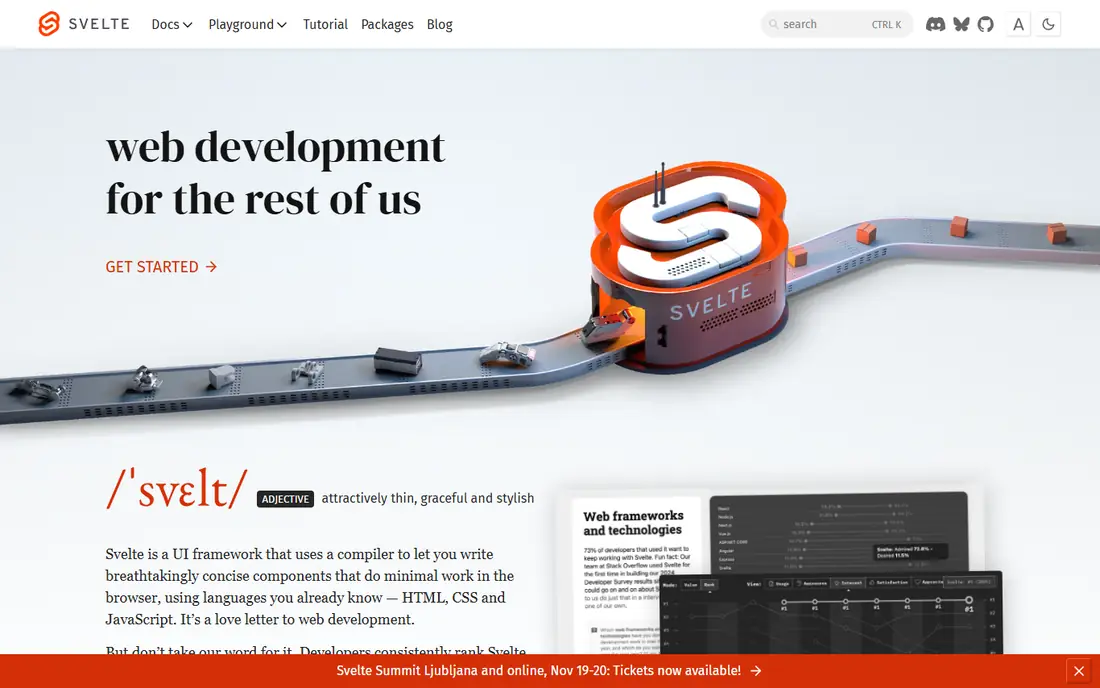
SvelteKit builds on Svelte, a compiler that turns components into efficient JavaScript without a large runtime. That approach often produces smaller bundles and fast interaction, which suits marketing sites, dashboards, and interactive apps where performance matters. File-based routing, server loads, and form actions cover the full-stack basics in a clear way. The ecosystem is smaller than React, so some libraries need Svelte versions or extra work. Hiring Svelte developers can also be harder in some markets. If your team likes Svelte and wants a lean, fast framework, SvelteKit is a compelling alternative to Next.js.
- Compiler-based Svelte with small bundles
- File-based routing and server rendering
- Adapters for many hosts
- Smaller ecosystem than React
- Hiring pool is smaller
- Some libraries need Svelte-specific versions
Remix is the closest React alternative for teams that want server rendering, nested routing, and data handling without Next.js. Loaders fetch data for a route, actions handle form submissions and mutations, and the framework leans on web standards such as fetch, forms, and HTTP caching. That model makes forms, workflows, and data-heavy apps feel straightforward. Note that Remix has been folded into React Router, so check the current React Router documentation for the latest full-stack patterns before starting a new project. Migration from Next.js still needs work on routing, data fetching, and caching. For React teams that want a standards-led full-stack framework, Remix remains the most direct swap.
- Closest full-stack React model to Next.js
- Loaders and actions based on web standards
- Strong form and mutation handling
- React Server Components model differs
- Ecosystem and hosting patterns have changed with React Router
- Migration needs planning
Gatsby suits sites that pull content from many sources and publish it as fast static pages. Its GraphQL data layer unifies content from a CMS, Markdown files, and APIs, and its plugin system covers images, SEO, and common integrations. That makes it strong for blogs, documentation, and marketing sites with structured content. Very large sites can face longer build times, and apps that need frequent server-rendered updates may fit Astro or a full-stack framework better. Gatsby is still a solid choice for data-rich static sites, especially when a team already knows React and values its plugin ecosystem.
- Mature static site system
- GraphQL data layer for CMS and API content
- Large plugin ecosystem
- Build times can grow on very large sites
- React-based, so not a Vue or Svelte option
- Less suited to frequent server-rendered updates
Qwik takes a different approach to performance. Instead of hydrating a whole page in the browser, it resumes execution on demand, so pages can become interactive quickly even with many components. That resumability model suits sites where load speed on slower devices and networks matters most. The ecosystem is smaller than Next.js, Astro, or Nuxt, and the resumability model takes time to understand. Teams that prioritise cold load performance above ecosystem size will find Qwik interesting. For a standard content site, Astro may be simpler, but for interactive speed, Qwik is a distinct and serious option.
- Resumability avoids large hydration costs
- Very fast time to interactive
- JSX-like syntax for React developers
- Smaller ecosystem
- Newer patterns to learn
- Fewer ready-made examples than mature frameworks
SolidStart is the full-stack framework for SolidJS, a library known for fine-grained reactivity. Updates target only the parts of the page that change, without re-rendering a whole component tree, which can give fast, efficient interaction. File-based routing, server functions, and rendering options cover the full-stack basics. The ecosystem is the smallest on this list, so expect to build more yourself or adapt libraries. SolidStart suits teams that already like SolidJS or want its reactivity model for a performance-sensitive app. For most teams, SvelteKit or Nuxt will offer a larger ecosystem with a similar lean feel.
- Fine-grained reactivity without a virtual DOM
- File-based routing and server rendering
- JSX familiarity
- Smallest ecosystem on this list
- Fewer libraries and examples
- Hiring pool is limited
TanStack Start is a full-stack React framework from the TanStack team, known for TanStack Query and TanStack Router. It emphasises type-safe routing, server functions, and predictable data flows, which appeals to TypeScript-heavy teams that want fewer runtime surprises. If your team already uses TanStack tools, Start fits naturally beside them. As a newer framework, its API and full-stack patterns are still maturing compared with Next.js, and examples are fewer. That makes it a better fit for teams comfortable with newer tools and willing to track changes. For a simpler React path without React Server Components, TanStack Start is a promising alternative.
- Type-safe routing and server functions
- Strong TypeScript support
- Works with TanStack Query patterns
- Newer framework with a changing API
- Smaller ecosystem than Next.js
- Full-stack patterns still maturing
How we picked these
We compared official documentation, feature pages, and public reviews to check what each framework offers for rendering, routing, data fetching, and deployment. We looked for frameworks that are still actively maintained in 2026, support production server or static output, and offer a clear reason to choose them over Next.js. We favoured a mix of React, Vue, Svelte, and Solid options, plus a content-first and a performance-first pick. We did not claim hands-on testing for every framework, and framework APIs change, so check the official docs before starting a project. All eight frameworks are open source and free to use, so hosting, team time, and learning cost matter more than licence fees.
Choosing the right Next.js alternative
Start with your team's language and your site's main job. A content site, a data-heavy app, and a Vue project point to different frameworks, even though all of them can render pages on a server. Language choice alone narrows the list more than any feature comparison, since retraining a team costs more than learning a new router.
Map rendering and data first
List which pages need static generation, server rendering, or client-side updates, and how data flows through forms and mutations. Next.js mixes these modes in one framework, while alternatives split them differently, so a page that relies on a specific Next.js feature may need rework. Document caching and revalidation rules before you migrate, since those details cause most migration pain.
Keep URLs and critical journeys stable
Preserve URL structure where possible, especially for SEO-sensitive pages, and translate App Router segments to the new framework's routing model. Rebuild critical journeys first, such as sign-up, checkout, or booking, and test them before moving secondary pages. A staged rollout, with parts of a site on the new framework, can reduce risk where infrastructure allows.
Check hosting and ecosystem fit
Confirm that your host supports the framework's output, whether static files, a Node server, or an edge adapter, and that key integrations have reliable support. A framework that looks fast in a demo can still fail if authentication, payments, or analytics need workarounds. Test those integrations early, not after a full migration.
Frequently asked questions
What is the best alternative to Next.js?
Remix, through React Router, is the closest full-stack React alternative, Astro is best for content-heavy sites, and Nuxt and SvelteKit are best for Vue and Svelte teams. The right pick depends on language, site type, and performance needs. There is no single winner for every project.
Is Astro better than Next.js?
Astro is better for content-heavy sites where small JavaScript bundles and fast loads matter most, since it ships little JavaScript by default. Next.js is better for highly interactive, full-stack React apps with complex client state. Choose Astro for blogs, docs, and marketing sites, and Next.js or Remix for complex React apps.
Can I migrate from Next.js to another framework easily?
Migration is rarely a simple swap, since routing, data fetching, caching, and server actions differ between frameworks. React components can often be reused in Remix or Gatsby, but Vue and Svelte moves need rewriting components. Plan a staged migration, preserve URLs, and rebuild critical journeys first.
Are Next.js alternatives free?
Yes, Astro, Nuxt, SvelteKit, Remix, Gatsby, Qwik, SolidStart, and TanStack Start are all open source and free to use. Costs come from hosting, team time, and any paid services you add, such as a CMS, database, or analytics tool. Licence cost alone should not decide the choice.
Which Next.js alternative is fastest?
For mostly static content sites, Astro and SvelteKit often produce small bundles and strong load performance, while Qwik can give very fast time to interactive on complex pages. Real speed depends on hosting, images, data fetching, and page design, not just the framework. Test with your own pages before judging speed.
Sources we checked (8)

Online Jobs is an independent blog about careers, online work, learning new skills and the tools that help people earn. More about us.
Keep reading
All posts
ZoomInfo Alternatives
The best ZoomInfo alternatives in 2026, compared on price, free plans, data coverage, and which tool fits small teams or large sales teams best in detail.

Workday Alternatives
We compared the best workday alternatives for HR, payroll, and global hiring, from BambooHR and Gusto to Rippling, Deel, and HiBob for growing teams in 2026.

Which SaaS Tools Have the Best Customer Support
Which SaaS tools have the best customer support? Compare eight popular tools on help centres, live help, response options and overall support quality.