8 Airflow Alternatives in 2026: 8 Tools Compared

How we put this together: we compare official feature and pricing pages, app store listings, privacy policies and public user reviews. Prices change, so check the provider's site before you pay.
Key takeaways
- Dagster and Prefect suit Python teams that want a modern, code-first alternative to Apache Airflow.
- Mage and Kestra suit teams that want a simpler setup or a visual, low-code workflow builder.
- Temporal suits durable, long-running workflows that must survive failures.
- Apache NiFi suits data movement and integration flows rather than code-first pipelines.
- The best alternative to Apache Airflow depends on team skills, deployment choice, and workflow complexity.
Quick comparison
| Name | Who it suits | Starting price | Free option | |
|---|---|---|---|---|
 Dagster | Python-first data orchestration | Free | Yes | Visit |
 Prefect | Python workflows with cloud option | Free | Yes | Visit |
 Mage | Simple all-in-one pipelines | Free | Yes | Visit |
 Kestra | Visual and code workflows | Free | Yes | Visit |
 Temporal | Durable long-running workflows | Free | Yes | Visit |
 Apache NiFi | Data movement and integration | Free | Yes | Visit |
 Luigi | Lightweight Python pipelines | Free | Yes | Visit |
 Google Cloud Workflows | Serverless cloud workflows | See website | Free trial | Visit |
The best Airflow alternatives
Apache Airflow is a widely used workflow orchestrator, but teams often look for simpler setup, a more Python-native design, visual building, or durable execution. The tools below cover those needs, from open source code-first tools to cloud services, with different trade-offs in hosting and learning curve.
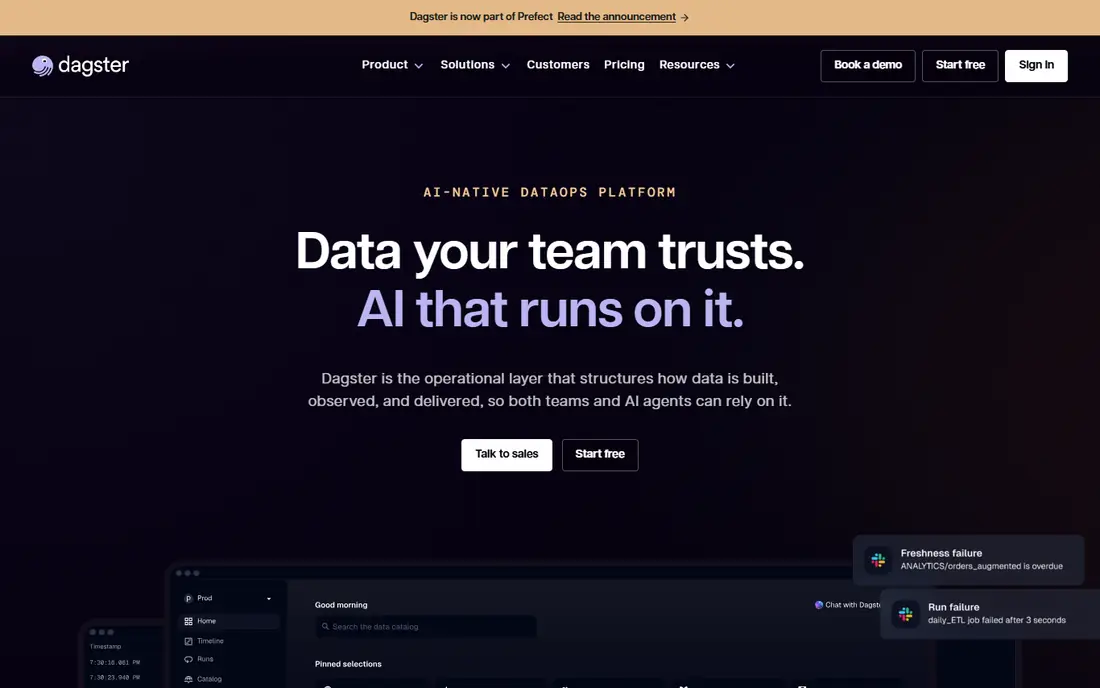
Dagster suits Python data teams that think in assets, such as tables and files, rather than just tasks. Its local development tools, testing support, and observability help teams build pipelines that are easier to reason about. Dagster Cloud offers a managed option for teams that do not want to self-host.
The asset model takes time to learn if you come from Airflow tasks and DAGs. For teams building modern data platforms in Python, Dagster is our pick for most teams.
- Python-native assets and jobs
- Strong local development tools
- Cloud option available
- Learning curve for asset concepts
- Self-hosting needs setup and monitoring
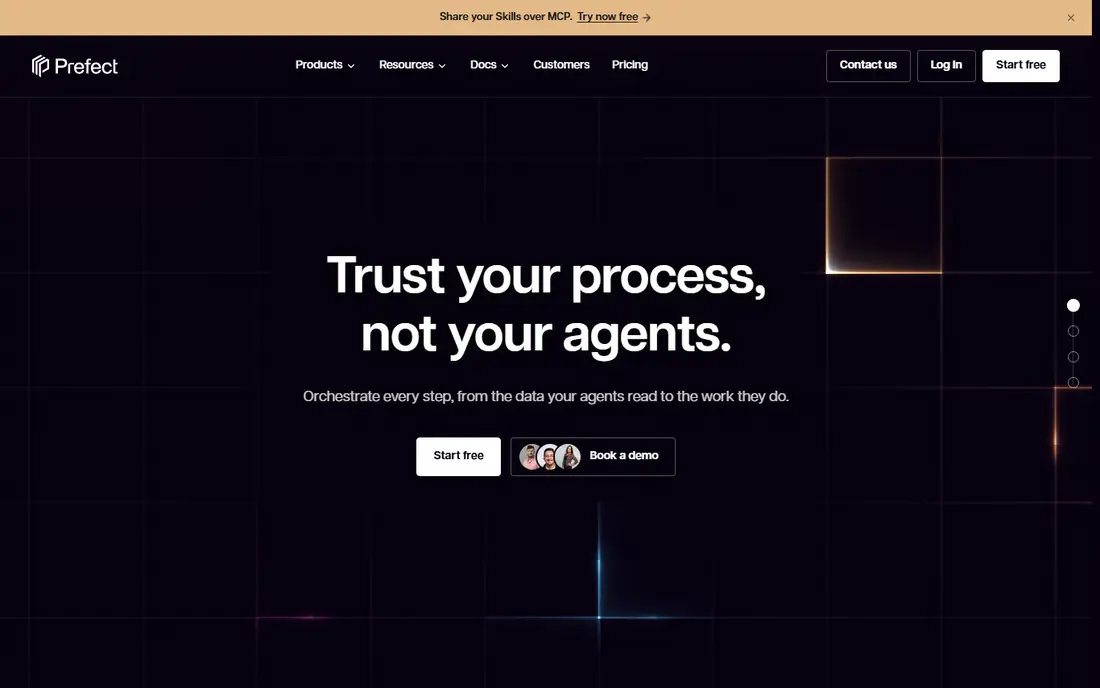
Prefect suits Python teams that want to turn functions into workflows with little boilerplate. Flows are plain Python, scheduling and retries are built in, and Prefect Cloud offers hosting and a dashboard. Self-hosting is also possible for teams that want control.
Prefect 2 changed the model from earlier versions, so older guides may not match current docs. For Python teams that want a fast start and a cloud path, Prefect is a strong alternative to Airflow.
- Python-first flows with simple syntax
- Cloud and self-hosted options
- Strong observability
- Pricing and features vary by cloud plan
- Some advanced features need a paid plan
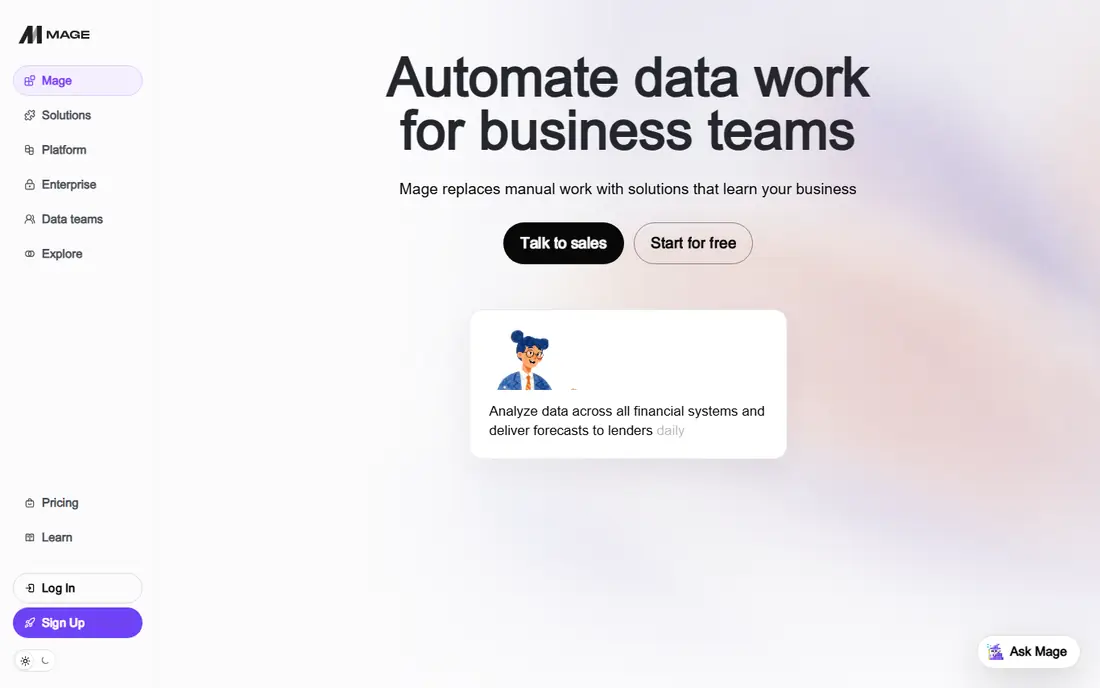
Mage suits teams that want pipelines, data loading, and transformation in one tool without heavy setup. Its notebook-style interface lets you build and test steps in one place, which helps small data teams move fast. Mage Cloud offers a managed option.
Mage is newer and smaller than Airflow, so community resources and integrations are less broad. For small teams that want simplicity over ecosystem size, Mage is a good fit.
- All-in-one notebook-style pipeline builder
- Data loading and transformation tools
- Open source
- Smaller ecosystem than Airflow
- Enterprise features sit on paid plans
Kestra suits teams that want both a visual builder and code definitions. Workflows are defined in YAML, the interface shows runs and logs clearly, and plugins cover databases, cloud services, and file tools. It works well for teams that include analysts as well as engineers.
Kestra's plugin and YAML model differs from Python-first tools, so Python teams may prefer Dagster or Prefect. For mixed teams that want visual workflows, Kestra is a strong choice.
- Visual workflow builder with YAML definitions
- Many plugins
- Open source with cloud option
- YAML and plugin model takes learning
- Self-hosting needs setup
Temporal suits applications and workflows that must not lose state, such as order processing, onboarding, and long-running business processes. Workflows resume after failures, retries are built in, and code runs in several languages. Temporal Cloud offers a managed option.
Temporal is not a drop-in DAG replacement, since its model centres on durable code execution rather than scheduled data pipelines. For long-running, failure-sensitive work, it is a strong, distinct alternative.
- Durable execution survives failures
- Supports many languages
- Cloud and self-hosted options
- Different model from DAG orchestrators
- Learning curve for workflow and activity concepts
Apache NiFi suits data movement, integration, and routing flows. Its visual canvas lets you design flows from sources to sinks, with processors for files, databases, APIs, and messaging systems. It is widely used for ingestion and integration work.
NiFi is less suited to Python data pipelines with complex transformations, where Dagster or Prefect fit better. For visual data movement and integration, NiFi remains a solid open source choice.
- Visual data flow design
- Many processors for sources and sinks
- Open source Apache project
- Less suited to code-first data pipelines
- Flow design can grow complex at scale
Luigi suits small Python teams that want simple task dependencies without a full orchestrator. Tasks are Python classes, dependencies are clear, and the scheduler and visualiser cover basic needs. It is lightweight and easy to run.
Luigi lacks the scheduling depth, UI, and ecosystem of Airflow, Dagster, or Prefect. For simple, code-first pipelines, that lightness is a strength. For complex, multi-team platforms, a larger tool fits better.
- Lightweight Python pipeline tool
- Simple task dependencies
- Open source from Spotify
- Smaller feature set than Airflow
- Scheduler and UI are simpler
Google Cloud Workflows suits teams already on Google Cloud who want serverless orchestration without managing servers. Workflows call HTTP services, Google Cloud APIs, and other steps, with scheduling and error handling built in. Pricing follows use, with a free tier under Google Cloud terms.
Teams outside Google Cloud, or those needing Python-native data pipelines, will prefer Dagster, Prefect, or Kestra. For Google Cloud service orchestration, Workflows is a clean, managed option.
- Serverless workflow orchestration on Google Cloud
- Integrates with Google Cloud services
- Pay for use
- Tied to Google Cloud
- Less suited to on-premise or multi-cloud Python pipelines
How we picked these
We compared official docs, pricing pages, and public reviews for workflow orchestration tools that teams use as alternatives to Apache Airflow. We checked language support, hosting options, visual versus code design, scheduling, and observability, since different teams need different mixes. We did not claim hands-on testing, and we used vendor and project pages as the source for current features and plans.
How to choose an Airflow alternative
Start with your team's language and skills. Python teams will feel at home in Dagster, Prefect, Mage, or Luigi, while mixed teams may prefer Kestra's visual YAML approach. NiFi suits integration specialists, and Temporal suits application developers building durable processes.
Next, decide on hosting. Self-hosted open source tools give control but need monitoring, upgrades, and on-call care. Cloud options reduce that burden but add cost and vendor ties. Run a small pilot with a real pipeline before you migrate a critical workflow.
Finally, test failure handling. Kill a run, retry a task, and check logs and alerts. A tool that looks simple in a demo may hide weak retry or observability features. The pilot should include a failure, not just a successful run.
Also check backfilling and rerunning old data, since pipelines often need to reprocess a date range after a source fix. Ask whether you can rerun one task, one day, or a full range without rerunning everything, and whether downstream tables update correctly after a rerun. Teams that skip this test often discover the gap during an incident, when time pressure is highest.
Next, review access control and audit logs before you roll out a tool to a wider team. Data pipelines touch sensitive sources, so check who can edit a workflow, who can trigger a run, and whether changes are logged. A clear permission model protects production data and makes it easier to trace a bad run back to a specific change. Document who owns each pipeline as well, so on-call staff know whom to contact when a run fails at night. Keep that ownership list current as teams change, since an outdated contact list slows incident response just as much as a missing alert.
Frequently asked questions
What are the best alternatives to Apache Airflow?
Dagster and Prefect are the strongest Python-first alternatives to Apache Airflow, while Mage suits simpler all-in-one pipelines and Kestra suits visual workflows. Temporal suits durable application workflows, and NiFi suits data movement. Pick based on language, hosting, and workflow type.
What is the best alternative to Airflow for Python teams?
Dagster is our pick for most Python data teams because of its asset model and local development tools. Prefect is a close second for teams that want simple Python flows and a cloud option. Mage suits smaller Python teams that want an all-in-one builder.
Are there free alternatives to Airflow?
Yes, Dagster, Prefect, Mage, Kestra, Temporal, NiFi, and Luigi all offer open source versions you can self-host for free, apart from infrastructure costs. Cloud options add managed hosting fees, so check the cloud pricing page if you do not want to self-host.
Is Prefect better than Airflow?
Prefect can be better than Airflow for Python teams that want simpler syntax and faster local development, while Airflow can be better for large, established platforms with a broad integration ecosystem. Compare your pipeline complexity, team skills, and hosting needs before switching.
Can I migrate from Airflow to Dagster or Prefect?
Yes, migration is possible, but it usually means rewriting DAGs as Dagster assets or Prefect flows, since task models differ. Start with one small pipeline, test scheduling and failure handling, and keep Airflow running until the new pipeline proves stable in production.
Sources we checked (8)

Online Jobs is an independent blog about careers, online work, learning new skills and the tools that help people earn. More about us.
Keep reading
All posts
iPhone Alternatives
Looking for iPhone alternatives in 2026? Compare 9 Android phones from Samsung, Google, OnePlus, and more, with cameras, battery life, and honest trade-offs.

Who Has the Best Home Internet Service
Find who has the best home internet service for your address, with fiber, cable, 5G, and satellite providers compared on price, speed, and coverage here.
Software Engineering Best Practices
Learn software engineering best practices through 8 tools for CI, testing, code review, and observability that support better engineering for growing teams.