Best ActiveCampaign Alternatives in 2026: 9 Tools Compared

How we put this together: we compare official feature and pricing pages, app store listings, privacy policies and public user reviews. Prices change, so check the provider's site before you pay.
Key takeaways
- Brevo is the best value switch for high volume senders, since pricing is based on sends, not stored contacts.
- Mailchimp suits small teams that want a familiar all rounder, while HubSpot suits teams that want CRM and marketing together.
- Klaviyo is the strongest pick for ecommerce stores, and Kit suits creators and newsletter writers.
- Campaign Monitor, now part of the same group as Emma and other tools, suits design led newsletters, but check current plans before switching.
- Migration cost matters: rebuild automations, warm up sending, and keep ActiveCampaign running until the new system proves deliverability.
Quick comparison
| Name | Who it suits | Starting price | Free option | |
|---|---|---|---|---|
 Mailchimp | Familiar all round email | $13 per month | Yes | Visit |
 HubSpot Marketing Hub | CRM plus marketing | $15 per month | Yes | Visit |
 Klaviyo | Ecommerce email and SMS | $20 per month | Yes | Visit |
 Brevo | Value send based pricing | $9 per month | Yes | Visit |
 Kit | Creators and newsletters | $39 per month | Yes | Visit |
 GetResponse | Funnels and webinars | $19 per month | Yes | Visit |
 Constant Contact | Beginners and local business | $12 per month | Free trial | Visit |
 MailerLite | Simple low cost email | $12 per month | Yes | Visit |
 Campaign Monitor | Design led newsletters | See website | No | Visit |
The best activecampaign alternatives
ActiveCampaign is strong on automation depth, with conditional branching, lead scoring and a built-in CRM, but that depth comes with price and complexity that many teams do not need. Some teams leave for lower cost, simpler email, better ecommerce tools or a CRM led platform. The alternatives below cover those reasons, including options that also work as Campaign Monitor alternatives and best alternatives to ActiveCampaign for creators, stores and B2B teams.
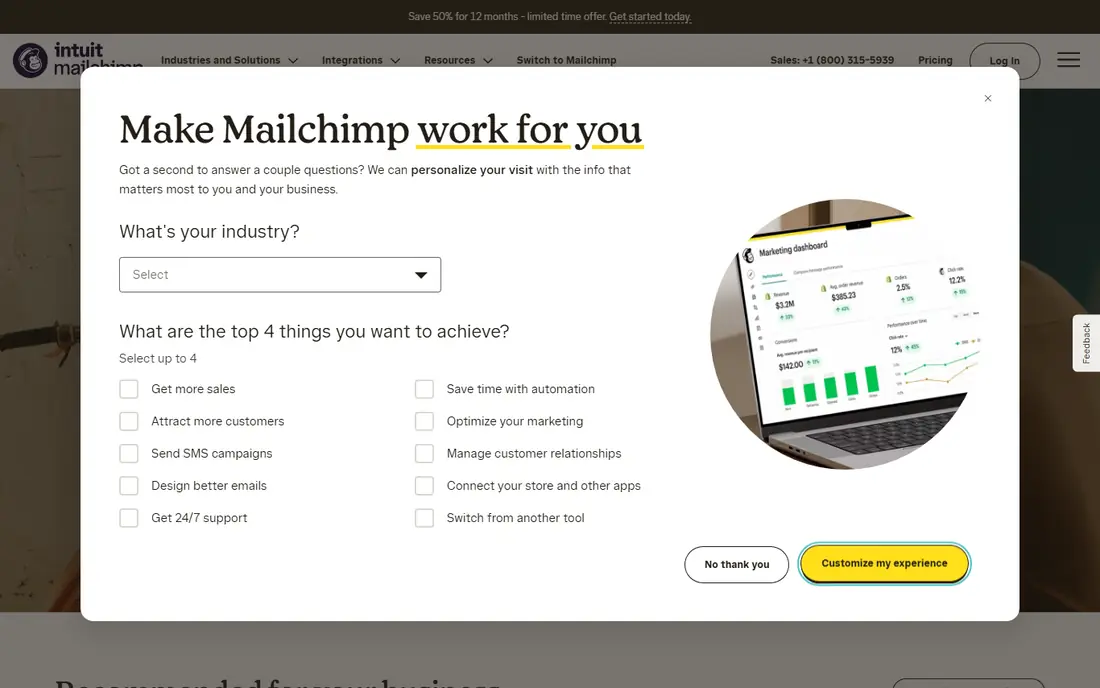
Mailchimp is the safe switch for small businesses that mainly send newsletters, promotions and simple automated journeys. The editor is familiar, templates are plentiful, and integrations cover most stores, CRMs and form tools. For a team that does not need complex branching or lead scoring, Mailchimp covers daily email well. ActiveCampaign users will notice simpler automation. Multi step branching, goal tracking and CRM deal handling are less deep, and contact based pricing can rise quickly as a list grows. Check the plan that includes the automation, segmentation and support you need, not just the entry price. For straightforward email, Mailchimp is a reliable, low friction alternative.
- Widely known editor and templates
- Simple automations for newsletters and journeys
- Many integrations
- Automation depth is lower than ActiveCampaign
- Contact based pricing rises with list size
- Some features need higher plans
HubSpot suits B2B teams that want marketing and sales in one system. Contacts, deals, email, forms and reporting share one CRM, so a lead journey from first form to closed deal stays visible. The free CRM and marketing tools let a small team start without paying, and Starter plans add automation and landing pages at a modest seat price. The jump to Professional is steep, and that plan is where many ActiveCampaign level automation features live. Teams should map which automations they actually use, then check whether Starter covers them or Professional is required. For CRM led teams that will grow into HubSpot, the platform is a strong long term alternative, even if the full cost is higher.
- Marketing, sales and service on one CRM
- Free CRM tools
- Strong reporting as teams grow
- Professional plan is a large price jump
- Seat and contact costs add up
- Setup takes time
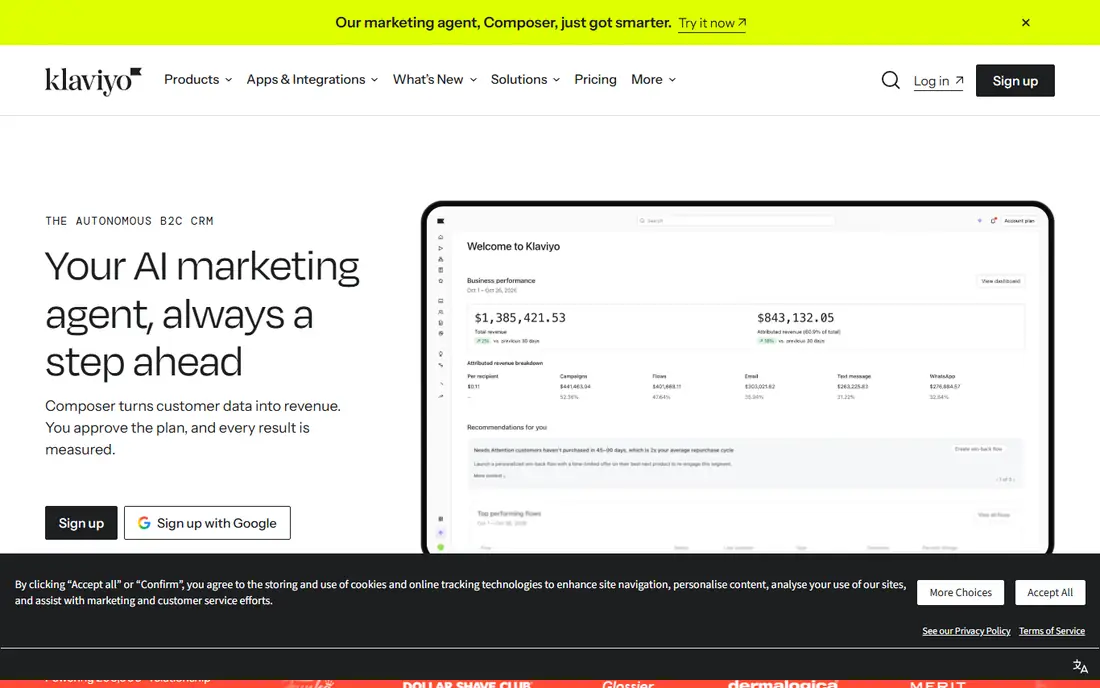
Klaviyo is the strongest alternative for online stores. It pulls order, browsing and product data into segments and flows, so abandoned cart, post purchase and winback emails can use real purchase behavior. Email and SMS together in one platform also help stores coordinate campaigns without separate tools. Pricing is contact based and rises with active profiles, so a growing store should model cost at 5,000 and 10,000 profiles, not just at entry level. SMS is billed separately, which can surprise teams that enable it without checking rates. For ecommerce brands where email drives a large share of revenue, Klaviyo often earns its price through better targeted flows.
- Deep ecommerce data and flows
- Strong segmentation for stores
- Email plus SMS in one platform
- Pricing rises steeply with profiles
- SMS costs are separate
- Learning the flow builder takes time
Brevo, formerly Sendinblue, is the best value switch for high volume senders. Pricing is based on emails sent, not on how many contacts you store, so a large list with modest sending can cost far less than on contact based platforms. The free plan allows 300 emails per day, which suits testing and small lists. Automation covers common journeys, welcome series and transactional email, but it does not match ActiveCampaign branching and scoring depth. Teams with complex B2B scoring should test Brevo automation against their real flows before migrating. For newsletters, promotions and multichannel messages on a budget, Brevo is hard to beat.
- Send based pricing with unlimited contacts on paid plans
- Email, SMS and WhatsApp in one bill
- Generous free plan
- Automation and CRM depth is lower than ActiveCampaign
- Template design is simpler than Mailchimp
Kit, formerly ConvertKit, suits creators, writers and course sellers who build an audience through newsletters and landing pages. Forms, landing pages and simple sequences are easy to set up, and the free plan supports a large subscriber count, though automations require a paid plan. Paid newsletter and commerce tools help creators sell directly to subscribers. Kit is not a full CRM or ecommerce suite, so teams that need deal pipelines or deep store flows should look at HubSpot or Klaviyo. Paid pricing also starts higher than Brevo or MailerLite, so compare cost at your subscriber count. For creators leaving ActiveCampaign for simplicity, Kit is a natural fit.
- Creator focused editor and forms
- Free plan up to 10,000 subscribers without automations
- Paid newsletter tools
- Paid plans start higher than some rivals
- Ecommerce and CRM features are limited
GetResponse suits teams that run funnels and webinars alongside email. You can build landing pages, capture leads, run automated sequences and host webinars without separate tools, which helps course sellers and small agencies. The automation builder covers common journeys, though it is less deep than ActiveCampaign for complex B2B scoring. The broad toolset can feel busy, and webinar capacity and advanced features sit on higher plans. Check which plan includes the webinar seats, automation depth and list size you need. For a team that wants email, funnels and webinars in one bill, GetResponse is a practical ActiveCampaign alternative.
- Email plus funnels, landing pages and webinars
- Useful automation builder
- Free plan for small lists
- Interface covers many tools, which can feel busy
- Webinar seats and higher features cost more
Constant Contact is a good pick for beginners, local businesses and teams that send regular newsletters and event invitations. Templates, drag and drop editing and list tools are straightforward, and support is geared to non technical users. For a small team that does not want to learn automation jargon, that simplicity helps. Automation is basic, so ActiveCampaign users with complex journeys will feel the gap. There is no permanent free plan, only a trial, and contact based pricing rises as a list grows. Choose Constant Contact when simple, reliable email matters more than deep automation, and test the trial with your real list size.
- Very easy to learn
- Large template library
- Good for local businesses, events and nonprofits
- No permanent free plan
- Automation depth is basic compared with ActiveCampaign
- Pricing rises with contacts
MailerLite suits solo operators and small businesses that want clean email without a steep learning curve. The editor is clear, automations cover welcome series and basic journeys, and pricing is predictable by subscriber count. For newsletters, product updates and simple campaigns, MailerLite covers the work with little admin. Free plan limits are lower than Kit, and account approval can take time for new senders, so plan a warm up period. CRM and sales pipeline features are limited compared with HubSpot or ActiveCampaign. For a low cost, low friction switch, MailerLite is one of the easiest ActiveCampaign alternatives to adopt.
- Clean, easy editor
- Predictable subscriber pricing
- Useful automations for small teams
- Free plan limits subscribers
- Approval checks can delay first sends
- Fewer CRM features than HubSpot
Campaign Monitor, long known for design led email, remains a useful alternative for teams that prioritize beautiful newsletters and client work. Templates, drag and drop design and reporting suit agencies and brands that send regular, well designed campaigns. It also appears in searches for Campaign Monitor alternatives in reverse, since many teams compare it directly with ActiveCampaign and Mailchimp. Automation depth is lower than ActiveCampaign, and pricing details should be checked on the current Campaign Monitor site, since plans and group branding have changed over time. For design first newsletters rather than complex B2B automation, Campaign Monitor is a credible, if less transparently priced, option.
- Polished email templates and design tools
- Strong for agencies sending client newsletters
- Clear reporting
- Pricing is not a simple public entry figure on all pages
- Automation is less deep than ActiveCampaign
How we picked these
We compared official pricing pages, feature documentation and migration guides, and kept tools that are actively sold in October 2026 as an email and automation replacement. We favored a mix of value, CRM led, ecommerce, creator and design led options, since ActiveCampaign users leave for different reasons. Where pricing varies by contacts, sends, seats or plan, we used the starting figure shown on the vendor site and noted the pricing model, so readers can model cost at their own list size.
Migrating from ActiveCampaign without losing deliverability
Map automations before you move
Export a list of every automation, trigger, tag and goal in ActiveCampaign, then rebuild only the flows you actually use. Many teams discover dead automations during migration, and dropping them simplifies the new setup. Test each rebuilt flow with a small internal list before switching live traffic.
Warm up sending on the new platform
Do not move your full list to a new sender in one day. Start with engaged subscribers, monitor bounces and spam complaints, and increase volume gradually while authentication records are confirmed. Keep ActiveCampaign running in parallel until deliverability on the new platform is stable.
Check data, tags and integrations
Tags, custom fields, ecommerce data and CRM links rarely migrate perfectly. Export contacts with tags and fields, test imports on a sample, and reconnect store, form and CRM integrations before you turn off old automations. A short data audit after migration prevents lost segments and broken journeys.
Frequently asked questions
What is the best alternative to ActiveCampaign for small business?
Brevo is our value pick, Mailchimp is the familiar all rounder, and MailerLite is the simplest low cost switch. Choose Brevo for high volume sending, Mailchimp for templates and integrations, and MailerLite for a clean editor on a small list. Map your automations first, since depth needs vary widely.
Is there a free alternative to ActiveCampaign?
Yes, Brevo, Mailchimp, Klaviyo, Kit, GetResponse, MailerLite and HubSpot all offer free plans or free CRM tools, though limits differ. Free plans usually cap subscribers, sends or automations, so check whether your list size and automation needs fit. A free plan is best for testing, while a paid plan is usually needed for regular business sending.
Which ActiveCampaign alternative is best for ecommerce?
Klaviyo is the strongest ecommerce pick, thanks to purchase based segments and flows for cart recovery, post purchase and winback campaigns. Mailchimp and Brevo also work for stores, but Klaviyo data depth gives it an edge for revenue focused email and SMS. Model Klaviyo cost at your profile count before switching.
What is the best alternative to Campaign Monitor?
Mailchimp, MailerLite and Brevo are common Campaign Monitor alternatives for design led newsletters at lower cost. HubSpot suits teams that want CRM reporting alongside email, while Kit suits creators. Compare template design, list pricing and automation depth, since Campaign Monitor strengths vary by team.
How hard is it to migrate from ActiveCampaign?
Migration takes planning, but it is manageable if you map automations, export tagged contacts and warm up sending gradually. Complex branching and scoring take the most rebuild time, while simple newsletters move quickly. Allow a few weeks for testing, and keep ActiveCampaign active until the new system handles live sends reliably.
Should I switch if I use ActiveCampaign CRM and lead scoring?
Only after checking whether the new tool covers your CRM and scoring needs. HubSpot covers CRM depth best, while Brevo, Mailchimp and MailerLite cover simpler scoring or none at all. If lead scoring and deal pipelines are central, HubSpot or staying on ActiveCampaign may be cheaper than rebuilding a weaker workflow elsewhere.
Sources we checked (9)

Online Jobs is an independent blog about careers, online work, learning new skills and the tools that help people earn. More about us.
Keep reading
All posts
ZoomInfo Alternatives
The best ZoomInfo alternatives in 2026, compared on price, free plans, data coverage, and which tool fits small teams or large sales teams best in detail.

Workday Alternatives
We compared the best workday alternatives for HR, payroll, and global hiring, from BambooHR and Gusto to Rippling, Deel, and HiBob for growing teams in 2026.
Which SaaS Tools Have the Best Customer Support
Which SaaS tools have the best customer support? Compare eight popular tools on help centres, live help, response options and overall support quality.