Best WooCommerce Alternatives in 2026: 8 Tools Compared

How we put this together: we compare official feature and pricing pages, app store listings, privacy policies and public user reviews. Prices change, so check the provider's site before you pay.
Key takeaways
- WooCommerce alternatives split into hosted platforms, where the vendor runs hosting and security, and self-hosted platforms, where you run them.
- Shopify and BigCommerce suit stores that want hosted checkout, apps, and support without managing WordPress updates.
- Wix and Squarespace suit design-led small stores that need a simple editor and built-in marketing tools.
- Adobe Commerce, PrestaShop, and Ecwid suit stores that need deeper control, a lower licence cost, or a store added to an existing site.
- Square Online suits shops that already use Square in person and want online selling in the same system.
Quick comparison
| Name | Who it suits | Starting price | Free option | |
|---|---|---|---|---|
 Shopify | Fast hosted store launches | $39 per month | No | Visit |
 BigCommerce | Growing stores with built-in features | $39 per month | No | Visit |
 Wix eCommerce | Drag-and-drop design for beginners | See website | No | Visit |
 Squarespace Commerce | Design-led brands | See website | No | Visit |
 Adobe Commerce | Enterprise custom builds | See website | No | Visit |
 PrestaShop | Free open-source control | $0 per month | Yes | Visit |
 Ecwid | Adding a store to any site | See website | Yes | Visit |
 Square Online | Shops selling in person and online | See website | Yes | Visit |
The best WooCommerce alternatives
WooCommerce is a free WordPress plugin, so leaving it usually means leaving WordPress as the store platform, or at least leaving the plugin as the checkout engine. Some stores leave because they want hosted security and support. Others leave because they want a simpler editor, stronger built-in features, or a platform that scales without plugin maintenance. The alternatives below cover those reasons in different ways.

Shopify is the most common hosted alternative to WooCommerce. You get hosting, security, checkout, and support in one subscription, without managing WordPress, plugin updates, or server patches. Themes and apps cover most store needs, from subscriptions to reviews to multi-channel selling, and the checkout is familiar to many online buyers. Recent comparisons list the Basic plan at $39 per month, with higher plans for growing stores and Shopify Plus for enterprise use. App costs add up, so budget for the apps you actually need, not the full app store. Shopify fits stores that want speed and simplicity, and that are happy to trade some code control for hosted reliability.
- Hosted checkout, large app store, and themes that work on mobile
- Monthly cost plus app costs, and third-party payment fees unless Shopify Payments is used

BigCommerce suits mid-sized stores that outgrow a simple hosted builder but do not want an enterprise build. More features are built in than on some rivals, including product options, discounts, and multi-channel selling, which reduces reliance on paid apps. B2B features, such as customer groups and price lists, help stores that sell to both consumers and businesses. Recent comparisons list a starting plan at $39 per month, with plan changes tied to sales volume in recent terms, so check the current terms for your expected revenue. BigCommerce fits growing brands that want hosted reliability plus deeper catalogue and B2B features without moving to a fully custom platform.
- Strong built-in features, no extra transaction fees from BigCommerce itself, and B2B tools
- Theme and app costs can add up, and plan limits are tied to sales volume in recent terms
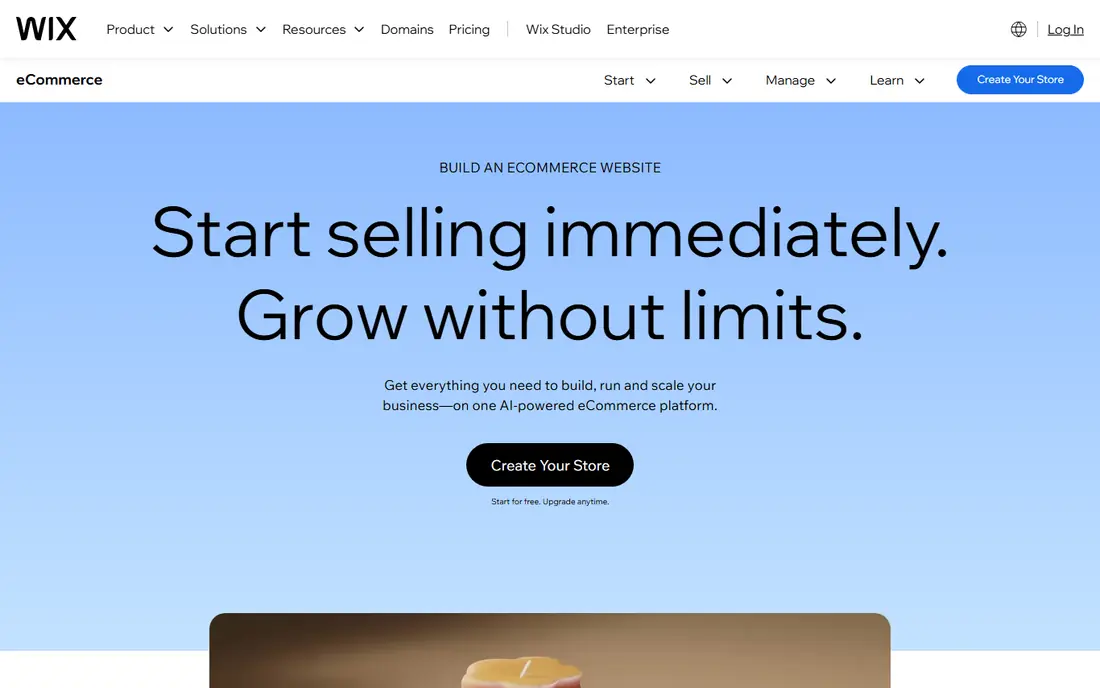
Wix eCommerce suits a small store where design control matters more than catalogue size. The drag-and-drop editor lets an owner build pages visually, and templates, marketing tools, and payment options are built in. That simplicity helps a maker, artist, or small retailer who wants a polished store without hiring a developer. Pricing in recent comparisons varies by region and plan, so check the current Wix pricing page for the ecommerce plan that fits your needs. Large catalogues, complex B2B pricing, and deep custom integrations are weaker areas. Wix fits best when the store is small, visual, and run by the owner.
- Visual editor, templates, and built-in marketing tools for small stores
- Less suited to very large catalogues, and moving away later can be harder than with open-source tools
Squarespace Commerce suits brands where look and story matter as much as the product. Templates are polished, blogging sits beside the store, and email and social tools are built in, which helps a brand-led store present a consistent image. Setup is straightforward, and the checkout is clean on mobile. Recent comparisons list commerce plans from around $18 to $50 per month, with features varying by plan, so check the current pricing page. The app ecosystem is smaller than Shopify, and stores with very large catalogues or complex fulfilment needs may hit limits. Squarespace fits design-led stores with a focused product range.
- Polished templates, clean checkout, and built-in blogging and marketing tools
- App ecosystem is smaller than Shopify, and large catalogue handling is limited
Adobe Commerce, formerly Magento Commerce, is the enterprise end of the WooCommerce alternative range. It offers deep customisation, complex pricing, B2B workflows, and multi-store management for large catalogues and international selling. That control suits brands with specific checkout, fulfilment, or integration needs that a hosted builder cannot meet. The open-source Magento version is free to self-host, while Adobe Commerce itself is quote-based and recent comparisons put enterprise costs in the tens of thousands per year. Implementation needs developers, hosting, and ongoing maintenance, so total cost is far higher than the licence alone. Adobe Commerce fits large stores with a development team and complex requirements, not small shops looking for a simple switch.
- Deep customisation, B2B features, and multi-store and multi-brand support
- Needs developer resources, and enterprise pricing is quote-based
PrestaShop is a free open-source ecommerce platform, which makes it a natural alternative for stores that want control without a monthly platform fee. It supports multiple stores, multiple languages and currencies, and a module marketplace for payments, shipping, and marketing features. That flexibility suits developers and agencies that build custom stores for clients. The licence is free, but hosting, themes, modules, and maintenance are not. A store that needs many paid modules can cost as much as a hosted plan over a year, and security updates remain the owner's job. PrestaShop fits stores that want open-source control and have technical help, rather than owners who want a fully hosted service.
- Free open-source core, multi-store support, and a large module marketplace
- Needs technical skills, and modules, hosting, and support add costs
Ecwid takes a different approach from a full platform rebuild. Instead of moving your whole site, you add an Ecwid store to an existing website, blog, or social page. That suits businesses that already have a site they like, or that sell mainly through social channels and want a simple checkout without rebuilding everything. A free plan covers a small store, with paid plans adding more products and features. Recent comparisons list paid plans from a low monthly figure, but check the current pricing page for product limits. Ecwid fits small stores and side projects, while larger stores with complex catalogues will usually prefer Shopify or BigCommerce.
- Free plan, and a store that can be added to an existing website or social page
- Design control is more limited than a full platform, and larger stores may need a higher plan
Square Online suits a shop that already uses Square at the counter and wants to add online selling without a second inventory system. Products, stock, and orders sync between in-person and online sales, and the free plan lets a small shop start selling online at no platform cost. Payment processing through Square keeps the setup simple. Paid plans add features such as a custom domain without Square branding, advanced reporting, and lower processing rates in some listings. Design flexibility and app choice are narrower than Shopify, so a brand-led store with complex design needs may prefer another platform. Square Online fits best when in-person and online selling must share one system.
- Free plan, and online selling linked to Square point of sale and inventory
- Design and app options are narrower than Shopify, and paid plans add monthly costs
How we picked these
We compared official feature pages, pricing pages, and public reviews for platforms that can replace WooCommerce as the store engine, not just tools that add a single feature to WordPress. We looked for a clear hosting model, a usable starting plan, and a track record with real stores. We also checked whether a platform suits a WordPress site, a new hosted store, or a store added to an existing site, since migration effort differs sharply across those paths. We did not run hands-on tests for this guide, and we did not claim sales or conversion results for any platform. Migration costs, app costs, and payment fees vary by store, and a platform that suits one store may not suit another with a different catalogue size or sales channel. Where pricing sources disagreed, we used See website and noted the pricing basis.
Choosing a WooCommerce alternative for WordPress sites
If you want to stay on WordPress, the choice is narrower. Ecwid can add a store to a WordPress site, and PrestaShop or a custom build can replace WooCommerce while keeping a separate store system. Most hosted alternatives, including Shopify and BigCommerce, mean running the store on their platform and linking it to WordPress for content, or moving content as well. If you want to leave WordPress fully, start with the store size and team skills. Small design-led stores do well on Wix or Squarespace. Growing hosted stores do well on Shopify or BigCommerce. Large custom stores do well on Adobe Commerce or PrestaShop with developer help. Map your product count, sales channels, and maintenance capacity before choosing, since those factors decide the total cost more than the monthly plan price.
Frequently asked questions
What are the best WooCommerce alternatives?
The best alternatives in this guide are Shopify for hosted simplicity, BigCommerce for growing stores, Wix and Squarespace for design-led small stores, and Adobe Commerce and PrestaShop for custom control. Ecwid suits adding a store to an existing site, while Square Online suits in-person shops. Shortlist by store size and hosting preference.
What are the WooCommerce alternatives for WordPress?
For WordPress sites, Ecwid can add a store without rebuilding the site, while Shopify and BigCommerce can be linked to WordPress content or used as a separate store platform. PrestaShop and Adobe Commerce are separate platforms that replace WooCommerce entirely. Check how products, orders, and content will sync before migrating.
Is Shopify better than WooCommerce?
Shopify is better for stores that want hosted security, support, and a fast setup without managing plugins and servers. WooCommerce is better for stores that want full WordPress control, lower licence cost, and deep content and SEO flexibility. The better choice depends on whether you value hosted simplicity or open-source control more.
What is the cheapest WooCommerce alternative?
PrestaShop and Ecwid offer free plans or a free core, while Square Online offers a free plan for small shops. Hosted platforms start at monthly fees, with Shopify and BigCommerce listed at $39 per month in recent comparisons. Compare total costs, including hosting, apps, modules, and payment fees, not just the platform price.
How hard is it to migrate from WooCommerce?
Migration effort depends on product count, customer data, order history, and custom features. Small stores with simple products can migrate in days, while large stores with custom plugins, subscriptions, or B2B pricing need a planned migration with testing. Export products, customers, and orders first, test the new checkout thoroughly, and keep the old store accessible until the new store is proven.
Sources we checked (8)

Online Jobs is an independent blog about careers, online work, learning new skills and the tools that help people earn. More about us.
Keep reading
All posts
n8n Alternatives
n8n alternatives compared for 2026, with Zapier, Make, Activepieces, and more, covering visual builders, code steps, self-hosting, and pricing models.

eBay Alternatives
Looking for ebay alternatives? We compared 9 marketplaces for sellers on fees, buyer reach, categories and ease of listing, to help you sell with confidence.

ZoomInfo Alternatives
The best ZoomInfo alternatives in 2026, compared on price, free plans, data coverage, and which tool fits small teams or large sales teams best in detail.