Top ERM Software in 2026: 8 Products Compared


teams that want no-code risk workflows · Starting price: See website
How we put this together: we compare official feature and pricing pages, app store listings, privacy policies and public user reviews. Prices change, so check the provider's site before you pay.
Key takeaways
- Most ERM tools are quote-only, so expect a demo and a sales process before you see a firm price.
- LogicGate and Onspring suit teams that want to configure workflows themselves, while larger suites suit regulated groups.
- Risk is wider than cyber risk, so check coverage for operations, third parties, audit, and business continuity.
- This article compares software only. It is not financial or legal advice, and regulated firms should check duties with their own advisers.
Quick comparison
| Name | Who it suits | Starting price | Free option | |
|---|---|---|---|---|
| LogicGate | teams that want no-code risk workflows | See website | No | Visit |
 Resolver | mid-size to large firms that want risk intelligence | See website | No | Visit |
 Riskonnect | large firms with claims and operational risk | See website | No | Visit |
 MetricStream | large regulated groups with complex controls | See website | No | Visit |
 Archer | large firms that need deep GRC coverage | See website | No | Visit |
 ServiceNow | firms already on ServiceNow | See website | No | Visit |
 Onspring | mid-market teams that want configurable GRC | See website | No | Visit |
 LogicManager | firms that want risk plus tax and audit links | See website | No | Visit |
The best ERM software
We looked for options that a real team can set up, use week after week, and explain to a colleague without a long training session. The list below covers different budgets and different ways of working, so start with the fit for your team size and your main task, then check price and limits before you sign up.
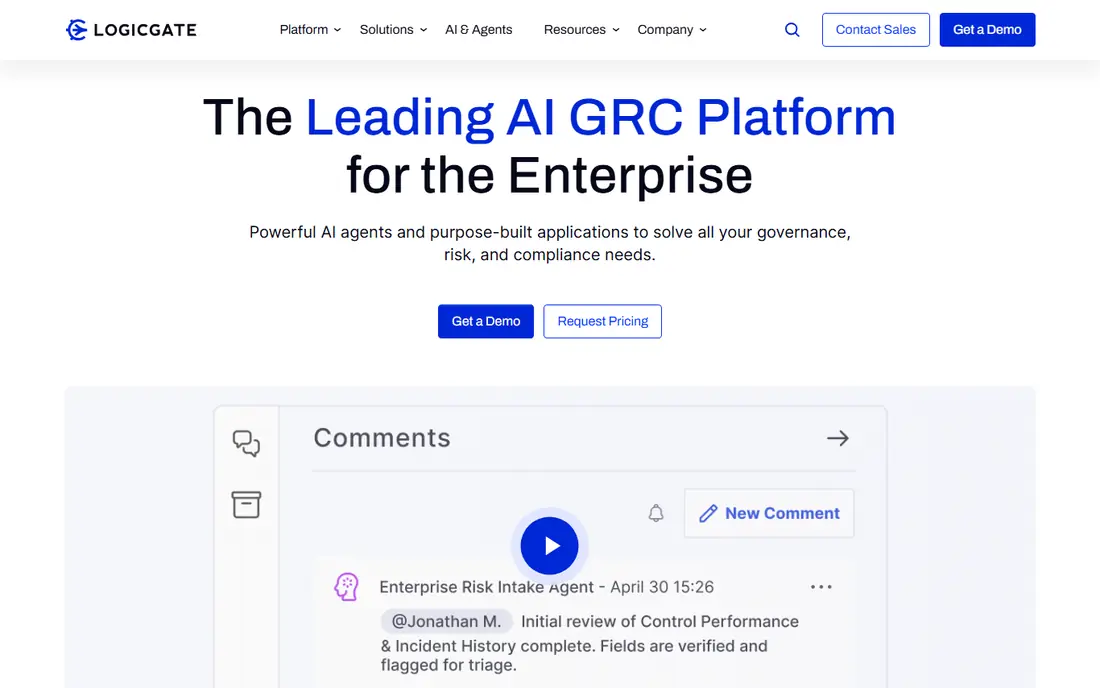
LogicGate fits mid-size and large teams that want business users to own risk workflows. LogicGate Risk Cloud offers prebuilt apps for enterprise risk, third-party risk, audit, and compliance. That focus shapes daily use: its drag-and-drop builder lets risk owners build assessments and workflows without waiting for IT for every change. For a team that needs steady, repeatable work, this is a practical starting point, because the core work stays visible in one place and the next step is clear without hunting through separate tools. The honest catch is teams that need very deep analytics should test reporting early, since some users find standalone reporting thinner than specialist tools. If that limit touches your main workflow, shortlist a second option before you commit and test it with a real example from your own work. When the fit is right, LogicGate keeps risk assessments and workflow ownership tidy and gives a small team a clear way to repeat what works, week after week.
- No-code workflow builder
- Prebuilt risk and compliance apps
- Flexible setup
- Quote-only pricing
- Reporting depth varies by app

Resolver fits firms that want risk data linked to business impact. Resolver gathers risk, compliance, audit, and incident data and links it to business impact. That focus shapes daily use: its platform approach helps teams see how one risk affects several parts of the business, rather than in isolated spreadsheets. For a team that needs steady, repeatable work, this is a practical starting point, because the core work stays visible in one place and the next step is clear without hunting through separate tools. The honest catch is smaller teams should allow time for setup and training, since the platform covers many risk areas at once. If that limit touches your main workflow, shortlist a second option before you commit and test it with a real example from your own work. When the fit is right, Resolver keeps risk registers and incident records tidy and gives a small team a clear way to repeat what works, week after week.
- Risk, audit, and incident work in one platform
- Custom reports
- Broad risk coverage
- Setup can be complex
- Integration range needs checking
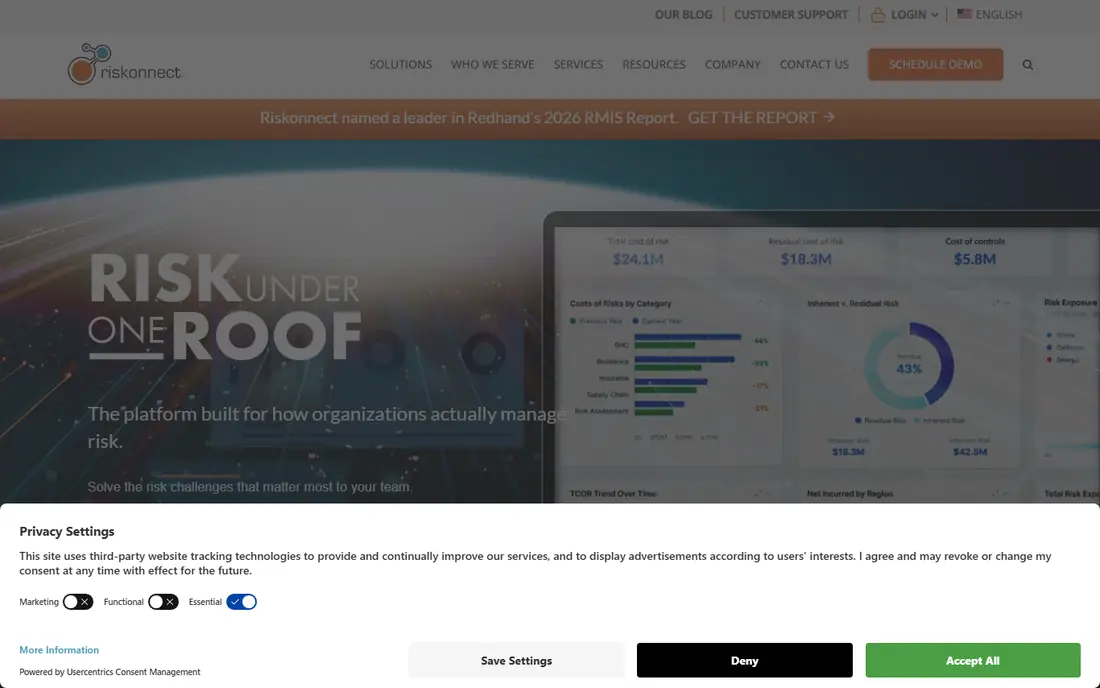
Riskonnect fits large enterprises where risk includes insurance, claims, and operations. Riskonnect covers enterprise risk, claims administration, third-party risk, and business continuity in one platform. That focus shapes daily use: its claims and insurance depth suits firms where insurable risk is a major cost and reporting need. For a team that needs steady, repeatable work, this is a practical starting point, because the core work stays visible in one place and the next step is clear without hunting through separate tools. The honest catch is the breadth and price point suit large programs, so smaller firms should shortlist a lighter tool first. If that limit touches your main workflow, shortlist a second option before you commit and test it with a real example from your own work. When the fit is right, Riskonnect keeps claims, insurance, and operational risk tidy and gives a small team a clear way to repeat what works, week after week.
- Enterprise risk plus claims and business continuity
- Insurance and health coverage
- Quote-only pricing
- Steep learning curve for large programs
MetricStream fits large regulated firms with complex control libraries. MetricStream provides governance, risk, and compliance tools for large, regulated organisations. That focus shapes daily use: its control and audit depth helps firms that must map risks to controls, policies, and audit evidence in one system. For a team that needs steady, repeatable work, this is a practical starting point, because the core work stays visible in one place and the next step is clear without hunting through separate tools. The honest catch is mid-size firms may find the implementation longer and heavier than a no-code tool built for smaller teams. If that limit touches your main workflow, shortlist a second option before you commit and test it with a real example from your own work. When the fit is right, MetricStream keeps controls, policies, and audit evidence tidy and gives a small team a clear way to repeat what works, week after week.
- Broad GRC coverage
- Control libraries
- Audit and compliance depth
- Enterprise pricing and implementation
- Needs dedicated staff
Archer fits large firms with mature GRC programs. Archer offers integrated risk management modules for risk, audit, compliance, and third-party work. That focus shapes daily use: its long history in GRC means many large firms already know its model and can find experienced staff. For a team that needs steady, repeatable work, this is a practical starting point, because the core work stays visible in one place and the next step is clear without hunting through separate tools. The honest catch is teams starting a first risk program may find a simpler, no-code tool faster to launch. If that limit touches your main workflow, shortlist a second option before you commit and test it with a real example from your own work. When the fit is right, Archer keeps GRC modules and risk reporting tidy and gives a small team a clear way to repeat what works, week after week.
- Long-standing GRC platform
- Risk, audit, and compliance modules
- Enterprise scale
- Enterprise pricing
- Implementation needs planning and resource
ServiceNow fits firms that already run ServiceNow for IT or operations. ServiceNow offers integrated risk management as part of its wider workflow platform. That focus shapes daily use: its strength is workflow: risks, issues, and tasks can move through the same system teams already use for service work. For a team that needs steady, repeatable work, this is a practical starting point, because the core work stays visible in one place and the next step is clear without hunting through separate tools. The honest catch is firms that do not use ServiceNow should compare the full platform cost, not only the risk module. If that limit touches your main workflow, shortlist a second option before you commit and test it with a real example from your own work. When the fit is right, ServiceNow keeps risk workflows and task ownership tidy and gives a small team a clear way to repeat what works, week after week.
- Risk work inside a wider workflow platform
- Automation
- Enterprise integrations
- Best value when ServiceNow is already in use
- Pricing is quoted
Onspring fits mid-market teams that want to shape workflows without heavy coding. Onspring provides configurable tools for risk, audit, compliance, and policy work. That focus shapes daily use: its configurability helps mid-market teams build a risk register and assessment flow that matches their own process. For a team that needs steady, repeatable work, this is a practical starting point, because the core work stays visible in one place and the next step is clear without hunting through separate tools. The honest catch is very large, highly regulated groups should test control and reporting depth against larger suites. If that limit touches your main workflow, shortlist a second option before you commit and test it with a real example from your own work. When the fit is right, Onspring keeps risk registers and assessment flows tidy and gives a small team a clear way to repeat what works, week after week.
- Configurable workflows
- Audit, risk, and compliance in one tool
- No-code options
- Quote-only pricing
- Enterprise depth varies by module
LogicManager fits mid-size firms that want a guided risk program. LogicManager offers risk management with governance, audit, and control tools in one platform. That focus shapes daily use: its taxonomy approach helps teams link risks, controls, and business processes in a consistent structure. For a team that needs steady, repeatable work, this is a practical starting point, because the core work stays visible in one place and the next step is clear without hunting through separate tools. The honest catch is firms that need a very large, global rollout should check scale and integration coverage in a demo. If that limit touches your main workflow, shortlist a second option before you commit and test it with a real example from your own work. When the fit is right, LogicManager keeps risk taxonomy and control links tidy and gives a small team a clear way to repeat what works, week after week.
- Risk, governance, and audit tools
- Taxonomy and control links
- Support-led setup
- Quote-only pricing
- Smaller vendor profile than the largest suites
How we picked these
We compared ERM tools by risk coverage, workflow configurability, audit and compliance links, and whether pricing is published or quoted. We checked vendor product pages for enterprise risk, third-party risk, audit, and business continuity coverage, and we treated quote-only pricing as a sign that a demo and scoping call will be needed before a budget can be fixed.
How to buy ERM software without buying too much
Start with your risk register, not a feature list. Bring your top risks, your owners, and your current spreadsheets to every demo, and ask the vendor to build one real assessment live. A tool that cannot handle your actual register in a demo will not handle it better after purchase. Agree who owns the system. Risk software fails when no one owns data quality, review dates, and reporting. Name a risk owner, an admin, and a reporting cadence before you sign, and keep the first rollout narrow so the team can learn the workflow. Check audit and reporting needs early. Ask how risks link to controls, how evidence is stored, and how a board report is produced. If reporting needs manual exports and rebuilding each quarter, the tool will cost more staff time than its licence suggests.
Frequently asked questions
What is the top risk management software?
There is no single top tool for every firm. LogicGate and Onspring suit configurable mid-market programs, while MetricStream, Archer, and Riskonnect suit large, regulated programs.
What is the best ERM software?
The best ERM software is the one that covers your risk types, fits your team size, and produces reports your board can use. Shortlist two or three tools and test them with your real risk register.
What are the best ERM software platforms for mid-size firms?
Configurable, no-code tools such as LogicGate and Onspring are often a better fit for mid-size firms than large enterprise suites, since setup is faster and business users can own workflows.
Is ERM software the same as GRC software?
The terms overlap. ERM focuses on enterprise risk, while GRC covers governance, risk, and compliance together. Many tools on this list cover both, so check the modules included in your quote.
How much does ERM software cost?
Most vendors quote per program, so cost depends on modules, users, and implementation. Expect a sales process, and budget for setup, training, and ongoing admin as well as the licence.
Sources we checked (5)

Online Jobs is an independent blog about careers, online work, learning new skills and the tools that help people earn. More about us.
Keep reading
All posts
n8n Alternatives
n8n alternatives compared for 2026, with Zapier, Make, Activepieces, and more, covering visual builders, code steps, self-hosting, and pricing models.

iPhone Alternatives
Looking for iPhone alternatives in 2026? Compare 9 Android phones from Samsung, Google, OnePlus, and more, with cameras, battery life, and honest trade-offs.

eBay Alternatives
Looking for ebay alternatives? We compared 9 marketplaces for sellers on fees, buyer reach, categories and ease of listing, to help you sell with confidence.