Telegram Alternatives in 2026: 8 Apps Compared

How we put this together: we compare official feature and pricing pages, app store listings, privacy policies and public user reviews. Prices change, so check the provider's site before you pay.
Key takeaways
- Signal is our pick for most people leaving Telegram, with free end-to-end encryption by default and a nonprofit model.
- WhatsApp suits anyone who needs to reach contacts who will actually reply, since adoption is far wider than smaller private apps.
- Threema suits users who want messaging without a phone number, for a one-time purchase.
- Session and SimpleX Chat suit users who prioritize anonymity and no identifiers over convenience.
- Element, Wire, and Discord suit teams, communities, and large groups that need structure Telegram users already expect.
Quick comparison
| Name | Who it suits | Starting price | Free option | |
|---|---|---|---|---|
 Signal | Private messaging for most people | Free | Yes | Visit |
 WhatsApp | Reaching almost everyone | Free | Yes | Visit |
 Threema | Messaging without a phone number | See website | No | Visit |
 Session | Anonymous messaging with no phone number | Free | Yes | Visit |
 SimpleX Chat | Messaging with no user identifiers | Free | Yes | Visit |
 Element | Self-hosted team and community chat | Free | Yes | Visit |
 Wire | Encrypted team collaboration | Free | Yes | Visit |
 Discord | Large communities and group chat | Free | Yes | Visit |
The best telegram alternatives
Telegram is popular for large groups, channels, and fast cloud messaging, but its default chats are not end-to-end encrypted. Only Secret Chats use end-to-end encryption, while regular chats are encrypted between your device and Telegram's servers. That gap is why many people look for an alternative, whether they want stronger privacy, a simpler app, or a better home for a community. The apps below cover those different reasons for leaving.
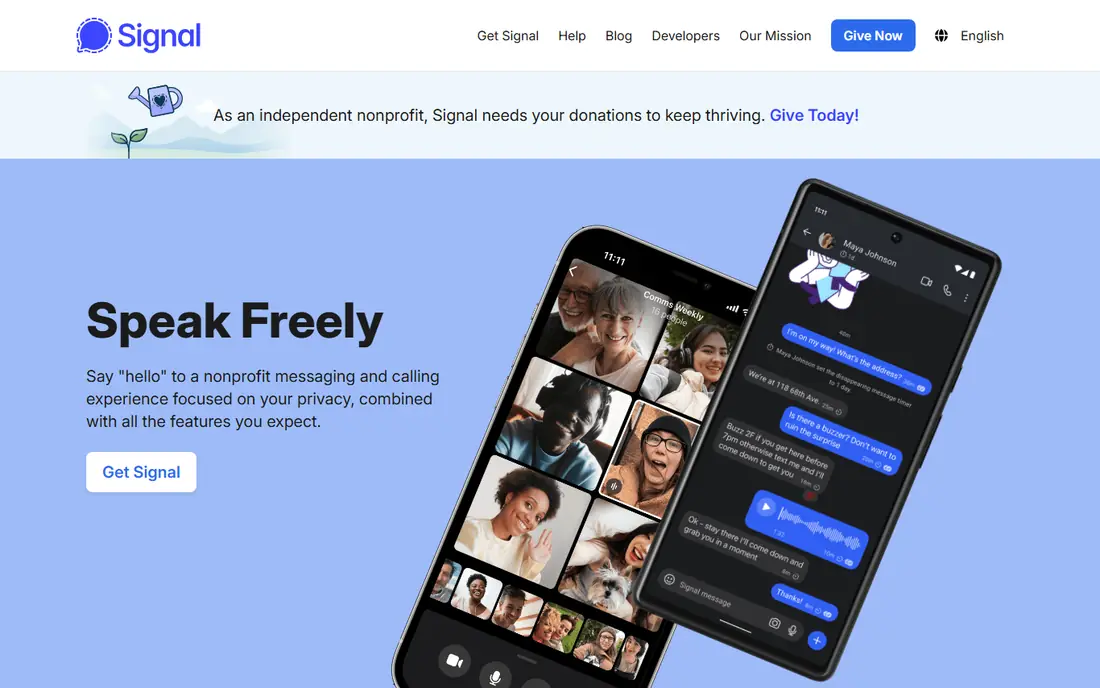
Signal is the closest private replacement for everyday Telegram messaging. It encrypts messages, voice calls, and video calls by default, supports groups, disappearing messages, and stories, and is run by a nonprofit foundation funded by donations. Its code is open source, which lets independent experts review how it works, and it is designed to hold very little metadata about who you message and when.
The trade-off is reach and channels. Signal requires a phone number to register, which some privacy-focused users dislike, and it does not offer Telegram-style public channels with hundreds of thousands of subscribers. For private chats with friends, family, and small groups, Signal is our pick for most people. For a public broadcast channel, you will need a different tool alongside it.
- End-to-end encryption by default for messages and calls
- Open source
- Minimal metadata collection
- Free and nonprofit
- Requires a phone number
- Smaller user base than WhatsApp
- Fewer large public channels than Telegram
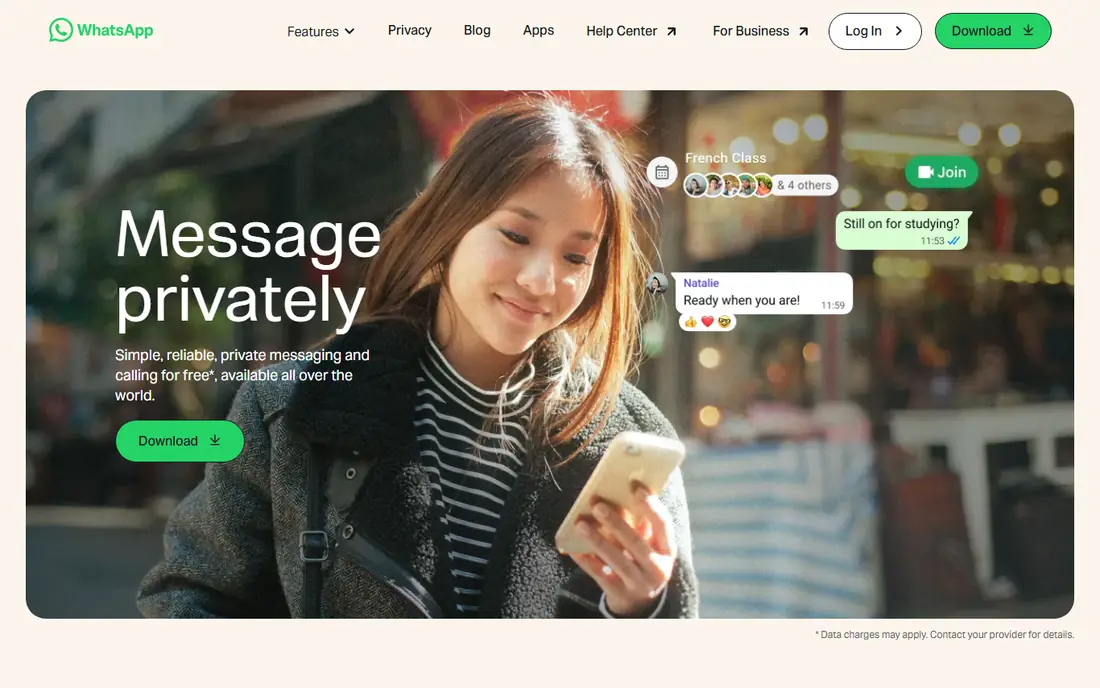
WhatsApp uses the Signal protocol for message encryption, so message content is end-to-end encrypted in personal and group chats. Its main advantage is adoption: most contacts already have it, so you do not need to convince friends, family, or customers to install a new app. It also offers groups, Communities, Channels, voice and video calls, and business features for small companies.
The drawback is privacy beyond message content. WhatsApp is owned by Meta, and it collects metadata about who you message, when, and how often, which is linked to other Meta services in ways Signal avoids. Its client is also closed source, so independent review is more limited. If your priority is reaching people, WhatsApp wins. If your priority is minimal metadata, Signal or Threema is a better fit.
- End-to-end encryption for messages and calls
- Huge user base
- Groups, channels, and business tools
- Owned by Meta, with metadata collection
- Closed source client
- Ads have appeared in the Updates tab in public reports
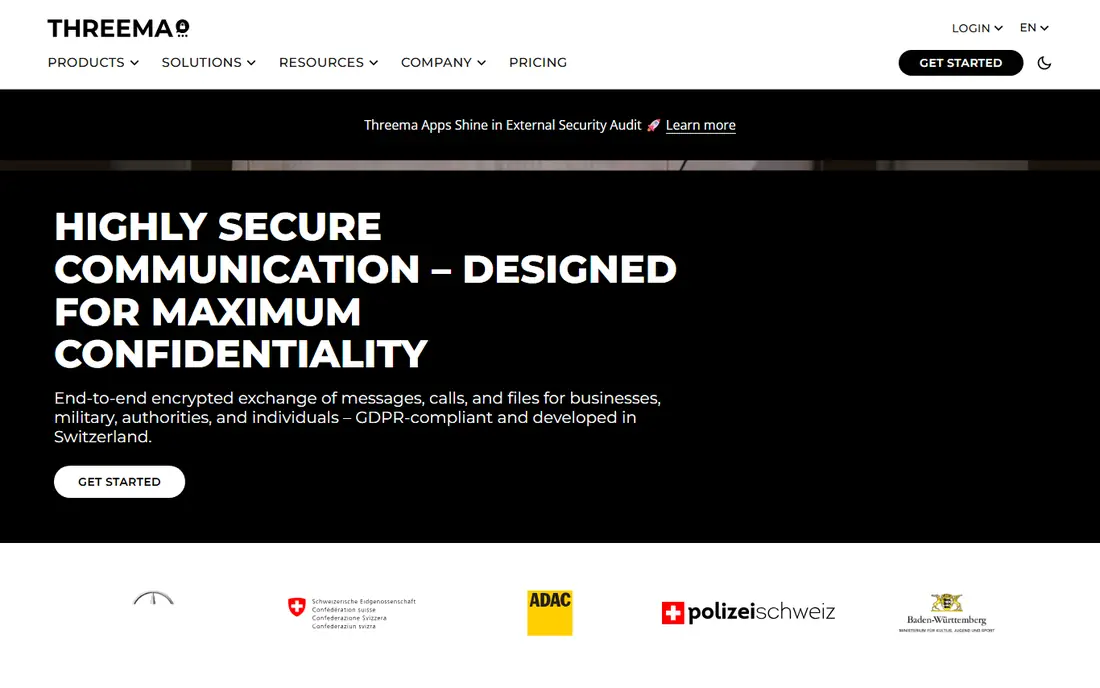
Threema issues a random ID when you install it, so you can message without sharing a phone number or email address. It is based in Switzerland, uses end-to-end encryption, and is funded by a one-time purchase rather than ads or data collection. Public reports describe the app price around $5.99 in the US, or about 4 Swiss francs in Switzerland, though app store prices vary by region and should be checked at purchase.
The limit is adoption. Because Threema costs money and has a smaller user base, you will need to convince contacts to buy and install it, which is a hard sell for casual chats. For a small group that values anonymity and is willing to pay once, Threema is a strong choice. For general messaging with many contacts, Signal or WhatsApp will be easier to adopt.
- Random ID instead of phone number or email
- Based in Switzerland
- One-time purchase, not ad-funded
- End-to-end encryption
- One-time purchase cost
- Small user base
- Fewer contacts will already have it
Session is built for anonymity. You create an account with a randomly generated Session ID, no phone number or email required, and messages are routed through a decentralized network designed to hide metadata about who talks to whom. It is free and open source, with groups, voice messages, and disappearing messages for private chats.
The trade-off is convenience. Session has a smaller user base than Signal or WhatsApp, and decentralized routing can make delivery slower or less predictable than a centralized app. It also lacks some mainstream features like large public channels. For users who prioritize anonymity over speed and reach, Session is a compelling Telegram alternative. For everyday chats, Signal will feel faster and simpler.
- No phone number or email needed
- Decentralized routing
- End-to-end encryption
- Free and open source
- Smaller user base
- Message delivery can be slower
- Fewer features than mainstream apps
SimpleX Chat goes further than Session on anonymity by using no user identifiers at all. Instead of an account ID, you share a one-time connection link or QR code for each contact, so there is no global identifier that can link your conversations together. It is free, open source, and offers end-to-end encryption, groups, and file sharing, with options to run your own server.
The drawback is usability and adoption. SimpleX Chat has a small user base, and its connection model takes getting used to if you are coming from Telegram or WhatsApp. It is best suited to privacy-focused users, journalists, activists, and small groups who accept extra steps for stronger anonymity. For most people, Signal gives a better balance of privacy and ease of use.
- No user identifiers at all, not even a random ID tied to an account
- End-to-end encryption
- Open source
- Self-hosting options
- Smallest user base on this list
- Interface takes learning
- Fewer mainstream features and integrations
Element runs on Matrix, an open, federated protocol for messaging, which means organizations can run their own server and still communicate with other Matrix servers. It supports large rooms, spaces for communities, voice and video calls, file sharing, and end-to-end encryption. A free tier covers basic use, while hosted plans for teams start around $5 per user per month in public reports.
The limit is polish and setup. Element is powerful for teams and communities that want control over their data, but self-hosting requires technical skill, and the interface can feel less smooth than Telegram or WhatsApp. For a community or company that wants to own its chat infrastructure, Element is a strong alternative. For casual private chats, Signal is simpler.
- Built on the open Matrix protocol
- Self-hosting and federation
- End-to-end encryption
- Large rooms and communities
- Setup is more complex for self-hosting
- Interface can feel rougher than mainstream apps
- Encryption setup has edge cases
Wire offers encrypted messaging, voice and video calls, file sharing, and team collaboration, with a free personal tier and paid business plans for organizations. Public reports describe business pricing from about 6 euros per user per month, with a free personal tier for individual use. It is based in Switzerland and designed for teams that need secure communication with admin controls.
The trade-off is consumer adoption. Wire is stronger as a team tool than as a replacement for Telegram's public groups and channels, and few of your personal contacts are likely to have it already. For a business team that needs encrypted collaboration with guest access and admin tools, Wire is worth testing. For personal chats, Signal or WhatsApp will reach more people.
- End-to-end encryption for messages, calls, and files
- Team collaboration features
- Personal tier is free
- Business pricing applies for teams
- Smaller consumer user base
- Fewer public channels than Telegram
Discord is the best Telegram alternative for communities, not for private messaging. It offers servers with text channels, voice channels, roles, moderation tools, bots, and live events, which suit gaming groups, creator communities, study groups, and fan communities that outgrew Telegram groups. The free tier covers most community needs, with a paid Nitro subscription for extra perks.
The honest limit is privacy. Discord chats are not end-to-end encrypted in the way Signal chats are, and Discord collects data about activity on its platform. If your main reason for leaving Telegram is stronger private messaging, Discord is the wrong pick. If your main reason is finding a better home for a large community with structure and moderation, Discord is often the easiest move, since many users already have it.
- Large servers, channels, and voice chat
- Roles and moderation tools
- Huge existing communities
- Free tier is full-featured
- Not end-to-end encrypted for most chats
- Privacy model is weaker than Signal
- Best for communities, not private messaging
How we picked these
We compared apps that can replace Telegram for private messaging, group chat, or community chat, with a focus on encryption, registration requirements, user base, and cost. We used official app descriptions and public pricing reports, and we used See website where app store prices vary by region or business pricing is quoted. We did not invent user counts, security audit claims, or feature availability, and we noted where an app's privacy model differs from Telegram's default chats.
How to move from Telegram to an alternative
Start by deciding why you are leaving. If privacy is the reason, choose Signal for most chats, Threema for no-phone-number messaging, or Session and SimpleX Chat for stronger anonymity. If reach is the reason, choose WhatsApp. If community structure is the reason, choose Discord or Element. Trying to find one app that does all three jobs as well as Telegram is the most common mistake, so pick a main private app and a separate community app if you need both.
Next, move groups in stages. Create the new group, invite core members first, and keep the Telegram group open for a transition period with a pinned message pointing to the new home. Export any important files, links, and notes before you leave, since Telegram cloud chats and alternative apps handle history differently. For private chats, agree on one app with your closest contacts first, since a private app only works if both sides use it.
Finally, check your security settings on the new app. Turn on disappearing messages where you want them, review who can add you to groups, enable two-step verification where available, and check backup settings, since unencrypted backups can weaken otherwise strong encryption. A safer app with weak settings is not much safer than Telegram, so spend ten minutes on settings after you install it.
Frequently asked questions
What are the best telegram alternatives?
Signal is the best general alternative for private messaging, WhatsApp is best for reach, Threema is best for messaging without a phone number, and Discord is best for large communities. Session and SimpleX Chat suit users who prioritize anonymity, while Element and Wire suit teams. The best choice depends on whether you value privacy, reach, or community structure most.
Is Signal better than Telegram for privacy?
For private chats, yes. Signal encrypts messages and calls by default with end-to-end encryption and collects minimal metadata, while Telegram only encrypts Secret Chats end-to-end and stores regular chats on its servers. Telegram still offers large groups and channels that Signal does not match, so many users keep Telegram for public channels and use Signal for private chats.
What is the best alternative to Telegram without a phone number?
Threema, Session, and SimpleX Chat all work without a phone number. Threema uses a random ID and costs a one-time purchase, Session uses a random Session ID and is free, and SimpleX Chat uses no user identifiers at all and is free. Threema is easiest for a small paid group, while Session and SimpleX Chat suit users who prioritize anonymity and open source tools.
Can I use WhatsApp as a Telegram alternative?
Yes, if your goal is to reach contacts easily. WhatsApp encrypts messages end-to-end, supports groups, Communities, and Channels, and most contacts already have it. It is owned by Meta and collects metadata, so it is not the best choice if minimal metadata is your main goal. In that case, Signal is a stronger private alternative.
Is Discord a good Telegram alternative?
Discord is a good alternative for communities, with servers, channels, voice chat, roles, and moderation tools that suit large groups. It is not a good alternative for private messaging, since its chats are not end-to-end encrypted like Signal. Use Discord for community structure and Signal for private chats if you need both.
How do I convince friends to switch from Telegram?
Pick one app, explain why in one sentence, and make the move easy by creating the group and inviting people directly. Start with your closest contacts, keep the Telegram group open during transition, and share a clear reason, such as default encryption on Signal or better community tools on Discord. Most people will switch if the new group is active and easy to join.
Sources we checked (8)

Online Jobs is an independent blog about careers, online work, learning new skills and the tools that help people earn. More about us.
Keep reading
All posts
Surfshark Alternatives
Looking for Surfshark alternatives? We compare 8 VPN services on price, privacy, streaming, and device limits to help you find a VPN that fits your needs.
NordPass Alternatives
We compared NordPass alternatives for families, solo users and teams, checking pricing, free plans, passkeys and sharing, so you can switch safely today.

LastPass Alternatives
Looking for LastPass alternatives? We compare 9 password managers on price, free plans, family sharing, team controls, and security. for US readers in 2026.