Best Sales Intelligence Software in 2026: 8 Tools Compared

How we put this together: we compare official feature and pricing pages, app store listings, privacy policies and public user reviews. Prices change, so check the provider's site before you pay.
Key takeaways
- Apollo is the best all in one starting point for small and mid-size teams, since it pairs a contact database with outreach in one tool.
- ZoomInfo suits mid-market and enterprise teams that need deep coverage, intent signals, and a large contact database.
- Cognism leads for European prospecting, with phone verified mobiles and compliance controls for GDPR focused teams.
- Lusha, LeadIQ, and RocketReach suit individual sellers and small teams that want fast lookups without a large contract.
- Clay is not a database alone: it enriches across many providers and automates workflows, which suits RevOps and growth engineering teams.
Quick comparison
| Name | Who it suits | Starting price | Free option | |
|---|---|---|---|---|
 ZoomInfo | Enterprise B2B data and intent | See website | Yes | Visit |
 Apollo | All in one prospecting and outreach | See website | Yes | Visit |
 Cognism | European contact data | See website | No | Visit |
 Lusha | Fast contact lookups for small teams | See website | Yes | Visit |
 Clay | Waterfall enrichment workflows | See website | Yes | Visit |
 LeadIQ | LinkedIn to CRM prospecting | See website | Yes | Visit |
 Seamless.AI | Real time contact search | See website | Yes | Visit |
 RocketReach | Transparent self serve lookup pricing | See website | Yes | Visit |
The best sales intelligence software
Sales intelligence tools find the right contacts, verify their details, and show buying signals, so sellers spend time on conversations instead of manual research. The tools below differ in database size, region, pricing model, and whether they also handle outreach.
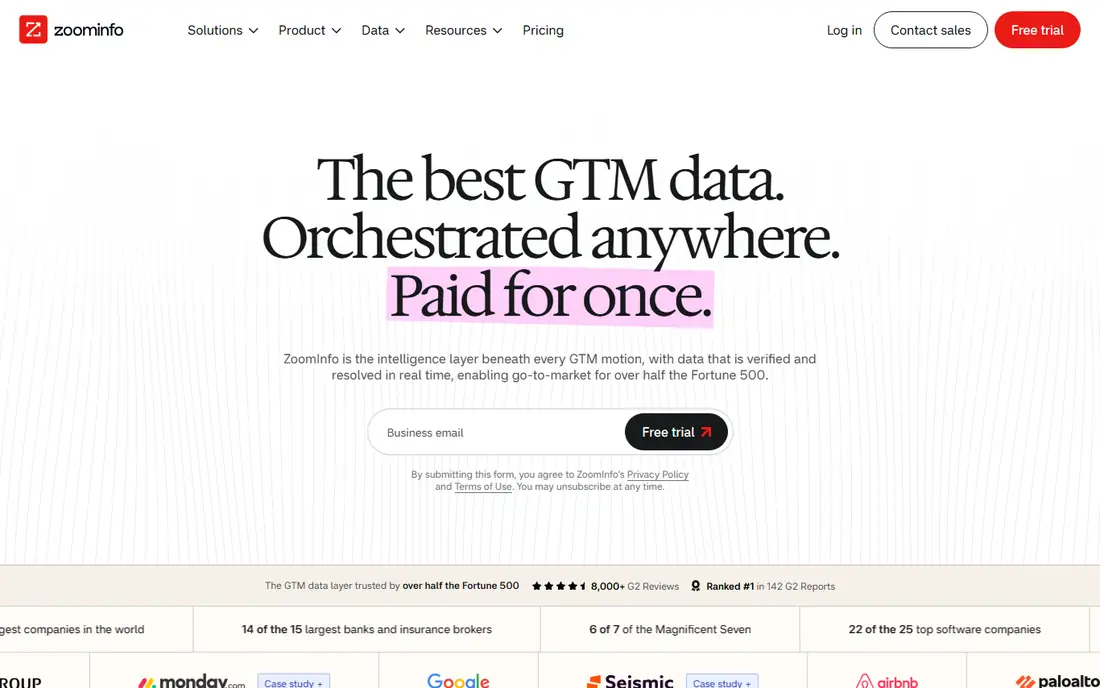
ZoomInfo is the enterprise standard for B2B contact and company data. Its database covers hundreds of millions of contacts, with firmographics, technographics, and intent signals that help teams prioritise accounts showing buying activity. A free entry tier, ZoomInfo Lite, lets small teams test basic search before a paid contract.
The strength is depth and workflow: search, build lists, enrich CRM records, and track intent in one platform. The cost is commitment, since paid plans are quote based and usually annual. ZoomInfo suits mid-market and enterprise revenue teams with a clear ideal customer profile and the budget to use the full platform, not just occasional lookups.
- Very large contact database, intent and technographic signals, broad integrations
- Quote based paid pricing, annual contracts for paid tiers
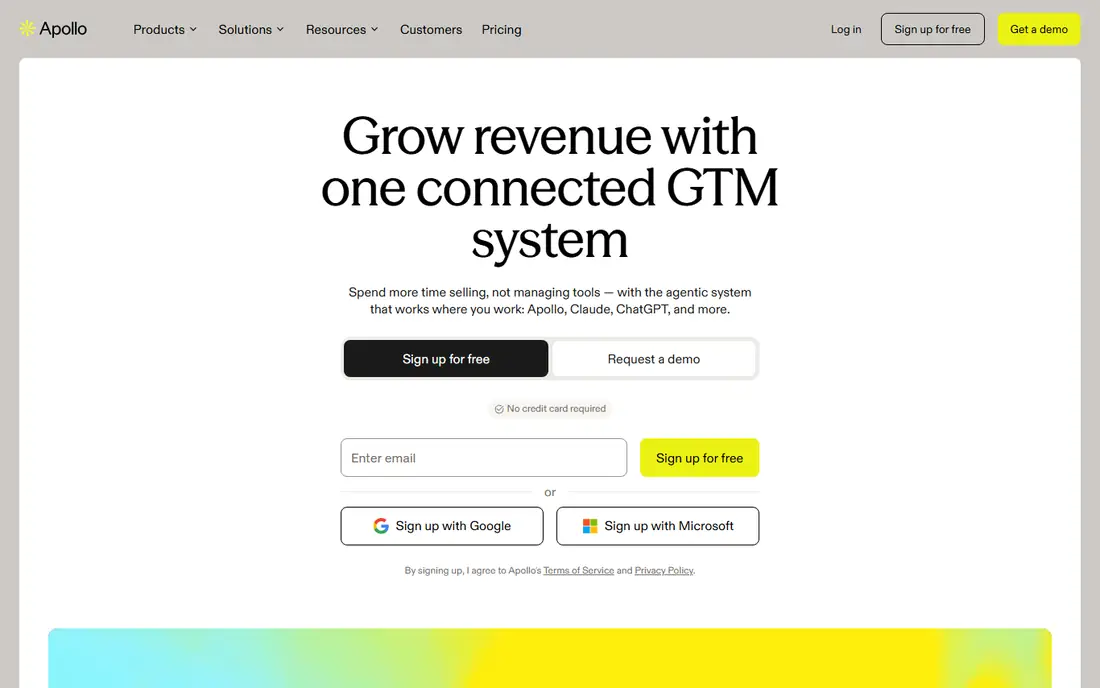
Apollo pairs a large contact database with sales engagement tools, so a small team can find contacts, build sequences, and send outreach without buying a separate tool. The free tier covers basic search and limited credits, and paid plans start with public monthly pricing per user. That transparency makes Apollo easy to trial and budget.
Phone heavy teams should watch credit use, since phone numbers cost more credits than emails on Apollo plans. Data accuracy also varies by region and role, so verify key contacts before a large campaign. For startups and mid-size teams that want one tool for prospecting and outreach, Apollo is the most practical starting point in this list.
- Database plus sequences and dialler, free tier, clear public pricing
- Phone data accuracy varies, credit limits shape heavy phone prospecting
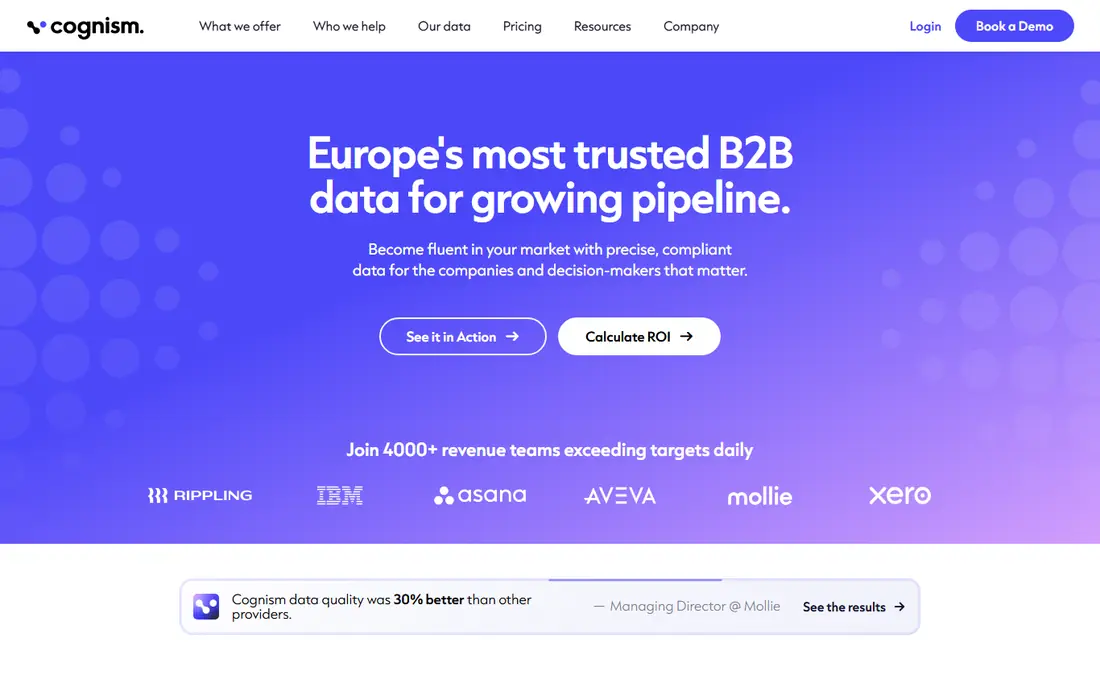
Cognism focuses on European B2B data, with Diamond Data phone verified mobiles and checks against do not call lists. That focus matters for teams calling into Europe, where mobile accuracy and compliance controls decide whether outreach is both effective and lawful. Cognism also supports GDPR aligned workflows, with data handling controls that compliance teams can review.
Pricing is quote based, and there is no free tier for core contact data, so Cognism suits teams with a real European prospecting need and a budget to match. North American teams with little European business may get more value from ZoomInfo or Apollo. Request a quote based on users, regions, and mobile data needs, and test mobile accuracy on your target titles.
- Phone verified mobile data for Europe, GDPR aligned controls, do not call list checks
- Quote based pricing, no free tier for core data
Lusha is built for speed. A browser extension lets sellers reveal contact details while browsing LinkedIn or company sites, then save those contacts to a CRM. The free tier includes a monthly credit allowance, and paid plans add more credits per user. That model suits individual sellers and small teams that need quick lookups rather than a full platform.
The limit is scale. Credit based pricing rewards careful use, and heavy prospecting teams can burn through credits fast. Database depth also trails ZoomInfo for some roles and regions. Lusha works best as a lookup tool for sellers who already know their target accounts, rather than as a list building engine for a whole territory.
- Simple browser extension, fast LinkedIn lookups, free tier with monthly credits
- Credit limits on lower tiers, database depth is less than ZoomInfo
Clay is a workflow tool, not a single database. It pulls data from many providers in a waterfall, so if one provider lacks a phone number or email, the next provider is tried automatically. Teams build tables that enrich, score, and route leads, then sync results to a CRM or outreach tool. That flexibility suits RevOps and growth engineering teams.
The learning curve is real. Clay rewards users who can design a workflow, while a lone seller who just wants a phone number will find Lusha or LeadIQ faster. Clay offers a free tier with limited credits, and paid plans are priced by credits and features. Use Clay when data quality and automation matter more than a simple lookup.
- Enrichment across many providers, workflow automation, AI assisted research
- Learning curve, paid pricing rises with enrichment volume
LeadIQ focuses on the LinkedIn workflow that many sellers already use. A browser extension captures contact details from a LinkedIn profile with one click, then syncs to a CRM or sales engagement tool. Job change tracking, often called champion tracking, alerts teams when a past contact moves to a new company, which creates warm outreach moments.
That focused workflow is the appeal, and also the limit. LeadIQ is not a full account research platform, and its database is smaller than ZoomInfo or Apollo. The free tier covers a small monthly credit allowance, with paid plans adding more credits. It suits SDR and BDR teams that live on LinkedIn and want a fast capture tool.
- One click LinkedIn capture, job change tracking, simple CRM sync
- Credit limits, smaller database than enterprise rivals
Seamless.AI works like a search engine for B2B contacts, returning emails and phone numbers in real time as sellers search. That live search model suits high volume prospecting, where a team needs many contacts fast and can verify them through outreach. A free tier with a credit allowance lets new users test the search before paying.
Paid tiers are quote based, so request pricing based on expected search volume. Accuracy varies, as with any large database, so verify key contacts and watch bounce rates on first campaigns. Seamless.AI suits teams that value speed and volume, and that pair it with a verification or enrichment step before large sends.
- Real time search engine for contacts, free tier, large claimed database
- Paid tiers are quote based, accuracy varies by role and region
RocketReach offers a broad database of professional profiles with email and phone lookup, plus clear public pricing that small teams can model without a sales call. The workflow is simple: search for a person or company, reveal contact details, and export or sync the result. That clarity appeals to teams tired of quote based pricing.
The trade off is breadth of features. RocketReach does not offer the same intent, engagement, or workflow depth as ZoomInfo, Apollo, or Clay. It works best as a reliable lookup tool for recruiters, sellers, and founders who need contact details fast. Pair it with a CRM and an outreach tool when a full prospecting stack is needed.
- Clear public pricing, broad profile database, simple lookup workflow
- Lookup focused, fewer intent and engagement features than Apollo
How we picked these
We compared official feature pages, pricing pages, and public product documentation for each tool, and we checked each homepage to confirm it belongs to the product named. We favoured tools with a clear B2B contact database or enrichment workflow, a published free tier or trial where offered, and integrations to common CRMs. We did not claim hands on testing, and we treated any price not shown on a vendor page as quote based.
We also weighed pricing transparency and region. A tool with public pricing and a free tier scores well for small teams, while a quote based enterprise tool scores well for coverage and intent. Credit systems change often, so confirm the current credit rules and paid rates on each vendor pricing page before budgeting.
Choosing a tool by team size
Solo sellers and small teams should start with a free tier from Apollo, Lusha, LeadIQ, or RocketReach, and pay only for the lookup volume they actually use. That keeps cost low while the ideal customer profile is still being tested. Add Clay when enrichment quality or automation becomes the bottleneck, not before.
Mid-market and enterprise teams should shortlist ZoomInfo and Cognism alongside Apollo. ZoomInfo fits broad North American and global coverage with intent, while Cognism fits European calling. Run a data test on the same target list in each tool, and compare match rate, phone accuracy, and bounce rate. The tool with the best data on your list, not the largest claimed database, is the right buy.
Frequently asked questions
What is the best sales intelligence software?
Apollo is the best all in one pick for small and mid-size teams, since it pairs data with outreach. ZoomInfo suits enterprise teams that need deep coverage and intent. Cognism suits European prospecting. The best tool depends on region, team size, and whether you need outreach, enrichment, or intent as well as contacts.
What is the difference between sales intelligence and a CRM?
A CRM stores your own customer and deal records. Sales intelligence finds new contacts, verifies their details, and adds buying signals from outside your CRM. Most teams sync intelligence tools into a CRM, so prospect data flows into the same pipeline view as existing deals.
Do sales intelligence tools offer a free plan?
Yes, several do. ZoomInfo Lite, Apollo, Lusha, Clay, LeadIQ, Seamless.AI, and RocketReach each offer a free tier with limited credits or features. Cognism is quote based without a core free tier. Free tiers suit testing and light use, but check credit limits, since phone numbers often cost more credits than emails.
How accurate is B2B contact data?
Accuracy varies by provider, role, region, and how recently a contact changed jobs. Phone numbers are harder to keep accurate than emails. Test each tool on your own target list, verify key contacts, and track bounce and connect rates on first campaigns. No provider is accurate for every title in every country.
Is sales intelligence data compliant with GDPR?
Compliance depends on the provider controls and on how your team uses the data. Cognism highlights GDPR aligned workflows and do not call checks for Europe. Other providers offer suppression, opt out handling, and data processing terms. Review each vendor data policy, respect opt outs, and get legal advice for your markets before large outreach.
Which sales intelligence tool is best for startups?
Apollo is a strong startup pick, since its free tier and public pricing cover data plus outreach in one tool. Lusha and LeadIQ also suit startups that need fast lookups on a small budget. Start free, prove the ideal customer profile with real replies, and upgrade only when credit limits or team size force the move.
Sources we checked (8)

Online Jobs is an independent blog about careers, online work, learning new skills and the tools that help people earn. More about us.
Keep reading
All posts
Best Sales Prospecting Tools
Compare the best sales prospecting tools for B2B contact data, enrichment, and outreach, with pricing, credits, and free plans explained in detail in 2026.

Best Proposal Software
Looking for the best proposal software? We compare 8 proposal tools on templates, e-signatures, pricing tables, tracking, and price for freelancers and teams.
Best AI Sales Automation Tools
Looking for the best AI sales automation tools in 2026? We compare nine platforms for prospecting, enrichment, sequences and coaching, with prices and limits.