Best Sales Prospecting Tools in 2026: 8 Tools Compared

How we put this together: we compare official feature and pricing pages, app store listings, privacy policies and public user reviews. Prices change, so check the provider's site before you pay.
Key takeaways
- Apollo is the best all-round pick for small and mid-market teams, with contact data plus sequences and a dialer in one tool.
- ZoomInfo leads for enterprise data depth, intent signals, and account intelligence, but pricing is custom and often high.
- Lusha and LeadIQ suit individual sellers who need quick LinkedIn lookups without an enterprise contract.
- Clay suits RevOps teams that enrich existing lists from many providers, rather than building lists from scratch alone.
- LinkedIn Sales Navigator is best for relationship selling, but it does not provide verified emails or phone numbers on its own.
Quick comparison
| Name | Who it suits | Starting price | Free option | |
|---|---|---|---|---|
 Apollo | All-round prospecting | $49 per user per month | Yes | Visit |
 ZoomInfo | Enterprise data depth | See website | Yes | Visit |
 LinkedIn Sales Navigator | Relationship selling | $99 per month | Free trial | Visit |
 Lusha | Quick contact lookup | $37.45 per month | Yes | Visit |
 Clay | Enrichment workflows | $185 per month | Yes | Visit |
 Cognism | EMEA prospecting | See website | No | Visit |
 LeadIQ | LinkedIn capture | $15 per month | Yes | Visit |
 Hunter | Email finder | $49 per month | Yes | Visit |
The best sales prospecting tools
We compared official pricing pages, database scope, credit models, and workflow features for B2B prospecting tools. Prospecting tools differ in job: some find new contacts, some enrich lists you already own, and some help you reach contacts through sequences or social selling. The list below labels each tool by its main job.
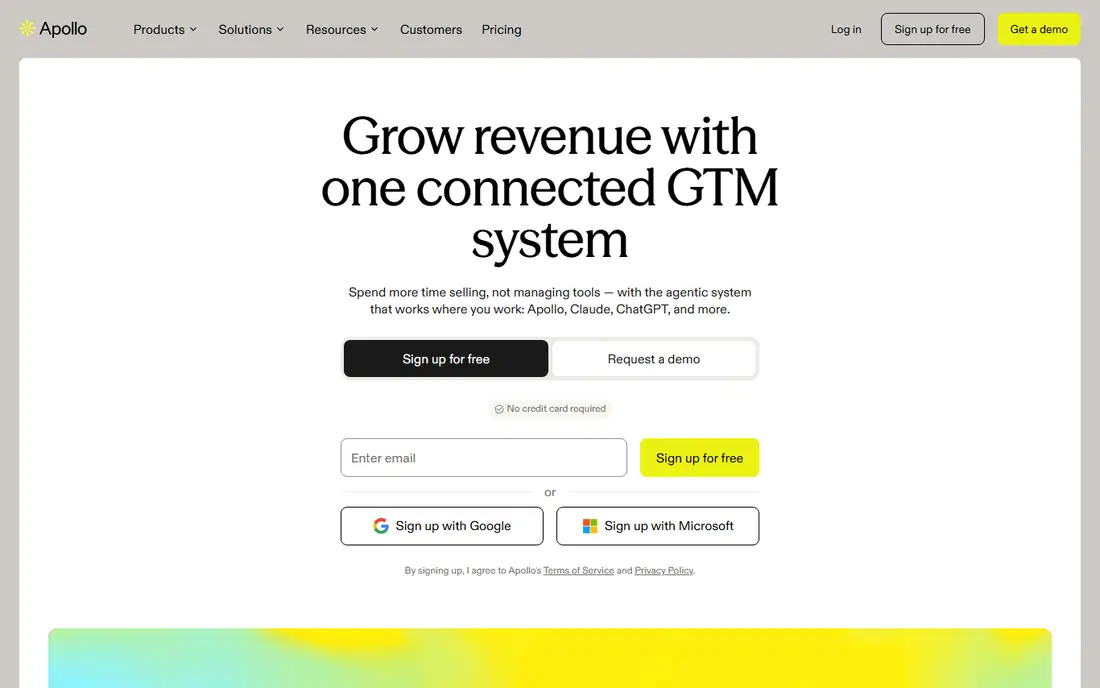
Apollo is our pick for most small and mid-market sales teams because it combines finding, enriching, and reaching prospects in one tool. You can search contacts by title, industry, and company size, build sequences with email and LinkedIn steps, and call from the built-in dialer. The free plan lets a solo seller test the workflow before paying.
The credit model is the catch. Paid plans start at $49 per user per month billed yearly, with credits that expire under some terms, so model your monthly contact volume before choosing a tier. Data quality also varies by niche, so verify a sample list in your market during the trial. For a team that wants one prospecting tool, Apollo is still the simplest strong choice.
- Contact database plus sequences, dialer, and LinkedIn steps
- 65 plus filters
- Free plan with yearly credits
- Credit limits and expiry need watching
- Data accuracy varies by niche
- Advanced features sit on higher tiers
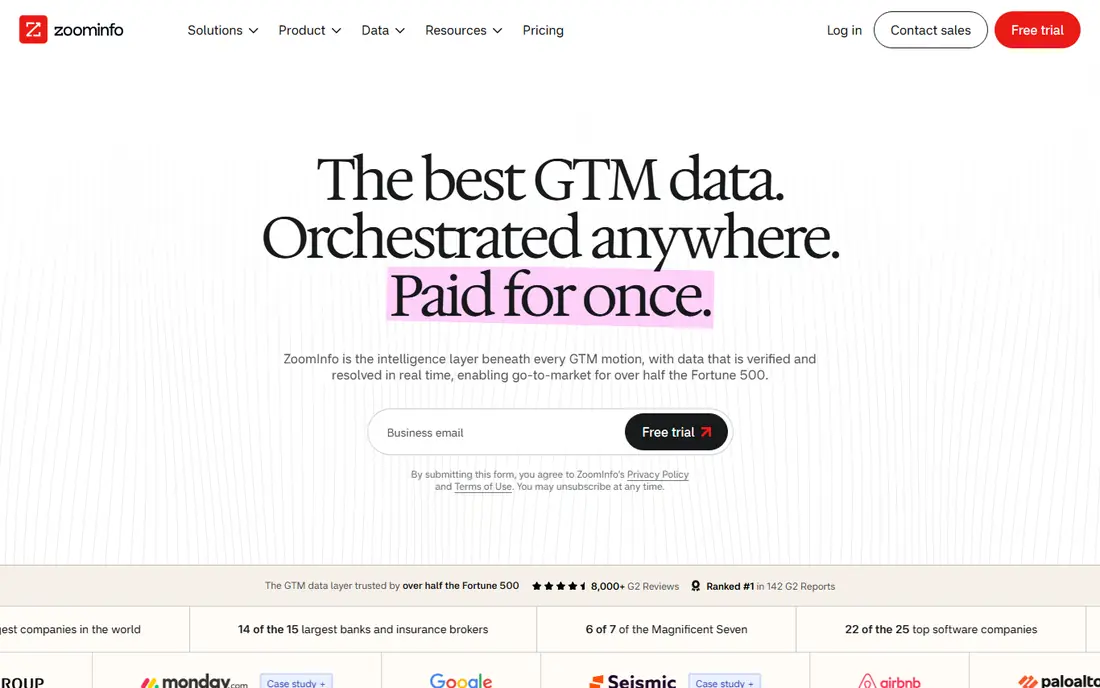
ZoomInfo suits mid-market and enterprise revenue teams that need depth, not just contact names. It combines verified contacts, buying signals, technographics, org charts, and account intelligence, with a free Lite plan to start. That depth helps account-based teams prioritize accounts showing real buying activity.
Price is the barrier for smaller teams. Paid plans use consumption credits and custom quotes, with annual costs often far above Apollo or Lusha. If your team is small, start with Apollo or Lusha. If you run account-based programs, manage large territories, or need intent data at scale, ZoomInfo earns its place on the shortlist.
- Large verified contact database
- Intent, technographic, and org chart data
- AI agents and GTM workspace features
- Paid plans are custom-quoted and often costly for small teams
- Contract and renewal terms need care
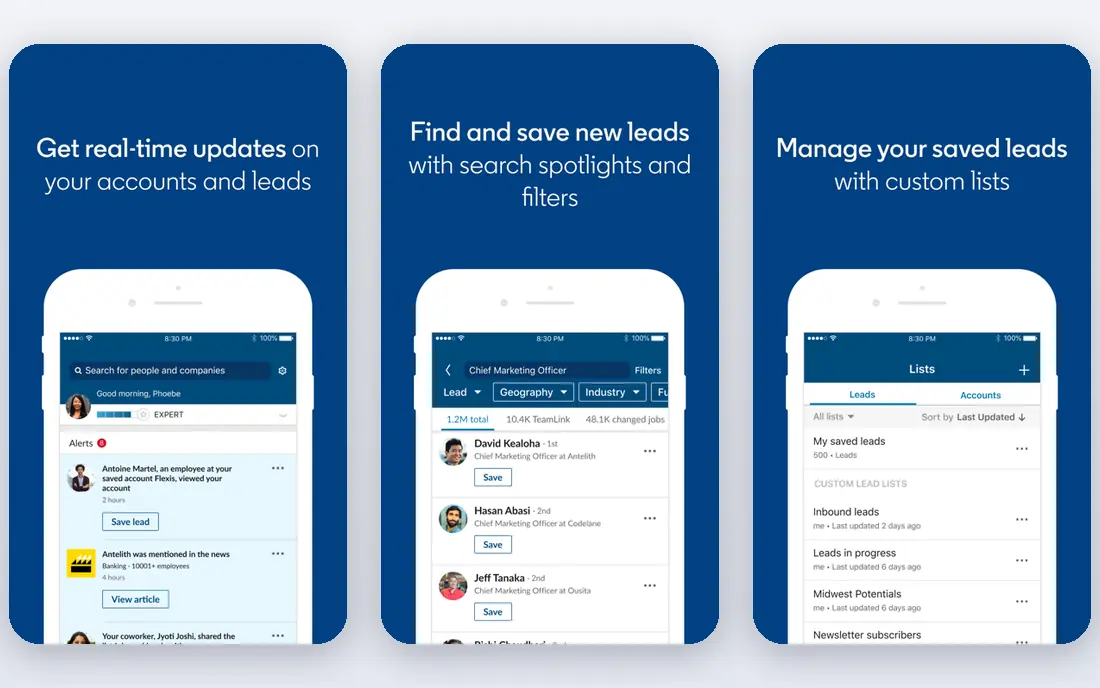
LinkedIn Sales Navigator is the best tool for sellers who win through relationships, referrals, and warm introductions. It offers advanced filters, saved leads, job change alerts, and InMail, which help you track decision makers and time outreach to role changes. For enterprise selling, that timing often matters more than list size.
It is not a contact database on its own. You still need Apollo, Lusha, or another tool for verified emails and direct dials, since Sales Navigator focuses on profiles and messaging within LinkedIn. Pair it with a data tool if you run email outreach, and use it alone only if your motion is truly LinkedIn-first.
- Advanced search across LinkedIn profiles
- Job change and lead alerts
- InMail credits
- Relationship mapping
- Does not provide verified emails or phone numbers directly
- Core price is $99 per month in many listings, with higher tiers above that
Lusha suits individual sellers and small teams who need fast contact details while browsing LinkedIn. The browser extension shows emails and phone numbers for a profile in one click, and contacts sync to your CRM. The free plan, with monthly credits, lets a new seller test accuracy in their niche before paying.
Heavy prospectors will hit credit limits quickly, and phone coverage is less deep than ZoomInfo or Cognism. Use Lusha for targeted lookup, not for building thousand-contact lists in one sitting. If your workflow is LinkedIn-first and you need a few verified contacts per day, Lusha is efficient and fairly priced.
- One-click lookup from LinkedIn profiles
- Browser extension
- Credit rollover within limits
- Free plan with monthly credits
- Accuracy varies by contact and region
- Credit limits bind heavy users
- Phone data is thinner than enterprise rivals
Clay fits RevOps and GTM teams that already have a list and want to enrich, score, and route it well. It pulls data from many providers in a waterfall, so if one source lacks a phone number, another fills it. AI agents can research companies, draft context, and score leads against your ideal customer profile.
It is not the cheapest way to find contacts from scratch. At $185 per month for Launch, or $167 billed yearly, it costs more than Apollo Basic, and untested workflows can burn credits fast. Choose Clay when enrichment quality and automation matter more than list building alone, and test workflows on a small sample first.
- Waterfall enrichment across 150 plus data providers
- AI research agents
- Custom scoring and workflow automation
- Higher entry price than simple lookup tools
- Setup needs RevOps or GTM skill
- Onboarding can burn credits if workflows are untested
Cognism is the strongest pick for teams selling into Europe, the Middle East, and Africa. Its Diamond Data includes human-verified mobile numbers, and its compliance tools check do-not-call lists across many countries. That combination improves connect rates in markets where data rules are strict and mobile numbers are hard to verify.
US-only teams will find less value, and pricing is by quote, which makes quick comparison hard. If your territories are mainly European, Cognism deserves a trial against ZoomInfo, with a focus on mobile accuracy in your target countries. If your market is US-only, Apollo or ZoomInfo will usually be cheaper and broader.
- Phone-verified Diamond Data for mobiles
- Strong GDPR and compliance focus
- DNC checking across many countries
- Quote-based pricing, often costly for small teams
- Best value is in EMEA markets, less central for US-only teams
LeadIQ suits SDR and BDR teams that live on LinkedIn and need fast capture into their CRM. One click saves a contact, enriches key fields, and syncs it to Salesforce or HubSpot, while champion tracking alerts you when a past champion changes jobs. At $15 per month billed yearly for Pro, it is one of the cheapest paid entry points on this list.
It does not replace a full database for large list building. Use LeadIQ to capture contacts you already found on LinkedIn, and pair it with Apollo or ZoomInfo for broader search. For a small SDR team with a LinkedIn-heavy motion, that pairing is efficient and low cost.
- One-click capture from LinkedIn to CRM
- Champion tracking for job changes
- Low entry price
- Free plan for testing
- Contact depth trails larger databases
- Credit limits apply
- Best as a capture tool, not a full prospecting platform
Hunter fits sellers who mainly need verified work emails for a company domain. Enter a domain, find email patterns and individual addresses, verify them, and export the list for outreach. The free plan lets you test search quality before paying, and the browser extension speeds up lookup while browsing.
The drawback is scope. Hunter does not provide phone data for most contacts, and its database depth trails larger rivals for full prospect records. If email finding is your main job, Hunter is efficient and fairly priced. If you need phones and intent data too, pair it with Apollo or ZoomInfo.
- Email finder and verifier for domains
- Browser extension
- Free plan with monthly searches
- Simple campaign tools
- No phone data for most contacts
- Credit limits bind heavy users
- Database depth trails larger rivals
How we picked these
We compared official pricing pages, credit models, database scope, and workflow features for B2B prospecting tools operating in 2026. We kept tools that help sales teams find, enrich, or reach business contacts, and we labeled each by its main job. Where pricing is by quote, we say so rather than publishing a guessed rate.
Choosing the right sales prospecting tool
Start with your bottleneck. If you lack contacts, pick a database tool such as Apollo or ZoomInfo. If you have contacts but lack good emails and phones, pick an enrichment tool such as Clay or Lusha. If you lack meetings, pick a tool that pairs data with sequences, dialer, or LinkedIn outreach.
Model credits, not just monthly price
Most tools charge by credits, seats, or both, and credit expiry, rollover, and per-contact costs change the real price. Model your monthly contact volume, email verification needs, and phone lookup needs before choosing a tier. A cheap monthly plan with tight credits can cost more than a higher plan with generous credits.
Check data in your niche
Database size claims hide niche gaps. Run the same search, for your exact titles, industries, and regions, across two or three tools during trials, and check bounce rates on a small email sample. A tool that wins for SaaS titles in the US may be weak for manufacturing titles in Europe, so test your market, not the homepage.
Stay compliant
Use data tools that state GDPR and CCPA compliance, explain data sourcing, and support opt-out and do-not-call checks where relevant. Prospecting works best when lists are targeted, verified, and respectful of opt-outs, since high bounce and complaint rates harm deliverability for your whole domain.
Frequently asked questions
What are the best sales prospecting tools overall?
Apollo is our pick for most small and mid-market teams, ZoomInfo leads for enterprise data depth, and LinkedIn Sales Navigator leads for relationship selling. Lusha and LeadIQ suit individual sellers who need quick lookups.
What is the best prospecting software for B2B leads?
Apollo combines a B2B database with sequences and a dialer from $49 per user per month. ZoomInfo offers deeper intent and account data for larger teams, while Clay excels at enriching existing B2B lists from many providers.
What is the best sales prospecting tool for small teams?
Apollo and Lusha suit small teams, with free plans and published entry prices. LeadIQ at $15 per month is also strong for LinkedIn capture, especially when paired with a database tool for broader search.
How much do sales prospecting tools cost?
Entry prices range from free plans for Apollo, ZoomInfo Lite, Lusha, Clay, LeadIQ, and Hunter, to $15 per month for LeadIQ Pro, $37.45 for Lusha, $49 for Apollo and Hunter, $99 for LinkedIn Sales Navigator Core, and $185 for Clay Launch. ZoomInfo and Cognism paid plans are often quote-based.
Do prospecting tools provide email addresses and phone numbers?
Most database tools do, including Apollo, ZoomInfo, Lusha, and Hunter, subject to credit limits and regional coverage. LinkedIn Sales Navigator does not provide verified emails or phone numbers directly, so pair it with a data tool for email and phone outreach.
Sources we checked (8)

Online Jobs is an independent blog about careers, online work, learning new skills and the tools that help people earn. More about us.
Keep reading
All posts
Best AI Sales Automation Tools
Looking for the best AI sales automation tools in 2026? We compare nine platforms for prospecting, enrichment, sequences and coaching, with prices and limits.
9 Best AI Sales Tools for Teams That Want Better Pipeline
We compared the best ai sales tools for prospecting, outreach, coaching, and forecasting, including Gong, Apollo, Clay, Outreach, Salesloft, and Clari.

ZoomInfo Alternatives
The best ZoomInfo alternatives in 2026, compared on price, free plans, data coverage, and which tool fits small teams or large sales teams best in detail.