Best Mailchimp Alternatives Free in 2026: 9 Tools Compared

How we put this together: we compare official feature and pricing pages, app store listings, privacy policies and public user reviews. Prices change, so check the provider's site before you pay.
Key takeaways
- Brevo suits big lists mailed occasionally, because its free plan stores many contacts and caps sends per day rather than by list size.
- Sender suits small lists that send often, with a generous monthly send allowance for up to 2,500 subscribers on its free plan.
- Kit suits creators who want up to 10,000 subscribers free, though automation on the free plan is basic.
- Free plans almost always add branding or limit automation, so check those limits before you move a list.
Quick comparison
| Name | Who it suits | Starting price | Free option | |
|---|---|---|---|---|
 Brevo | Big lists mailed occasionally | Free | Yes | Visit |
 MailerLite | Polished design for small lists | Free | Yes | Visit |
 Sender | Small lists that send often | Free | Yes | Visit |
 Kit | Creators growing a newsletter | Free | Yes | Visit |
 EmailOctopus | Low cost sending for small lists | Free | Yes | Visit |
 Omnisend | Ecommerce newsletters | Free | Yes | Visit |
 AWeber | Simple newsletters with support | Free | Yes | Visit |
 GetResponse | Newsletters plus landing pages | Free | Yes | Visit |
 beehiiv | Newsletter creators and growth | Free | Yes | Visit |
The best best free Mailchimp alternatives
We compared the current options for mailchimp alternatives free by checking vendor sites, plan limits, and core features, then ranked them by fit for common users rather than by marketing claims. Our pick for most readers is Brevo, but the right choice depends on your budget, audience, and the workflow you will actually use every week.
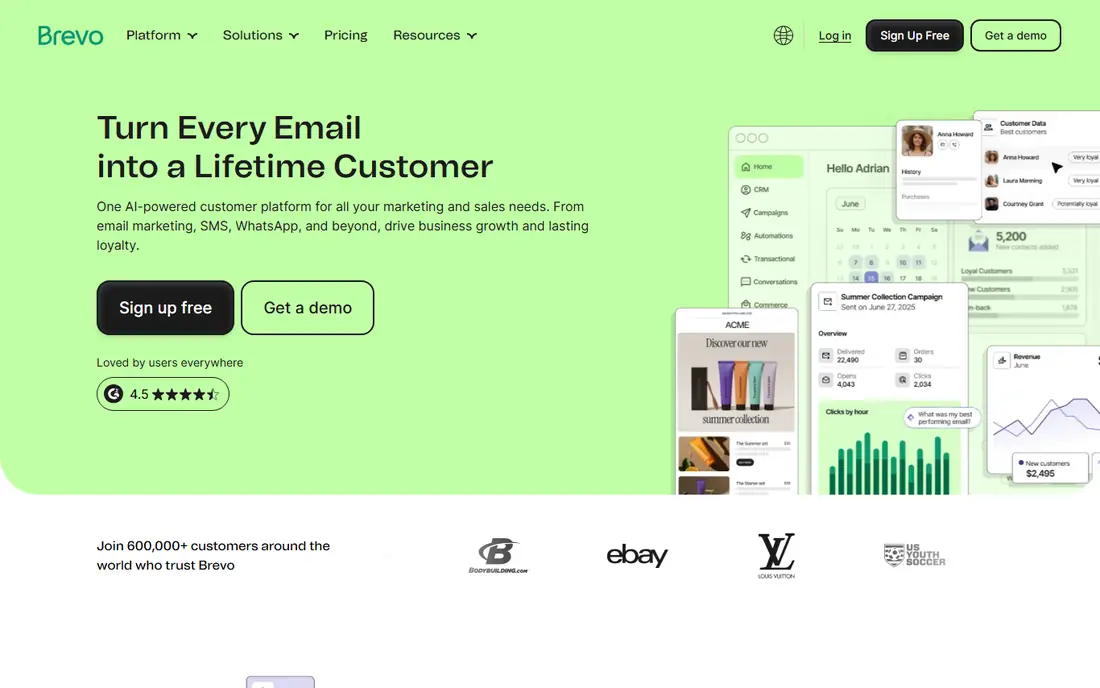
Start with Brevo when big lists mailed occasionally matters most. Its strengths include free plan stores many contacts, daily send cap rather than list cap, and crm and automation tools included. In practice, that means less time spent on setup and more time on the work itself, provided the plan you choose covers the features you will use most often.
The honest catch is that 300 emails per day on free plan, while branding on free plan emails can also frustrate. Before committing, trial the core workflow with your own data, confirm the plan limits in writing, and compare the total cost at your real team or list size rather than the headline starter price.
- Free plan stores many contacts
- Daily send cap rather than list cap
- CRM and automation tools included
- 300 emails per day on free plan
- Branding on free plan emails
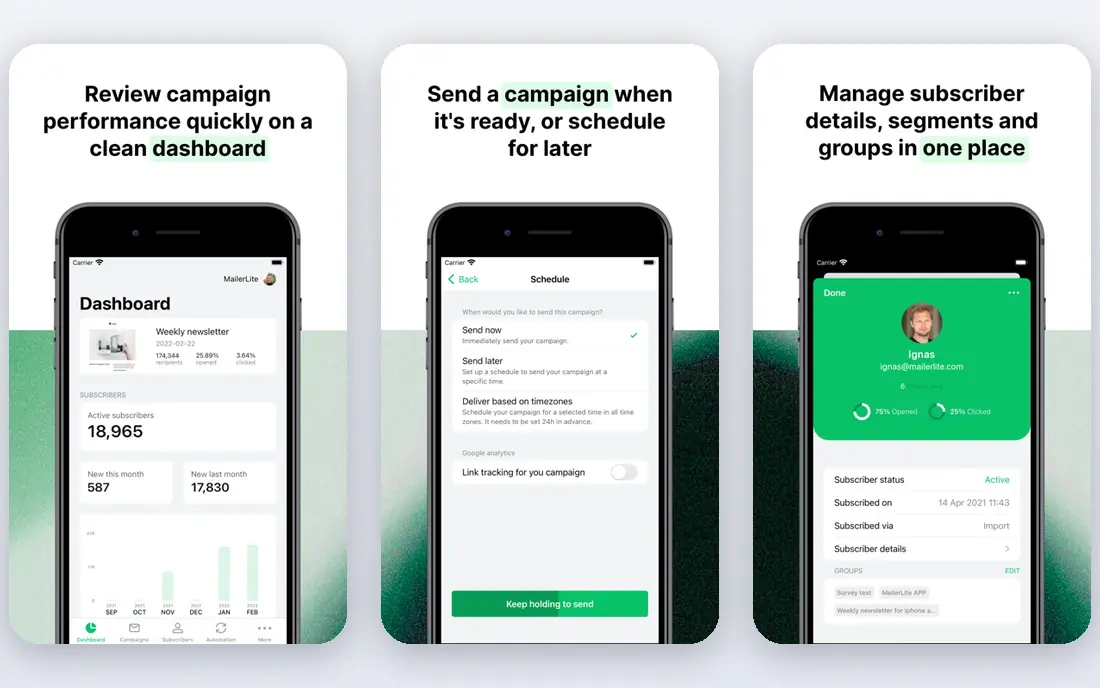
MailerLite suits polished design for small lists better than most rivals in this list. Its strengths include clean editor and templates, simple automation for small lists, and good deliverability focus for newsletters. In practice, that means less time spent on setup and more time on the work itself, provided the plan you choose covers the features you will use most often.
No product here is perfect, and MailerLite is no exception: free plan limited to 250 subscribers, while sending pauses above the free limit can also frustrate. Before committing, trial the core workflow with your own data, confirm the plan limits in writing, and compare the total cost at your real team or list size rather than the headline starter price.
- Clean editor and templates
- Simple automation for small lists
- Good deliverability focus for newsletters
- Free plan limited to 250 subscribers
- Sending pauses above the free limit
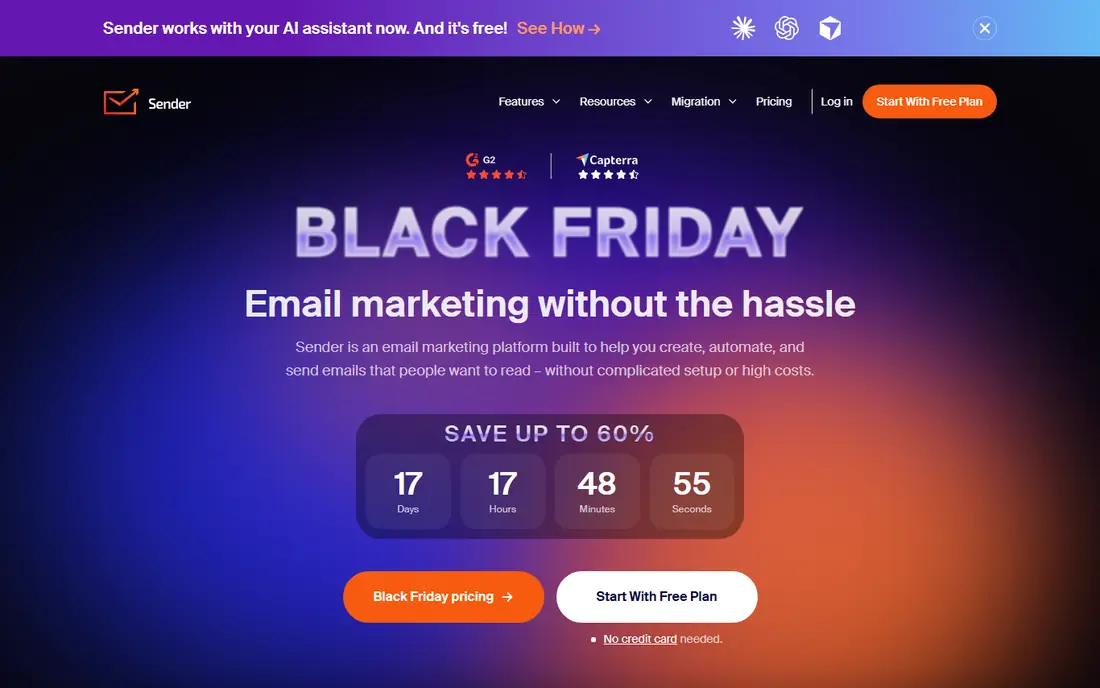
If small lists that send often is the priority, Sender deserves a close look. Its strengths include 2,500 subscribers on free plan, 15,000 emails a month free, and multi step automation on free plan. In practice, that means less time spent on setup and more time on the work itself, provided the plan you choose covers the features you will use most often.
The main trade-off with Sender is that branding on free plan messages, while smaller template set than leaders can also frustrate. Before committing, trial the core workflow with your own data, confirm the plan limits in writing, and compare the total cost at your real team or list size rather than the headline starter price.
- 2,500 subscribers on free plan
- 15,000 emails a month free
- Multi step automation on free plan
- Branding on free plan messages
- Smaller template set than leaders
Teams looking for creators growing a newsletter will find Kit a practical choice. Its strengths include free plan up to 10,000 subscribers, unlimited broadcasts on free plan, and good landing pages and forms. In practice, that means less time spent on setup and more time on the work itself, provided the plan you choose covers the features you will use most often.
Before you commit, note that only basic automation on free plan, while sequences need a paid plan can also frustrate. Before committing, trial the core workflow with your own data, confirm the plan limits in writing, and compare the total cost at your real team or list size rather than the headline starter price.
- Free plan up to 10,000 subscribers
- Unlimited broadcasts on free plan
- Good landing pages and forms
- Only basic automation on free plan
- Sequences need a paid plan
EmailOctopus earns its place here by serving low cost sending for small lists well. Its strengths include free plan for 2,500 subscribers, simple editor and automation, and low paid prices for growth. In practice, that means less time spent on setup and more time on the work itself, provided the plan you choose covers the features you will use most often.
The catch worth knowing is that fewer advanced features than suites, while template range is narrower can also frustrate. Before committing, trial the core workflow with your own data, confirm the plan limits in writing, and compare the total cost at your real team or list size rather than the headline starter price.
- Free plan for 2,500 subscribers
- Simple editor and automation
- Low paid prices for growth
- Fewer advanced features than suites
- Template range is narrower
For ecommerce newsletters, Omnisend offers a clear and workable route. Its strengths include ecommerce integrations for stores, automation for carts and welcome flows, and segmentation for store customers. In practice, that means less time spent on setup and more time on the work itself, provided the plan you choose covers the features you will use most often.
A fair warning is that free plan limited to 250 contacts, while paid plans rise with list size can also frustrate. Before committing, trial the core workflow with your own data, confirm the plan limits in writing, and compare the total cost at your real team or list size rather than the headline starter price.
- Ecommerce integrations for stores
- Automation for carts and welcome flows
- Segmentation for store customers
- Free plan limited to 250 contacts
- Paid plans rise with list size
Consider AWeber first when simple newsletters with support shapes the decision. Its strengths include free plan for 500 subscribers, human support on all plans, and large template library. In practice, that means less time spent on setup and more time on the work itself, provided the plan you choose covers the features you will use most often.
The downside to weigh is that editor feels older than rivals, while automation limits on free plan can also frustrate. Before committing, trial the core workflow with your own data, confirm the plan limits in writing, and compare the total cost at your real team or list size rather than the headline starter price.
- Free plan for 500 subscribers
- Human support on all plans
- Large template library
- Editor feels older than rivals
- Automation limits on free plan
GetResponse is built around newsletters plus landing pages, and that focus shows in daily use. Its strengths include free plan for 500 contacts, landing pages and forms included, and automation on paid plans. In practice, that means less time spent on setup and more time on the work itself, provided the plan you choose covers the features you will use most often.
One limit to plan around is that free plan limits are modest, while paid cost rises with contacts can also frustrate. Before committing, trial the core workflow with your own data, confirm the plan limits in writing, and compare the total cost at your real team or list size rather than the headline starter price.
- Free plan for 500 contacts
- Landing pages and forms included
- Automation on paid plans
- Free plan limits are modest
- Paid cost rises with contacts
When the job is newsletter creators and growth, beehiiv is worth shortlisting early. Its strengths include free plan for up to 2,500 subscribers, newsletter growth tools built in, and clean reading experience for subscribers. In practice, that means less time spent on setup and more time on the work itself, provided the plan you choose covers the features you will use most often.
The weaker side of beehiiv is that paid plans needed for scale features, while less general marketing depth than suites can also frustrate. Before committing, trial the core workflow with your own data, confirm the plan limits in writing, and compare the total cost at your real team or list size rather than the headline starter price.
- Free plan for up to 2,500 subscribers
- Newsletter growth tools built in
- Clean reading experience for subscribers
- Paid plans needed for scale features
- Less general marketing depth than suites
How we picked these
We compared email tools that still offer a free plan in October 2026, checking vendor pricing pages for subscriber limits, monthly send limits, branding, and automation access. We kept only tools that can replace Mailchimp for newsletters and small list marketing, not only transactional email services, and we noted where a free plan is really a trial. Free limits change often, so confirm the current limit on the vendor page before migrating a list.
We did not claim hands-on testing we did not do, and we did not invent ratings, user counts, or awards. Where a vendor uses quote based pricing, we say so, because a guessed price would be worse than no price for a reader planning a budget.
Pick by list size, send frequency, and automation need
Match the free limit to your real sending pattern
A 10,000 subscriber list mailed once a month fits Brevo or Kit better than a small list mailed daily. A 500 subscriber list mailed weekly fits Sender better, because its monthly send allowance is generous for that size. Count sends, not just subscribers.
Check branding and automation before you migrate
Free plans often add the vendor logo and limit automation steps, sequences, or segmentation. Test one campaign end to end, including signup forms, welcome automation, and unsubscribe handling, before you import your full list.
Plan the paid step in advance
A free plan that jumps sharply in price at 1,000 subscribers can cost more than a slightly pricier free alternative. Check the paid price at your expected list size in six months, and confirm whether unsubscribed contacts still count toward billing.
Frequently asked questions
What are the best free Mailchimp alternatives?
Brevo, Sender, Kit, and MailerLite are the strongest free alternatives, with different strengths for list size, send volume, and design. Brevo suits big occasional lists, Sender suits frequent small sends, and Kit suits creators growing a newsletter.
What is the best free alternative to Mailchimp for a small list?
Sender is a strong pick for lists up to 2,500 subscribers, because its free monthly send allowance covers regular campaigns. MailerLite suits smaller lists under 250 subscribers where polished design matters more than send volume.
Are there free alternatives to Mailchimp with no branding?
Most free plans add vendor branding, and removing it usually needs a paid plan. If branding matters for a client newsletter, budget for the cheapest paid tier rather than hoping a free plan will hide it.
Can I migrate my list from Mailchimp for free?
Most alternatives offer free import from a CSV file or a direct Mailchimp import, but check list hygiene first. Remove invalid addresses and confirm consent records, because a bad import can harm deliverability on the new platform from day one.
What is the best free Mailchimp alternative for automation?
Brevo and Sender offer the most useful free automation, though both cap contacts or steps in some way. Kit offers only basic automation free, so creators who need full sequences should compare paid Kit or Brevo plans before committing.
Sources we checked (5)

Online Jobs is an independent blog about careers, online work, learning new skills and the tools that help people earn. More about us.
Keep reading
All posts
n8n Alternatives
n8n alternatives compared for 2026, with Zapier, Make, Activepieces, and more, covering visual builders, code steps, self-hosting, and pricing models.

ZoomInfo Alternatives
The best ZoomInfo alternatives in 2026, compared on price, free plans, data coverage, and which tool fits small teams or large sales teams best in detail.
Yotpo Alternatives
Find cheaper alternatives to Yotpo for reviews and loyalty, with Judge.me, Loox, Stamped, and more compared for Shopify stores in 2026, all in one guide.