Best Mailchimp Alternatives in 2026: 8 Apps Compared

How we put this together: we compare official feature and pricing pages, app store listings, privacy policies and public user reviews. Prices change, so check the provider's site before you pay.
Key takeaways
- MailerLite suits small teams who want a simple, low-cost switch from Mailchimp with a clean editor.
- Brevo suits budget teams who prefer pricing by emails sent rather than by contacts.
- Kit suits creators who sell to a list and want simple automation and landing pages.
- Klaviyo and Omnisend suit ecommerce stores that need deep segmentation and SMS alongside email.
- Check list size, sending volume and automation needs together, because the cheapest plan at 500 contacts may not stay cheapest at 10,000.
Quick comparison
| Name | Who it suits | Starting price | Free option | |
|---|---|---|---|---|
 MailerLite | Simple low-cost switch | See website | Yes | Visit |
 Brevo | Send-based pricing | See website | Yes | Visit |
 Kit | Creators and newsletters | See website | Yes | Visit |
 Klaviyo | Ecommerce segmentation | See website | Yes | Visit |
 Omnisend | Ecommerce email plus SMS | See website | Yes | Visit |
 GetResponse | Funnels and webinars | See website | Yes | Visit |
 Constant Contact | Beginners and events | See website | Free trial | Visit |
 ActiveCampaign | Advanced automation | See website | Free trial | Visit |
The best mailchimp alternatives
Mailchimp alternatives differ on pricing model, automation depth, ecommerce tools and ease of migration. We compared tools on free plan limits, paid starting prices, automation, segmentation, templates, landing pages, integrations and support. We focused on tools that suit small businesses, creators and ecommerce stores, not only enterprise platforms.
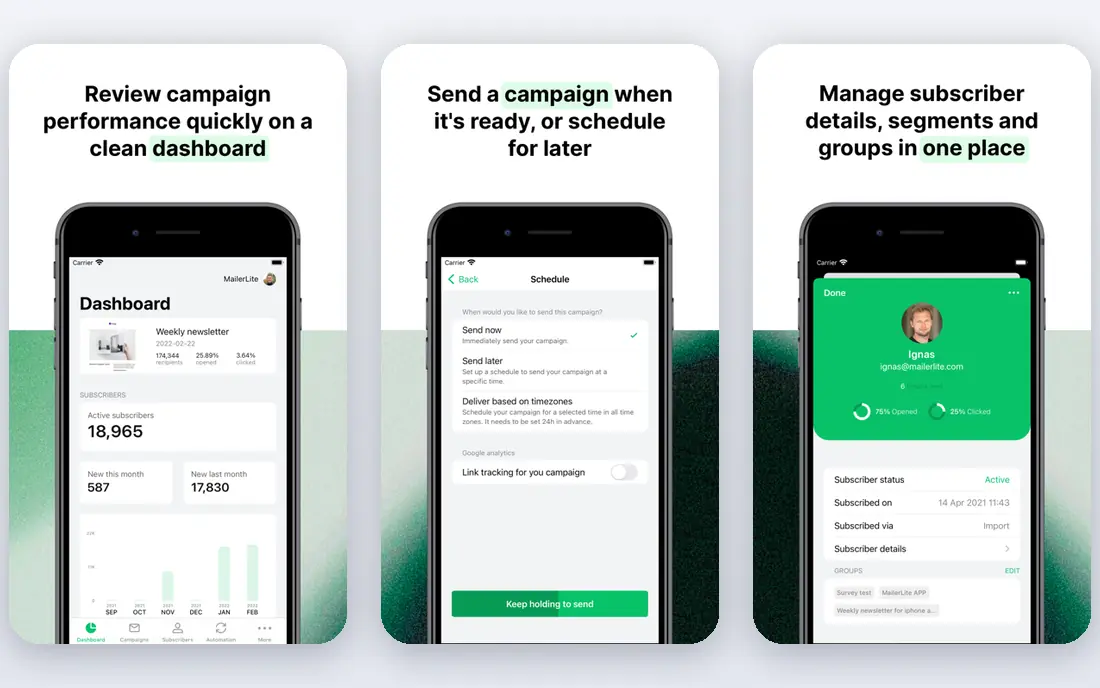
MailerLite is the easiest switch for many Mailchimp users, because the editor, list tools and automation feel familiar without the same price jump as lists grow. Drag-and-drop emails, landing pages and simple welcome sequences cover most small business needs, and the interface stays calm even for first-time senders. Migration tools help import contacts and templates with less manual work. Automation is simpler than advanced platforms, so complex multi-branch journeys may need another tool. Template choice is also smaller, though custom templates fill most gaps. If you want a clean, low-cost newsletter tool that does the basics well, MailerLite is our top general pick.
- Clean editor
- Simple automation
- Low-cost paid plans
- Automation is simpler than ActiveCampaign
- Template range is smaller than some rivals
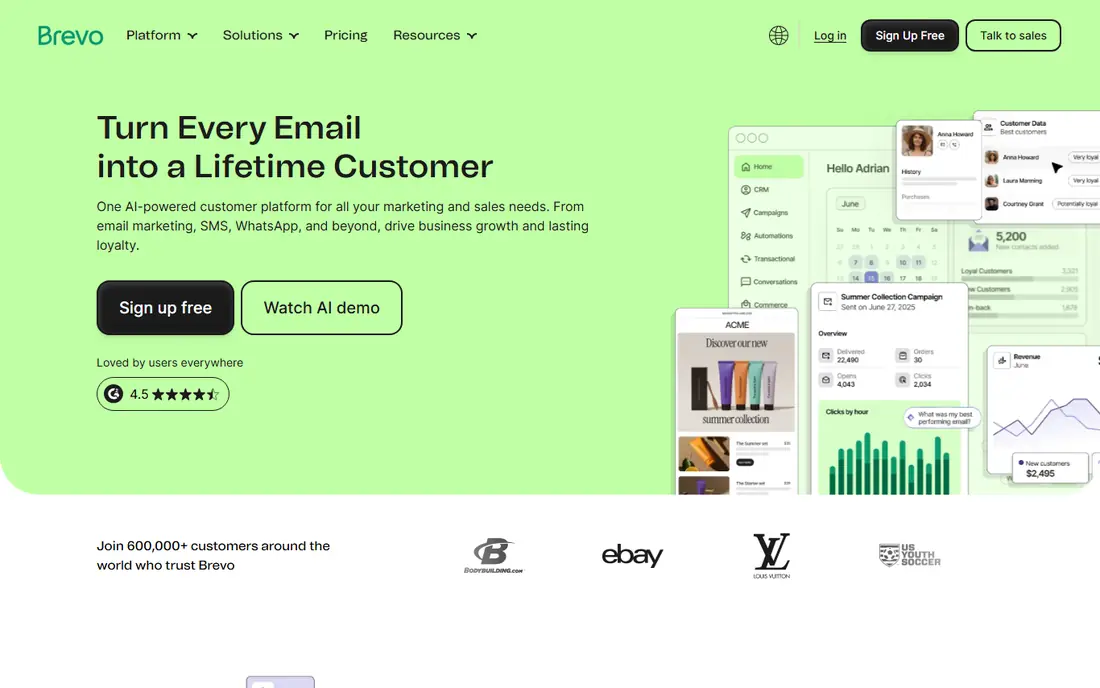
Brevo, formerly Sendinblue, suits teams whose contact list is large but sending volume is modest, because pricing is based mainly on emails sent rather than contacts alone. The free plan covers a daily sending limit, and paid plans add automation, segmentation and multi-channel messaging through SMS and WhatsApp. A built-in CRM also helps small teams track contacts without a separate system. Contact limits and feature tiers need careful reading, since some plans cap contacts or gate features. The interface also carries many sections for email, SMS, CRM and automation, which takes time to learn. If your list is large and your sending is steady rather than daily, Brevo can save money.
- Pricing by emails sent
- SMS and WhatsApp options
- Built-in CRM features
- Contact limits apply on some tiers
- Interface has many sections
Kit, formerly ConvertKit, is built for creators, authors and newsletter writers who sell products or paid subscriptions to a list. Forms, landing pages and simple sequences make it easy to grow a list and send regular newsletters, and commerce tools help sell digital products directly. The focus on creators keeps the workflow simple compared with general marketing platforms. Design flexibility is more limited than drag-and-drop builders, and ecommerce automation is less deep than Klaviyo. That trade-off suits writers who value simplicity over complex store journeys. If you are a creator building a newsletter business, Kit is a strong Mailchimp alternative.
- Creator-focused forms and landing pages
- Simple automation
- Paid newsletter tools
- Less suited to complex ecommerce automation
- Design options are simpler than MailerLite
Klaviyo is the ecommerce pick for stores that want detailed segmentation and automation tied to purchase behaviour. Flows for abandoned carts, post-purchase follow-ups and win-back campaigns use store data to target the right customers at the right time. Shopify integration is deep, and revenue attribution helps stores see which emails drive sales. Pricing rises with active profiles, so a growing store can see costs climb faster than on send-based plans. Setup also takes time, since powerful segmentation needs clean store data. If you run a store and email drives a large share of sales, Klaviyo is worth the investment.
- Deep ecommerce segmentation
- Revenue attribution
- Strong Shopify integration
- Costs rise quickly with list size
- Learning curve for advanced flows
Omnisend combines email, SMS and push notifications for ecommerce stores in one platform. Pre-built automation for welcome, cart recovery and post-purchase flows speeds up setup, and integrations with Shopify and WooCommerce keep product and order data in sync. That multi-channel approach suits stores that want to reach customers beyond email alone. Free plan limits are tight, so growing stores will need a paid plan soon. SMS costs also add up, so budget for both email and SMS volume. If you want ecommerce automation with SMS in the same tool, Omnisend is a practical alternative to separate email and SMS providers.
- Email, SMS and push in one platform
- Ecommerce automation presets
- Shopify and WooCommerce support
- Free plan limits are tight
- Costs rise with contacts and SMS use
GetResponse suits teams that need more than email, including landing pages, funnels and webinars in one platform. The automation builder covers welcome sequences, scoring and tagging, while webinar tools help course creators and coaches present live sessions without a separate app. That all-in-one scope reduces the number of tools a small team must manage. The interface packs in many features, so beginners may need time to find the tools they use most. Pricing also varies by tier, with some features gated to higher plans. If you run funnels, webinars and email together, GetResponse offers good value in one subscription.
- Landing pages and funnels
- Built-in webinar tool
- Automation builder
- Interface can feel busy
- Pricing varies by feature tier
Constant Contact is the easiest tool for beginners, non-profits and event organisers who want a simple newsletter without learning automation. The editor is clear, templates cover common business types, and event registration and survey tools help community groups collect responses. Support is geared to users who are new to email marketing. There is no permanent free plan, only a trial, so long-term costs start sooner than with MailerLite or Brevo. Automation is also simpler than ActiveCampaign or Klaviyo. If you want the simplest editor and helpful support, and you are happy to pay from the start, Constant Contact is a good fit.
- Very easy editor
- Event and survey tools
- Helpful support for beginners
- No permanent free plan
- Automation is simpler than rivals
ActiveCampaign suits businesses that need advanced automation, lead scoring and a built-in CRM. Multi-step journeys can branch by behaviour, tags and custom fields, which helps B2B teams nurture leads over weeks or months. Integrations cover many CRM, ecommerce and scheduling tools, so data can flow between systems. The learning curve is steeper than MailerLite, and there is no permanent free plan, only a trial. Costs also rise with contacts, so large lists need careful budgeting. If automation depth matters more than simplicity, ActiveCampaign is the strongest pick in this list.
- Deep automation and CRM
- Strong segmentation
- Many integrations
- Higher learning curve
- No permanent free plan
- Costs rise with contacts
How we picked these
We reviewed official pricing pages, feature pages, app listings and public reviews for each tool. We checked free plan limits, pricing models, automation depth, segmentation, ecommerce integrations, landing pages and migration tools. We kept only tools with a current plan for small businesses or creators and a clear pricing page, and we marked prices as See website where plans vary by contacts, sends or billing period. We did not claim hands-on testing that we did not do.
How to choose a Mailchimp alternative
Start with your list size and sending volume together. A tool priced by contacts suits small lists with frequent sends, while a tool priced by sends suits large lists with occasional sends. Check the price at your current size and at double that size, because the cheapest tool today may not stay cheapest as you grow.
Check automation and migration
List the automations you actually use, such as welcome emails, cart recovery or lead nurture, and confirm the new tool supports them without a higher tier. Test migration with a small segment first, including tags, custom fields and unsubscribes. A clean import protects your sender reputation and avoids sending to people who opted out.
Test deliverability and support
Send test campaigns to major inbox providers and check spam placement, not only delivery reports. Review support hours and channels, because email problems often need fast help. Also confirm whether the tool offers a dedicated sending domain or authentication setup, since those steps improve inbox placement for growing lists.
Frequently asked questions
What is the best alternative to Mailchimp?
MailerLite is the best general alternative for most small teams, thanks to a clean editor and low cost. Brevo suits send-based pricing, Kit suits creators, and Klaviyo suits ecommerce stores. The best alternative depends on your list size, sending volume and automation needs.
What is the cheapest Mailchimp alternative?
Brevo and MailerLite are among the cheapest options for small lists, with free plans for low-volume sending. Brevo pricing by sends can be cheaper for large lists with modest volume, while MailerLite pricing by subscribers can be cheaper for small lists with frequent sends. Compare the price at your actual list size.
Can I migrate from Mailchimp easily?
Yes, most tools offer CSV import and direct migration for contacts, tags and lists. Test with a small segment first, and check that unsubscribes, bounces and custom fields carry over correctly. Set up domain authentication on the new tool before your first large send.
Which Mailchimp alternative is best for ecommerce?
Klaviyo leads on segmentation and revenue attribution for stores, while Omnisend adds SMS and push in one platform. Both integrate with Shopify and WooCommerce. Choose Klaviyo for deep data-driven flows, and Omnisend for multi-channel campaigns on a simpler setup.
Which alternative is best for creators?
Kit suits creators best, with forms, landing pages and newsletter tools built for audience growth and product sales. Beehiiv and Substack also suit newsletter writers, though they focus less on general email marketing. If you sell digital products to your list, Kit is a strong pick.
Do Mailchimp alternatives offer a free plan?
Yes, MailerLite, Brevo, Kit, Klaviyo, Omnisend and GetResponse offer free plans with limits on contacts, sends or features. Constant Contact and ActiveCampaign offer trials instead of permanent free plans. Check sending limits and branding rules on each free tier before you commit.
Sources we checked (8)

Online Jobs is an independent blog about careers, online work, learning new skills and the tools that help people earn. More about us.
Keep reading
All posts
Best Web Scraping Tools
Compare the best web scraping tools in 2026, from no-code Octoparse and Browse AI to Apify, Firecrawl, Bright Data, Zyte, ScraperAPI and free Scrapy, with prices.
Best Web Hosting Services
Find the best web hosting services for your site in 2026. We compare prices, speed, support and ease of use across eight leading hosting providers today.
Best Video Conferencing Software
Looking for the best video conferencing software? We compare 8 meeting apps on price, meeting limits, features, security and ease of use. Read the guide.