Best Lovable Alternatives in 2026: 8 Tools Compared

How we put this together: we compare official feature and pricing pages, app store listings, privacy policies and public user reviews. Prices change, so check the provider's site before you pay.
Key takeaways
- Bolt and Replit suit builders who want to see and edit real code alongside AI generation.
- v0 by Vercel is strongest for polished React interfaces that deploy to Vercel.
- Base44 and Glide suit non-technical founders who want a working app without managing code.
- Bubble remains the deepest option for complex logic, user roles, and scale, with a steeper learning curve.
- Every builder here meters usage in credits or tokens, so the monthly price is a floor, not the full bill.
Quick comparison
| Name | Who it suits | Starting price | Free option | |
|---|---|---|---|---|
 Bolt | Prompt-to-app with code control | $25 per month | Yes | Visit |
 v0 by Vercel | Polished React interfaces | $30 per month | Yes | Visit |
 Replit | AI help plus a real code workspace | $20 per month | Yes | Visit |
 Base44 | Full apps for non-developers | $20 per month | Yes | Visit |
 Bubble | Complex logic and user roles | $29 per month | Yes | Visit |
 Glide | Spreadsheet-to-app tools | $25 per month | Yes | Visit |
 Emergent | Prompt-to-production apps | $20 per month | Yes | Visit |
 Softr | Client portals and directories | $25 per month | Yes | Visit |
The best Lovable alternatives
Lovable made prompt-to-full-stack-app building mainstream: describe an app, get a working web app with database, authentication, and hosting, and sync the code to GitHub. People look for alternatives when credit costs rise, when they want more code control, when they need mobile output, or when they want a deeper no-code platform for complex logic. The tools below cover those reasons, from code-forward builders to no-code platforms.
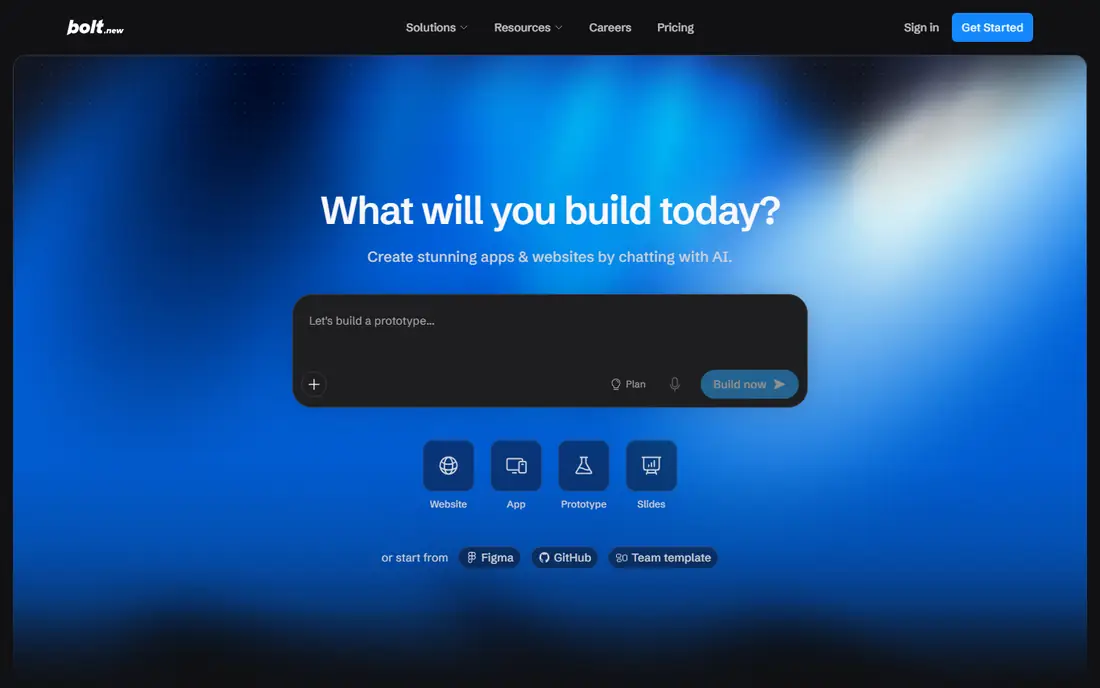
Bolt, built by StackBlitz, is the closest Lovable alternative for a prompt-to-app flow with more code visibility. You describe an app, Bolt generates a full-stack project in the browser, and you can inspect and edit every file in the built-in editor. That transparency matters once a prototype grows, because you can fix a bug directly instead of prompting again and hoping the AI guesses correctly.
The honest catch is token cost. Bolt meters usage in tokens, and large projects can burn through an allowance faster than expected, especially when you iterate often. The free tier offers a monthly token allowance, which is enough to test the workflow, but a serious build will need a paid plan. Bolt fits technical founders and developers who want Lovable-style speed with real code ownership.
- Fast prompt-to-preview loop
- Full code visible and editable
- Browser-based full-stack builds
- Token usage can rise quickly on large builds
- Needs some code comfort to iterate well
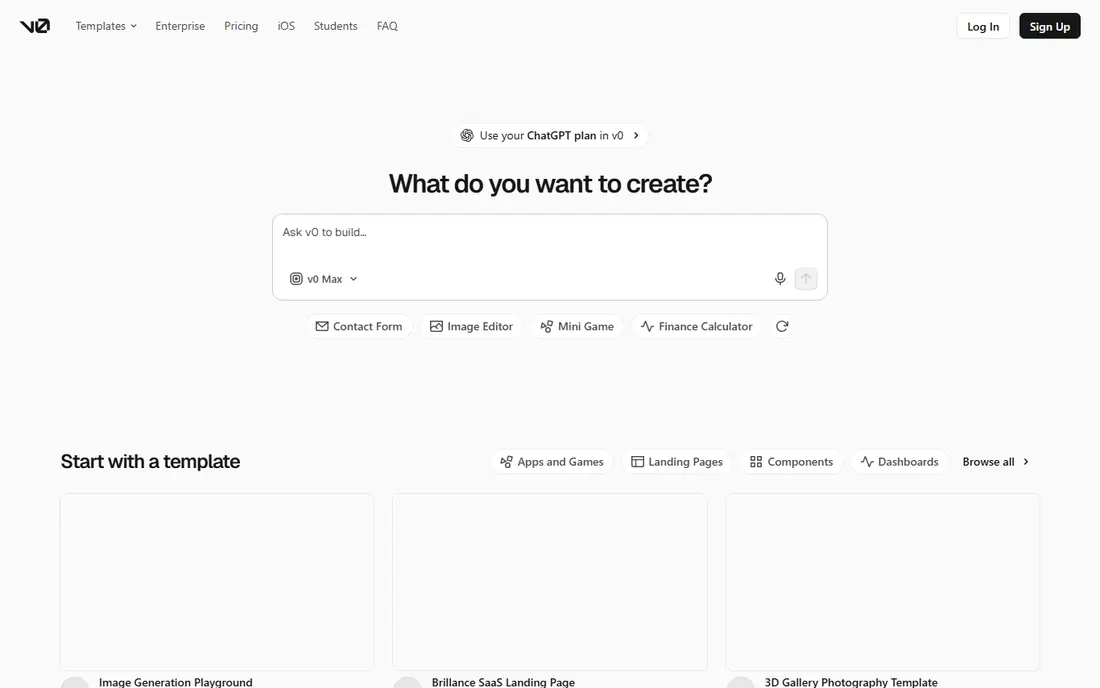
v0 by Vercel excels at generating clean, modern React interfaces from a prompt, with components that look production-ready rather than generic. Because it is built by Vercel, deployment to Vercel is smooth, and the generated code follows Next.js conventions that developers recognise. For designers and front-end developers who need a polished interface fast, v0 is hard to beat.
The limitation is scope. v0 is strongest for interfaces and front-end apps, while Lovable and Bolt aim more directly at full-stack apps with database and authentication built in. v0 can still build fuller apps, but you may need to add backend pieces yourself. Choose v0 when interface quality and Vercel deployment matter most, and choose Bolt or Replit when you need a fuller backend from the first prompt.
- Very polished React and Next.js output
- Smooth Vercel deployment
- Good for UI-heavy work
- Less focused on full backend logic than Lovable
- Pricing is per user
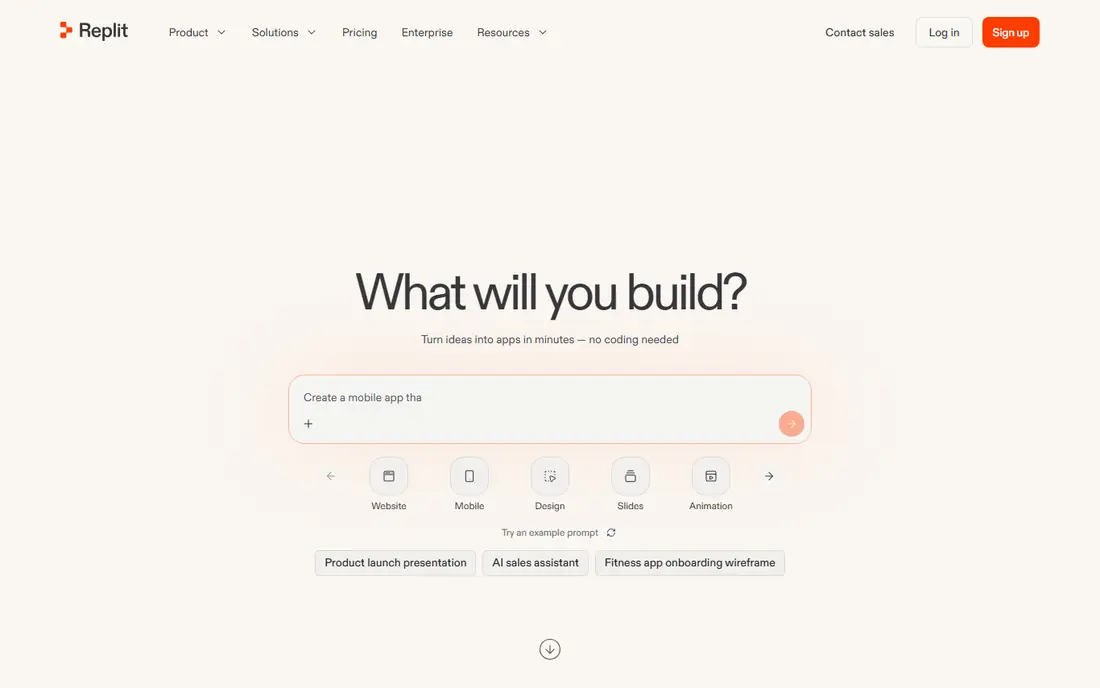
Replit combines an AI agent with a real cloud development environment, so you can prompt an app into existence, then open the code, run it, and deploy it from the same workspace. That combination suits builders who want AI speed without giving up developer tools like version control, packages, and a terminal. Replit also hosts the app, which removes a separate deployment step.
The catch is cost structure. The Core plan includes credits, but agent usage beyond that can add pay-as-you-go charges, so a long build can cost more than the headline price. Replit also feels more developer oriented than Lovable or Base44, which may overwhelm a non-technical founder. It fits developers and technical founders who want an end-to-end workspace, not just a prompt box.
- Full cloud IDE and hosting in one place
- AI agent plus manual coding
- Git support
- Agent usage can add pay-as-you-go costs
- Interface can feel busy for non-developers
Base44, now part of Wix, is built for non-technical founders who want a full app, not just a landing page. You describe the app, Base44 builds the interface, data, and logic, and you can publish and share it without managing servers or code. That simplicity makes it a strong Lovable alternative for internal tools, simple customer apps, and MVPs where speed matters more than code ownership.
The trade-off is control. On lower plans, code access and GitHub sync are limited, and message credits cap how much you can iterate in a month. If you plan to hand the app to developers later, check the plan that includes code export or sync before you build too much. Base44 fits founders who want to validate an idea quickly and who are happy to stay on a managed platform.
- Full-stack apps from prompts
- Easy for non-technical builders
- Built-in hosting and data
- Less code control on lower plans
- Message credits limit iteration
Bubble is the deepest no-code builder in this guide, and it suits apps that need real business logic: user roles, permissions, complex workflows, payments, and data relationships. Unlike prompt-only builders, Bubble gives you a visual editor where you define exactly how the app behaves, which is essential when an MVP grows into a real product with edge cases. Its plugin ecosystem extends it further, from payments to maps.
The honest catch is learning time. Bubble is powerful, but it is not instant: building a complex app well takes weeks of learning, and workload-based pricing means a popular app can cost more than expected. Bubble also hosts your app, so moving away later is not as simple as exporting code. Choose Bubble when logic and scale matter more than a one-prompt prototype.
- Deep visual logic, workflows, and data
- User roles and permissions
- Large plugin ecosystem
- Steeper learning curve
- Apps stay on Bubble
- Workload pricing needs care
Glide turns a spreadsheet into a working app, which makes it ideal for operations teams, small businesses, and internal tools. You can build directories, inventory trackers, booking tools, and customer portals from data you already have, with a clean mobile-friendly interface and user permissions. For a team that lives in Google Sheets or Excel, Glide removes the need to design a database from scratch.
The limitation is ambition. Glide is excellent for data-driven internal apps, but it is less suited to a polished public consumer app with custom interactions. Design options are more constrained than Bubble or a code builder, by design, because speed and simplicity are the point. Glide fits operations use cases where the data already exists and the app needs to ship this week.
- Turns spreadsheets into apps quickly
- Good for internal tools
- Easy for operations teams
- Less suited to public consumer apps
- Design flexibility is more limited
Emergent aims at prompt-to-production building, with a focus on apps that can grow beyond a demo, including mobile output and testing support. That positioning appeals to founders who like Lovable-style prompting but want a clearer path to a real product, including code ownership and deployment options. Its entry price is competitive, and its free tier lets you test the workflow before paying.
The catch is maturity. Emergent is newer than Bubble, Replit, or v0, so its community, templates, and third-party integrations are smaller. Credit limits also apply, as with every AI builder here. Emergent fits builders who want to try a newer prompt-to-app platform with production ambitions, and who are comfortable with a smaller ecosystem in exchange for a modern workflow.
- Prompt-to-app with production focus
- Mobile and web output
- Testing features
- Newer platform with a smaller community
- Credit limits apply
Softr builds client portals, directories, membership sites, and internal tools from Airtable or Google Sheets data, with granular permissions for different user groups. That makes it a strong choice for agencies, coaches, communities, and small businesses that need a gated portal without building a custom app. The building blocks are clear, and the free plan lets you test a portal with a small group.
The limitation is logic depth. Softr is not a replacement for Bubble when you need complex custom workflows, and its power depends on your data source. If your data lives in Airtable, Softr feels natural; if it lives elsewhere, check integrations first. Softr fits portal and directory use cases where permissions and presentation matter more than custom code.
- Client portals, directories, and membership apps
- Granular permissions
- Airtable and Google Sheets data
- Less suited to complex custom logic
- Data source limits apply
How we picked these
We compared official pricing pages, feature documentation, and recent Lovable alternative guides published in October 2026. We looked for builders that are actively maintained, offer a free tier or trial, and cover different needs: code control, interface quality, no-code depth, spreadsheet apps, and portals. We favoured tools with clear hosting, data, and deployment stories, because a prompt-to-app builder is only useful if the app can actually run.
We did not claim hands-on testing of every builder with a production app, and we did not invent credit allowances or feature claims. Pricing and credit terms change often in this category, so check the current pricing page for the plan you need, especially for GitHub sync, code export, and usage limits. Treat the monthly price as a starting point, and budget for extra credits on a serious build.
Choosing between code builders and no-code platforms
Ask one question first: who will maintain this app in six months? If the answer is a developer, choose Bolt, v0, or Replit, and turn on GitHub sync early. If the answer is you, as a non-technical founder, choose Base44, Glide, Softr, or Bubble, depending on whether you need a simple app, a portal, or complex logic.
Watch the credit meter from day one
AI builders charge for prompts, tokens, or messages, so vague prompts cost money. Write a clear brief before you start: audience, main screens, data fields, and the one action the app must do well. Build in small steps, test each step, and save a working version before you ask for a large change. That discipline saves more money than any plan comparison.
Frequently asked questions
What is the best Lovable alternative for non-developers?
Base44 is the best starting point for non-developers who want a full app from prompts, while Glide suits spreadsheet-based internal tools. Softr is best for portals and directories. Try the free tier of each with a small version of your app, and choose the one whose editor feels clearest to you.
What is the best Lovable alternative for developers?
Bolt and Replit are the best developer-friendly alternatives, because both expose real code and support Git workflows. v0 is best for React interface work that deploys to Vercel. Developers who want full control may also prototype in an AI builder, sync to GitHub, and continue in a standard editor.
Is Bubble better than Lovable?
Bubble is better for complex apps with detailed logic, roles, and scale, but it takes longer to learn. Lovable is faster for a first prototype from a prompt. Many founders prototype in Lovable or Bolt, then rebuild in Bubble or code once the product logic is clear and the app needs to scale.
Do Lovable alternatives let you own your code?
It depends on the tool and plan. Bolt, Replit, and v0 offer code access and GitHub workflows, while Base44 offers sync on higher plans. Bubble, Glide, and Softr are managed platforms where the app stays on the platform. Check code export and GitHub sync for your exact plan before you build a product you plan to move later.
How much do Lovable alternatives cost?
Entry paid plans in this guide start at around $20 to $30 per month, but credits, tokens, workload, and usage can add cost on top. A realistic budget for a serious MVP is higher than the entry price, especially if you iterate often. Start free, measure your credit use on a small build, and then choose a plan.
Can AI app builders build mobile apps?
Some can, including Emergent and Bolt with mobile frameworks, while others focus on web apps. Bubble also offers mobile app options on higher plans. If mobile is essential, confirm the output type before you start, because a web-only builder will not give you a native app store build without extra work.
Sources we checked (8)

Online Jobs is an independent blog about careers, online work, learning new skills and the tools that help people earn. More about us.
Keep reading
All posts
n8n Alternatives
n8n alternatives compared for 2026, with Zapier, Make, Activepieces, and more, covering visual builders, code steps, self-hosting, and pricing models.

eBay Alternatives
Looking for ebay alternatives? We compared 9 marketplaces for sellers on fees, buyer reach, categories and ease of listing, to help you sell with confidence.

ZoomInfo Alternatives
The best ZoomInfo alternatives in 2026, compared on price, free plans, data coverage, and which tool fits small teams or large sales teams best in detail.