Home / Professional networking
LinkedIn Alternatives in 2026: 10 Products Compared

How we put this together: we compare official feature and pricing pages, app store listings, privacy policies and public user reviews. Prices change, so check the provider's site before you pay.
Key takeaways
- No single platform replaces everything LinkedIn does, so pick an alternative for the specific job: hiring, job search, events or community.
- Indeed and ZipRecruiter lead for active job search, while Wellfound leads for startup roles and AngelList for startup funding and hiring.
- Xing leads for German speaking professional markets, while Meetup and Luma lead for turning online contacts into in person meetings.
- Behance, Dribbble and GitHub lead for creative and developer work, where a portfolio or code history matters more than a profile summary.
Quick comparison
| Name | Who it suits | Starting price | Free option | |
|---|---|---|---|---|
 Indeed | Active job search across industries | Free | Yes | Visit |
 ZipRecruiter | AI matched job search | Free | Yes | Visit |
 Wellfound | Startup jobs and hiring | Free | Yes | Visit |
 AngelList | Startup hiring and funding | Free | Yes | Visit |
 Xing | German speaking professional networking | Free | Yes | Visit |
 Meetup | Local networking events | Free | Yes | Visit |
 Behance | Creative portfolios | Free | Yes | Visit |
 Dribbble | Designer portfolios and hiring | Free | Yes | Visit |
 GitHub | Developer portfolios and hiring | Free | Yes | Visit |
 Slack | Industry communities | Free | Yes | Visit |
The best LinkedIn alternatives
LinkedIn combines a professional profile, a job board, a recruiter database and a content feed in one place. Alternatives tend to do one of those jobs well, not all of them. This guide therefore groups platforms by the job they do best, so you can build a small set of tools that together cover what LinkedIn did for you.
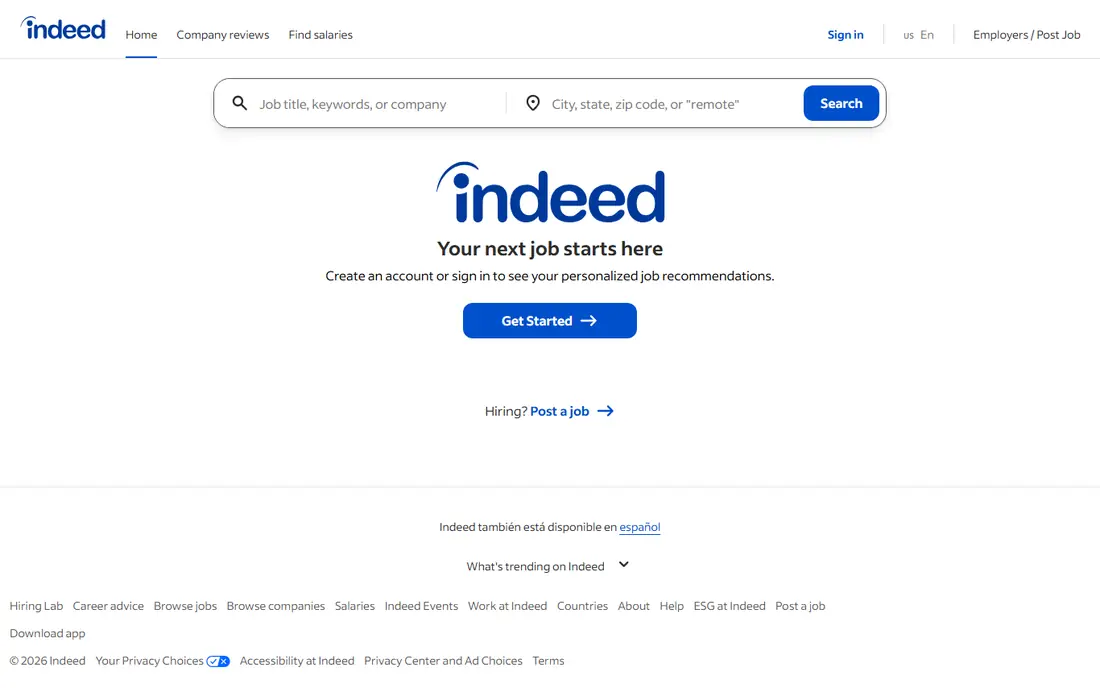
Indeed is the closest alternative for job search alone. It aggregates listings from employers and other boards, covers almost every industry and location, and is free for job seekers to search and apply. Company reviews and salary pages also help a candidate check an employer before applying, which LinkedIn company pages do less well.
Indeed is not a networking platform in the LinkedIn sense. There is no professional feed for building an audience, and connections are not the point. Use Indeed to find and apply for roles, and pair it with a community or portfolio platform for networking. Employers pay to sponsor listings, so job seekers should apply early for popular roles.
- Very large job listings across industries
- Free for job seekers
- Company reviews and salary data
- High application volume for popular roles
- Less of a networking feed than LinkedIn
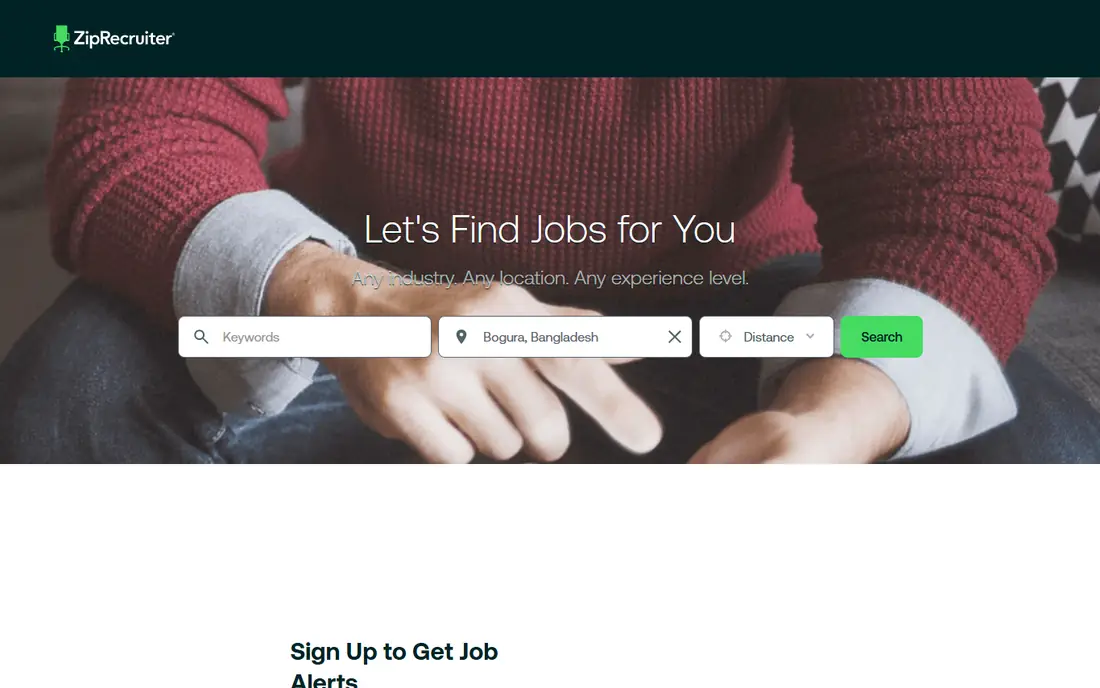
ZipRecruiter matches job seekers to roles using profile and search data, then sends alerts when a strong match appears. That matching can save time compared with searching the same boards every day, especially for candidates open to several similar roles. Job seekers can create a profile once and be considered for matching roles without applying to each one separately.
Matching is only as good as the profile and the roles in the system, and niche roles may get weaker matches. ZipRecruiter also does not replace LinkedIn for professional visibility or recruiter outreach. Use it as a second job search channel alongside Indeed, with alerts set for your core job titles and locations.
- Job matching and alerts
- Free for job seekers
- Broad employer coverage
- Matching quality varies by role
- Less networking than LinkedIn
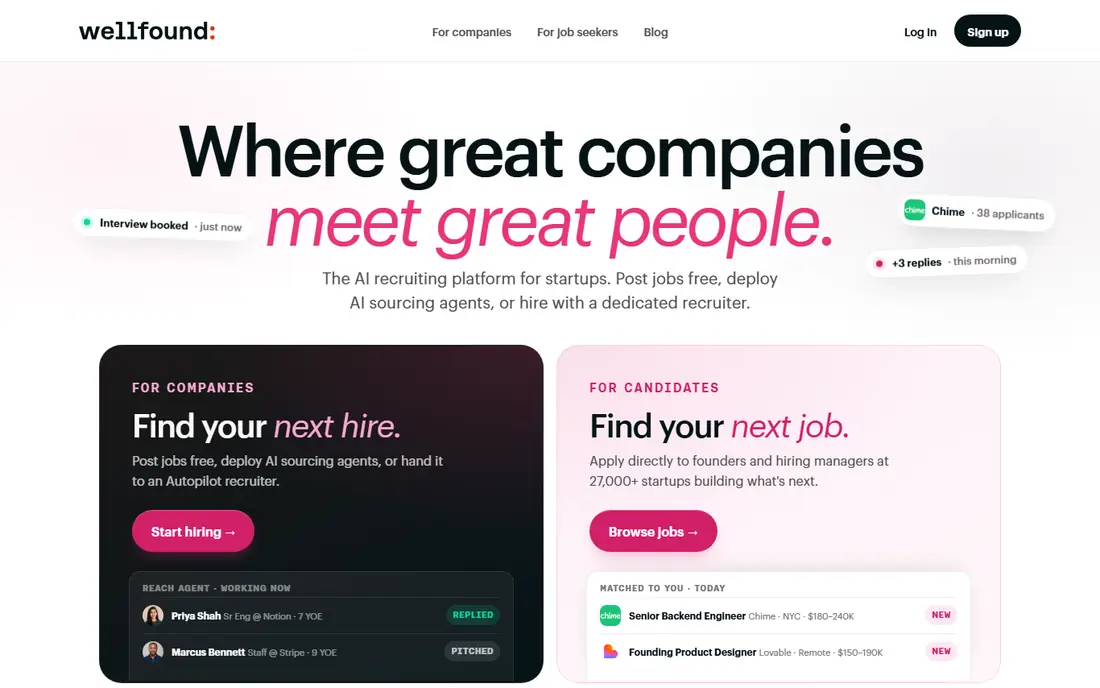
Wellfound, formerly AngelList Talent, focuses on startup jobs, with profiles for startups, salary ranges and equity details shown more openly than on many general boards. Candidates can apply to startups, see funding and team details, and connect directly with founders and hiring managers. That transparency helps candidates judge a startup opportunity before a long interview process.
The focus is also the limit. Wellfound does not cover large corporate, public sector or non tech roles in the same depth as Indeed. It is best for candidates who actively want startup work, and for startups hiring early team members. Pair it with a general board if you are open to both startup and corporate roles.
- Startup focused roles
- Salary and equity transparency
- Free for candidates
- Limited to startup and tech roles
- Smaller than general job boards
AngelList covers the startup ecosystem beyond jobs, including company profiles, funding information and tools for founders and investors. Job seekers can research a startup's stage, investors and team, while founders can hire and raise through the same platform. That combined view is useful in a market where company stage and funding matter as much as the role itself.
For a general job seeker or a recruiter outside startups, AngelList is too narrow to replace LinkedIn. Its value is for people already focused on startups, whether as candidates, founders or investors. Use Wellfound for the job search side and AngelList for the wider startup research side, since the two are closely related.
- Startup profiles and hiring tools
- Investor and funding information
- Startup community
- Startup only
- Less useful for general job search
Xing is the professional network that leads in German speaking markets, where it functions much like LinkedIn does elsewhere. Profiles, jobs, groups and events are built for business users in Germany, Austria and Switzerland, and many local employers and recruiters use Xing as a primary channel. For anyone working in or with that region, Xing is not optional, it is a core platform.
Outside German speaking markets, Xing is far smaller, so it does not replace LinkedIn globally. A professional with clients or employers in both regions may need both Xing and LinkedIn. If your work is centred on Germany, Austria or Switzerland, start with Xing and treat LinkedIn as the secondary global profile.
- Strong in Germany, Austria and Switzerland
- Professional profiles and jobs
- Local events
- Much smaller outside German speaking markets
- Less global recruiter coverage
Meetup turns online networking into in person meetings, which is where many professional relationships actually form. Local groups cover technology, design, marketing, finance, entrepreneurship and many other topics, and regular attendance builds familiarity in a way that feed posts rarely do. For a job seeker or freelancer in a new city, Meetup can be faster than cold outreach.
Group quality varies, and some groups are more social than professional. Meetup also does not provide a professional profile or job board to match LinkedIn. Use it to meet people, then keep in touch through email, Slack communities or a portfolio site. Attending regularly matters more than joining many groups once.
- Large local event groups
- In person networking
- Many professional topics
- Quality varies by group
- Organising costs for hosts
- Less of a profile platform
Behance, from Adobe, is a portfolio platform where designers, illustrators, photographers and other creatives show full projects, not only a CV summary. Clients and recruiters browse Behance to find talent by style and project type, which makes the work itself the introduction. That is more useful for a creative than a text profile on LinkedIn.
Behance does not cover non creative roles, and it does not provide the same recruiter messaging or job search tools as LinkedIn. Creatives should still keep a LinkedIn profile for general visibility, but Behance should be the main portfolio link on that profile, on a CV and in outreach. Update it with finished projects, not only with work in progress.
- Free portfolio hosting
- Large creative audience
- Discovery by clients and recruiters
- Creative only
- No general job board or networking feed
Dribbble is a designer community focused on visual work, with portfolios, shots of work in progress, and hiring tools for design roles. Product designers, UI designers and illustrators use it to show style and craft, and employers use it to shortlist designers by visual fit. The community feedback loop also helps designers improve work before it reaches clients.
Like Behance, Dribbble is design only, so it does not replace LinkedIn for other professions. Many designers keep both Behance and Dribbble, using Dribbble for community and hiring visibility and Behance for full project case studies. If you hire designers, Dribbble is a useful sourcing channel alongside LinkedIn and Behance.
- Designer focused community
- Hiring tools for design roles
- Visual portfolio discovery
- Design only
- Smaller audience than Behance for some fields
GitHub is where developers show their work through code, projects and open source contributions. A GitHub profile with active repositories, clear documentation and contributions to known projects tells a hiring manager more about a developer than a summary paragraph. Recruiters also source developers on GitHub by language, project and activity.
A GitHub profile only helps if it reflects real work, so a developer with no public code will get less value. GitHub also does not provide general professional networking, job listings or company pages like LinkedIn. Developers should keep GitHub as their technical portfolio, and use it as the main link for technical roles, while keeping a general profile elsewhere for non technical visibility.
- Code history as a portfolio
- Open source collaboration
- Recruiter sourcing for developers
- Developer only
- Profile needs real code activity to be useful
Slack hosts thousands of industry communities where professionals discuss work, share jobs and help each other in real time. Marketing, product, design, data and many other fields have active Slack groups, and job channels inside those groups often surface roles before they reach public boards. The conversation quality can be higher than a public feed, since groups are smaller and more focused.
Slack communities are not a public profile platform, and finding the right groups takes effort, often through peers, events or online directories. A Slack presence also requires regular participation, not only lurking, to build relationships. Use Slack for community and learning, and pair it with a portfolio or job board for the parts Slack does not cover.
- Active industry communities
- Real conversations
- Job channels in many groups
- Communities are invitation based or hard to find
- No public profile or job board
How we picked these
We compared platforms that are live in October 2026 and serve at least one core LinkedIn job well: job search, recruiting, professional networking, events, portfolio display or community. We excluded general social networks that only overlap with LinkedIn in passing, and we kept platforms that a professional can actually join and use today, whether free or paid.
We did not try to find a single LinkedIn replacement, since none exists at LinkedIn scale. Instead we judged each platform on its own job, and on how well it pairs with other platforms on this list. A good alternative set for most professionals is one job board, one portfolio or community platform, and one event platform, rather than ten accounts that are never updated.
How to replace LinkedIn with a small set of tools
Start by naming the LinkedIn job you miss most. If it is job search, start with Indeed and ZipRecruiter, plus Wellfound if you want startup roles. If it is hiring, add the portfolio platform for your field, such as GitHub for developers or Behance and Dribbble for designers, plus a job board for volume. If it is networking, add Meetup for in person meetings and a Slack community for daily conversation.
Next, keep one public home base that links to the rest. That can be a personal website, a portfolio page or a profile on the most relevant platform for your field. Link that home base from your CV, email signature and other profiles, so people can find your work without LinkedIn. Finally, update the small set regularly. Two active profiles beat ten stale ones, and regular event attendance beats occasional feed posting.
Frequently asked questions
What is the best LinkedIn alternative?
There is no single best alternative, since LinkedIn covers jobs, recruiting, networking and content in one place. Indeed is best for job search, Wellfound for startup jobs, Xing for German speaking markets, and Behance, Dribbble and GitHub for portfolios. Pick the alternative that matches the job you need most.
Are there free LinkedIn alternatives?
Yes, all the platforms on this list offer a free plan for job seekers or individual users, including Indeed, ZipRecruiter, Wellfound, Xing, Meetup, Behance, Dribbble, GitHub and Slack. Paid plans mainly add employer, recruiter or organiser features. Creating profiles on several free platforms costs nothing, but keeping them updated takes time.
What is the best alternative to LinkedIn for job seekers?
Indeed and ZipRecruiter are the best general job search alternatives, with Wellfound added for startup roles. For creative and developer roles, Behance, Dribbble and GitHub help employers find you through your work. Use a job board for applications and a portfolio platform for visibility.
What is the best LinkedIn alternative for recruiting?
Recruiters should combine a job board such as Indeed with a sourcing platform for their field, such as GitHub for developers, Dribbble and Behance for designers, and Wellfound for startup talent. Xing adds German speaking coverage. That mix reaches active job seekers and passive candidates in a way a single board cannot.
Can I network without LinkedIn?
Yes, Meetup for in person events and Slack communities for daily conversation both support real networking without LinkedIn. The key is regular participation, not only joining groups. Attend events, answer questions in communities, and follow up with people you meet by email or through their portfolio site.
Should I delete LinkedIn if I use alternatives?
Most professionals keep LinkedIn as a public profile even when they use alternatives for jobs and networking, since many recruiters still search there first. Alternatives work best as a supplement that covers the jobs LinkedIn does less well, such as portfolio display, local events or startup hiring. Deleting LinkedIn only makes sense if you have a strong home base elsewhere and your field does not rely on it.
Sources we checked (10)

Online Jobs is an independent blog about careers, online work, learning new skills and the tools that help people earn. More about us.
Keep reading
All posts
n8n Alternatives
n8n alternatives compared for 2026, with Zapier, Make, Activepieces, and more, covering visual builders, code steps, self-hosting, and pricing models.

eBay Alternatives
Looking for ebay alternatives? We compared 9 marketplaces for sellers on fees, buyer reach, categories and ease of listing, to help you sell with confidence.

ZoomInfo Alternatives
The best ZoomInfo alternatives in 2026, compared on price, free plans, data coverage, and which tool fits small teams or large sales teams best in detail.