Langfuse Alternatives in 2026: 9 LLM Observability Tools Compared


Deep tracing for LangChain and LangGraph apps · Starting price: $39 per seat per month
How we put this together: we compare official feature and pricing pages, app store listings, privacy policies and public user reviews. Prices change, so check the provider's site before you pay.
Key takeaways
- LangSmith is best for teams already building on LangChain and LangGraph.
- Helicone gives the fastest cost visibility through a proxy gateway.
- Phoenix and Opik offer self-hosting at low or no cost.
- Braintrust leads for evaluation-heavy teams, at a higher price.
- Check billing units carefully, since traces, seats, records, and requests all price differently.
Quick comparison
| Name | Who it suits | Starting price | Free option | |
|---|---|---|---|---|
| LangSmith | Deep tracing for LangChain and LangGraph apps | $39 per seat per month | Yes | Visit |
 Helicone | Fast cost logging through a proxy gateway | $79 per month | Yes | Visit |
 Arize AX | OpenTelemetry tracing plus hosted analytics | $50 per month | Yes | Visit |
 Phoenix by Arize | Free self-hosted tracing and evaluation | Free | Yes | Visit |
 Braintrust | Evaluation-first development and scoring | $249 per month | Yes | Visit |
 Opik | Low-cost tracing with self-hosting | $19 per month | Yes | Visit |
 Pydantic Logfire | Tracing, logs, and metrics in one platform | $49 per month | Yes | Visit |
 Humanloop | Prompt management and evaluation for product teams | See website | Free trial | Visit |
 Traceloop | OpenTelemetry instrumentation for LLM apps | See website | Free trial | Visit |
The best Langfuse alternatives
Langfuse set a high bar for open source LLM observability, with tracing, prompt management, and evaluations in one tool. The alternatives below differ in whether they are open, hosted, evaluation-first, or cost-first, so the right pick depends on your stack, your budget, and whether you need to self-host.
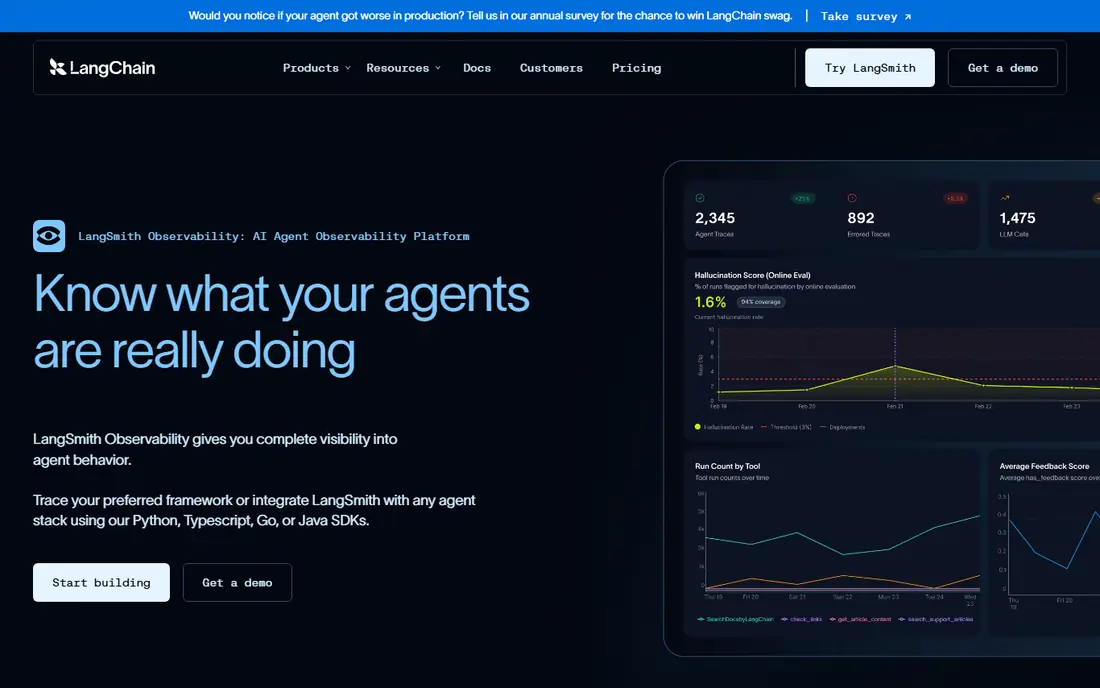
LangSmith is the natural pick if you already build on LangChain. Its tracing, evaluation, and prompt tools integrate with LangChain and LangGraph with little setup, and its hosted dashboards suit teams that want to ship fast. That closeness to the framework is its main advantage.
The catch is cost and hosting. Per-seat pricing grows with team size, and self-hosting needs an enterprise plan. If you are not on LangChain, a vendor-neutral tool may be cheaper.
- Native LangChain integration
- Tracing, evals, and prompt tools
- Hosted dashboards
- Per-seat pricing adds up
- Self-hosting is enterprise only
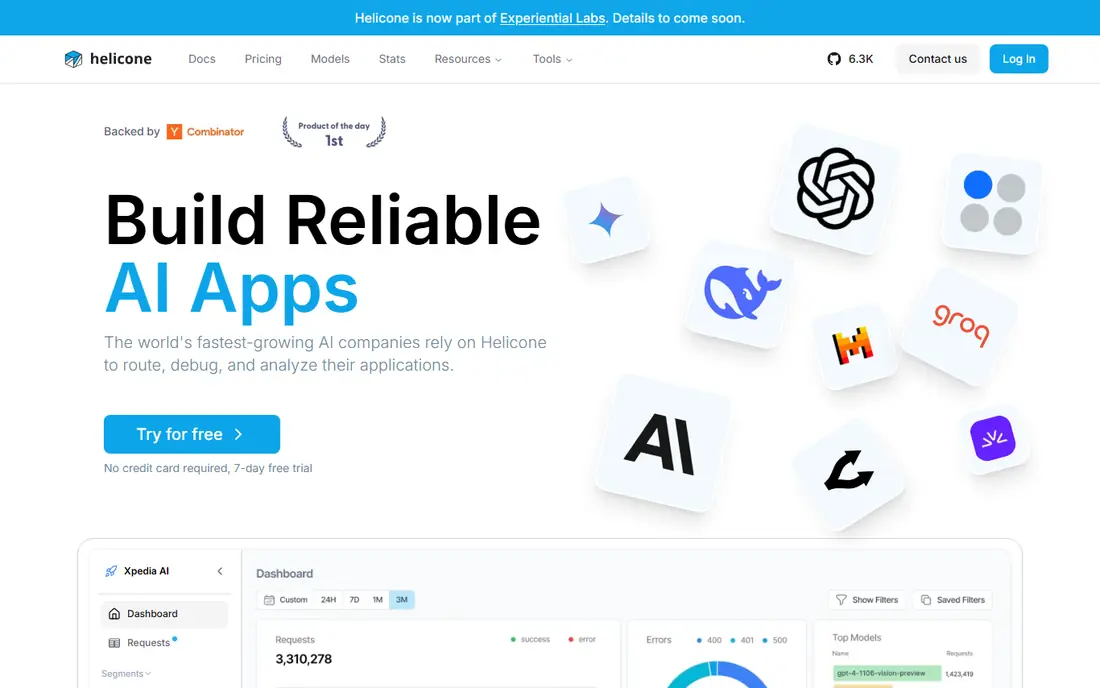
Helicone is the fastest way to see what your LLM calls actually cost. By routing calls through its proxy, it logs requests, costs, and latency with little code change. That makes it ideal for teams that want spend visibility before they invest in full tracing.
The catch is the proxy model. It adds a hop to every call, and deeper evaluation features sit on higher tiers. For cost logging and quick debugging, it is hard to beat.
- Drop-in proxy logging
- Cost tracking per provider
- Prompt experiments
- Proxy adds a hop
- Some features need higher tiers
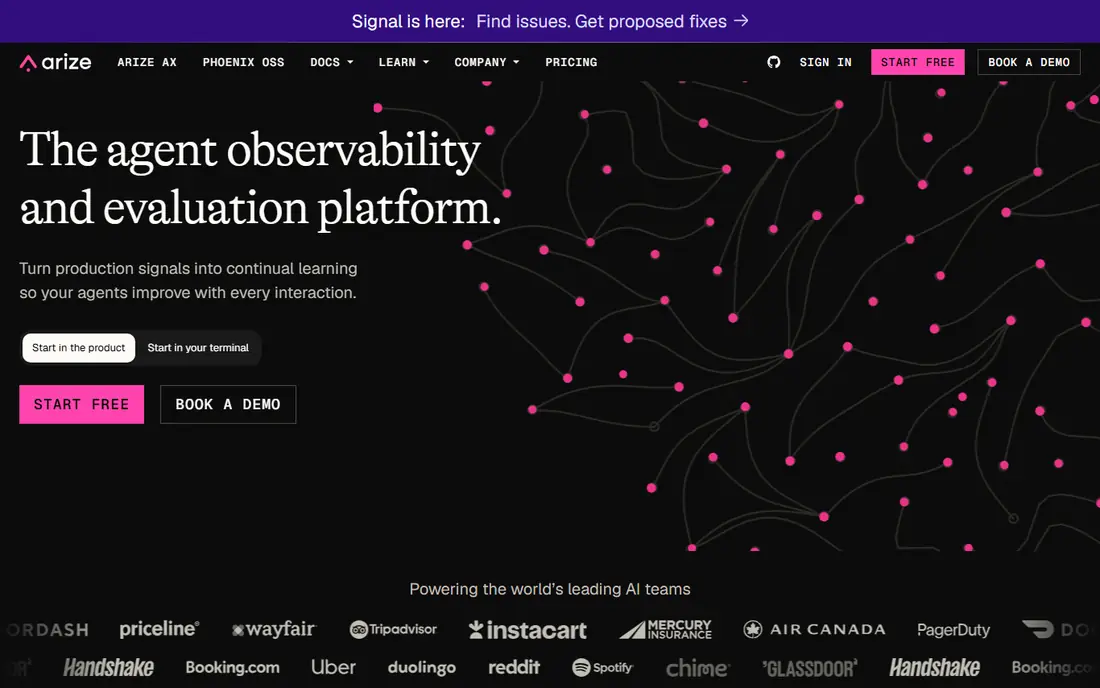
Arize AX suits teams that want OpenTelemetry standards with a hosted option. Its Phoenix tool runs locally or self-hosted for debugging, while AX adds hosted analytics, evaluations, and monitoring. That pair covers both local work and production oversight.
The catch is the split. Phoenix is free and open, while AX is the paid hosted product, so check which features live where. For OpenTelemetry shops, that standard-based approach is a real advantage.
- OpenTelemetry-native tracing
- Phoenix for self-hosting
- Evaluation tools
- Phoenix and AX have different feature sets
- Hosted pricing is usage-based
Phoenix is the best free starting point for LLM tracing. It runs locally or on your own servers, traces with OpenTelemetry, and includes evaluation tools for retrieval work. That makes it ideal for developers and small teams who want control without a bill.
The catch is operations. You handle hosting, scaling, and updates, and you miss hosted collaboration features. For a prototype or a privacy-sensitive project, that trade is worth it.
- Free and self-hosted
- OpenTelemetry tracing
- RAG evaluation
- You run and scale it yourself
- Hosted features need AX
Braintrust is the pick for teams where evaluation drives development. Its scorers, datasets, and CI gates let teams test prompts and models like software, catching regressions before release. That discipline matters when a prompt change can break many user flows at once.
The catch is price. The paid entry is high for a small team, though a startup offer can help. If you only need basic tracing, a cheaper tool will do.
- Strong evals and scorers
- Prompt testing
- CI gates
- High paid entry price
- Enterprise self-hosting only
Opik is the value pick for teams that want tracing without a large bill. Its paid entry is low, it supports self-hosting, and it covers tracing, evaluation, and prompt tools. That combination suits startups that need production visibility on a tight budget.
The catch is maturity. Opik is newer than LangSmith or Arize, so its ecosystem and integrations are smaller. Check that it supports your frameworks before you migrate.
- Low paid entry
- Self-hosting option
- OpenTelemetry support
- Newer product with a smaller ecosystem
- Some features are newer
Pydantic Logfire suits Python teams that want observability beyond LLM traces. It combines traces, logs, and metrics, so an LLM call can be seen beside the application code around it. Prompt versioning and Pydantic Evals add structure for teams already in the Pydantic ecosystem.
The catch is billing and hosting. Record-based pricing needs modeling at scale, and self-hosting needs an enterprise plan. For Python-heavy teams, the unified view is worth it.
- Traces, logs, and metrics together
- Prompt versioning
- Pydantic Evals
- Self-hosting is enterprise only
- Billing is record-based
Humanloop fits product teams that iterate on prompts with non-engineers. Its prompt versioning, rollout, and evaluation workflows let product managers and engineers test changes together, without a deploy for every tweak. That collaboration is its main strength.
The catch is pricing and scope. Larger use needs a custom quote, and its tracing is less deep than dedicated observability tools. If prompt iteration is your bottleneck, Humanloop fits.
- Prompt versioning and rollout
- Evaluation workflows
- Collaboration tools
- Custom pricing for larger use
- Smaller tracing focus than rivals
Traceloop suits teams that want OpenTelemetry instrumentation without lock-in. Its open source SDKs instrument LLM apps with OpenTelemetry standards, so traces can flow to tools you already use. That vendor-neutral approach appeals to platform teams.
The catch is scale. Traceloop is smaller than the leaders, so check hosted features and support before you rely on it for production. For standards-based tracing, it is a strong, flexible option.
- OpenTelemetry-based SDKs
- Tracing and monitoring
- Open source instrumentation
- Hosted features vary
- Smaller vendor than LangSmith or Arize
How we picked these
We compared official feature pages, pricing pages, and app store listings, and we checked that each vendor homepage loads and matches the product named. We favored tools that are still offered in October 2026, that fit the topic without stretching the definition, and that publish clear pricing or a clear route to a quote. Where a price was not published on the vendor site, we wrote See website instead of guessing. We did not claim hands-on testing we did not do, and we treated public reviews as background only, not as proof of a feature.
How to choose a Langfuse alternative
First, list what you actually need: tracing, prompt management, evaluations, cost tracking, or all four. A cost-first proxy such as Helicone will not replace an evaluation platform such as Braintrust, and a free tracer such as Phoenix will not give you hosted collaboration.
Second, check self-hosting and data rules. If prompts or outputs cannot leave your environment, you need a self-hosted tool such as Phoenix or Opik, not just a hosted dashboard. Confirm retention, regions, and compliance terms in writing for regulated work.
Third, model pricing on your real volume. Vendors bill by traces, seats, records, requests, or data processed, so the cheapest entry price can become the most expensive at scale. Run a pilot with production-like traffic for two weeks before you commit.
Before you commit, run a two-week pilot on real traffic. Send a copy of production traces to the finalist, invite the engineers who will read them daily, and check search speed, alert quality, and cost at your actual volume. A tool that looks clean on a demo can feel slow or noisy on real data, and a pilot will show that before you migrate prompts, dashboards, and team habits.
One more check helps: ask who on your team will read traces every day, and whether they prefer a hosted dashboard or a self-hosted tool. A tool that engineers ignore will not improve prompts, however good its charts look. Pick the option your team will actually open during an incident, not the one with the longest feature list.
Frequently asked questions
What are the best Langfuse alternatives?
LangSmith, Helicone, Arize AX, Phoenix, and Braintrust are the leading alternatives. Phoenix and Opik suit self-hosting, while Helicone suits fast cost tracking.
Is there a free alternative to Langfuse?
Yes. Phoenix by Arize is free and self-hosted, and Opik, Helicone, and LangSmith all offer free tiers with limits on traces, requests, or seats.
Which alternative is best for LangChain users?
LangSmith, because it integrates natively with LangChain and LangGraph. If you want a vendor-neutral option, Arize AX and Opik both support OpenTelemetry tracing.
Do I need LLM observability if I only use one model?
Even one model benefits from tracing, cost tracking, and evaluation, since prompts, latency, and failures still vary. Start with a free tier, and add evaluations once you ship to real users.
Can I self-host a Langfuse alternative?
Yes. Phoenix and Opik support self-hosting, while LangSmith, Braintrust, and Pydantic Logfire reserve self-hosting for enterprise plans. Check the vendor docs for the current terms.
Sources we checked (9)

Online Jobs is an independent blog about careers, online work, learning new skills and the tools that help people earn. More about us.
Keep reading
All posts
Replit Alternatives
Replit alternatives for 2026 compared: browser coding, AI app builders and team workspaces, with free plans, limits and honest trade-offs for developers.

Docker Alternatives
Compare Docker alternatives for 2026, with Podman, Rancher Desktop, OrbStack, containerd, Colima, Finch, Portainer and Kubernetes on cost, fit and licensing.
Databricks Alternatives
Compare Databricks alternatives for analytics, Spark, and lakehouse work, with 9 platforms on pricing, clouds, and team fit. Prices and free plans compared.