Best Kemono Alternatives in 2026: 9 Creator Platforms Compared

How we put this together: we compare official feature and pricing pages, app store listings, privacy policies and public user reviews. Prices change, so check the provider's site before you pay.
Key takeaways
- This article lists only legitimate creator platforms, because unlicensed leak sites harm creators, carry malware risk and create legal risk for visitors.
- Patreon remains the strongest general membership platform, while Ko-fi suits tips and simple support, and Substack suits paid writing.
- Gumroad and Payhip suit digital product sales, Ghost and Podia suit creators who want more control over audience and pricing, and Memberful suits WordPress based memberships.
- Fees matter more than features at scale, so compare platform percentage, payment processing and monthly cost for your actual income level.
- Creators should move their audience to an email list or owned site as well, because any single platform can change rules or fees.
Quick comparison
| Name | Who it suits | Starting price | Free option | |
|---|---|---|---|---|
 Patreon | Membership tiers and community | Free | Yes | Visit |
 Ko-fi | Tips and simple fan support | Free | Yes | Visit |
 Substack | Paid newsletters and writing | Free | Yes | Visit |
 Buy Me a Coffee | Simple support and memberships | Free | Yes | Visit |
 Gumroad | Digital product sales | Free | Yes | Visit |
 Memberful | WordPress memberships | See website | Free trial | Visit |
 Ghost | Owned publishing and memberships | $9 per month | Free trial | Visit |
 Podia | Courses and digital products | See website | Free trial | Visit |
 Payhip | Low cost digital storefront | Free | Yes | Visit |
The best legitimate Kemono alternatives
Kemono is known for hosting leaked paywalled creator content, and we do not recommend using leak sites or listing them as alternatives. The platforms below let creators earn directly from supporters, with consent, payment handling and content controls. Use them to support creators through official channels.

Patreon is the most complete membership platform on this list, because it combines tiers, gated posts, community tools and payment handling in one place. Creators can offer several price levels, share work in progress, and build a habit of monthly support rather than relying on one off sales. That structure suits artists, writers, podcasters and video makers who publish regularly. The cost needs a clear look. Patreon takes a platform percentage on top of payment processing, and new creator plans now use a higher percentage than older plans in some cases, so check the current plan page. Patreon also does not guarantee discovery, so creators still need to bring their own audience from social media, video or search.
- Flexible membership tiers
- Large existing supporter base
- Tools for posts, chat and community
- Platform fee plus payment processing
- Discovery is weaker for brand new creators

Ko-fi works best as a simple support page that fans understand at a glance. Supporters can leave a one off tip, join a membership, buy from a small shop or request a commission, all from one link. That simplicity suits creators who already have an audience elsewhere and just need a clean place to receive support. Ko-fi does not help new fans find you, so it is not a growth channel on its own. Its membership and shop features are also less deep than Patreon or Podia. Use Ko-fi when ease and low fees matter most, and pair it with an email list or social channel for audience growth.
- Simple tips with no platform fee on basic tips
- Memberships, shop and commissions in one page
- Low friction setup
- No built in discovery or recommendation feed
- Membership tools are simpler than Patreon
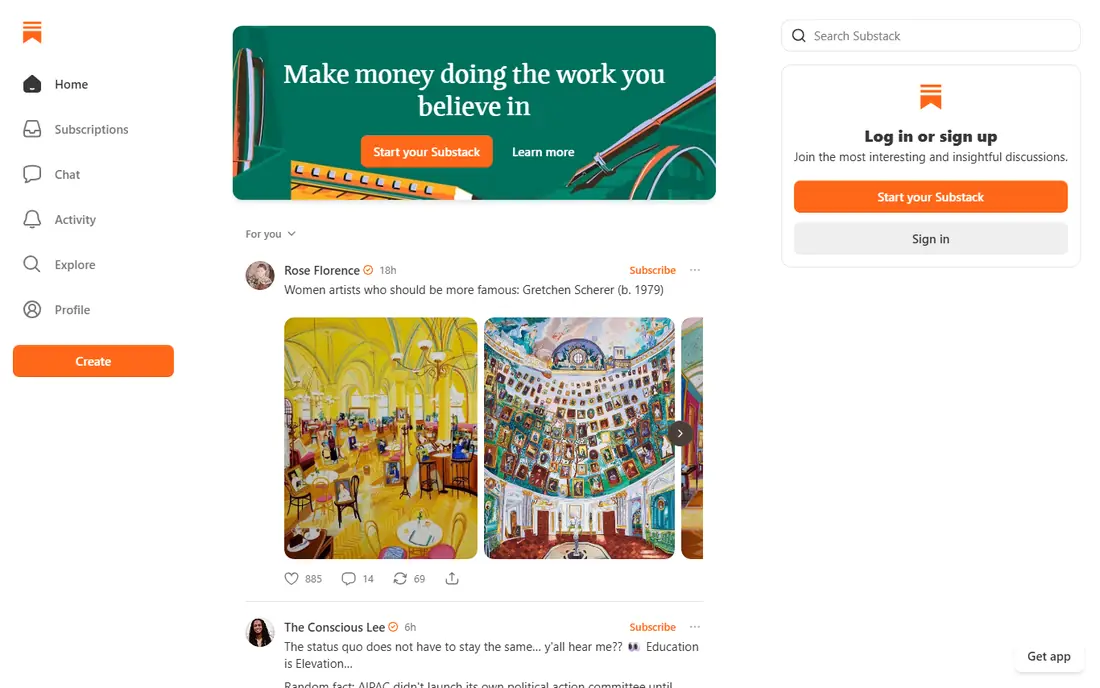
Substack suits writers first, because it turns a newsletter into a paid subscription with very little setup. Readers can subscribe free, upgrade to paid, and discover new writers through recommendations from publications they already read. That network effect is a real advantage for new writers who lack a large following. The fee structure matters as paid income grows. Substack takes a percentage of paid subscriptions plus payment processing, so larger writers often compare it with a flat monthly platform such as Ghost. Substack is also less suited to selling standalone digital products, so writers who sell many products may need a second storefront.
- Easy paid newsletter setup
- Recommendation network helps new writers grow
- Podcast and video support
- Platform fee plus Stripe processing
- Not built as a general product storefront
Buy Me a Coffee is similar to Ko-fi in spirit, with a focus on fast setup and a single support page. Fans can leave support, join a membership or buy an extra, and creators can start without building a full site. That low friction makes it a good first step for creators testing whether supporters will pay at all. Advanced creators may outgrow it. Community tools, tier depth and product features are simpler than Patreon or Podia, and there is no strong discovery feed. Treat Buy Me a Coffee as a simple support link, not as a full membership business platform, and move to a deeper tool when membership income becomes a main revenue source.
- Very fast setup
- Simple memberships and extras
- Clear flat fee structure
- Fewer advanced membership and community tools
- Limited discovery
Gumroad suits creators who sell files, templates, guides, music, presets or other digital products. A creator can list a product, set a price, and let Gumroad handle checkout and delivery without building a shop. Memberships and a discovery marketplace add extra routes to income, though discovery sales carry a higher fee. Fees are the main watch point. Gumroad charges a percentage plus a fixed amount on direct sales, and a higher share on discovery sales, so high volume sellers should compare it with a flat monthly storefront such as Payhip or Podia. Gumroad still wins on speed for a first product, because setup takes far less time than building a full store.
- Quick digital product storefront
- Handles payments and delivery
- Memberships and discovery options
- Percentage fee plus per sale charge
- Refund fee handling needs checking on the current terms
Memberful is built for creators who already run a WordPress site and want to add paid memberships without moving content. It handles signups, payments and access control, while the creator keeps their site design, domain and content structure. That control appeals to writers, podcasters and educators with an established site. It is less useful as a starting point for creators with no site, because setup assumes an existing WordPress presence. Pricing also includes a platform fee on some plans plus payment processing, so compare total cost with Patreon or Ghost for your income level. Memberful shines when ownership of the site matters more than a ready made community feed.
- Strong WordPress integration
- Flexible membership and subscription control
- Good for existing sites
- Works best with an existing site and audience
- Pricing and fees need checking for your plan
Ghost is the strongest choice for creators who want to own their publishing platform. It combines a website, newsletter and membership system, takes no percentage of paid subscriptions on its hosted plans, and lets creators keep their email list and domain. As paid income grows, a flat monthly price often beats a percentage fee, which is why many larger writers move from Substack to Ghost. The trade off is effort and upfront cost. Ghost requires a monthly plan even before income arrives, and building a good site takes more work than starting a Substack newsletter. Self hosting can lower cost but adds maintenance. Ghost suits creators who are ready to treat publishing as a business and who value long term control over a quick start.
- No platform fee on paid memberships
- Full control over site and email list
- Clean publishing tools
- Monthly cost starts before income
- Setup and theme work take more time than Substack
Podia suits creators who sell courses and digital products alongside memberships. It bundles course hosting, downloads, email marketing and a storefront, so a creator does not need several separate tools to launch a course. Paid plans take no platform transaction fee, which helps once sales grow beyond a small level. The monthly price is the main barrier for new creators, because it starts before the first sale. Podia also lacks the deep community and discovery features of Patreon, so creators must bring their own audience. It is best for educators and product sellers who want one tidy platform for courses, products and email.
- Courses, digital downloads, memberships and email in one tool
- No platform transaction fee on paid plans
- Clean storefront
- Monthly cost before sales
- Community features are simpler than Patreon
Payhip is a practical low cost storefront for digital products, memberships and simple courses. Its free plan lets creators start selling without a monthly fee, while paid plans lower the per sale percentage. For creators selling to international buyers, its handling of EU VAT on digital products removes a common headache that other tip platforms leave to the seller. Payhip does not offer a large built in audience, so creators must drive their own traffic. Its membership and course tools are also less deep than Podia or Patreon. Payhip is best when the goal is a cheap, tidy shop for products you already promote elsewhere, rather than a community platform.
- Free plan for digital sales
- Lower fees on paid plans
- Handles EU VAT on digital products
- Membership and course tools are simpler than Podia
- No large discovery audience
How we picked these
We only considered legitimate platforms where creators choose to publish, set prices and receive payment with consent. We excluded leak sites, pirate archives and any site that hosts paywalled content without the creator permission, because those sites do not count as creator alternatives and they expose visitors to malware and legal risk. Each platform on this list is actively sold in October 2026 and offers a real route for fans to support a creator directly. We compared official pricing pages, fee structures, membership tools, product sales and publishing features. Where fees differ by plan or sales channel, we used See website or a general description rather than presenting one channel fee as if it applied to all sales. We also weighed control over audience and data, because a platform that owns your list creates a different long term risk from one that lets you export it.
A plain warning about leak sites
Unlicensed leak sites may look like a free way to access creator content, but they carry real risks that are easy to understate. Files and links on such sites are common routes for malware, phishing pages and unwanted software, and visiting them can expose devices and accounts. Creators also lose income when paywalled work is copied without permission, which makes it harder for them to keep publishing. Legal risk is another factor. Copying, sharing or downloading paywalled content without permission can breach copyright law, and rules differ by country, so a site that is easy to reach is not the same as a site that is lawful to use. The safer route is to support creators through their official pages, free tiers, trials or lower cost tiers, and to report leaks to the creator or platform rather than sharing them further.
Choosing a legitimate platform for your work
Start with what you actually sell. Membership creators should shortlist Patreon, Ko-fi and Memberful, writers should shortlist Substack and Ghost, and product sellers should shortlist Gumroad, Payhip and Podia. A platform that fits your main income type will serve you better than a platform with a longer feature list in areas you will not use.
Compare fees on your real income
A percentage fee looks small at low income and large at high income, while a monthly fee looks large at first and cheaper later. Work out your expected monthly income, then add platform fee, payment processing and monthly plan cost for each option. That simple calculation often decides between Patreon, Substack, Ghost and Podia more clearly than any feature comparison.
Keep an audience you can reach directly
Platform rules, fees and discovery change over time, so build an email list alongside any membership or newsletter platform. Ghost and Podia include email tools, while Patreon, Ko-fi and Gumroad creators should add a separate list. An email list means you can tell supporters about a move, a new product or a price change even if a platform account is lost or closed.
Frequently asked questions
What are Kemono alternatives?
Legitimate Kemono alternatives are creator platforms such as Patreon, Ko-fi, Substack, Gumroad, Ghost and Podia, where fans pay creators directly for memberships, writing, products or courses. We do not list leak sites as alternatives, because they host paywalled content without creator consent and carry malware and legal risk. If you want to support a creator, use their official page or a platform they link from their own site.
Is Kemono legal?
Kemono is known for hosting leaked paywalled creator content, and copying or sharing paywalled work without permission can breach copyright law. Rules differ by country and by the exact content involved, so the safest course is to avoid leak sites and use licensed platforms instead. If you are unsure about a specific site, check whether the creator themselves links to it or lists it as an official channel.
What is the best alternative to Patreon for creators?
Ko-fi is best for simple tips and low friction support, Substack is best for paid writing, and Ghost is best for creators who want a flat monthly price and full control over their site. Gumroad and Payhip suit product sellers, while Podia suits course sellers. The best choice depends on whether your income comes from memberships, writing, products or courses.
Which creator platform takes the lowest fees?
Ko-fi takes no platform fee on simple tips, Ghost takes no platform percentage on paid memberships on hosted plans, and Payhip and Podia lower per sale fees on paid plans. Payment processing still applies in most cases, so compare total cost including processing and monthly plans. At low income, a free plan with a percentage fee is often cheapest, while at higher income a flat monthly plan usually wins.
Can creators move from a leak site audience to a legal platform?
Creators cannot control a leak site audience directly, but they can build a legal audience by linking official platforms from their own site, social profiles and free content. An email list helps, because it gives creators a direct channel that does not depend on any one platform. Fans can help by paying through official channels and by not sharing leaked links.
How can fans support creators safely?
Use the creator official page, a linked platform such as Patreon, Ko-fi or Substack, or a direct product link from the creator own site. Avoid downloading files from unknown leak sites, because those files are a common malware route. If a creator offers a free tier or a lower cost tier, that is a safer way to try their work than using an unlicensed copy.
Sources we checked (9)

Online Jobs is an independent blog about careers, online work, learning new skills and the tools that help people earn. More about us.
Keep reading
All posts
n8n Alternatives
n8n alternatives compared for 2026, with Zapier, Make, Activepieces, and more, covering visual builders, code steps, self-hosting, and pricing models.
eBay Alternatives
Looking for ebay alternatives? We compared 9 marketplaces for sellers on fees, buyer reach, categories and ease of listing, to help you sell with confidence.

ZoomInfo Alternatives
The best ZoomInfo alternatives in 2026, compared on price, free plans, data coverage, and which tool fits small teams or large sales teams best in detail.