Best GoPro Alternatives in 2026: 8 Tools Compared


Best overall GoPro alternative for most buyers · Starting price: See website
How we put this together: we compare official feature and pricing pages, app store listings, privacy policies and public user reviews. Prices change, so check the provider's site before you pay.
Key takeaways
- DJI and Insta360 now lead the GoPro alternatives field, with stronger low-light results and longer practical battery life in many tests.
- A 360 camera suits creators who want to reframe shots after filming, but it needs more editing time than a standard action camera.
- Budget cameras from AKASO cover basic 4K recording well, but they trail flagship models on stabilisation, low light, and audio.
- Mounts, batteries, and memory cards add real cost, so compare the full kit price rather than the camera body alone.
- Check waterproof depth, weight, and app support before buying, because those limits shape daily use more than headline resolution.
Quick comparison
| Name | Who it suits | Starting price | Free option | |
|---|---|---|---|---|
| DJI Osmo Action 5 Pro | Best overall GoPro alternative for most buyers | See website | No | Visit |
 DJI Osmo Action 4 | Buyers who want flagship handling at a lower price | See website | No | Visit |
 Insta360 Ace Pro 2 | Low-light filming and vlogging with a flip screen | See website | No | Visit |
 Insta360 X5 | 360 capture that can be reframed after filming | See website | No | Visit |
 Insta360 GO 3S | Tiny POV clips and hands-free mounting | See website | No | Visit |
 AKASO Brave 8 | Budget buyers who want 4K and a full mount kit | See website | No | Visit |
 AKASO Brave 7 LE | First action camera on the smallest budget | See website | No | Visit |
 DJI Osmo Pocket 3 | Creators who want gimbal-smooth footage without a large rig | See website | No | Visit |
The best GoPro alternatives
GoPro built the action camera category, but buyers in 2026 have real choices. DJI offers strong stabilisation and dual screens, Insta360 offers 360 capture and a flip screen for vlogging, and AKASO covers the budget end for casual use. The right alternative follows from how you film: helmet mounts, water sports, travel vlogs, and tiny POV clips each favour a different body.
DJI Osmo Action 5 Pro
Who it suits: Best overall GoPro alternative for most buyers
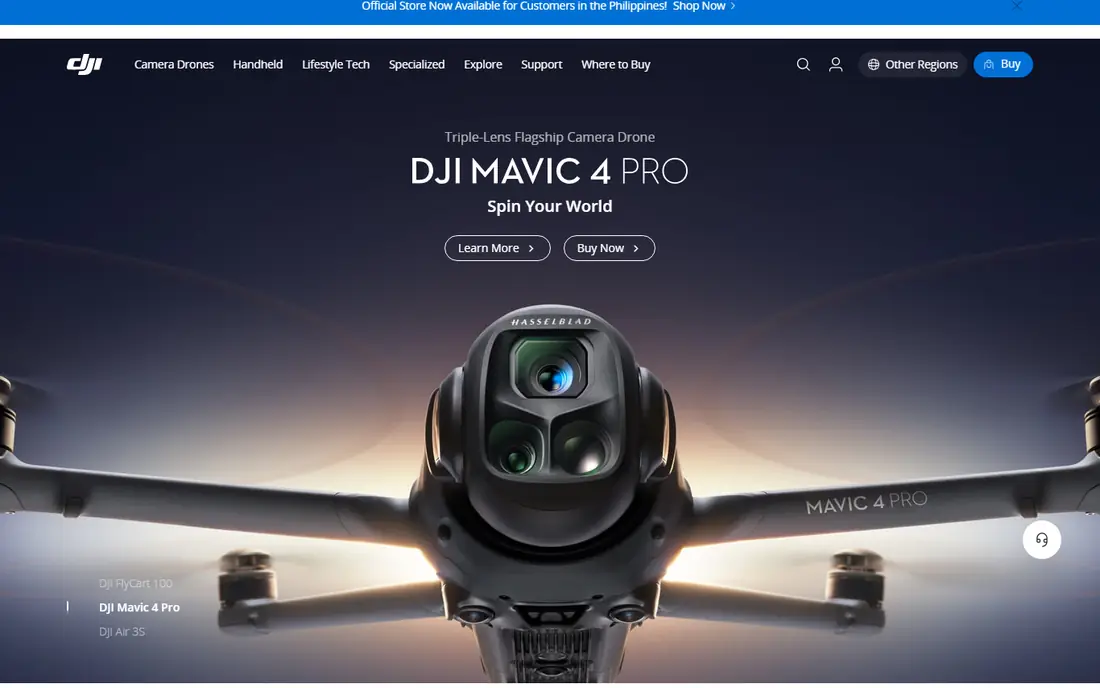
The Action 5 Pro is the safest default pick among GoPro alternatives. It pairs a 1/1.3-inch sensor with RockSteady and HorizonSteady stabilisation, so walking, riding, and running footage stays watchable without a gimbal. Dual touchscreens help too: the front screen frames selfies and vlogs, while the rear screen handles settings and playback. Battery life in real use beats many rivals, which matters on a full day out.
Low-light footage is a clear step up from older action cameras, though it still cannot match a large-sensor mirrorless camera after dark. Buyers should compare bundles, because DJI sells standard and adventure combinations with extra batteries and mounts. The camera body alone may look cheaper than the kit you actually need.
- Dual touchscreens, strong stabilisation, good low-light results for its class
- Price varies by bundle, 4K files fill cards fast at high frame rates
DJI Osmo Action 4
Who it suits: Buyers who want flagship handling at a lower price
The Action 4 remains a sensible buy when discounted. It shares much of the Action 5 Pro handling, including the magnetic mount system that makes swapping between mounts quick and secure. Stabilisation holds up on bikes, boats, and runs, and the dual screens keep selfie framing simple. For daylight sports and travel, the gap to the newer model is modest.
Low light is where the age shows. Footage gets noisier sooner as light falls, and detail softens in shadows. A buyer who films mostly outdoors in daylight will notice little difference. A buyer who films evenings, indoor events, or dawn rides should spend the extra on the newer model or the Ace Pro 2.
- Proven stabilisation, magnetic quick-release mount, dual screens
- Older sensor than the Action 5 Pro, less headroom in very dark scenes
Insta360 Ace Pro 2
Who it suits: Low-light filming and vlogging with a flip screen
The Ace Pro 2 targets creators who film in mixed light. Its large sensor and Leica-tuned lens produce cleaner dusk and indoor footage than most standard action cameras, and colours hold up well straight from the camera. The flip-up screen is a practical win for vlogging, because it shows framing without a separate monitor or phone preview. FlowState stabilisation keeps handheld walking shots steady.
The cost of that quality is storage. 8K clips fill cards and slow editing on older computers, so many owners shoot 4K for everyday work and reserve 8K for hero shots. The flip screen also adds a moving part to protect on hard mounts. Used within those limits, this is the strongest pick for creators who care about image quality first.
- Large sensor with Leica tuning, 2.5-inch flip-up screen, 8K recording
- 8K files are very large, flip screen needs care on rough mounts
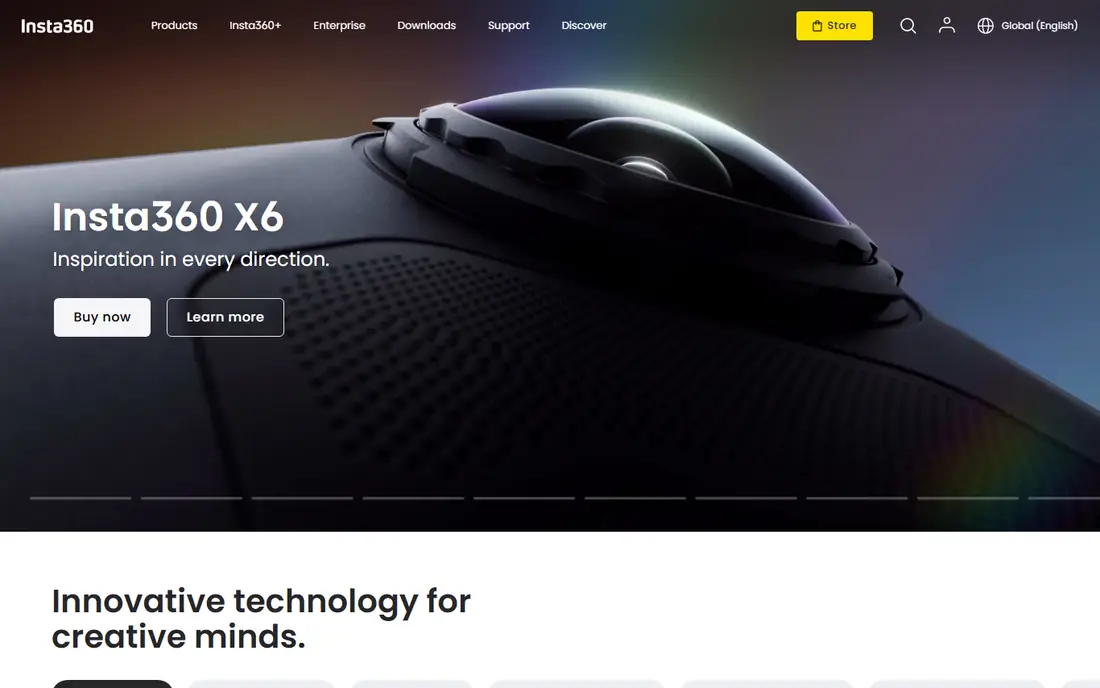
The X5 changes how a creator shoots. Instead of aiming the camera, the owner captures everything around it and chooses the angle later in the app or desktop editor. That freedom rescues shots that would otherwise miss the action, such as a wave, a turn, or a reaction behind the camera. It also produces distinctive tiny-planet and tracking shots that a standard camera cannot match.
Reframed footage will not look as sharp as footage from a dedicated 4K action camera pointed at the same subject, because the 360 frame is cropped to a normal view. Editing also takes longer, since each clip needs angle choices before export. The X5 suits creators who enjoy editing and want flexible coverage, rather than buyers who want quick clips straight from the card.
- Full 360 capture, reframing in editing, strong stabilisation
- Editing takes longer, twin lenses need protection, lower reframed detail than a dedicated 4K camera
The GO 3S fits where no normal action camera can go. It clips to a hat, a chest mount, or a pendant, and films hands-free POV clips for cooking, cycling, and travel. The charging case tops the camera up between clips, which stretches a day of short takes. For social clips and point-of-view inserts, the size advantage outweighs the spec sheet.
Battery life per single charge is short, so this is a camera for short clips rather than continuous recording. Image quality in low light also trails the larger models, and the tiny body needs care around water and drops. Think of it as a second camera for angles a main camera cannot reach, not as a sole camera for a long shoot.
- Thumb-sized body, magnetic mounting, charging case extends use
- Shorter battery life per charge, smaller sensor than flagship models
The Brave 8 covers the basics at a fraction of flagship prices. It records 4K video, offers electronic stabilisation, and often ships with a generous mount and accessory kit that would cost extra elsewhere. For holidays, kids sports, and casual water use, that package is hard to beat on value. Setup is simple, and the controls suit first-time action camera owners.
Limits show in harder conditions. Low-light footage gets noisy, stabilisation at the highest settings crops the frame more, and built-in audio can sound thin in wind. A buyer who films mainly in daylight and edits short clips will be happy. A buyer who needs clean night footage or broadcast-ready audio should budget for a DJI or Insta360 model instead.
- Lower price, 4K recording, mounts and accessories often included
- Weaker low-light results, audio quality trails flagship models
The Brave 7 LE is the entry point for buyers who are unsure whether they will use an action camera often. It is waterproof without an extra case at its rated depth, and dual screens help with selfie framing. For beach days, pool clips, and bike rides in daylight, it produces usable footage that looks fine on a phone screen.
Frame rates and stabilisation mark the budget boundary. 4K tops out at 30 frames per second, so slow-motion work needs a lower resolution. Electronic stabilisation helps on smooth paths but struggles on rough trails. Buy it as a starter or a second camera for risky mounts, and upgrade if action filming becomes a regular habit.
- Very low price, waterproof body, dual screens for framing
- 4K limited to 30 frames per second, stabilisation and low light are basic
DJI Osmo Pocket 3
Who it suits: Creators who want gimbal-smooth footage without a large rig
The Pocket 3 is not a direct action camera replacement, but it belongs on a GoPro alternatives list for creators. Its built-in three-axis gimbal produces smoother walking footage than electronic stabilisation alone, and the rotating touchscreen makes vertical and horizontal filming quick. The larger sensor helps in mixed light, and the pocket-sized body suits travel vlogging.
Ruggedness is the trade-off. The gimbal head is a moving part that needs protection, and the body is not built for helmet mounts, surf, or hard falls in the way a sealed action camera is. Buyers who film mostly on foot, in cities, and indoors will get more from the Pocket 3. Buyers who mount a camera to a bike or a board should pick a sealed DJI or Insta360 model instead.
- Three-axis gimbal, large sensor for its size, rotating screen
- Not a rugged action camera, needs care around water and impacts
How we picked these
We compared official feature pages, pricing pages, app store listings, and public reviews for cameras that match GoPro on mounts, waterproofing, stabilisation, and everyday use. We favoured models with current official support and a clear use case, from flagship rivals to budget starters and specialist options such as 360 and gimbal cameras. We did not claim hands-on testing. Prices vary by bundle and retailer, so the vendor site and the retailer listing on the day you buy are the final sources.
What to check before you buy
Start with the mount and the conditions. A helmet, a surfboard, and a travel vlog each stress a camera differently, and the best sensor cannot fix a weak mount or a flooded body. Check the rated waterproof depth without a case, the mount system, and whether spare batteries and mounts are easy to buy where you live.
Next, think about editing time. A standard action camera gives quick clips with little work. A 360 camera gives flexible angles but needs reframing before export. A gimbal camera gives smooth footage but needs care and a different shooting rhythm. Pick the workflow you will actually finish, not just the camera with the longest spec list.
Finally, add up the kit. Batteries, a fast memory card, a protective case, and mounts can add a large share to the body price. Check card speed requirements for high frame rates and 8K, because a slow card can stop recording mid-clip. A mid-range camera with the right kit often beats a flagship body bought bare.
Frequently asked questions
Sources we checked (3)

Online Jobs is an independent blog about careers, online work, learning new skills and the tools that help people earn. More about us.
Keep reading
All posts
n8n Alternatives
n8n alternatives compared for 2026, with Zapier, Make, Activepieces, and more, covering visual builders, code steps, self-hosting, and pricing models.

eBay Alternatives
Looking for ebay alternatives? We compared 9 marketplaces for sellers on fees, buyer reach, categories and ease of listing, to help you sell with confidence.

ZoomInfo Alternatives
The best ZoomInfo alternatives in 2026, compared on price, free plans, data coverage, and which tool fits small teams or large sales teams best in detail.