Best Google Alternatives in 2026: 10 Search and News Options Compared
 Online Jobs·Updated Oct 26, 2026·12 min read

How we put this together: we compare official feature and pricing pages, app store listings, privacy policies and public user reviews. Prices change, so check the provider's site before you pay.
Key takeaways
- Nine of the ten options here are free to use. Kagi is the exception: after a 100-search trial, plans start at $5 per month for 300 searches.
- Brave Search and Mojeek run their own independent indexes, while DuckDuckGo says its traditional links come largely from Bing.
- Ecosia says it puts 100% of its profits into climate action, and its homepage counter showed more than 257 million trees planted when we checked.
- Bing is the only option that pays you back, through Microsoft Rewards points (3 points per qualifying search, with a daily cap).
- For a Google News alternative, Ground News shows how left, center and right outlets cover the same story; its Vantage plan is $8.33 per month billed annually.
Quick comparison
| Name | Who it suits | Starting price | Free option | |
|---|---|---|---|---|
 DuckDuckGo | An easy, private switch from Google | Free | Yes | Visit |
 Bing | Google-like results plus rewards | Free | Yes | Visit |
 Brave Search | An independent index with privacy | Free | Yes | Visit |
 Startpage | Private search with an anonymous proxy | Free | Yes | Visit |
 Ecosia | Searching that funds tree planting | Free | Yes | Visit |
 Kagi | Ad-free search you pay for | $5 per month | Free trial (100 searches) | Visit |
 Qwant | A European, privacy-first option | Free | Yes | Visit |
 Mojeek | Truly independent UK search | Free | Yes | Visit |
 Perplexity | AI answers with cited sources | Free | Yes | Visit |
 Ground News | A Google News alternative | Free | Yes | Visit |
The best Google alternatives
People leave Google for different reasons: privacy, too many ads, AI summaries they did not ask for, or a wish to support someone else. We grouped the strongest options so you can match one to your reason, and we added one news app for readers looking for alternatives to Google News.
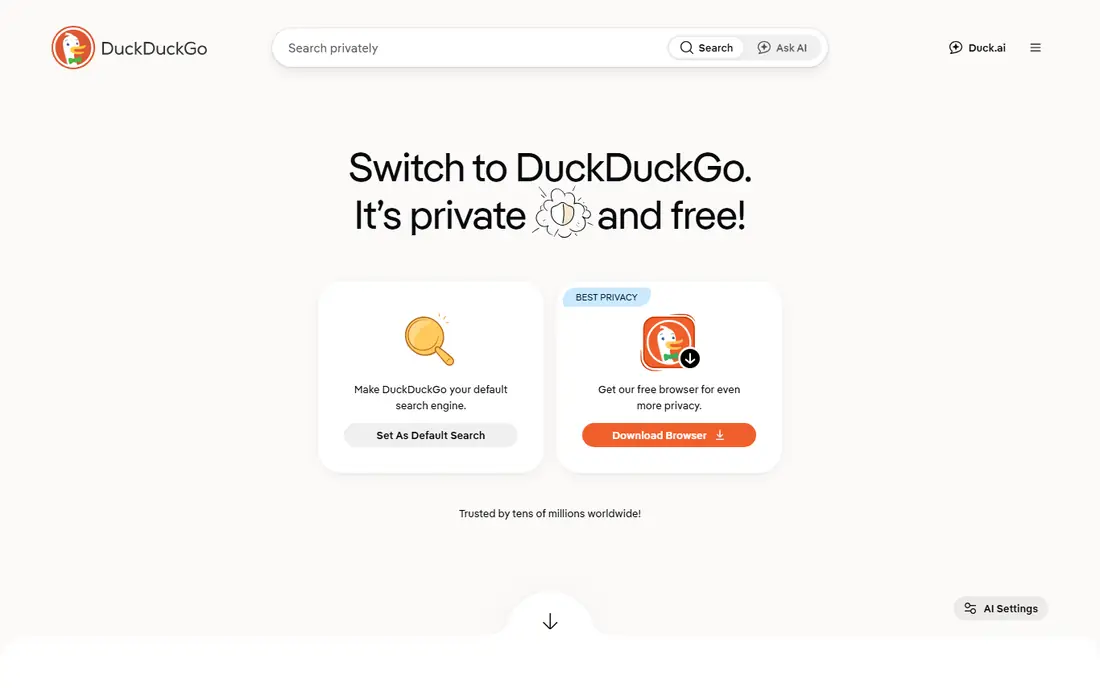
DuckDuckGo is the alternative most people try first, and for good reason. It looks and works much like Google, it is free, and it does not tie your searches to a profile. Its help pages explain that requests to partners are routed through its own servers, so those partners do not see identifiers about you.
The honest catch is where results come from. DuckDuckGo says its traditional links and images come largely from Bing, supplemented by its own crawler and sources such as Wikipedia for instant answers. If you dislike Bing's results, DuckDuckGo will feel similar. For most everyday searches, though, it is the smoothest switch on this list.
- Does not build a profile of your searches
- Familiar layout with instant answers
- Free browser and extensions for more privacy
- Traditional links come largely from Bing
- Local results can be thinner than Google's
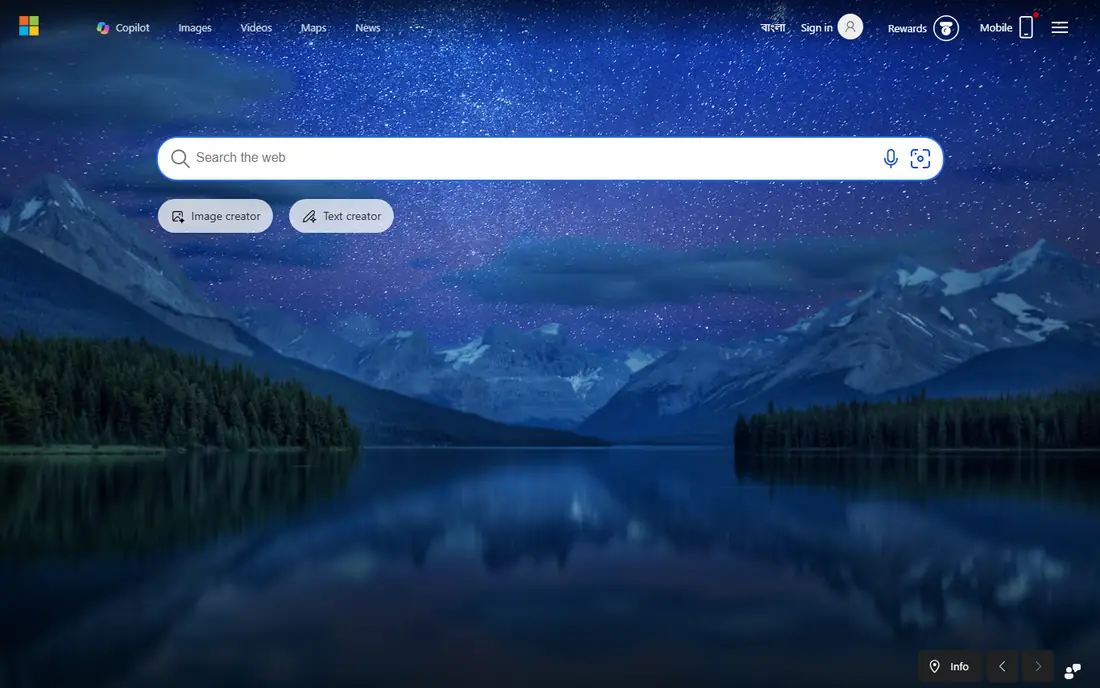
If you want results that feel closest to Google without using Google, Bing is it. It has its own large index, which several other engines on this list rely on, and its image and video search are good.
Bing also pays you a little. Microsoft Rewards gives 3 points per qualifying search, with a daily cap of 5, 10 or 20 searches depending on your level, and points can be redeemed for gift cards or donations. Bing is still run by a big tech company that uses data for advertising, so pick it for convenience, not privacy.
- Large index with strong image and video search
- Microsoft Rewards points for searching
- Built into Windows and Edge
- Not a privacy upgrade over Google
- Pushes Microsoft's own products and Copilot
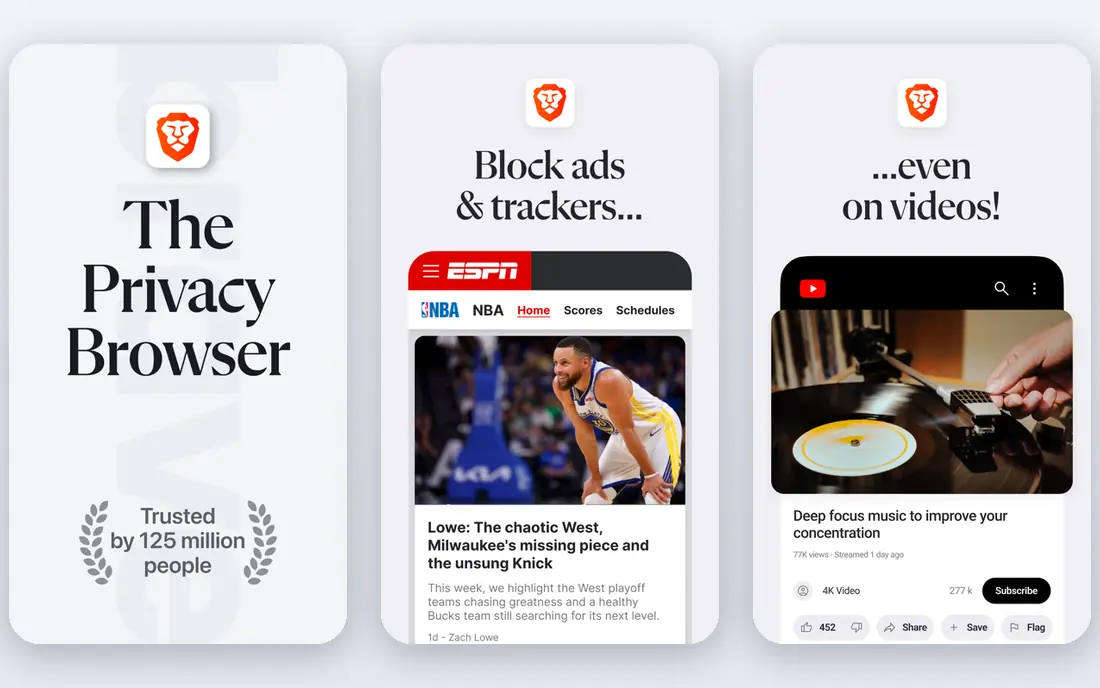
Brave Search stands out because it does not borrow its main results from Google or Bing. Brave says it operates a fully independent index, so it would keep working even if a big provider cut it off. That independence also means you sometimes get different, less SEO-gamed results.
It is ad supported, with what Brave calls privacy-first ads, and users who want no ads can buy Brave Search Premium inside the Brave browser. Brave's help page did not show a price when we checked. There is an optional setting that checks Google as a fallback for some queries, which you can turn off if you want to avoid Google entirely.
- Runs its own independent search index
- Says it does not filter or downrank results for political reasons
- Ad-free Premium option for supporters
- Premium is available only in the Brave browser
- Results for niche or local queries can be uneven
Startpage launched in the Netherlands in 2006 and calls itself the world's first private search engine. Its "How Startpage Works" page explains the setup: a first layer of servers strips your IP address, a second layer calls its search result providers, and queries are never stored in its logs.
The feature people love is Anonymous View. Click it next to any result and the website opens through Startpage's proxy, which hides your IP from that site. The trade-off is that the first results above the web listings are ads, though Startpage says they are based on your search term, not your history.
- Removes your IP address before passing queries to its result providers
- Anonymous View lets you open sites through a proxy
- Search queries are not saved in its logs
- Ads appear above results
- Fewer extra features than Google
Ecosia turns your searches into ad revenue and spends its profits on climate projects, mostly tree planting with more than 900 native species. Its homepage counter showed 257,572,127 trees planted and over 104 million euros dedicated to climate action when we checked, and it says about 20 million people use it.
What makes Ecosia credible is transparency: it publishes financial reports every month. It also says it collects only the data it needs. The catch is that it is still an ad-funded engine built on partner results, so the reason to switch is mostly the mission rather than better answers.
- Says 100% of profits go to climate action
- Publishes monthly financial reports
- Over 257 million trees planted per its counter
- Results rely on partners rather than a fully independent index
- Ads are how it earns money
Kagi flips the business model. You pay a subscription, so there are no ads and no reason to track you. Its pricing page lists a free trial with 100 searches, Starter at $5 per month for 300 searches, Professional at $10 per month for unlimited searches, and Ultimate at $25 per month with its most advanced AI assistant. Annual billing is 10% off.
It suits heavy searchers who are tired of sponsored results and content farms. You can lower or block domains you never want to see, which slowly makes results feel personal in a good way. Most people use more than 300 searches a month, so budget for Professional if you switch fully.
- No ads, because users pay
- Lets you block or boost specific websites
- Unlimited searches from $10 per month
- Paid only after the trial
- The $5 Starter plan caps you at 300 searches a month
Qwant is a French search engine whose pitch is that you are the user, not the product. Its about page says it does not store your search history by default and does not store or sell your personal data. It also now offers AI-generated answers and page summaries, plus a browser extension and mobile app.
Read the fine print: Qwant says some advanced, optional features require sharing certain data with partners. For US users, results are fine for general topics but can be weaker for local American searches. It is a good pick if you want a European company outside the US tech giants.
- Does not store search history by default
- Does not sell personal data
- Offers AI answers and page summaries
- Some optional features share data with partners
- Smaller presence in the US
Mojeek is the underdog. It is a small UK company that built its own crawler and index from the ground up, and it says the index passed 9 billion pages in 2025. It has offered search without tracking for more than 15 years.
Because its index is independent, Mojeek often surfaces small personal sites and forums that bigger engines bury. The downside is coverage: for obscure or very new pages, it may simply not have them yet. Many people keep Mojeek as a second engine for research rather than their only one.
- Its own crawler and index built from scratch
- Index passed 9 billion pages in 2025
- Says it has offered search without tracking for over 15 years
- Smaller index than Google or Bing
- Fewer instant answers and extras
Perplexity is less a search engine and more an answer engine. You ask a question, it searches the web and writes a summary with numbered citations, and you can ask follow-ups in the same thread. For questions like comparing two products or explaining a topic, that can save a lot of clicking.
The paid Pro tier adds more advanced models and higher limits, and its price is on Perplexity's site. Treat its answers as a starting point. AI summaries can misread a source, so open the citations for anything involving money, health or legal decisions.
- Answers questions in plain language with source links
- Good for research and follow-up questions
- Free plan available
- AI answers can still be wrong, so you must check sources
- Advanced models and limits sit behind a paid Pro plan
If what you want is an alternative to Google News, Ground News is our pick. It groups articles about the same event and shows how left, center and right outlets cover it, so you see the full spread rather than one algorithm's selection.
You can read for free, and its subscription page lists the Vantage plan at $8.33 per month billed annually, which adds Blindspot analysis, a global coverage map, unlimited saved stories, ownership and funding information and a personal news bias dashboard. It is a reading tool, not a web search engine, so pair it with one of the options above.
- Shows how outlets across the political spectrum cover each story
- Blindspot feature highlights stories one side ignores
- Bias and factuality ratings for sources
- Best features need a paid plan
- Ratings come from third-party rating groups, which some readers dispute
How we picked these
We read each service's official privacy policy, help pages and pricing pages in October 2026, and we checked where each engine says its results come from. We only list prices published by the company. We did not run a formal accuracy benchmark, so our notes on result quality reflect how each service describes its index and what is publicly documented, not a lab test.
We favored services that are clear about how they make money, since an engine that does not charge you usually earns from ads. We also included one AI answer engine and one news reader because many people searching for Google alternatives want those, not just another search box.
How to choose a Google alternative that sticks
Decide what you are replacing
"Google" can mean search, news, maps, email or a browser. This list covers search and news. If your main worry is privacy, change your search engine and browser together, because a private search engine inside a tracking-heavy browser only solves half the problem.
Match the engine to your reason
- Want privacy with little change: DuckDuckGo or Startpage.
- Want independent results: Brave Search or Mojeek.
- Want no ads at all: Kagi.
- Want your searches to do good: Ecosia.
- Want rewards: Bing.
Set it as your default
Every major browser lets you change the default search engine in its settings. Give your new engine two weeks as the default before judging it. Most people find they miss Google less than expected, especially for everyday questions.
Keep a fallback
Some local and very recent results are still strongest on Google. Many engines support shortcuts or a quick way to repeat a search elsewhere, so you can switch without giving up your new default.
Frequently asked questions
What is the best alternative to Google?
For most people, DuckDuckGo is the easiest switch because it is free, familiar and private. If you want results that do not depend on Google or Bing, try Brave Search. If you are willing to pay for an ad-free experience, Kagi is the strongest option.
What are the best alternatives to Google News?
Ground News is our top pick because it shows coverage from across the political spectrum and flags stories that one side underreports. Many readers also use the news section of the search engine they switch to, such as Bing's news results. Following outlets directly through their apps or newsletters is another good habit.
Is DuckDuckGo really private?
DuckDuckGo says it does not build profiles from your searches and routes partner requests through its own servers so no unique identifiers are passed along. Its traditional links come largely from Bing, but Bing does not receive your identity through DuckDuckGo. No service is perfect, so read its privacy policy if you have specific concerns.
Are there good Google alternatives that do not track you?
Yes. DuckDuckGo, Startpage, Brave Search, Qwant and Mojeek all state that they do not track or profile users in the way Google does. Kagi avoids ads entirely because users pay for it. Check each privacy policy, because optional features can change what data is shared.
Is there a search engine that pays you?
Bing pays in Microsoft Rewards points: 3 points per qualifying search, with a daily cap of 5 to 20 searches depending on your member level. Points can be redeemed for gift cards, sweepstakes entries or donations. It is a small reward, not an income.
Which Google alternative is best for research?
Perplexity is helpful for research because it answers in plain language and cites its sources, but you should open those sources to confirm the details. Mojeek and Brave Search can surface independent pages that bigger engines bury. Using two engines side by side is a simple way to catch what one misses.
Sources we checked (12)
- https://duckduckgo.com/duckduckgo-help-pages/results/sources
- https://rewards.bing.com/
- https://brave.com/search/
- https://search.brave.com/help/premium
- https://www.startpage.com/en/about-us/
- https://www.startpage.com/en/how-startpage-works/
- https://www.ecosia.org/
- https://kagi.com/pricing
- https://about.qwant.com/en/
- https://www.mojeek.com/about
- https://www.perplexity.ai/
- https://ground.news/subscribe
Online Jobs is an independent blog about careers, online work, learning new skills and the tools that help people earn. More about us.
Keep reading
All posts
Best Safety Apps
The best safety apps in 2026 for families, personal safety, disasters and workplaces, with free and paid options, what each does and their honest limits.
Best Web Scraping Tools
Compare the best web scraping tools in 2026, from no-code Octoparse and Browse AI to Apify, Firecrawl, Bright Data, Zyte, ScraperAPI and free Scrapy, with prices.
Best Tools to Find Company Decision Makers
The best tools to find company decision makers in 2026: LinkedIn Sales Navigator, Apollo, ZoomInfo, Lusha, Hunter and more, with real prices and free plans.