9 Etsy Alternatives for Sellers Who Want More Control or Lower Fees

How we put this together: we compare official feature and pricing pages, app store listings, privacy policies and public user reviews. Prices change, so check the provider's site before you pay.
Key takeaways
- Marketplaces such as Amazon Handmade and eBay bring built-in shoppers, while Shopify, WooCommerce and Big Cartel give you your own store and brand.
- Etsy charges a listing fee plus a transaction fee, so a flat monthly store plan can be cheaper once sales grow.
- Free alternatives to Etsy usually mean a free store plan with payment fees, not free selling with no costs at all.
- The best alternative depends on whether you need traffic now, design control, or room to grow a larger catalog.
Quick comparison
| Name | Who it suits | Starting price | Free option | |
|---|---|---|---|---|
 Shopify | Growing stores with many products | See website | No | Visit |
 Amazon Handmade | Sellers who want Amazon shoppers | Free | Yes | Visit |
 eBay | Wide reach for varied goods | Free | Yes | Visit |
 Big Cartel | Small catalogs and simple stores | Free | Yes | Visit |
 WooCommerce | WordPress sellers who want control | Free | Yes | Visit |
 Squarespace | Design-led brands and portfolios | See website | No | Visit |
 Wix | Beginners who want drag-and-drop building | See website | No | Visit |
 Storenvy | Marketplace exposure plus a store | Free | Yes | Visit |
 Folksy | UK makers of handmade goods | See website | No | Visit |
The best etsy alternatives
We compared official feature pages, pricing pages, app store listings and public reviews to find etsy alternatives for sellers at different stages. Some options bring shoppers to you, while others give you a store you must promote yourself, and that trade-off shapes most of the choice.

Shopify fits sellers who have outgrown a marketplace and want a store that can grow with them. You control the design, domain, checkout and customer list, and you can add apps for email, reviews, subscriptions and shipping as sales grow. That control suits a brand with repeat buyers and a catalog that keeps expanding. What stands out is the depth of the system, from inventory locations to discount rules and reporting. The honest catch is traffic: nobody finds your Shopify store by browsing Shopify itself, so you must bring visitors through search, social media or email. Budget time and money for promotion, not just the monthly plan.
- Unlimited products on paid plans
- Large app and theme range
- Built-in checkout, discounts and analytics
- Monthly fee applies from the start
- Transaction fees apply with some payment providers
- Marketplace traffic is not included
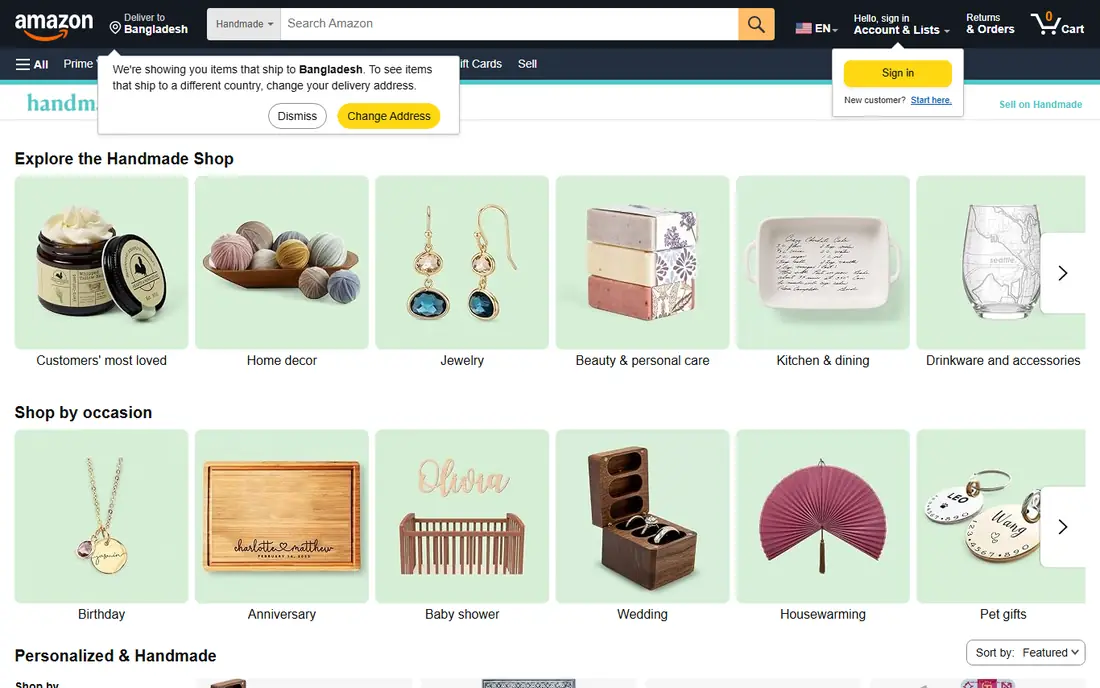
Amazon Handmade fits makers who want built-in demand and are willing to follow Amazon rules to reach it. Buyers already trust Amazon checkout, shipping expectations and returns, which can help a new seller win a first sale. The application process also signals to buyers that items are genuinely handmade. What stands out is the size of the audience, which no independent store can match on day one. The honest catch is the referral fee on each sale and the limited room to build a distinct brand inside Amazon pages. Treat it as a sales channel, and keep your own site or email list for repeat buyers if you can.
- Access to Amazon shoppers
- No monthly fee for the Handmade tier in many cases
- Familiar checkout for buyers
- Referral fee applies to each sale
- Strict handmade rules and application process
- Less brand control than your own store
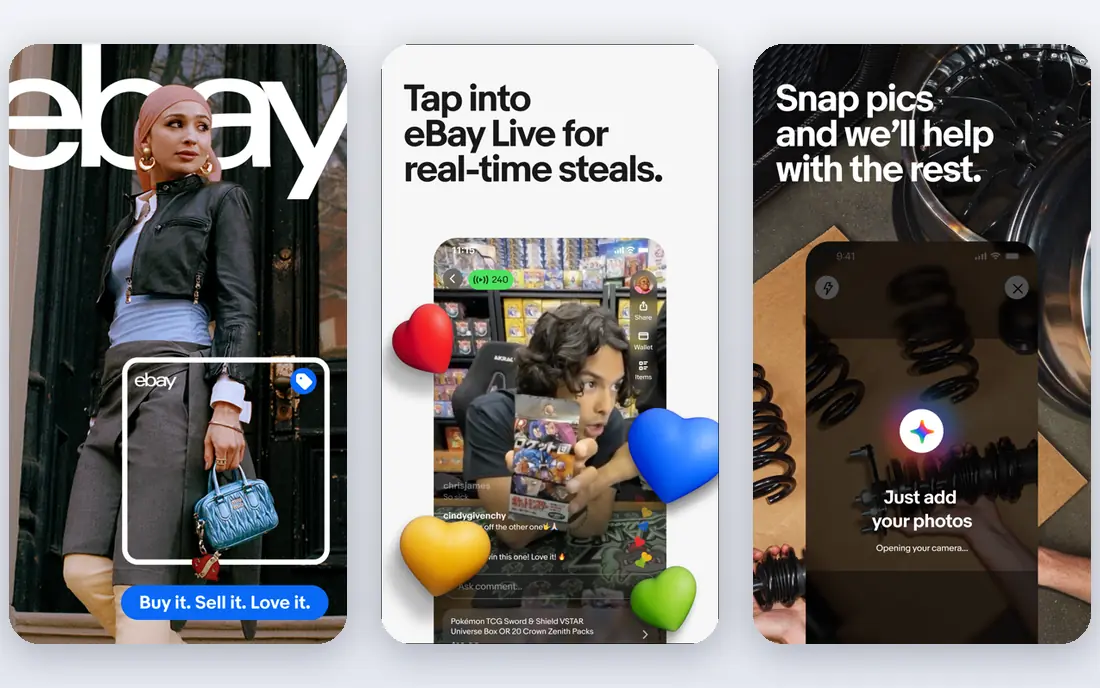
eBay fits sellers with varied stock, vintage finds, craft supplies or one-off pieces that do not fit a neat handmade range. The auction option can suit rare items, while fixed-price listings suit repeat stock. Buyers search eBay with intent, which helps when your item is specific and hard to find elsewhere. What stands out is reach across categories, far beyond handmade goods alone. The honest catch is fees and price pressure: final value fees plus payment fees take a share of each sale, and similar listings can undercut you. Price with fees in mind, and write clear titles and condition notes to reduce returns.
- Very large buyer base
- Auction and fixed-price options
- Strong for vintage, supplies and one-off items
- Final value fees apply
- Competition can push prices down
- Seller policies and returns need close attention
Big Cartel fits artists, bands and makers with a small catalog who want a clean store without a steep learning curve. The free Gold plan covers five products, which is enough to test demand before paying. Setup is quick, themes are tidy, and you still pay only payment processor fees on sales. What stands out is the free starting point and the absence of a platform fee per sale. The honest catch is scale: once you pass five products you need a paid plan, and the top plan still caps at 500 products. If your catalog grows fast, compare the paid plan with Shopify before you rebuild later.
- Free plan for up to five products
- No platform transaction fee
- Simple setup for artists and makers
- Product limits on each plan
- No native blog
- Smaller app range than larger platforms
WooCommerce fits sellers who already use WordPress or who want full ownership of their store and customer data. The core plugin is free, and you can shape checkout, product pages and content in ways a hosted marketplace cannot match. A blog on the same site can also support search traffic over time. What stands out is control without a monthly platform fee for the core software. The honest catch is the hidden work: hosting, security, backups and plugin updates sit with you, and useful extensions can add cost. It suits sellers who are comfortable with WordPress or who have help to run it.
- Core plugin is free
- Full control over design and data
- Large extension range for shipping, payments and bookings
- You pay for hosting, domain and some extensions
- Setup takes more time
- Updates and security are your job
Squarespace fits makers whose work sells on look and story, such as photographers, jewellers and homeware brands. Templates are polished out of the box, and you can pair a shop with a portfolio, journal and about pages without extra tools. That presentation can raise perceived value for higher-priced work. What stands out is design quality with little effort, which matters when photos carry the sale. The honest catch is cost and flexibility: you pay monthly even in slow months, and some selling features sit on higher plans. Check which plan includes the transaction terms and product features you need before you sign up.
- Polished templates
- Built-in blogging and portfolio tools
- Checkout and basic marketing tools included
- Monthly fee applies
- Transaction fees may apply on lower plans
- App range is smaller than Shopify
Wix fits sellers who want to build a store visually and do not want to touch code. The editor lets you place text, images and products where you want them, and the platform adds payments, shipping and discount tools on commerce plans. That ease suits a first store for a small brand. What stands out is how quickly a presentable store can take shape. The honest catch is that the free plan is not a selling plan, so a real shop needs a paid commerce plan. Also, moving to a very different design later can mean rebuilding, so pick a template you can live with for a while.
- Drag-and-drop editor
- Many templates
- Built-in payments, bookings and marketing tools
- Free plan does not support full online payments
- Monthly fee for selling
- Switching templates can be awkward
Storenvy fits small sellers who want both a store page and a chance of marketplace discovery without paying a monthly fee to start. You can list products in the marketplace and run your own storefront from the same account. That mix suits makers testing a range before committing to a paid platform. What stands out is the low barrier to entry for a seller with a tight budget. The honest catch is audience size: Storenvy does not bring the same volume as Amazon or eBay, so you still need your own promotion. Treat marketplace sales as a bonus, and build your own traffic in parallel.
- Free store option
- Marketplace discovery for listed products
- Simple setup for small sellers
- Marketplace traffic is smaller than large rivals
- Premium features cost extra
- Design options are limited
Folksy fits UK-based makers who want a handmade-only marketplace with a local feel. Buyers browsing Folksy expect craft, jewellery, art and homeware, which can mean better-matched traffic than a general marketplace. The community focus also suits sellers who value maker events and shared promotion. What stands out is the focused audience for British handmade work. The honest catch is scale: the buyer pool is smaller than Etsy or Amazon, so sales may be slower outside popular categories. If most of your buyers are outside the UK, a global platform may serve you better.
- UK-focused handmade marketplace
- Clear listing and commission structure
- Community of makers and buyers
- Smaller audience than global marketplaces
- Listing fees apply
- Mainly suited to UK-based sellers
How we picked these
We compared official feature pages, pricing pages, app store listings and public reviews, and we weighed traffic, fees, design control, product limits and ease of setup. We included both marketplaces and independent store platforms, because alternatives to Etsy for sellers split into those two groups. We did not claim hands-on testing, and we treated fees as a starting point to verify, since platforms change plans and referral rates over time.
How to choose an alternative to Etsy
The right choice depends less on the platform name and more on where your buyers come from and how much control you need.
Decide whether you need traffic or control
If you need sales this month, a marketplace with existing shoppers is the safer first step, even with higher per-sale fees. If you already have an audience from social media, email or craft fairs, your own store keeps more of each sale and builds your brand. Many sellers use both: a marketplace for discovery and a store for repeat buyers.
Work out the true cost at your sales level
Add listing fees, transaction fees, payment fees and any monthly plan together for a typical month of sales. A free plan with a high per-sale fee can cost more than a monthly plan once volume grows, while a monthly plan can hurt in a slow month. Run the numbers for 10 sales and for 50 sales before you choose.
Check the rules that affect your products
Handmade marketplaces may require proof of making, restrict resold goods, or limit categories. Store platforms are more flexible, but you must handle taxes, shipping and returns yourself. Read the seller terms for your product type before you move listings, and keep copies of your product photos and descriptions.
Frequently asked questions
What are the best alternatives to Etsy for sellers?
Shopify and WooCommerce suit sellers who want their own store, while Amazon Handmade, eBay and Folksy suit sellers who want marketplace traffic. Big Cartel is a strong free starting point for a small catalog, and Squarespace or Wix suit design-led brands. The best choice depends on your sales volume, audience and budget.
Are there free alternatives to Etsy?
Yes, in the sense that Big Cartel, WooCommerce, Storenvy and some marketplace tiers have free plans or no monthly fee. Payment processor fees still apply on most sales, and marketplaces may charge listing or referral fees. Read the full fee schedule, since free to list does not always mean free to sell.
Which alternative to Etsy has the lowest fees?
Big Cartel has no platform transaction fee, so you pay mainly payment processor fees, which can be the lowest cost for a small catalog. WooCommerce core software is also free, but hosting and extensions add cost. At higher volumes, a monthly store plan can beat a marketplace percentage fee, so compare costs at your own sales level.
Can I sell on Etsy and an alternative at the same time?
Yes, many sellers list on Etsy for discovery while running their own store for repeat buyers, as long as each platform rules allow it. Keep stock levels in sync to avoid overselling, and use different pricing if fees differ by channel. Check each marketplace terms for rules on directing buyers elsewhere.
Is Shopify better than Etsy for handmade sellers?
Shopify gives more brand control, customer data and room to grow, but it gives no built-in marketplace traffic. Etsy gives discovery and a ready audience, but charges per listing and per sale and limits brand control. Sellers with their own audience often prefer Shopify, while new sellers often start on a marketplace.
Do I need my own website to leave Etsy?
No, you can move to another marketplace such as Amazon Handmade, eBay or Folksy without building a store. A store platform such as Shopify, Squarespace, Wix or WooCommerce does give you a website, which helps with branding and repeat sales. Start with the channel that matches where your buyers already shop.
Sources we checked (9)

Online Jobs is an independent blog about careers, online work, learning new skills and the tools that help people earn. More about us.
Keep reading
All posts
Zoom Alternatives
Zoom alternatives compared for 2026: Google Meet, Microsoft Teams, Webex, Jitsi and more for free calls, large meetings and webinars for teams and classrooms.
Top Rated Poster Maker Software
Top rated poster maker software compared for 2026: Canva, Adobe Express, VistaCreate, PosterMyWall and more for events, sales and classrooms for US users.
Surfshark Alternatives
Looking for Surfshark alternatives? We compare 8 VPN services on price, privacy, streaming, and device limits to help you find a VPN that fits your needs.