Constant Contact Alternatives in 2026: 8 Tools Compared

How we put this together: we compare official feature and pricing pages, app store listings, privacy policies and public user reviews. Prices change, so check the provider's site before you pay.
Key takeaways
- Mailchimp suits a straightforward switch from Constant Contact, with a familiar interface and many integrations.
- Brevo suits budget-conscious senders, since pricing is based on email volume rather than list size.
- MailerLite suits small businesses that want a clean editor and a generous free plan.
- ActiveCampaign suits teams that need deeper automation and CRM features as they grow.
- Nonprofits should check discounts directly, since several tools offer reduced pricing for registered charities.
Quick comparison
| Name | Who it suits | Starting price | Free option | |
|---|---|---|---|---|
 Mailchimp | Straightforward switch | See website | Yes | Visit |
 Brevo | Value volume pricing | See website | Yes | Visit |
 MailerLite | Clean budget editor | See website | Yes | Visit |
 ActiveCampaign | Advanced automation | See website | No | Visit |
 Klaviyo | E-commerce email | See website | Yes | Visit |
 Kit | Creators and newsletters | See website | Yes | Visit |
 GetResponse | All-in-one marketing | See website | Yes | Visit |
 AWeber | Simple small business email | See website | Yes | Visit |
The best constant contact alternatives
Constant Contact is known for simple email, event tools and phone support, but its pricing rises with list size and its automation is lighter than some rivals. The alternatives below cover the main reasons people switch: lower cost, better automation, e-commerce features, creator tools, or a simpler editor. All of them support the core job of sending newsletters and campaigns to a permission-based list.
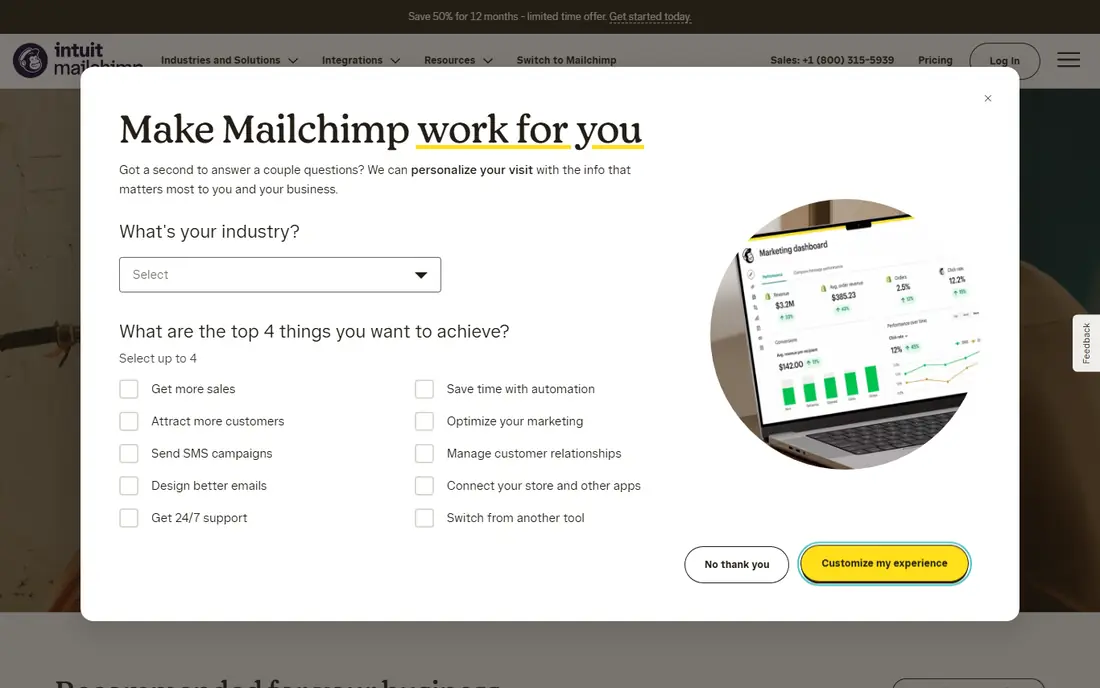
Mailchimp is the most obvious alternative to Constant Contact, and for many small businesses it is the easiest switch. Its editor is familiar, its template library is large, and it connects with many website, shop and CRM tools. If your team already knows Mailchimp from another job, training time is close to zero.
The main watch point is pricing. Mailchimp charges by contacts, so a growing list can push you into a higher tier even if you send rarely. Check how unsubscribed and inactive contacts count toward your tier before you migrate. Mailchimp suits businesses that send regularly, use several integrations, and want a well-known tool with plenty of help articles.
- Familiar interface
- Many integrations
- Templates, automation and analytics in one place
- Pricing rises with list size
- Some advanced features need higher plans
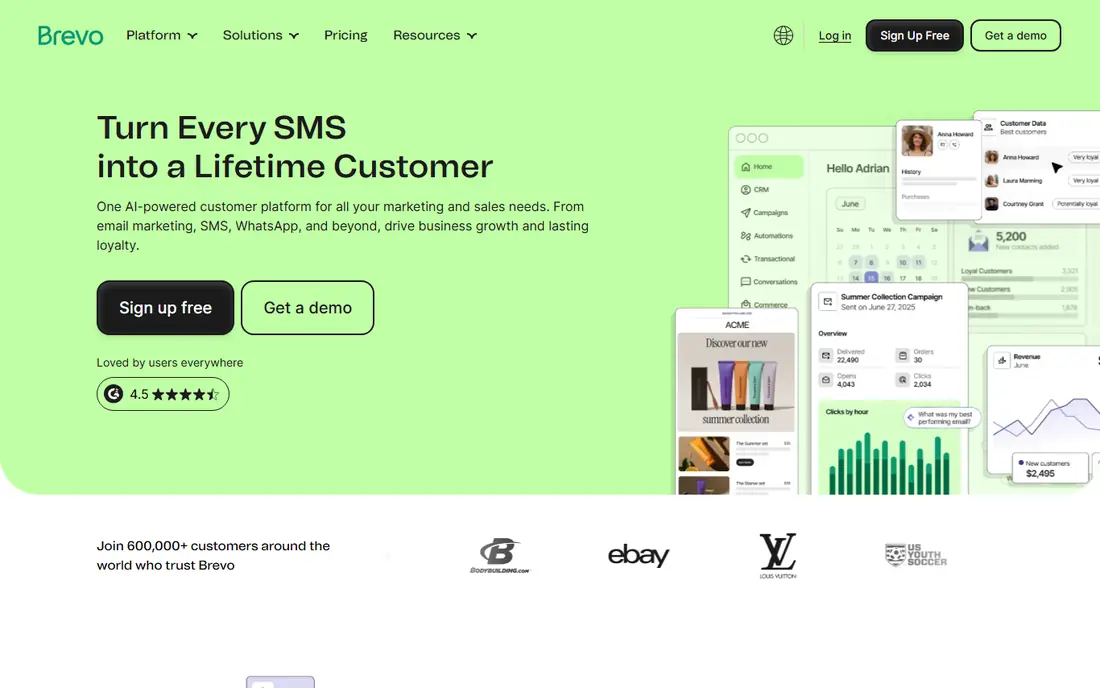
Brevo, formerly Sendinblue, is the best value pick for senders with a large list but modest sending volume. Its pricing is based on how many emails you send, not how many contacts you store, so a list of ten thousand infrequent readers costs far less than on a contact-based tool. It also adds SMS, WhatsApp and a basic CRM in the same account.
Design is the trade-off. Brevo templates are workable but less refined than Mailchimp or MailerLite, so brand-heavy senders may need more design time. Brevo suits nonprofits, clubs and small businesses with large lists, infrequent sends, or a need for SMS alongside email. Check the daily sending limit on the free plan before relying on it for a large campaign.
- Pricing by email volume with unlimited contacts on many plans
- Email plus SMS and CRM
- Generous free tier
- Template design is less polished than some rivals
- Learning curve for advanced automation
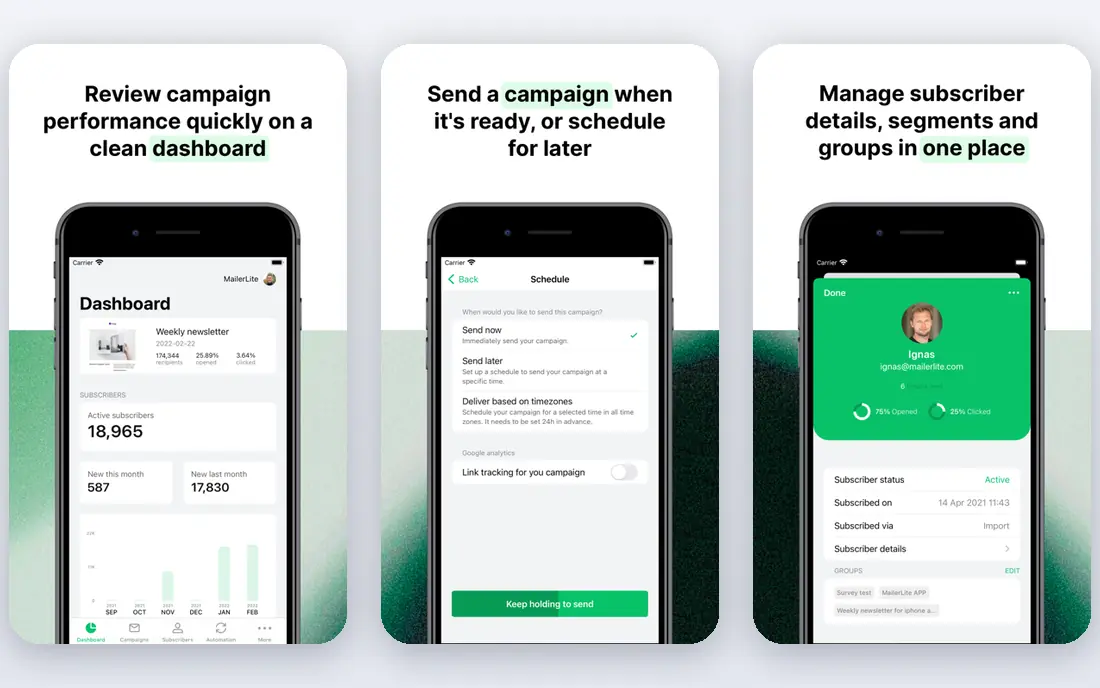
MailerLite is a favourite among small businesses that want a modern editor without a high price. Its drag-and-drop builder is clean, its automation covers welcome series and basic journeys, and its free plan covers a useful number of subscribers and sends. Landing pages and signup forms are included, so you can grow a list without a separate tool.
New accounts go through an approval review, which can delay a first send, so plan migration timing around it. MailerLite suits bloggers, small shops and service businesses that send newsletters and simple automations. It also offers a nonprofit discount, which is worth asking about if you are a registered charity. For a free alternative to Constant Contact, MailerLite is a strong first test.
- Clean modern editor
- Generous free plan
- Automation, landing pages and forms included
- Approval process for new accounts can take time
- Fewer native integrations than Mailchimp
ActiveCampaign is the pick when email is part of a sales process, not just a newsletter. Its automation builder supports branching journeys, scoring, tagging and CRM pipelines, so a lead can move from signup to sales follow-up without manual work. That depth suits agencies, B2B firms and growing service businesses with a longer sales cycle.
The cost is complexity and price. There is no free plan, and the interface has more to learn than Mailchimp or MailerLite. ActiveCampaign suits teams that will use automation weekly and that have someone to own it. If you only send a monthly newsletter, a simpler and cheaper tool will serve you better.
- Deep automation and segmentation
- Built-in CRM
- Strong for sales-led businesses
- No free plan
- Higher price and steeper learning curve than simple newsletter tools
Klaviyo is built for online shops. Its integrations with Shopify and other e-commerce platforms pull order, browsing and product data into email flows, so you can send abandoned cart reminders, post-purchase follow-ups and product recommendations with little manual work. Segmentation by purchase history is far deeper than a general newsletter tool offers.
That power comes at a price, and costs rise as your list and sending volume grow. Klaviyo suits stores that earn a clear share of revenue from email and that need e-commerce flows to run automatically. A service business or a club newsletter will find Klaviyo more complex and more costly than it needs.
- Deep Shopify and e-commerce integrations
- Strong flows for abandoned carts and post-purchase
- Detailed segmentation
- Pricing rises fast with list size
- Overkill for simple newsletters
Kit, formerly ConvertKit, is built for creators, writers and newsletter publishers. Its focus is on growing an audience, tagging subscribers by interest, and sending clean text-led emails that reach the inbox. The free plan covers a large number of subscribers, which makes it attractive for a new newsletter that is still growing.
Design is deliberately simple, so Kit is not the tool for highly visual brand campaigns. It also lacks the deep e-commerce flows of Klaviyo. Kit suits authors, podcasters, coaches and newsletter writers who value deliverability and simplicity over fancy templates. If your emails are mostly words and links, Kit is a natural Constant Contact alternative.
- Creator-focused tools
- Generous free plan for subscribers
- Simple automations and landing pages
- Design options are simpler than Mailchimp
- Less suited to complex e-commerce flows
GetResponse combines email with landing pages, funnels, automation and webinars in one account. That breadth suits small businesses that want to run a campaign from signup to sale without buying several tools. Its automation and segmentation are stronger than Constant Contact, while its editor remains approachable for a small team.
The interface can feel busy, since so many tools share one dashboard. Pricing also varies by tier, so check which features sit on the plan you actually buy. GetResponse suits businesses that run webinars or lead funnels alongside email, and that want one bill for several marketing jobs.
- Email plus landing pages, funnels and webinars
- Automation and list tools
- Free plan available
- Interface feels busy
- Pricing varies a lot by feature tier
AWeber is a long-running email tool that suits small businesses that want simplicity and reliable support. Its editor is straightforward, its automations cover welcome series and basic journeys, and its free plan suits a small list getting started. AWeber also offers landing pages and signup forms, so a new business can start collecting subscribers quickly.
AWeber feels older than MailerLite or Kit, and its automation is less deep than ActiveCampaign. That simplicity is the point for many users: fewer features to learn, fewer settings to get wrong. AWeber suits small businesses, clubs and solo operators who send regular newsletters and want a dependable tool with human help when needed.
- Simple editor and automations
- Good support
- Free plan for small lists
- Design and automation feel older than MailerLite
- Fewer modern integrations
How we picked these
We shortlisted tools that are widely used as Constant Contact alternatives in 2026, cover budget, automation, e-commerce and creator needs, and publish clear free or paid plans on their own sites. We included nonprofit-relevant options, since many Constant Contact users are charities and clubs. Prices change with list size and tier, so we list them as See website.
How to choose the best constant contact alternative
Start with why you are leaving. If cost is the reason, compare Brevo and MailerLite at your actual list size and sending frequency, since volume pricing and contact pricing give very different bills. If automation is the reason, test ActiveCampaign or GetResponse with one real journey. If you run a shop, test Klaviyo with your store data. If you are a creator, test Kit with a simple newsletter and landing page.
Next, plan the migration. Export contacts, tags and past campaigns from Constant Contact, clean duplicates and inactive addresses, and set up signup forms before you switch. Send a test campaign to a small segment first, check deliverability and formatting, and only then move the full list. For nonprofits, ask each vendor about discounts and eligibility before you pay, since terms differ. The best alternative is the one your team will use every week, at a price that still makes sense when your list doubles.
Frequently asked questions
What is the best alternative to Constant Contact?
Mailchimp is the easiest general switch, Brevo is the best value for large lists with low sending volume, and MailerLite is the best budget editor. The best constant contact alternative for you depends on list size, sending frequency and whether you need automation or e-commerce features.
What is a free alternative to Constant Contact?
MailerLite, Brevo, Mailchimp, Kit and AWeber all offer free plans with limits on subscribers or sends. Brevo is notable for unlimited contacts on its free tier with a daily sending limit, while Kit offers a generous subscriber limit. Check limits carefully, since a free plan that caps sends can fail on a large campaign day.
What are alternatives to Constant Contact for nonprofits?
MailerLite, Mailchimp and Brevo all offer nonprofit discounts or generous free plans, with terms that vary by vendor and country. Ask each vendor directly about eligibility, since some discounts apply only to registered charities. Also compare sending limits, since a nonprofit with a large donor list may do better on volume pricing.
Is Mailchimp better than Constant Contact?
Mailchimp offers broader integrations and stronger automation on many plans, while Constant Contact is known for event tools and phone support. Mailchimp suits businesses that want a larger ecosystem, while Constant Contact may still suit users who rely on its event features. Test both editors with a real campaign before deciding.
How do I switch from Constant Contact?
Export your contacts and tags, clean the list, set up forms and templates in the new tool, and send a test to a small segment first. Keep Constant Contact active until the first full campaign has sent successfully from the new tool, so you can fall back if deliverability or formatting fails.
Sources we checked (8)

Online Jobs is an independent blog about careers, online work, learning new skills and the tools that help people earn. More about us.
Keep reading
All posts
Best Tools for AI Mode
Compare the best tools for AI Mode visibility, from Google Search Console to Semrush, Ahrefs Brand Radar, Peec AI, and Otterly, with prices and limits.
Best SEO Tools for Beginners
Compare the best SEO tools for beginners in 2026, from Google Search Console and Semrush to Ubersuggest and Yoast, with free plans, prices, and a workflow.
Best SEO Reporting Software
Best SEO reporting software compared for 2026: AgencyAnalytics, Semrush, Ahrefs, SE Ranking and more for agencies, clients and in-house teams in the US.