Best Workout Apps for Men in 2026: 8 Apps Compared


Free guided workouts for beginners and general fitness · Starting price: Free
How we put this together: we compare official feature and pricing pages, app store listings, privacy policies and public user reviews. Prices change, so check the provider's site before you pay.
Key takeaways
- Nike Training Club is the strongest free starting point for guided workouts at home or in a gym.
- Fitbod and Jefit suit lifters who want planned sessions or detailed logging, but they work in different ways.
- Strava fits runners and cyclists who value route tracking and a social training record.
- Hevy keeps gym logging simple, while FitOn and Freeletics cover guided and bodyweight training.
- The best free workout apps for men are often enough at first, so check the free tier before paying for a plan.
Quick comparison
| Name | Who it suits | Starting price | Free option | |
|---|---|---|---|---|
| Nike Training Club | Free guided workouts for beginners and general fitness | Free | Yes | Visit |
 Fitbod | Adaptive strength plans based on equipment and recovery | See website | See website | Visit |
 Jefit | Detailed gym logging and ready-made routines | See website | Yes | Visit |
 Strava | Running, cycling and outdoor activity tracking | See website | Yes | Visit |
 Hevy | Simple, fast strength workout logging | See website | Yes | Visit |
 FitOn | Free guided classes across cardio, strength and yoga | See website | Yes | Visit |
 Freeletics | Bodyweight training with minimal equipment | See website | See website | Visit |
 Apple Fitness+ | Guided classes for people who use Apple devices | See website | See website | Visit |
The best workout apps for men
We compared apps that cover strength, cardio, home training and gym logging, with a focus on what each one does well and where it falls short. Some apps guide every session, while others give you a logbook and leave the plan to you. That difference matters more than any single feature list, because the app you open most often is usually the one that fits how you already train.
Nike Training Club
Who it suits: Free guided workouts for beginners and general fitness
Nike Training Club gives you guided sessions across strength, cardio, yoga and mobility without asking you to pay for the core library. Each workout is led on video, with clear cues on form and pace, which helps when you are training alone at home or trying a new type of session. The range of lengths also helps on busy days, since a short session still counts as a useful workout. The app works best as a guided companion rather than a full training log. If you follow a multi-week program, you get structure and a clear next session, but lifters who want to track every set, rep and personal best in fine detail may want a second app for logging. For a free start, though, it is hard to beat, and it suits the best free workout apps for beginners search in a direct way.
- Large free workout library, guided video sessions, multi-week programs, no subscription for core workouts
- Limited detailed strength progression tracking, less suited to lifters who want full program control
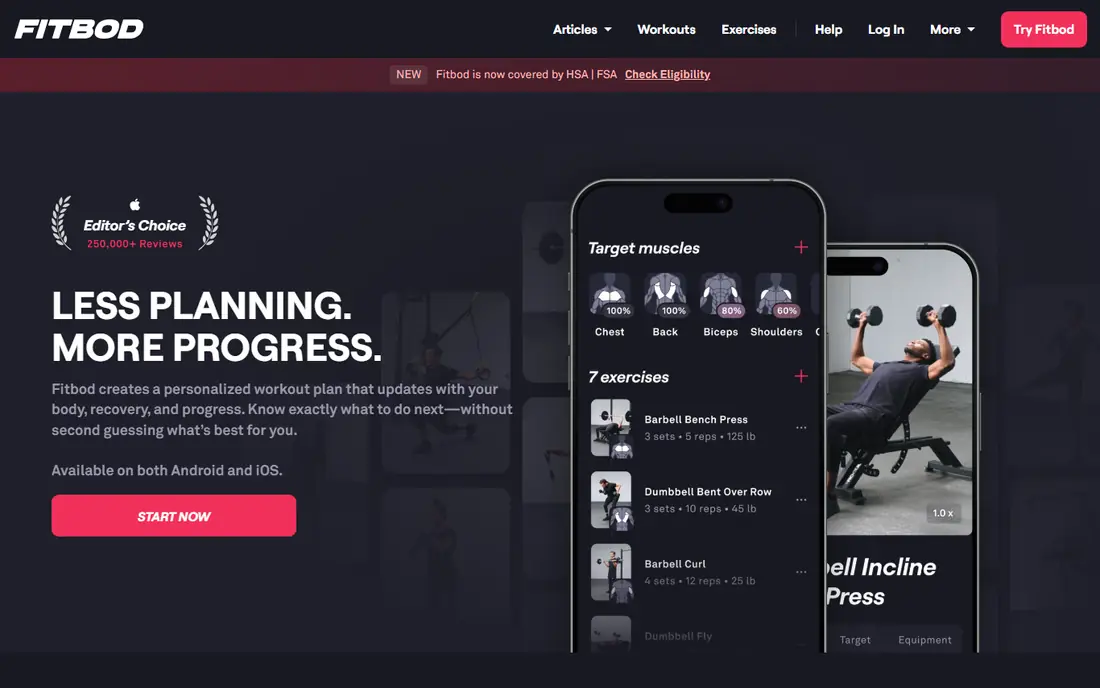
Fitbod builds a strength session from your available equipment, past workouts and the muscle groups you have trained recently. That approach removes the daily question of what to do next, and it adjusts the plan as your training history grows. For gym users, the equipment filter is a practical benefit, since a home dumbbell session looks very different from a full gym session. The trade-off is that the free access is limited, so regular users will need to check the current plan before committing. Some beginners may also find the settings and exercise options take a session or two to learn. Once it is set up, however, Fitbod is one of the most hands-off ways to follow a strength plan without writing one yourself.
- Personalised workout generation, equipment filtering, muscle recovery awareness, gym and home options
- Paid access limits the full plan, interface can feel busy at first
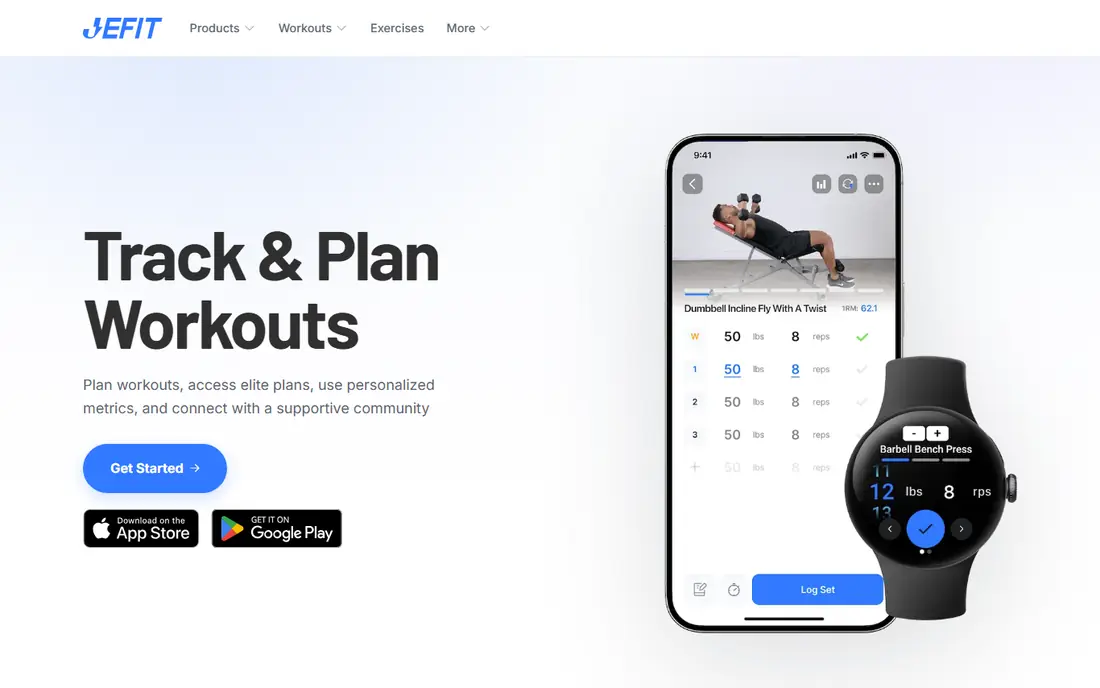
Jefit is built for people who like to log their training in detail. You can pick a ready-made routine, build your own, and record sets, reps and weights as you go. Over time, the charts show how your lifts are changing, which makes it easier to spot a plateau or a steady gain. That record is useful for lifters who train with a clear plan and want proof of progress. The app is less about guided video coaching and more about your own numbers. If you want someone to talk you through each move, another app on this list will suit you better. For lifters who already know the main lifts and want a dependable logbook, Jefit remains a solid and affordable choice.
- Large exercise library, routine builder, progress charts, free tier for logging
- Design feels dated in places, some advanced tools sit behind paid plans
Strava tracks runs and rides with GPS, maps your route, and records pace, distance and elevation in a clean activity feed. Many runners use it as a training diary, while others use the social side to stay consistent, since seeing friends train can be a quiet nudge on a low-motivation day. Segments add a competitive edge for people who like to compare times on a regular route. It is not a strength program, and it does not replace a gym log. Its strength is in outdoor cardio, where the map, the history and the community all work together. If running or cycling is your main training, Strava is the easiest pick here, and the free tier covers the core tracking most people need.
- GPS route tracking, segment records, social motivation, wide device support
- Strength training tools are limited, some analysis features need a paid plan
Hevy keeps the gym experience simple. You open a routine, log each set, and move on, without wading through menus between exercises. A built-in rest timer helps you keep pace, and the history view shows past sessions for the same routine. That simplicity is the point, and it suits lifters who want speed over extra features. The app does not try to coach you through each lift or build a fully adaptive plan. You bring the routine, and Hevy records it well. For many gym users, that is enough, and it explains why Hevy is often named among the best free workout apps for men who lift regularly.
- Clean logging interface, routine templates, rest timer, workout history
- Limited guided coaching, fewer program tools than Fitbod
FitOn offers guided classes that cover cardio, strength, yoga and stretching, with many sessions available without payment. The variety helps when you want to mix training styles across the week, rather than following one narrow plan. Short classes also make it easier to train on days when time is tight. Like other guided class apps, FitOn is weaker on long-term strength progression than a dedicated lifting log. It is best for general fitness, home training and building a regular habit. If you want free guided sessions and you like class-style training, it is a strong companion to a simple logging app.
- Free class library, varied class styles, short and long sessions, no equipment options
- Less strength progression tracking, class quality varies by instructor
Freeletics is built around bodyweight training, so it suits people who train at home, in a park, or while travelling. The coach-style plans set sessions based on your goals and feedback, and many workouts are short and intense. That format works well for people who want a clear session without setting up a gym routine. The intensity is a point to consider. Not every session will suit a beginner, and users with joint issues or specific training needs should check the session style first. For fit users who want bodyweight work without equipment, Freeletics gives a structured path that is easy to follow from a phone.
- Bodyweight-focused plans, coach-style programming, short intense sessions, works with little space
- High-intensity style may not suit all users, full coach features need a paid plan
Apple Fitness+ offers guided classes in strength, high-intensity interval training, yoga, dance, cycling and more, with metrics on screen when paired with an Apple Watch. The production quality is high, and the range means different members of a household can pick different classes from the same plan. New sessions keep the library fresh for regular users. The main limit is the ecosystem. If you do not use Apple devices, much of the value is lost, and lifters who want a detailed strength program may still need a logbook. For Apple users who like class-based training, however, it is a polished and convenient option. Note for health: these apps support general fitness and do not replace medical advice, so talk to a clinician about any health condition or new intense program.
- Wide class range, Apple Watch integration, new sessions added regularly, family sharing options
- Needs Apple devices for the full experience, no detailed barbell program builder
How we picked these
We started with apps that are widely available on major app stores, cover different training styles, and offer a usable free tier or a clear paid plan. We favoured apps with a clear purpose, such as guided classes, strength logging, or cardio tracking, over apps that try to cover every style thinly. We also looked at whether an app works for beginners as well as regular gym users, and whether its pricing is easy to check on the vendor site or app listing. We did not rank these apps by a single score, because a runner and a lifter need different tools. Instead, we grouped them by training style and noted the trade-off in each case. If an app needed a paid plan for its core benefit, we said so, and where pricing was not confirmed from the vendor listing at the time of writing, we used See website rather than guessing a figure.
What to look for when choosing a workout app
Start with your main training style, then check the rest. A runner needs GPS accuracy and route history, while a lifter needs easy logging and a clear record of past weights. A home trainer needs guided sessions that work with little equipment and little space. Matching the app to that one main use will matter more than a long feature list you may never open. Next, check cost and commitment. Free tiers vary a lot, so test the free version for a week before paying, and check what is locked behind a plan. Also check device support, offline access if you train without a signal, and how easy it is to export or view your history. A good app should make it easy to keep training, not add admin work to every session.
Frequently asked questions
What is the best workout app for men?
There is no single best app, because the right choice depends on your training style. Nike Training Club suits free guided workouts, Fitbod suits adaptive strength plans, and Strava suits runners and cyclists. Pick the app that matches your main training first, then add a second app only if you need a different tool for logging or classes.
What is the best free workout app for men?
Nike Training Club is a strong free choice for guided workouts, while Hevy and Jefit offer useful free tiers for gym logging. FitOn also offers free guided classes across several styles. The best free workout apps without subscription limits vary by style, so check what the free tier includes before you rely on it for a full program.
Is a free workout app enough for beginners?
For many beginners, yes. Guided free apps give structure, video cues and a range of session lengths, which helps you build a habit without paying. As your training gets more specific, you may want a paid plan for adaptive programming or deeper tracking. Start free, train for a few weeks, and only pay when you hit a clear limit.
Do I need a gym to use these apps?
No. Nike Training Club, FitOn and Freeletics all include bodyweight or low-equipment sessions that work at home. Fitbod can also build sessions from the equipment you have at home. Gym apps like Jefit and Hevy still work at home if you log dumbbell or bodyweight work, but they are designed with gym routines in mind.
Can one app cover strength and cardio?
Some apps cover both at a general level, but most do best at one style. A guided class app can mix cardio and light strength, while a running app will not build a strength plan. Many people use one app for cardio and one for lifting, which keeps each record clean and easy to read.
Are workout apps safe for people with health conditions?
Workout apps are general fitness tools and are not medical devices. They do not diagnose or treat health conditions, and intense programs may not suit everyone. If you have a health condition, an injury, or concerns about a new program, speak to a clinician before starting, and stop if you feel pain or unusual symptoms.
Sources we checked (8)

Online Jobs is an independent blog about careers, online work, learning new skills and the tools that help people earn. More about us.
Keep reading
All posts
n8n Alternatives
n8n alternatives compared for 2026, with Zapier, Make, Activepieces, and more, covering visual builders, code steps, self-hosting, and pricing models.

eBay Alternatives
Looking for ebay alternatives? We compared 9 marketplaces for sellers on fees, buyer reach, categories and ease of listing, to help you sell with confidence.

ZoomInfo Alternatives
The best ZoomInfo alternatives in 2026, compared on price, free plans, data coverage, and which tool fits small teams or large sales teams best in detail.