Best Weightlifting Apps in 2026: 8 Apps Compared

How we put this together: we compare official feature and pricing pages, app store listings, privacy policies and public user reviews. Prices change, so check the provider's site before you pay.
Key takeaways
- Strong is our pick for fast, simple logging, while Fitbod suits lifters who want each session planned for them.
- Hevy gives the best free social features, and JEFIT gives the deepest exercise library and progress charts.
- Caliber and Boostcamp are stronger choices when you want a structured program rather than a blank log.
- Most lifters should start free, then pay only for the feature they actually miss, such as charts, routines or coaching.
Quick comparison
| Name | Who it suits | Starting price | Free option | |
|---|---|---|---|---|
 Strong | Fast gym logging | $4.99 per month | Yes | Visit |
 Hevy | Social strength logging | $2.99 per month | Yes | Visit |
 JEFIT | Large exercise library | $12.99 per month | Yes | Visit |
 Fitbod | Planned sessions | $12.99 per month | Free trial | Visit |
 Caliber | Coach-designed programs | See website | Yes | Visit |
 Boostcamp | Proven training programs | $14.99 per month | Yes | Visit |
 Nike Training Club | Free guided workouts | Free | Yes | Visit |
 Alpha Progression | Precise progression targets | $12.99 per month | Yes | Visit |
The best weightlifting apps
These apps cover the main ways people train with weights, from a blank log you fill in yourself to a full plan that tells you what to lift next. We compared official feature pages, pricing pages and app store listings, and we kept the focus on logging speed, program quality and what the free plan really includes.
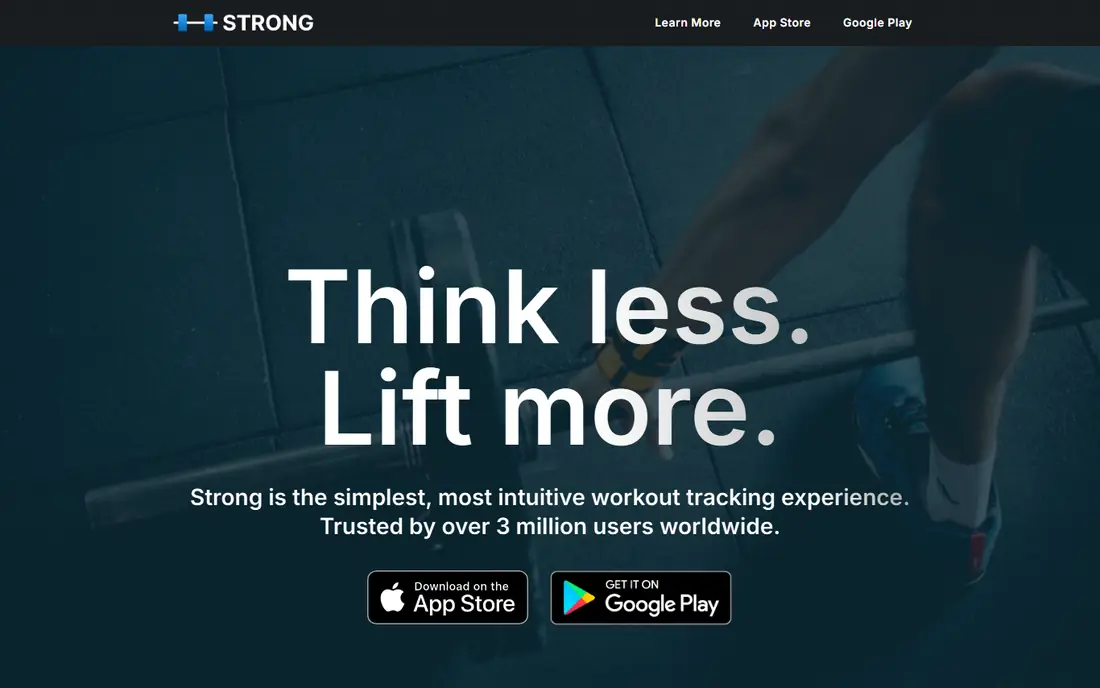
Strong is built around one job, and it does that job with very little friction. You open a workout, tap through sets and reps, and move on to the next lift without wading through menus. That speed matters in a busy gym, where a slow app can break your rest timing and your focus. The history view also makes it easy to see what you lifted last time, so progression is a quick check rather than a search.
The trade-off is that Strong expects you to bring your own plan. If you already follow a barbell routine, that is a strength, because nothing gets in your way. If you want the app to choose your exercises, you will need to look elsewhere. The free plan covers core logging, while Pro adds unlimited routines and fuller export options. For most self-directed lifters, the free plan is a fair place to start.
- Very fast set entry
- Clear history and charts
- Works well on Apple Watch
- Limited built-in programs
- Some charts and exports sit behind Pro
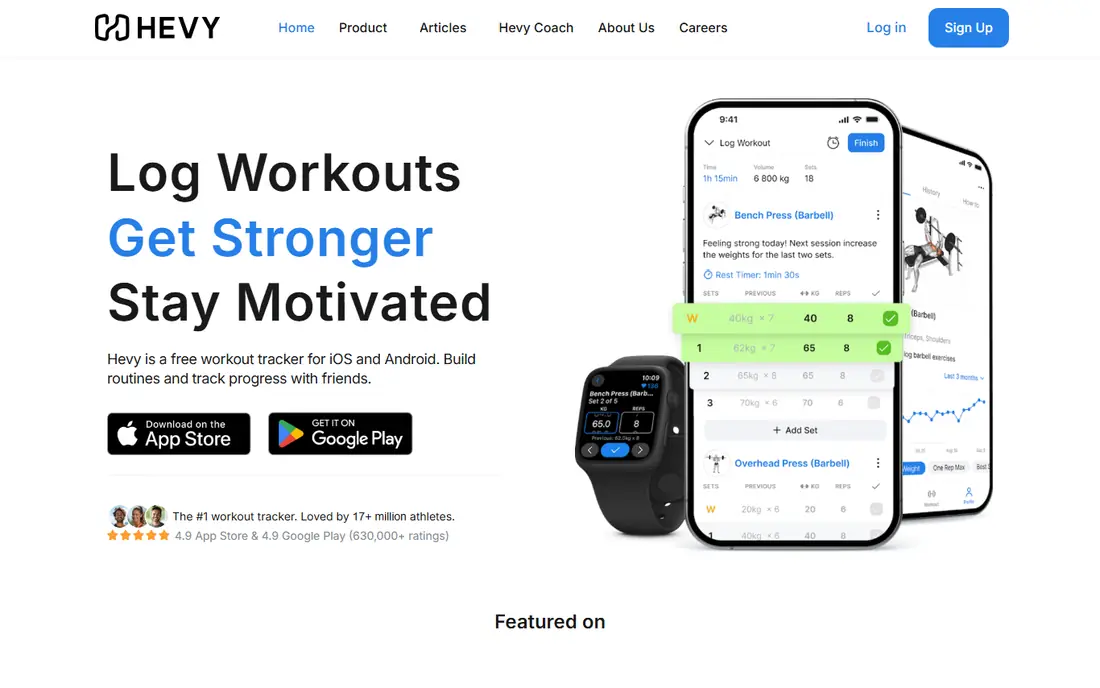
Hevy feels like a modern gym log with a community layer on top. Logging is quick, templates are easy to reuse, and the feed lets you follow friends and see their sessions. That social pull can help on weeks when motivation dips, because training stops feeling like a solo spreadsheet. Progress photos and body measurements also sit alongside lifting data, which gives a fuller picture than weight on the bar alone.
The free plan is generous for everyday logging, but it caps how many routines you can save. Lifters who rotate many programs may hit that limit and need Pro. Hevy also does less automatic planning than Fitbod or Caliber, so you still need a sense of what to train. If you like sharing progress and keeping logging simple, it is a strong middle ground between a plain log and a full coaching app.
- Clean logging design
- Social feed for friends
- Progress photos and measurements
- Free plan limits routines
- Advanced training tools sit behind Pro
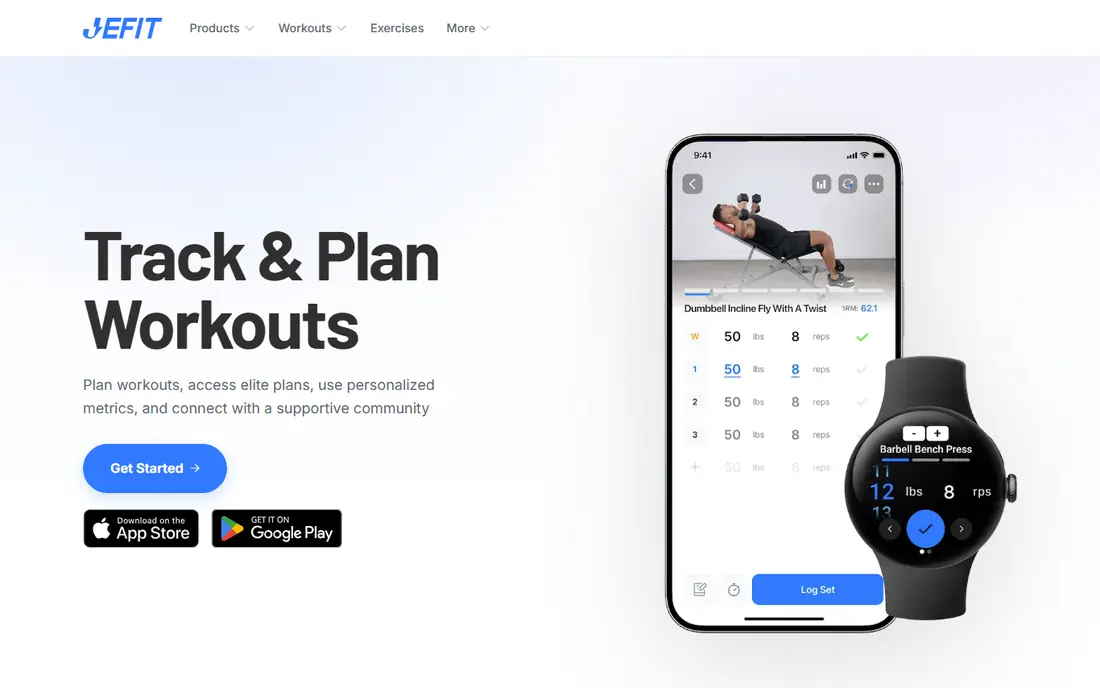
JEFIT suits lifters who like data and choice. Its exercise library is wide, with instructions that help when you are trying a new movement, and its charts break progress down by muscle group and exercise. Community programs add another layer, because you can start from a routine other lifters have built and adapt it to your gym. For people who track body measurements as well as lifts, the combined view is useful.
The downside is density. New users can feel lost among menus, programs and settings, and the free version carries ads. Elite removes ads and adds deeper analysis, but the monthly price is steep if you only log three sessions a week. JEFIT is best for lifters who will actually open the charts and use the library, rather than people who just want a fast timer and a log.
- Very large exercise database
- Detailed progress analysis
- Many community programs
- Interface feels busy
- Elite price is high for casual lifters
Fitbod answers a different question from Strong or Hevy. Instead of asking what you plan to do, it builds a session based on the equipment you have, the muscles you trained recently and your stated goals. That removes the planning step many lifters skip, and it keeps variety high without requiring you to design a program. The app also adjusts suggested weights as your logged performance changes, which helps steady progression.
The catch is cost and control. There is no lasting free tier, only a trial, so you are paying from the start. Lifters with a fixed program they love may also find the auto-generated sessions less precise than a coach-written plan. Fitbod is our pick for people who train regularly, have varied equipment access and want the thinking done for them, provided the monthly price fits their budget.
- Builds each session from your equipment and recovery
- Varied exercise selection
- Clear progression logic
- No ongoing free plan
- Price is high compared with simple loggers
Caliber blends a free log with programs designed by coaches, which makes it a good bridge for lifters who have outgrown random workouts. The programs give structure across weeks, rather than a single session at a time, and the logging tools keep the daily work simple. That combination suits beginners who want guidance and intermediate lifters who want a plan they can trust without hiring a coach in person.
Paid coaching is where Caliber goes further, with more personal feedback and program changes. That level costs more and will not suit every budget, so check the current price before you commit. The free logging alone is still useful, but the real value here is the program library. If you want direction without giving up control of your training days, Caliber deserves a trial week.
- Structured strength programs
- Free logging
- Coaching options for deeper support
- Paid coaching costs more
- Less flexible for fully custom routines
Boostcamp is for lifters who want to follow a named program and see how others are progressing on the same plan. Its library includes many well-known strength routines, and each program has its own community space where lifters share notes and questions. Tools such as a plate calculator and rest timer remove small gym frictions, and the workout builder lets you adjust a program without starting from scratch.
The free tier covers a large part of the library, which makes it easy to test before paying. Pro adds fuller tools and removes limits, but at the monthly price shown here it is a considered purchase. Boostcamp is less appealing if you prefer to invent every session yourself, because its design pushes you toward a program. For lifters who like structure and shared experience, that push is the point.
- Large library of known programs
- Plate calculator and rest timer
- Community forums per program
- Pro price is high
- Interface is program-first, not a free-form log
Nike Training Club is the best free starting point on this list, and it is the easiest to recommend to someone who is unsure about paying. The workouts are guided by video, cover strength, cardio, yoga and mobility, and require little or no equipment in many cases. That breadth makes it useful for general fitness, home training and days when you cannot get to a gym.
It is not, however, a dedicated weightlifting log. You will not get the same set-by-set barbell history, one-rep-max tracking or program progression as Strong, JEFIT or Fitbod. Think of it as a guided workout library rather than a strength training system. Pair it with a simple log if you start lifting heavy, or use it alone if guided sessions are what keep you training consistently.
- Fully free guided workouts
- Good video coaching
- Strength, yoga and mobility in one app
- Not a detailed barbell log
- Limited progression tracking for heavy lifting
Alpha Progression focuses on the detail many lifters care about most, which is the exact weight to use for the next set. It sets targets based on your past performance and planned progression, so you spend less time guessing between sets. The interface stays clean, charts are easy to read, and the app avoids clutter that can slow down a session. That precision appeals to lifters who train with a clear strength goal.
The smaller community and program library are the limits. You will not find the same breadth of shared programs as Boostcamp or JEFIT, and social features are modest. Alpha Progression is best for lifters who already know how they want to train and want the app to handle the numbers. If that sounds like you, the free tier is a low-risk way to test whether its targets match your style.
- Clear per-set weight targets
- Clean interface
- Useful progression charts
- Smaller community than larger apps
- Fewer guided programs
How we picked these
We compared official feature pages, pricing pages and app store listings for each app, and we checked that each one is still available for iOS or Android in 2026. We favoured apps that truly support weightlifting, with set, rep and weight logging or a strength program, rather than general step counters or diet apps. Price, free plan limits, program depth and logging speed carried the most weight in our shortlist.
We did not claim hands-on testing, and we did not invent ratings or user counts. Where pricing varied by billing period, we used the monthly figure shown on the vendor page or app store listing, and we marked prices as See website when we could not confirm a single current figure. Prices change, so check the app store listing before you subscribe.
What to check before you pay for a lifting app
Start with your training style, not the feature list. A blank log suits a lifter with a set program, a planned app suits a lifter who wants sessions built for them, and a program library suits a lifter who wants to follow a known routine. Write down how many days you train, what equipment you have and whether you train at home or in a gym, then match those answers to the shortlist above.
Free plan first
Use the free plan or trial for at least two full training weeks before paying. That gives you time to learn the logging flow, test rest timers and check whether charts actually help you. Note any routine caps, ad interruptions or missing exports, because those limits matter more after a month than on day one.
Progression and safety
Look for clear progression tools, such as suggested weights, volume charts and one-rep-max estimates, and check that the app lets you swap an exercise when equipment is busy. This is not medical advice. If you have an injury, a health condition or you are new to heavy lifting, get guidance from a qualified coach or clinician before you follow a demanding program, and learn safe form first.
Price over a year
Compare the annual cost, not just the monthly headline. A small monthly fee can add up over a year, and a lifetime option can be good value only if you are sure you will stay with the app. Check cancellation terms in the app store before you commit, and set a reminder to review the subscription after three months.
Frequently asked questions
What is the best strength training app for beginners?
Nike Training Club is the easiest free start for guided sessions, while Caliber gives more structure for strength work. Beginners who want a simple log can also start with Strong or Hevy free and add a program later. Pick the app you will open consistently, because a plan you follow beats a perfect plan you ignore.
What is the best weight lifting app for tracking progress?
Strong, JEFIT and Alpha Progression all track sets, reps and weights with charts, but they differ in depth. Strong is fastest for daily logging, JEFIT gives the most detailed muscle and exercise breakdowns, and Alpha Progression focuses on precise next-set targets. Try the free tier of each for a week and keep the one whose charts you actually check.
Is there a best app for weightlifting that is free?
Yes, for guided workouts Nike Training Club is free, and for logging Strong, Hevy and JEFIT all offer free plans. Free plans usually limit routines, charts or exports, so they work best for simple logging. If you need full programs or deep analysis, expect to pay for a subscription.
What is the best app for strength training at home?
Fitbod and Nike Training Club adapt well to home equipment, because they can build sessions around dumbbells, bands or bodyweight. Boostcamp and Caliber also offer home-friendly programs, but check each program for equipment needs before you start. A home lifter should confirm the app lets them filter by the equipment they own.
Do weightlifting apps replace a coach?
No, they support a plan but they do not watch your form or adjust for pain, fatigue or injury. Apps are useful for logging, progression and structure, while a coach adds technique feedback and personal judgment. If your lifts stall or something hurts, talk to a qualified coach or clinician rather than pushing through a program.
Sources we checked (8)

Online Jobs is an independent blog about careers, online work, learning new skills and the tools that help people earn. More about us.
Keep reading
All posts
Best workout apps for women
Compare the best workout apps for women in 2026, from free guided classes to structured strength plans, with current prices, free plans and honest trade-offs.
Best Yoga App
Find the best yoga app for home practice in 2026, with verified prices, free options, class styles, trials and honest limits for 10 yoga apps compared.
Best Workout Tracker App
We compared the best workout tracker app options for gym, home, and running training, checking prices, free plans, and logging tools in detail. See inside.