Best Weight Lifting App in 2026: 8 Apps Compared

How we put this together: we compare official feature and pricing pages, app store listings, privacy policies and public user reviews. Prices change, so check the provider's site before you pay.
Key takeaways
- Strong is our pick for fast, simple logging, while Hevy is the best value upgrade and the best social option on this list.
- Fitbod suits people who want each session built for them, but it has no free tier, only a trial.
- Jefit suits lifters who want a large exercise library and detailed progress analysis, while Boostcamp suits people who want to follow proven programs.
- Nike Training Club is the best free option for guided workouts at home, though it is less focused on barbell logging than Strong or Hevy.
- Start with a free tier for two weeks before paying, and check Apple Watch support, rest timers and export options if those matter to you.
Quick comparison
| Name | Who it suits | Starting price | Free option | |
|---|---|---|---|---|
 Strong | Fast, simple logging | Free | Yes | Visit |
 Hevy | Social logging and value | Free | Yes | Visit |
 Jefit | Large library and analysis | Free | Yes | Visit |
 Fitbod | Sessions built for you | $12.99 per month | Free trial | Visit |
 Boostcamp | Following proven programs | $14.99 per month | Free trial | Visit |
 Nike Training Club | Free guided workouts | Free | Yes | Visit |
 GymBook | Simple tracking on a budget | Free | Yes | Visit |
 Setgraph | Freestyle training logs | Free | Yes | Visit |
The best weight lifting app
We compared apps that log sets, reps and weight, support rest timers and progression charts, and work on the phones most lifters carry to the gym. The list covers pure loggers, program followers and AI-built sessions, so you can match the app to how much planning you want to do yourself.
This is not medical advice. Stop and seek care if you feel pain, and talk to a qualified coach or clinician before starting a new heavy program, especially after an injury or a long break from training.
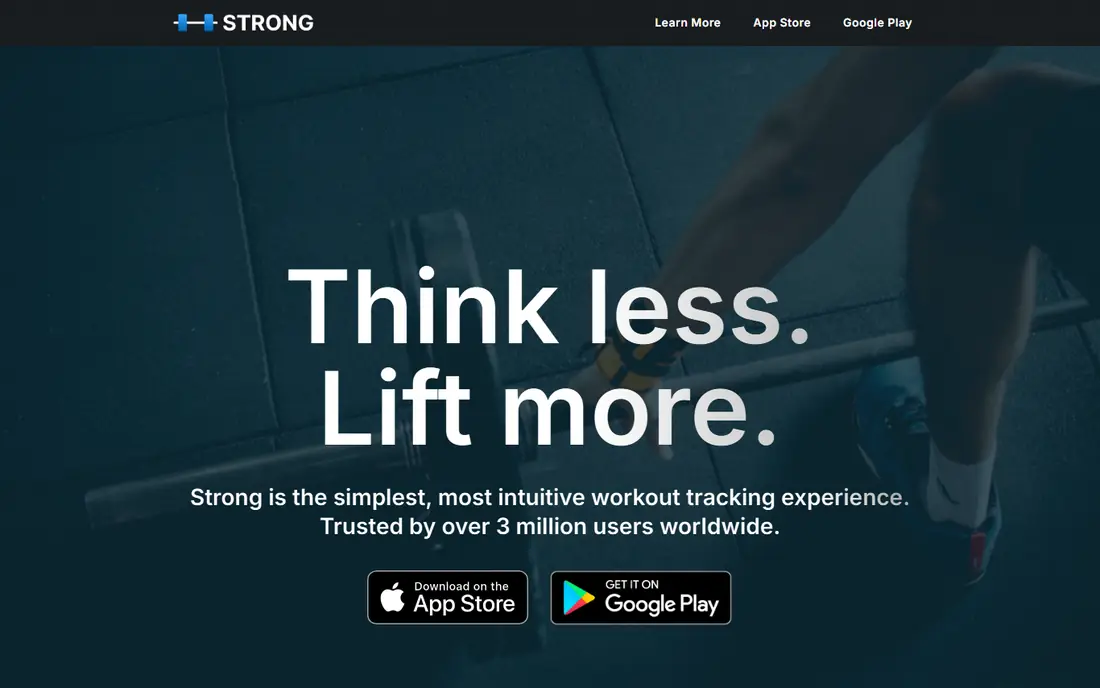
Strong is built for one job: log a workout quickly and move on. You pick a routine, tap through sets, and the app records weight, reps and rest without extra screens. Progression charts show how a lift changes over time, and Apple Watch support lets you log from your wrist. That speed matters in a busy gym, where a slow app breaks focus between sets.
The limits are clear. The free tier limits you to three custom routines, and Strong does not build sessions for you or offer a large coached program library. If you already follow a barbell program such as a simple linear progression plan, Strong is ideal. If you want the app to choose exercises each day, Fitbod or Jefit will suit you better.
- Very fast set logging
- Progression charts
- Apple Watch logging
- CSV export on the free tier as described by the vendor
- Free tier limits custom routines
- Exercise library is smaller than Jefit
- No built-in program builder
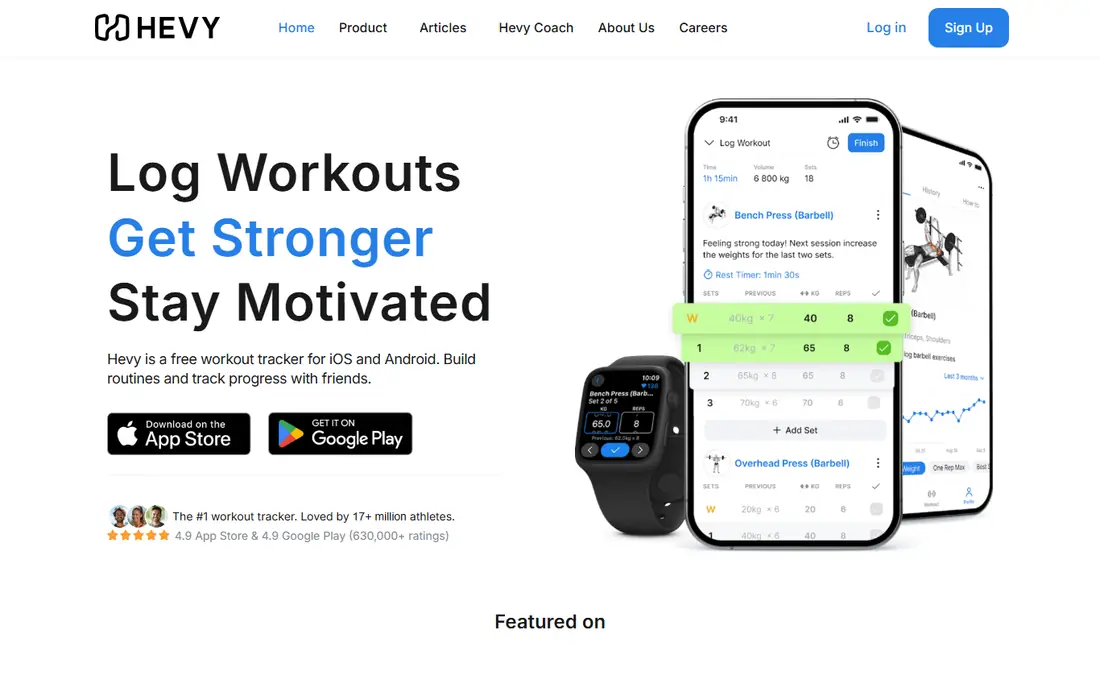
Hevy pairs a clean logger with a social feed, so you can follow friends, see their workouts and share your own. The free tier allows unlimited workout logging, which is generous, and Pro is among the cheapest upgrades on this list. For lifters who stay consistent because friends see their training, that social pull is a real feature, not a gimmick.
Free limits still apply. The free tier caps routines and limits how far back some graphs go, and Pro lifts those limits and adds custom exercises and longer history. Hevy also offers a Trainer feature for algorithmic plans on paid tiers. If you train alone and dislike social feeds, Strong is cleaner, but Hevy is better value if you want community and a low upgrade price.
- Unlimited workout logging on the free tier
- Social feed and friend workouts
- Low-cost Pro upgrade
- Free tier limits routines and graph history
- Social feed can distract during workouts
- No AI-built session on the free tier
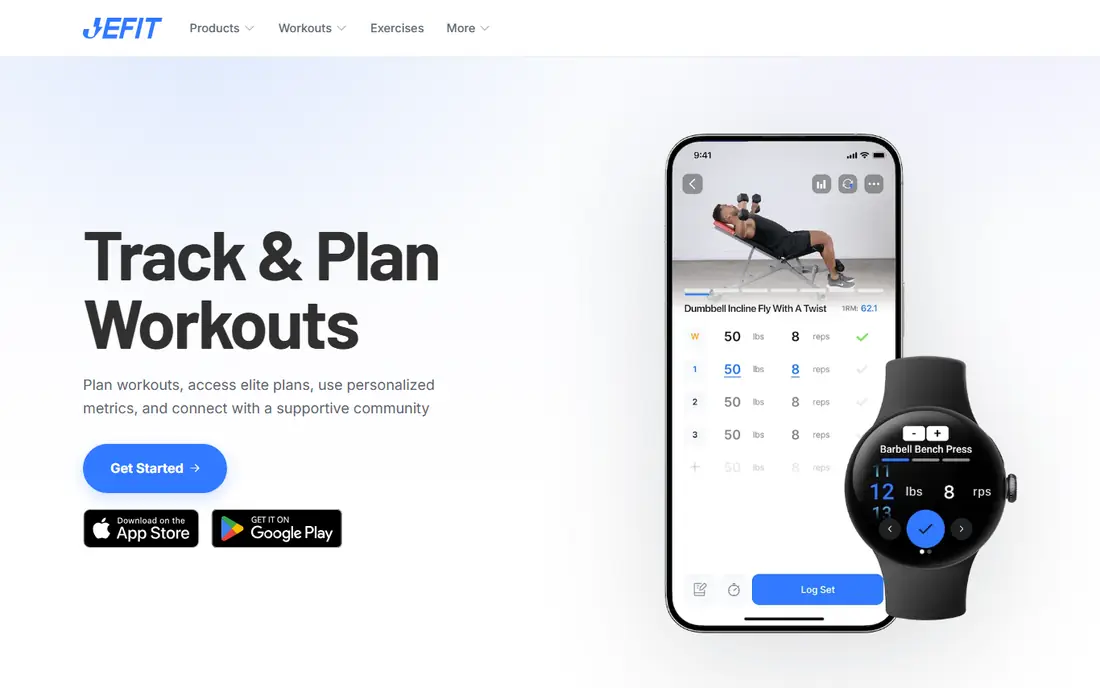
Jefit has been around for many years, and its library shows it. You get a large set of exercises with instructions, plus community and pre-built plans that give structure without a coach. Body statistics, measurements and per-muscle analysis help you see which muscle groups you train most and which you neglect, which is useful for balanced programming.
New users may find the app busy at first, because there are many menus, plans and stats to explore. The free tier includes ads, and logging a custom session can take more taps than Strong. If you want depth, plans and analysis in one app and you are willing to learn the layout, Jefit is the strongest all-rounder here after Strong and Hevy.
- Large exercise library with instructions
- Pre-built plans
- Detailed body and progress tracking
- Interface can feel busy for new users
- Free tier includes ads
- Logging can feel slower than Strong
Fitbod removes planning from the gym visit. You tell it your goals, available equipment and experience, and it builds each session, picks weights and adjusts for recovery and past performance. That suits people who know they want to lift but do not want to write programs, and it works well for home gyms with limited equipment.
The trade-off is control and cost. Fitbod has no free tier, only a trial, and the yearly price is higher than Strong or Hevy Pro. If you follow a fixed barbell program and want to log it exactly, a simple logger will feel more direct. If you want the app to decide each session and you will use it several times a week, Fitbod can justify its price.
- Builds each session around equipment, goals and recovery
- Large exercise library
- Progression tracking across exercises
- No free tier, only a trial
- Less control if you want to follow a fixed program exactly
- Price is higher than Hevy or Strong Pro
Boostcamp is built around following a program, not inventing one. You pick a program from a coach or creator, follow its weeks and sessions, and the app handles progression and logging within that structure. That appeals to lifters who want guidance but do not want a personal coach, and who like seeing other people on the same program.
If you prefer to write your own sessions, Boostcamp will feel restrictive compared with Strong or Hevy. Full access also requires a paid tier after a trial, so check which programs are included before you pay. For a lifter who wants a clear plan for the next 8 to 12 weeks, Boostcamp is a practical middle ground between a free logger and a coached service.
- Programs from known coaches and creators
- Structured progression
- Community around programs
- Less suited to fully custom logging
- Paid tier needed for full access
- Program quality varies by program
Nike Training Club is the best free option for guided training, especially at home or in a gym without a written plan. Workouts include video instruction, timed intervals and structured plans, and the app covers strength, mobility and conditioning, not only lifting. For beginners, that guidance lowers the barrier to starting.
Serious barbell lifters will notice the gaps. Logging is less detailed than Strong, Hevy or Jefit, and progression tracking for a specific lift is thinner. Use Nike Training Club if you want guided sessions and variety for free. Use a dedicated logger alongside it if you also want precise set, rep and weight history for barbell lifts.
- Free guided workouts
- Video instruction
- Plans for strength, mobility and conditioning
- Less focused on detailed barbell logging
- Progression charts are thinner than Strong or Jefit
- No paid tier needed, so advanced logging is limited
GymBook suits lifters who want a simple tracker without social feeds or AI plans. You log workouts, review history and track progress, and Pro adds extra features at a low price. The interface stays out of the way, which helps if you found Jefit busy or Hevy distracting.
The cost of that simplicity is breadth. There are fewer built-in programs, less community content and fewer analysis tools than the larger apps here. GymBook is best as a low-cost, no-fuss logger for someone who already knows what to lift each session and just wants a reliable record.
- Simple, focused logging
- Low-cost Pro upgrade
- Clean workout history
- Smaller community than Hevy
- Fewer built-in programs than Jefit or Boostcamp
- Feature set is narrower than larger apps
Setgraph is a freestyle tracker for lifters who do not want to fit every session into a fixed template. You can log varied sessions, review progress and keep a history without paying for a core logger. That flexibility suits people who mix barbell work, machines and bodyweight training in one week.
Because Setgraph is smaller than the main apps here, you should check that it supports your phone and watch, and that export options meet your needs, before you build a long history in it. If it fits your devices, it is a solid free alternative to Strong and Hevy for lifters who value flexibility over community or coached programs.
- Free tier for logging
- Flexible workout structure
- Progress views for logged lifts
- Less known than Strong or Hevy, so community content is thinner
- Fewer guided programs
- Check platform support before you commit
How we picked these
We compared official app pages, pricing pages and app store listings, plus public reviews of logging speed, program quality and free tier limits. We checked whether each app offers a free tier or only a trial, what Pro or Premium adds, whether Apple Watch logging is offered, and whether history can be exported. We focused on strength training, not general fitness, so guided cardio apps were left out unless they included structured strength work.
We did not claim hands-on testing that did not happen, and we did not invent ratings, user counts or exercise counts where a vendor did not publish them clearly. Prices vary by region and billing period, so we used the monthly or yearly price as listed in recent coverage and pointed readers to the vendor page for the current price in their store.
How to pick the best strength training app for you
Match the app to your planning style first. If you already have a program, pick a fast logger such as Strong or Hevy. If you want a program chosen for you, pick Fitbod or Boostcamp. If you want guided video workouts for free, start with Nike Training Club and add a logger later if you need detailed history.
Logging speed, programs and progress
Test logging during a real session, not only on the home screen. Check rest timers, superset support, plate calculators where offered, and how quickly you can repeat a past workout. For programs, check whether progression is automatic, whether you can swap an exercise when equipment is busy, and whether deload weeks are built in. For progress, check charts for your main lifts, body measurements and volume over time, and whether you can export that history.
Price, devices and long-term use
Start free where a free tier exists, and pay only after two weeks of regular use. Check yearly versus monthly pricing, lifetime options where offered, and whether a family or team plan exists. Check Apple Watch or Wear OS support, offline logging and backup, since losing a year of training history is a bigger cost than a monthly fee.
Frequently asked questions
What is the best app for lifting weights?
Strong is best for fast, simple logging, Hevy is best for social logging at low cost, and Jefit is best for a large library with detailed analysis. Fitbod is best if you want sessions built for you, while Boostcamp is best if you want to follow a proven program. The best strength training app is the one you will actually open at the gym, so test a free tier for two weeks before paying.
Are there good free lifting apps?
Yes. Strong, Hevy, Jefit, Nike Training Club, GymBook and Setgraph all offer free tiers for core logging or guided workouts. Free tiers usually limit routines, graph history or premium programs, but they are enough to learn whether an app fits your routine. Fitbod and Boostcamp offer trials rather than free tiers, so set a reminder before a trial ends if you do not want to pay.
Which lifting app is best for beginners?
Nike Training Club is best for beginners who want guided video workouts for free, while Hevy and Strong are best for beginners who want simple logging with a low learning curve. Jefit suits beginners who want plans and exercise instructions in one place, though the interface takes longer to learn. Start with a simple routine, focus on form, and add weight gradually rather than chasing a complex program in week one.
Do these apps work on Apple Watch?
Strong, Hevy and several other apps on this list offer Apple Watch logging, but the depth varies from full session logging to basic controls. Check the vendor page and app store listing for your watch model before you pay, since watch features change with app updates. If watch logging matters, test it during a trial or free tier with your actual watch.
Can I track progress without paying?
Yes, in most cases. Free tiers on Strong, Hevy and Jefit include progression charts and history, though some limit graph range or routines. Export options also vary, so check whether you can download your history as a file before you build a long record. If export matters, Strong and Jefit are safer picks than apps that lock history behind a paid tier.
Is it safe to follow an app program for heavy lifting?
App programs can guide structure, but they do not replace coaching, form checks or medical advice. Start with weights you can control, learn form for squat, hinge, press and pull movements, and stop and seek care if you feel pain. If you have an injury, a health condition or no lifting experience, talk to a qualified coach or clinician before starting a heavy program.
Sources we checked (8)

Online Jobs is an independent blog about careers, online work, learning new skills and the tools that help people earn. More about us.
Keep reading
All posts
Best workout apps for women
Compare the best workout apps for women in 2026, from free guided classes to structured strength plans, with current prices, free plans and honest trade-offs.
Best Yoga App
Find the best yoga app for home practice in 2026, with verified prices, free options, class styles, trials and honest limits for 10 yoga apps compared.
Best Workout Tracker App
We compared the best workout tracker app options for gym, home, and running training, checking prices, free plans, and logging tools in detail. See inside.