Best Vocabulary Apps in 2026: 8 Apps Compared

How we put this together: we compare official feature and pricing pages, app store listings, privacy policies and public user reviews. Prices change, so check the provider's site before you pay.
Key takeaways
- Anki is our pick for long-term retention, thanks to its spaced repetition system, while Quizlet is best for ready-made flashcard sets.
- Memrise and Duolingo suit daily habit building, with short lessons and video or game-style practice that keeps learners coming back.
- Magoosh Vocabulary Builder is free and focused, making it the best pick for GRE, SAT, and TOEFL word lists.
- The best app is the one you will open daily, so start free and only pay once a habit is established.
Quick comparison
| Name | Who it suits | Starting price | Free option | |
|---|---|---|---|---|
 Quizlet | Ready-made flashcard sets | Free | Yes | Visit |
 Anki | Long-term spaced repetition | Free | Yes | Visit |
 Memrise | Video-rich language practice | Free | Yes | Visit |
 Duolingo | Daily habit building | Free | Yes | Visit |
 Vocabulary.com | Adaptive quizzes and games | See website | Yes | Visit |
 Magoosh Vocabulary Builder | Test prep word lists | Free | Yes | Visit |
 WordUp | Personalized English vocabulary | See website | Yes | Visit |
 Drops | Short visual word sessions | See website | Yes | Visit |
The best vocabulary apps
Building vocabulary works best in small, regular sessions with review timed before you forget a word. That is why spaced repetition and short daily practice beat long cramming sessions. The apps below take different routes to the same goal, from flashcards to games to video, so pick by how you like to learn, not by which app looks most impressive.
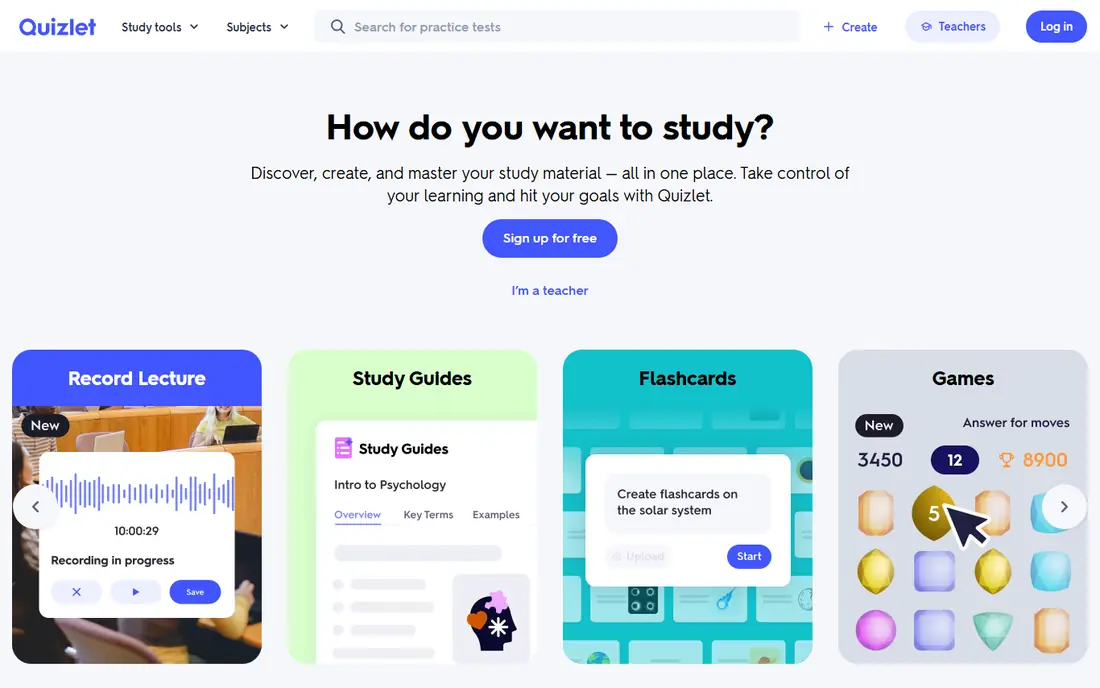
Quizlet is the fastest way to start studying a word list someone else already made. Search for a topic, textbook chapter, or exam, and you will usually find a set ready to use, with text, audio, and images. Learn mode quizzes you on weak words first, and games add variety when flashcards feel dull. Teachers and classes share sets easily, which makes it a staple in schools.
The free version includes ads, and its spaced repetition is simpler than a dedicated system such as Anki, so long-term retention needs more manual review. A paid Plus plan removes ads and adds features, but many learners do fine on free. If you need a word list today for a class or exam, Quizlet is the quickest starting point on this list.
- Huge library of user-made sets
- Learn mode targets weak words
- Easy set sharing for classes
- Free version includes ads
- Spaced repetition is less advanced than Anki
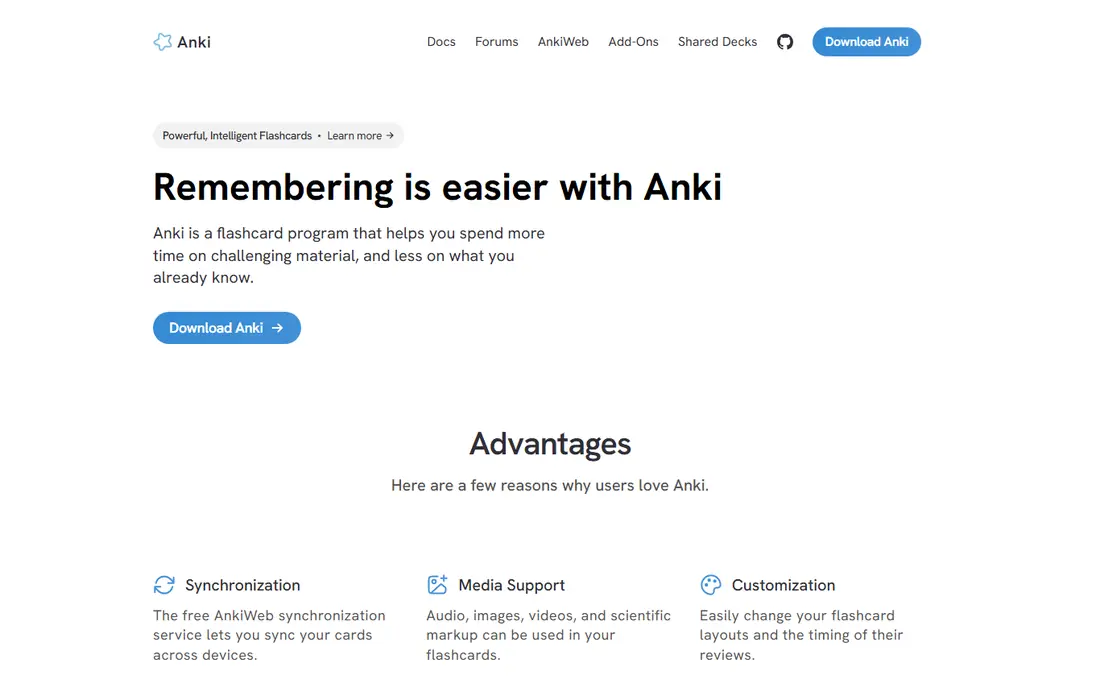
Anki is the tool serious learners return to when they want words to stick for months, not days. Its spaced repetition system schedules each card just before you are likely to forget it, and you control intervals, card design, and review settings in detail. Shared decks cover languages, exams, and academic vocabulary, and you can add audio, images, and example sentences to your own cards.
The interface is plain and takes an afternoon to learn, and the iOS app costs a one-time fee while desktop and Android versions are free. That learning curve puts some people off, but the payoff is real: a daily Anki habit builds a durable vocabulary with less total study time than re-reading lists. If retention matters more than polish, start here.
- Powerful spaced repetition for lasting memory
- Huge shared deck library
- Full control over cards and scheduling
- Interface looks dated and takes learning
- IOS app is a paid one-time purchase

Memrise teaches words in context, with short video clips of native speakers using phrases in real situations. That context helps you remember not just a definition but how a word sounds and when to use it. Lessons are short, progress is visible, and the app covers many languages, so you can switch between them without learning a new system.
Depth varies by course, and some courses feel lighter than a dedicated flashcard deck for advanced learners. Premium adds offline access and extra features, while the free tier covers a good deal of daily practice. If you learn best by hearing and seeing words used, rather than drilling definitions alone, Memrise is a strong daily companion.
- Native-speaker video clips give real context
- Short lessons fit busy days
- Many languages available
- Vocabulary depth varies by course
- Premium features need a subscription
Duolingo is the easiest app on this list to open every day. Short, game-style lessons with streaks, points, and gentle reminders turn vocabulary practice into a habit, and the free tier covers a large amount of content. It teaches words inside sentences and exercises, which helps beginners connect vocabulary to grammar and listening from the start.
Advanced learners will hit limits. Vocabulary follows the course path rather than a custom list, and depth on nuance and formal usage is thinner than Vocabulary.com or Anki. Ads appear on the free tier, and a paid Super plan removes them. As a habit builder and a first step into a language, Duolingo is excellent. As a sole tool for advanced vocabulary, pair it with a flashcard app.
- Game-style lessons build a daily habit
- Free tier is generous
- Many languages and courses
- Vocabulary is tied to course progression
- Advanced learners may outgrow it
- Free version includes ads
Vocabulary.com takes a quiz-first approach. Its adaptive system asks questions matched to your level, explains words with definitions and example sentences, and tracks mastery over time. Word lists cover exam prep, classic books, and current events, and games add a competitive edge for classroom or self-study use. The explanations are clear and written for learners, not just dictionary entries.
Pricing for learner plans has varied, so check the current page before subscribing, and the free access covers a useful amount of practice. The app is English-focused, so learners building vocabulary in another language should look at Memrise or Duolingo instead. For English learners who enjoy quizzes and want adaptive difficulty, Vocabulary.com is a strong pick.
- Adaptive questions adjust to your level
- Word lists for exams and books
- Games make review fun
- Paid learner plans vary, so check current pricing
- Less suited to non-English languages
Magoosh Vocabulary Builder does one job extremely well: test vocabulary. Its GRE list covers high-frequency test words organized by difficulty, and SAT and TOEFL lists follow the same curated approach. Quizzes test definitions in context, progress tracking shows mastery, and the app is free, which makes it an easy recommendation for any student facing one of these exams.
General learners will find it narrow. The lists are shaped by tests, not by conversation, work, or reading, so everyday vocabulary needs another app. That focus is also its strength: if your exam is in three months, a curated list beats a random word feed. Pair it with Anki for long-term review of the words you miss most.
- Free app
- Curated GRE, SAT, and TOEFL word lists
- Difficulty levels and quizzes
- Narrow focus on test vocabulary
- Not designed for general conversation words
WordUp personalizes vocabulary learning by mapping words you already know and recommending new ones at the right level. Each word comes with definitions, example sentences, images, and video context, so you see how it works in real use rather than memorizing a single meaning. Progress tracking shows which words have moved from new to known, which keeps motivation visible.
Pricing for premium access varies, so check the app store listing or website before subscribing, and the free tier lets you test the approach first. The app focuses on English, so it will not help with other languages. If you want a personal vocabulary path that adapts to you, WordUp is a modern and pleasant option.
- AI-personalized word recommendations
- Multimedia examples and context
- Tracks words you already know
- Premium pricing varies
- English-only focus
Drops builds vocabulary through quick, visual sessions: swipe, match, and tap words to images in five-minute bursts. That format suits commuters and busy learners who will not sit down for a long study session but will open an app for a few minutes. The image-word link helps memory, and the app covers many languages with themed word lists.
Free use is limited to short sessions per day, with a subscription removing the limit, so heavy learners will need to pay or pair Drops with a free flashcard app. Depth is also lighter: Drops teaches recognition well but goes less deep on grammar and usage than Duolingo or Memrise. As a daily top-up alongside a main study tool, it is a fun and effective addition.
- Five-minute visual sessions fit any schedule
- Strong image-word links
- Many languages
- Free sessions are time-limited each day
- Depth is lighter than flashcard systems
How we picked these
We compared official app pages, app store listings, and pricing pages, plus public reviews, and kept only apps that are live today and genuinely build vocabulary. We favored apps with a free tier so readers can start without paying, and we noted where pricing varies or where a free tier has daily limits, rather than quoting a single price that may not apply to every reader.
How to build a vocabulary habit that lasts
The app matters less than the routine. Ten minutes a day, every day, beats an hour once a week, because spaced review depends on regular contact with words. Set a small daily target you can keep on a bad day, not an ambitious one you keep on a good day.
Use words, do not just collect them
After learning a word, use it in a sentence, in a message, or out loud. A word you have used once is far more likely to stay than a word you have only read. Keep a short list of new words each week and try to use each one in real writing or speech.
Review before you forget
Spaced repetition works because it shows you a word just before it fades. If your app offers review scheduling, trust it and clear your due cards daily, even if you skip new words that day. Clearing reviews matters more than adding new cards.
Mix methods for the same words
See a word in video, drill it in flashcards, and meet it in reading, and it will stick faster than any single method alone. Pair a habit app such as Duolingo or Drops with a retention app such as Anki, and use reading or listening to meet your new words in the wild.
Frequently asked questions
What is the best free vocabulary app?
Anki is free on desktop and Android, Quizlet and Duolingo offer generous free tiers, and Magoosh Vocabulary Builder is free for test prep. The best free pick depends on whether you want flashcards, games, or a curated exam list.
What is the best vocabulary app for learning English?
Memrise and WordUp suit English learners who want context and personalization, while Vocabulary.com suits learners who enjoy adaptive quizzes. Pair any of them with Anki for long-term retention of the words you find hardest.
What is the best app to learn English vocabulary for free?
Duolingo, Memrise, and Quizlet all offer free vocabulary practice, and Anki is free on most platforms. Start with the free tier of one habit app and one flashcard app, then pay only if a premium feature solves a real problem.
Which app is best for GRE vocabulary?
Magoosh Vocabulary Builder is the most focused free pick, with curated GRE lists by difficulty. Many students pair it with Anki, importing missed words into a spaced repetition deck for review until exam day.
How long should I study vocabulary each day?
Ten to twenty minutes daily is enough for steady progress, provided you review due cards and use new words in sentences. Consistency matters more than session length, so pick a target you can keep every day.
Sources we checked (8)

Online Jobs is an independent blog about careers, online work, learning new skills and the tools that help people earn. More about us.
Keep reading
All posts
Best Udemy Alternatives
Explore the best Udemy alternatives for 2026, including Coursera, Skillshare, and LinkedIn Learning, with pricing, certificates, and who each platform suits.

Best Tools for Virtual Tutoring
Compare the best tools for virtual tutoring, from one-to-one tutor marketplaces to free self-paced learning, with pricing, subjects and honest limits.
Best Study Apps for Young Children
Compare the best study apps for young children in 2026, from Khan Academy Kids and ABCmouse to Reading Eggs, Starfall, Duolingo ABC and PBS Kids, with prices.