Best Tools for Personal Development in 2026: 9 Apps Compared

How we put this together: we compare official feature and pricing pages, app store listings, privacy policies and public user reviews. Prices change, so check the provider's site before you pay.
Key takeaways
- Headspace and Calm cover mindfulness and sleep, with Headspace suiting structured learning and Calm suiting sleep stories and relaxation.
- Duolingo, Blinkist and Coursera cover learning in different depths, from daily language practice to book ideas and full courses.
- Habitica, Fabulous and Forest help with habits and focus, but they work in very different ways, so the right pick depends on motivation style.
- Daylio suits quick mood and habit tracking, and it pairs well with a journal or mindfulness app rather than replacing them.
- One app used daily beats five apps used for a week, so start with the single habit or skill that matters most right now.
Quick comparison
| Name | Who it suits | Starting price | Free option | |
|---|---|---|---|---|
 Headspace | Guided mindfulness | See website | Yes | Visit |
 Calm | Sleep and relaxation | See website | Yes | Visit |
 Duolingo | Daily language learning | Free | Yes | Visit |
 Habitica | Gamified habit tracking | Free | Yes | Visit |
 Fabulous | Guided habit routines | See website | Yes | Visit |
 Forest | Focus sessions | See website | No | Visit |
 Daylio | Mood and habit journal | Free | Yes | Visit |
 Blinkist | Book ideas in minutes | See website | Free trial | Visit |
 Coursera | Structured online courses | See website | Yes | Visit |
The best tools for personal development
Personal development covers too many goals for one app. Stress, sleep, habits, learning, focus and reflection are different jobs, and an app that helps one may not help another. The tools below are grouped by the job they do best, so you can pick one starting point instead of downloading a set of apps that compete for the same ten minutes.
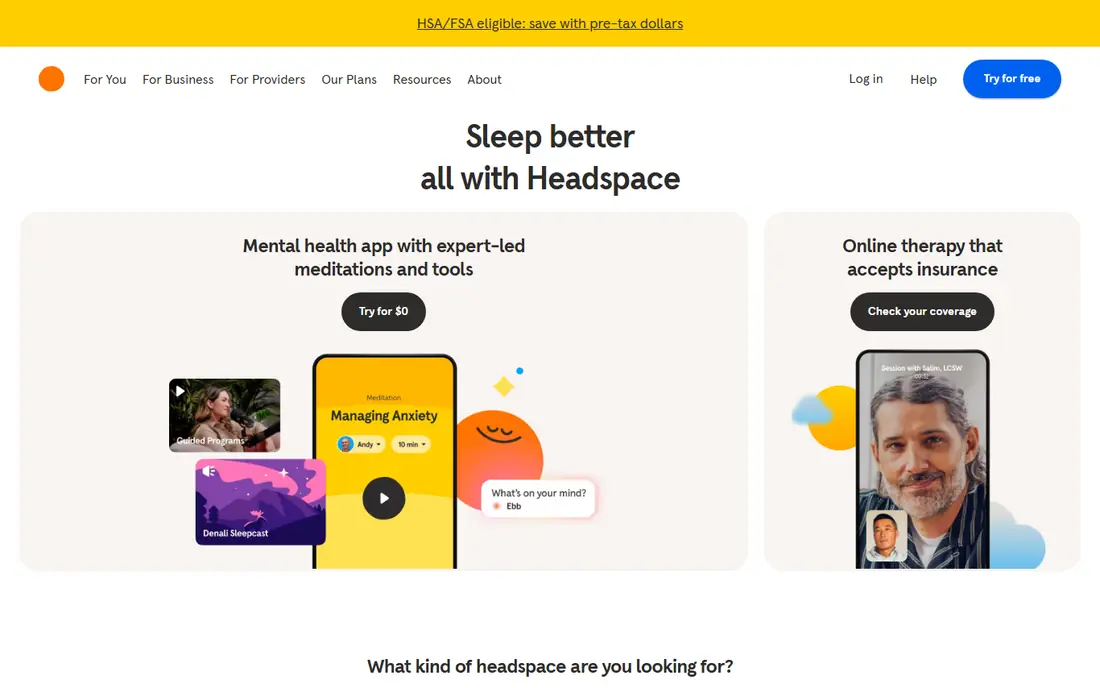
Headspace suits people who want guidance rather than a large library to browse. Courses build step by step, which helps a beginner learn mindfulness without wondering what to try next. Sleepcasts, focus music and short sessions also make it useful at different times of day, not just for a morning meditation.
The catch is cost and structure. The free content is limited, and the guided path that helps beginners can feel restrictive for experienced meditators who want silent or open sessions. If you want a teacher-led path and a consistent daily habit, Headspace is a strong start. If you want a huge free library, Insight Timer may suit you better as a companion.
- Structured meditation courses for beginners
- Sleep, focus and movement content
- Clear progress tracking
- Full library needs a subscription
- Some users may prefer less structured, open-ended meditation
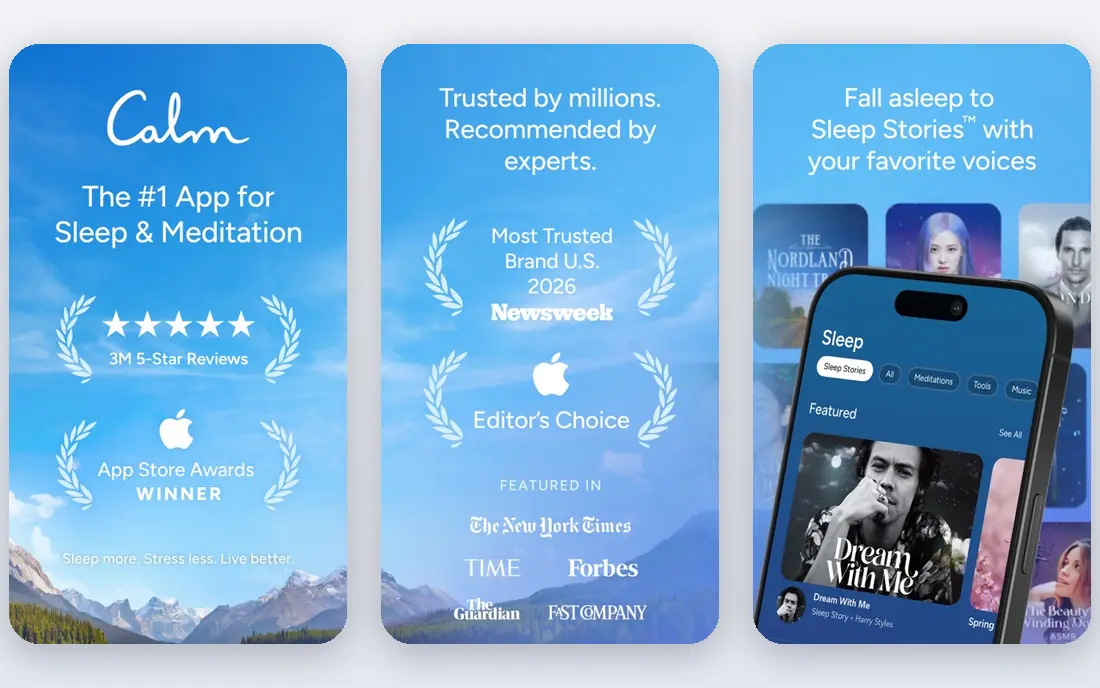
Calm fits people whose main problem is winding down, sleeping better or reducing daily stress. Sleep stories, breathing exercises and soundscapes are its core strengths, and the interface stays simple when you are tired. For a bedtime routine, Calm is often easier to use than a more course-heavy app.
The limit is depth for structured learning. Calm offers courses and programmes, but a user who wants a step-by-step mindfulness curriculum may prefer Headspace. Calm works best when relaxation and sleep are the goals, with meditation as a supporting habit rather than a formal study path.
- Sleep stories and relaxing soundscapes
- Guided meditations for stress and anxiety
- Simple, calm interface
- Full content needs a subscription
- Learning paths are less structured than Headspace for some users
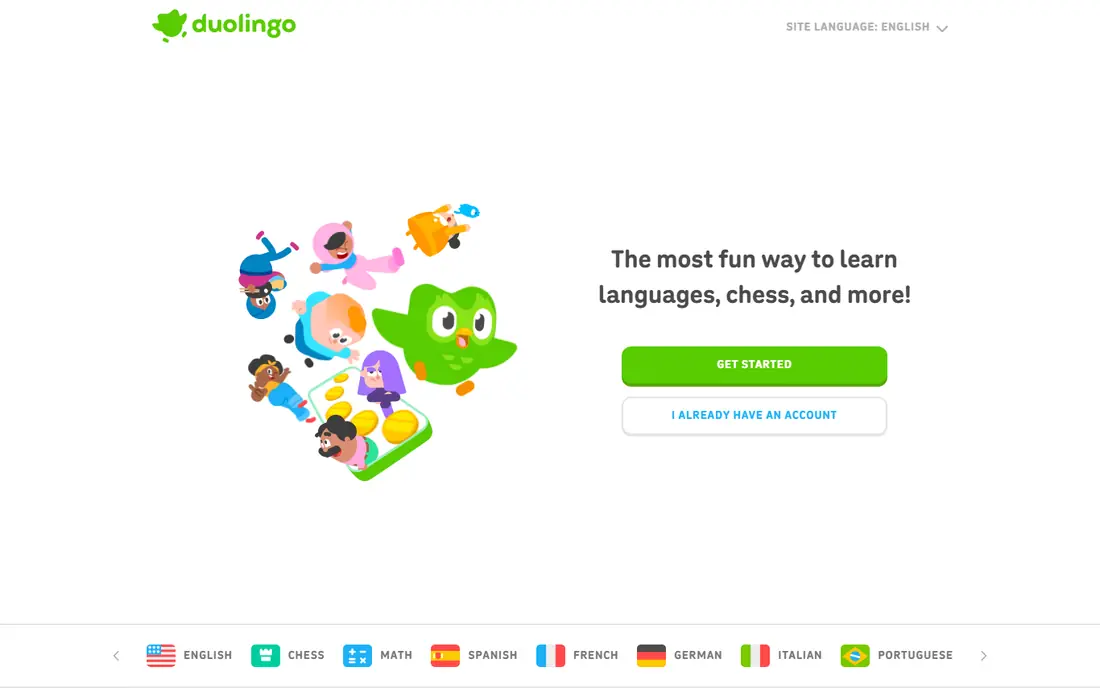
Duolingo suits beginners and casual learners who want a daily language habit. Short lessons, streaks and rewards make it easy to practise for a few minutes a day, and the free tier covers a large amount of content. For travel, school support or a first step into a new language, it is an accessible start.
The catch is fluency. Duolingo builds vocabulary and basic grammar well, but it does not replace conversation, listening to native speakers or reading real texts. Learners who reach an intermediate level will need podcasts, books, classes or conversation partners. As a daily habit builder, Duolingo is still one of the best personal development apps available.
- Free core lessons in many languages
- Gamified streaks and rewards
- Short daily lessons that fit a busy schedule
- Depth is limited for advanced learners
- Speaking practice needs real conversation outside the app
Habitica fits people who respond to games, streaks and social accountability. Habits, daily tasks and to-dos become quests, and completing them earns rewards for a character. Parties let friends or colleagues support each other, which can help when motivation drops after the first few weeks.
The limit is the game itself. Some users spend more time managing rewards and characters than doing the habit, and the interface can feel crowded. Habitica works best for people who enjoy that playful layer and who want accountability. If you prefer a clean tracker, Daylio or a simple habit app will feel calmer.
- Habits, dailies and to-dos turned into a role-playing game
- Parties and social accountability
- Free core features
- Game elements can distract from the habits themselves
- Interface feels busy for users who want a simple tracker
Fabulous suits people who want to build a routine, not just track a habit. Guided journeys start with small steps, such as drinking water in the morning, and add new habits over time. That gradual build helps when a person has tried to change everything at once and stopped after a few days.
The catch is pace and price. A user with an existing routine may find the early steps too basic, and the full programme needs a paid plan. Fabulous is best for a reset, such as building a morning routine, an evening wind-down or a focus habit, rather than for tracking a long list of unrelated habits.
- Guided journeys for morning and evening routines
- Science-based habit advice in small steps
- Reminders and coaching prompts
- Full journeys need a subscription
- Pace may feel slow for users who already have strong routines
Forest fits students, writers and workers who check their phone too often during focus time. You plant a virtual tree, stay off your phone for the session, and watch the tree grow. If you leave the app, the tree dies, which is a simple but effective nudge. Team sessions add gentle accountability for study groups or remote teams.
The limit is scope. Forest does not manage tasks, projects or habits in depth, so it works best alongside a task app or a simple list. It is also a paid app in many stores, though the cost is low compared with a subscription. If phone distraction is the main problem, Forest solves that one job well.
- Simple focus timer with a growing tree reward
- Team focus sessions
- Helps reduce phone checking during work
- No free plan in many stores
- It tracks focus time, not tasks or habits in depth
Daylio suits people who want to notice patterns without writing long journal entries. A daily check-in takes seconds, with mood, activities and notes, and charts over weeks or months can reveal links between sleep, exercise, work and mood. That low friction is why many users keep it going longer than a full journal app.
The catch is depth. Daylio records what happened, but it does not replace reflective writing, therapy or a structured journal for processing difficult experiences. It works best as a tracking layer, paired with a mindfulness app, a habit app or a journal when reflection is needed. For a first step into self-tracking, it is an excellent free option.
- Very fast mood and activity logging
- Charts show patterns over time
- No long writing needed each day
- Short entries give less depth than a full journal
- Advanced stats and themes sit on a paid plan
Blinkist fits readers who want ideas from nonfiction books without committing to a full book every time. Summaries, called Blinks, cover key ideas in about fifteen minutes, in text or audio. That makes it useful for commutes, workouts or deciding which books deserve a full read.
The limit is depth. A summary can spark an idea, but it cannot carry the examples, nuance and argument of a full book. Blinkist is best used as a discovery and review tool, with full books for topics that matter most. For personal development reading, that two-step approach keeps learning moving without pretending a summary is the same as reading.
- Short summaries of nonfiction books
- Audio and text versions
- Useful for discovering books worth reading in full
- Summaries cannot replace a full book for deep topics
- Catalogue depth varies by subject
Coursera suits learners who want structured, deeper personal and professional development. Courses from universities and companies cover psychology, wellbeing, communication, business and technical skills, with assignments and, on paid tracks, certificates. That structure helps when a short app lesson feels too light.
The catch is time and cost. A course needs weeks of steady work, and certificates are not free. Coursera is best chosen for one clear goal, such as a career skill or a deep interest, rather than browsing many courses at once. Paired with a daily habit app, it can turn personal development from scattered tips into real learning.
- University and company courses with certificates
- Broad subjects from psychology to data skills
- Audit options for many courses
- Full certificates and graded work need payment
- Course completion needs more time than app-based learning
How we picked these
We reviewed official feature pages, pricing pages, app store listings, privacy policies and public user reviews. We favoured apps with a clear job, a usable free tier or trial, and a track record of regular use, rather than apps that promise broad life change without a specific daily action. Where pricing varies by plan or region, we used See website instead of a single figure.
Building a personal development routine that lasts
Start with one goal and one app. If sleep is the problem, start with Calm. If habits are the problem, start with Habitica, Fabulous or Daylio. If learning is the problem, start with Duolingo, Blinkist or Coursera. Attach the new habit to an existing routine, such as after breakfast or before bed, and keep the daily commitment small enough to do on a bad day.
Review monthly, not daily
Daily results can mislead, because mood, focus and motivation vary. Review a month of Daylio charts, Duolingo streaks or Forest sessions, and look for patterns rather than perfect days. Drop an app that you avoid, even if it looks good on paper, and keep the one you return to without forcing it. Personal development works when the tool fits your life, not when you fit your life around the tool.
Know when an app is not enough
Apps can support habits, learning and relaxation, but they are not a replacement for professional help with mental health, addiction or serious life problems. If stress, low mood or anxiety is persistent, talk to a clinician or a trusted professional, and use apps as support rather than treatment. A good app should make it easier to seek help, not delay it.
Frequently asked questions
What are the best apps for personal development?
Headspace and Calm suit mindfulness and sleep, Duolingo suits language learning, Habitica and Fabulous suit habits, Forest suits focus, Daylio suits mood tracking, and Blinkist and Coursera suit learning. The best app depends on your main goal, because no single app covers all of these well.
What are the best personal development apps for free?
Duolingo, Habitica and Daylio offer strong free tiers, while Headspace, Calm, Fabulous and Coursera offer limited free content or audit options. Forest is usually paid, and Blinkist offers a trial. Start with free tiers for two weeks before paying, and only subscribe to an app you already use regularly.
What are the best free self help apps?
For free self help, Daylio suits mood tracking, Habitica suits gamified habits, Duolingo suits learning, and Insight Timer, not on this list, suits free meditation. Headspace and Calm also offer some free content, but their full libraries need subscriptions. Pick one free app for your main goal, rather than collecting several.
How do I stick with a personal development app?
Keep the daily action tiny, attach it to an existing routine, and track streaks or patterns rather than perfection. Start with one app, review monthly, and allow missed days without restarting from zero. If an app feels like a chore after a month, switch to a simpler tool for the same goal.
Is Headspace or Calm better?
Headspace suits structured mindfulness learning, with courses that build step by step. Calm suits sleep stories, relaxation and winding down. Many people prefer Headspace for a morning practice and Calm for bedtime, but paying for both is rarely needed. Trial the free content for each and choose the one that fits your main need.
Can apps really help personal development?
Apps can help when they support a specific daily action, such as meditating, practising a language, tracking a habit or focusing without a phone. They help less when they only collect tips or streaks without a real habit behind them. Choose an app with a clear daily job, use it for a month, and judge it on behaviour change, not on time spent in the app.
Sources we checked (9)

Online Jobs is an independent blog about careers, online work, learning new skills and the tools that help people earn. More about us.
Keep reading
All posts
Zoom Alternatives
Zoom alternatives compared for 2026: Google Meet, Microsoft Teams, Webex, Jitsi and more for free calls, large meetings and webinars for teams and classrooms.
Top Rated Poster Maker Software
Top rated poster maker software compared for 2026: Canva, Adobe Express, VistaCreate, PosterMyWall and more for events, sales and classrooms for US users.
Surfshark Alternatives
Looking for Surfshark alternatives? We compare 8 VPN services on price, privacy, streaming, and device limits to help you find a VPN that fits your needs.