Home / Life Sciences Technology
Best Tech Companies for Life Sciences Solutions in 2026: 8 Products Compared


Clinical and commercial cloud · Starting price: See website
How we put this together: we compare official feature and pricing pages, app store listings, privacy policies and public user reviews. Prices change, so check the provider's site before you pay.
Key takeaways
- Veeva and Medidata cover clinical and commercial work at scale, while Benchling fits lab research and early development teams.
- IQVIA combines data, analytics, and trial services, which suits organisations that need insight across a full portfolio.
- LabVantage, Sapio Sciences, Dotmatics, and IDBS focus on lab data, workflows, and scientific records, so fit depends on your lab type.
- Pricing is almost always quoted, so budget for implementation, validation, training, and support, not only the licence.
- Shortlist by use case first, then test integration, security, and audit support with your own data and workflows.
Quick comparison
| Name | Who it suits | Starting price | Free option | |
|---|---|---|---|---|
| Veeva Systems | Clinical and commercial cloud | See website | No | Visit |
 Benchling | Lab research and development | See website | No | Visit |
 IQVIA | Data and trial analytics | See website | No | Visit |
 Medidata | Clinical trial technology | See website | No | Visit |
 LabVantage | Laboratory information management | See website | No | Visit |
 Sapio Sciences | Lab and research informatics | See website | No | Visit |
 Dotmatics | Scientific data and workflows | See website | No | Visit |
 IDBS | Lab and process data management | See website | No | Visit |
The best tech companies for life sciences solutions
We compared companies that provide software platforms for life sciences work, from lab notebooks and sample tracking to clinical trials and commercial operations. The right pick depends less on brand size and more on where you work in the product life cycle, what data you must control, and what regulators will ask you to prove later.
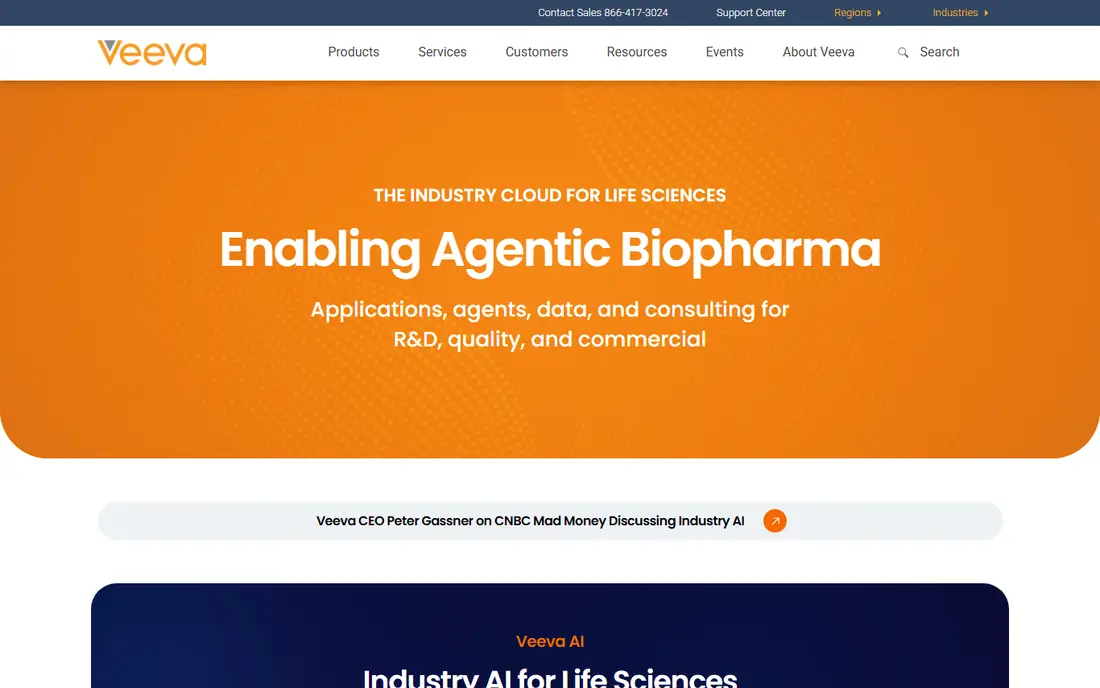
Veeva suits organisations that need one vendor across clinical development, regulatory documents, quality, and field work. Its Vault platform groups documents, data, and workflows in a way that helps teams share controlled content without losing version control or audit history. That breadth is useful when a trial, a submission, and a product launch all draw on the same core records.
The catch is scale. Smaller teams may find the full suite more than they need, and implementation needs clear ownership, data migration planning, and training. Veeva fits best when you have several regulated functions to connect, a dedicated admin team, and a multi-year plan for clinical and commercial growth.
- Broad suite for clinical, regulatory, quality, and commercial teams
- Cloud delivery built for regulated work
- Widely used across sponsors and partners
- Enterprise scope can mean longer implementation
- Pricing is quoted and varies by modules and users
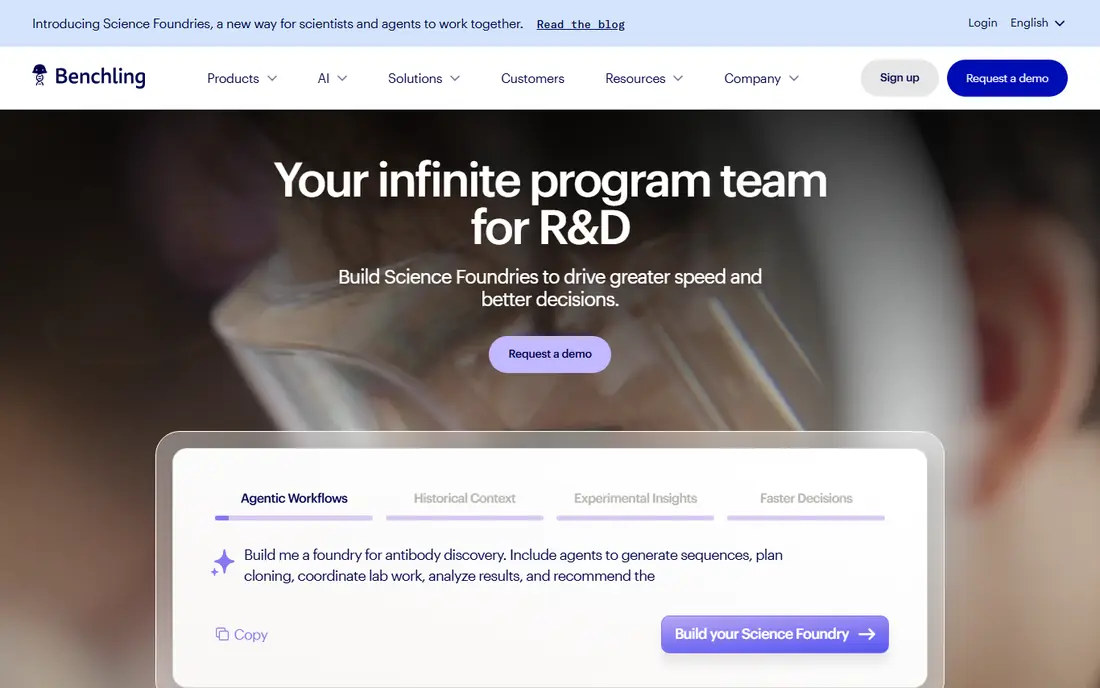
Benchling is a strong pick for research teams that live in the lab. It brings notebooks, molecular biology tools, sample tracking, and experiment records into one system, so results, methods, and materials stay linked. That linkage helps scientists find prior work, reuse protocols, and hand projects to new team members without digging through separate files.
Benchling is less of a fit if your main need is clinical trial operations or commercial sales work, where other vendors in this list are stronger. For discovery and early development, though, its research focus is a clear advantage, and it scales from small biotech teams to larger research organisations.
- Electronic lab notebook plus sequence and sample tools
- Built for biotech research teams
- Strong focus on scientific data structure
- Less suited to late-stage commercial work
- Enterprise pricing needs a direct quote
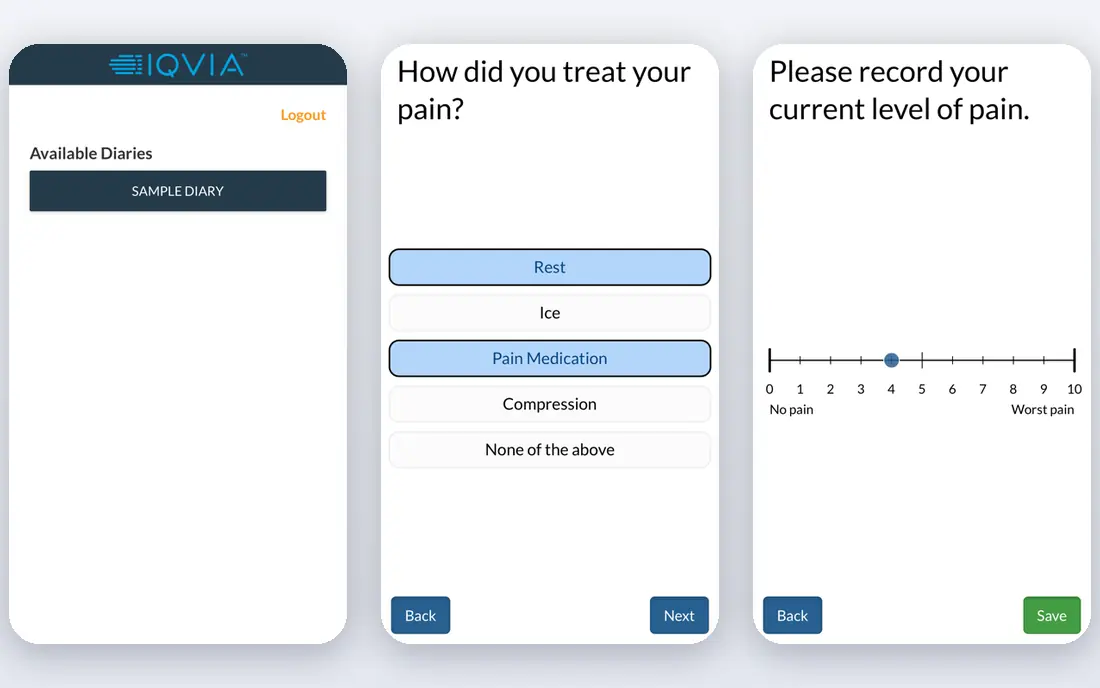
IQVIA suits organisations that need data-driven decisions across research, trials, and commercial planning. Its analytics and data offerings help teams study patient populations, site performance, treatment patterns, and market trends, while its trial technology supports study execution. That mix is useful for sponsors who want evidence and operations in closer step.
Because IQVIA offers both services and software, buyers should be clear about what they are buying in each contract. Ask which parts are technology, which are services, and how data access, reporting, and exit terms work. Used with clear scoping, IQVIA is a strong choice for portfolio-level insight.
- Large healthcare data assets and analytics
- Trial services plus technology
- Insight across therapy areas and markets
- Broad scope can make scoping complex
- Services and software are often bought together, so compare each part
Medidata, part of Dassault Systemes, is a well-known name in clinical trial technology. Its tools cover data capture, study management, randomisation support, and patient engagement features, which helps sponsors run trials with consistent data collection and oversight. Teams that run many trials value a stable platform that sites already know.
The honest catch is that trial technology does not remove trial design work. You still need clear protocols, trained sites, and data review plans. Medidata fits sponsors and contract research organisations that run trials at volume and want a proven, widely adopted trial platform.
- Established electronic data capture and trial tools
- Patient-facing trial features
- Used across many study types
- Trial setup still needs skilled study builders
- Pricing is quoted by study and scope
LabVantage suits labs that need to track samples from receipt to result, with clear chains of custody, test assignments, and reporting. It serves pharma, biotech, food, environmental, and other lab settings, and its workflows can be shaped to match how a specific lab actually works. That control helps labs that must show who did what, when, and with which method.
Buyers should plan for setup work, including instrument links, method definitions, and user training. LabVantage is a strong pick when sample volume, traceability, and audit-ready records are the main need, rather than general research notes alone.
- Laboratory information management for many lab types
- Sample, test, and result tracking
- Configurable workflows
- Configuration can take time
- Fit depends on lab type and existing instruments
Sapio Sciences fits teams that want research informatics in one place, rather than separate notebook, sample, and data tools. Its platform links experiments, samples, and results, which helps research and bioprocessing teams keep a clear record as projects move from bench work toward production. Configurability is a plus for teams with distinct methods or sample types.
As with any mid-size vendor, test the platform with your own protocols and data before you commit. Check integration with instruments and other systems, ask for reference users in a similar lab type, and confirm support hours and upgrade plans. For teams that want one research system, Sapio Sciences deserves a place on the shortlist.
- Combined lab notebook, sample management, and data tools
- Configurable for research and bioprocessing
- Cloud-based delivery
- Smaller brand footprint than the largest vendors
- Buyers should test fit with their exact workflows
Dotmatics suits discovery and development teams that work with complex scientific data, including chemical structures, assay results, and experiment records. Its tools help teams capture, search, and share that data in a structured way, so scientists spend less time hunting for files and more time testing ideas. Workflow support also helps teams move data from experiments into decisions.
The main task for buyers is module mapping. Dotmatics offers a suite, not a single tool, so list your must-have workflows first, then confirm which products cover each one. Done well, it gives research teams a coherent data layer that grows with a pipeline.
- Scientific data management and workflow tools
- Strong chemistry and biology data handling
- Used across discovery and development
- Scope varies by product within the suite
- Buyers need to map modules to their exact needs
IDBS fits teams that need to manage lab and process data with care, especially in bioprocess development and analytical work. Its platform helps capture experiment and process data in context, with links to methods, materials, and results that support later review and tech transfer. That traceability matters when a process moves from development toward manufacturing.
IDBS is not a general clinical or commercial platform, so judge it on lab and process fit alone. If your bottleneck is scattered process data, unclear experiment context, or slow tech transfer, IDBS is a focused option worth testing with your own data sets.
- Data management for lab and process development
- Focus on data integrity and traceability
- Supports bioprocess and analytical work
- Best fit is specific to lab and process teams
- Commercial or clinical buyers will need other vendors
How we picked these
We chose companies with established life sciences platforms, clear product documentation on their official sites, and use across research, clinical, or commercial work. We checked each vendor site for product scope, target users, and core modules, and we left out general software vendors with only a small life sciences add-on. We then balanced lab research, clinical trials, data analytics, and quality and commercial work, so the list reflects the full life cycle rather than one stage.
This article is for general information only and is not medical, regulatory, or legal advice. Platform choice in regulated work needs review by your quality, regulatory, and IT teams, and any claim about compliance should be checked against your own requirements and current regulations. Prices are quoted by vendors, so treat any public estimate with care and get a written quote for your scope.
How to choose a life sciences platform
Start by naming the job the platform must do in plain terms. Is it to record experiments, track samples, run a trial, manage documents, or analyse market data. A vendor that is strong in one job may be weak in another, and buying a broad suite for a narrow job often adds cost and training without benefit. Write down three must-have workflows and three deal-breakers before you take a demo, and test those exact workflows with your own sample data.
Next, check integration, security, and audit support. Ask how the platform connects to instruments, electronic health record systems where relevant, document stores, and data warehouses, and how it handles user access, audit trails, electronic signatures, and data export. Also ask about validation support, upgrade timing, and what happens to your data if you leave. A platform that is hard to leave, or hard to audit, can cost more over time than a higher licence fee.
Finally, plan the human side. Budget for data migration, validation where needed, training, and a named owner for each workflow. Run a pilot with one team and one real project, measure time saved and errors avoided, and only then roll out wider. A short, honest pilot tells you more than a polished sales demo.
Frequently asked questions
What are the best tech platforms for life science companies?
The best platform depends on your stage and job. Benchling and Dotmatics suit research and discovery, Medidata and Veeva suit clinical work, IQVIA suits data and analytics, and LabVantage, Sapio Sciences, and IDBS suit lab and process data. Shortlist by workflow first, then compare integration, security, and total cost.
How much do life sciences platforms cost?
Most vendors in this list quote pricing based on users, modules, study scope, and implementation needs, so there is no single list price to compare. Budget for licence or subscription fees plus implementation, validation, migration, training, and ongoing support. Get written quotes for the same scope from each shortlisted vendor before you compare totals.
Is Veeva or Benchling better for a biotech startup?
Benchling often fits an early research team better, because it centres on lab notebooks, samples, and experiment records. Veeva fits better when you need clinical, regulatory, quality, and commercial functions in one regulated cloud, usually at a later stage. Many companies use Benchling early and add Veeva or Medidata as clinical work grows.
What is the difference between a LIMS and an electronic lab notebook?
A laboratory information management system tracks samples, tests, and results through a lab workflow, with a focus on chain of custody and reporting. An electronic lab notebook records experiments, methods, and observations, with a focus on scientific context and reuse. Many teams need both, and some vendors combine them in one platform.
Do these platforms support regulatory compliance?
Vendors in this list build features for regulated work, such as audit trails, access controls, and electronic signatures, but compliance depends on how you configure and use the system. Your quality and regulatory teams should review validation, data integrity, and record retention for your exact use. Do not treat a vendor feature list as proof of compliance for your organisation.
How long does implementation usually take?
Timelines vary by scope, from weeks for a focused lab tool to many months for a broad clinical or quality suite. Factors include data migration, instrument links, validation, training, and how many teams must change workflows at once. Ask each vendor for a phased plan with clear milestones, and pilot with one team before a full rollout.
Sources we checked (8)

Online Jobs is an independent blog about careers, online work, learning new skills and the tools that help people earn. More about us.
Keep reading
All posts
n8n Alternatives
n8n alternatives compared for 2026, with Zapier, Make, Activepieces, and more, covering visual builders, code steps, self-hosting, and pricing models.

iPhone Alternatives
Looking for iPhone alternatives in 2026? Compare 9 Android phones from Samsung, Google, OnePlus, and more, with cameras, battery life, and honest trade-offs.

eBay Alternatives
Looking for ebay alternatives? We compared 9 marketplaces for sellers on fees, buyer reach, categories and ease of listing, to help you sell with confidence.