Best tax software for self employed in 2026: 8 Tools Compared

How we put this together: we compare official feature and pricing pages, app store listings, privacy policies and public user reviews. Prices change, so check the provider's site before you pay.
Key takeaways
- TurboTax and H&R Block suit self-employed filers who want guided help and expert support, while FreeTaxUSA and Cash App Taxes suit confident filers who want the lowest cost.
- TaxAct and TaxSlayer sit in the middle, with mainstream guided filing at lower prices than the premium brands.
- Jackson Hewitt Online and E-file.com suit filers who want flat or low-cost pricing without a complex tier structure.
- This guide is general information only, not tax advice, and it makes no promises about refunds or filing outcomes.
Quick comparison
| Name | Who it suits | Starting price | Free option | |
|---|---|---|---|---|
 TurboTax | Guided filing with expert help | See website | Yes | Visit |
 H&R Block | Guided filing with in-person backup | See website | Yes | Visit |
 TaxAct | Budget guided filing | See website | Yes | Visit |
 FreeTaxUSA | Free federal filing | Free | Yes | Visit |
 TaxSlayer | Value filing for gig workers | See website | Yes | Visit |
 Cash App Taxes | Fully free filing | Free | Yes | Visit |
 Jackson Hewitt Online | Flat-price filing | See website | No | Visit |
 E-file.com | Low-cost online filing | See website | Yes | Visit |
The best tax software for self employed
Self-employed filing is different from a simple wage return, because it usually involves Schedule C, self-employment tax, business expenses, and sometimes quarterly estimated payments. The tools below all support self-employed situations in their relevant tiers, but they differ on guidance, price, and support.

TurboTax is the guided option many first-time self-employed filers choose, because the interview walks through business income, expenses, home office, vehicle use, and depreciation in plain language. Public listings place TurboTax Premium, the tier that covers rental and self-employment income, at around $139 federal plus $64 per state, with seasonal pricing changes. That price reflects the guidance, the import tools, and the option to add live expert help. The catch is cost and tiering. The free edition covers only simple returns, so a self-employed filer will need a paid tier, and state filing adds a separate charge. TurboTax is worth it when guidance and confidence matter more than saving $50 to $100, especially for a first year of self-employment or a complex year with many income sources. For a straightforward sole proprietor year, a cheaper tool files the same forms, so compare the total federal plus state cost before choosing.
- Thorough guided interview for Schedule C
- Imports 1099 and financial data
- Expert review and live help on higher tiers
- Most expensive mainstream option in public listings
- State filing adds cost
- Free edition does not cover self-employment in most cases

H&R Block suits self-employed filers who want guided online filing plus the option to walk into an office for help. Public listings place H&R Block Self-Employed around $130 federal in recent online tiers, with state filing extra, though seasonal pricing changes apply. The online product covers Schedule C, business expenses, and self-employment tax, and the office network is a real backup for filers who want a face-to-face review. The limits are similar to TurboTax. The free edition does not cover self-employment, and the total cost rises with state filing and expert add-ons. The interface is also less polished than TurboTax for some users, though the guidance is solid. For filers who value in-person help and a lower price than TurboTax, H&R Block is a strong mainstream choice, provided you check the live total before filing.
- Guided self-employed filing
- In-person offices for help
- Expert review options
- Generally lower price than TurboTax in public listings
- Interface is less polished than TurboTax for some users
- State filing adds cost
- Free edition does not cover self-employment
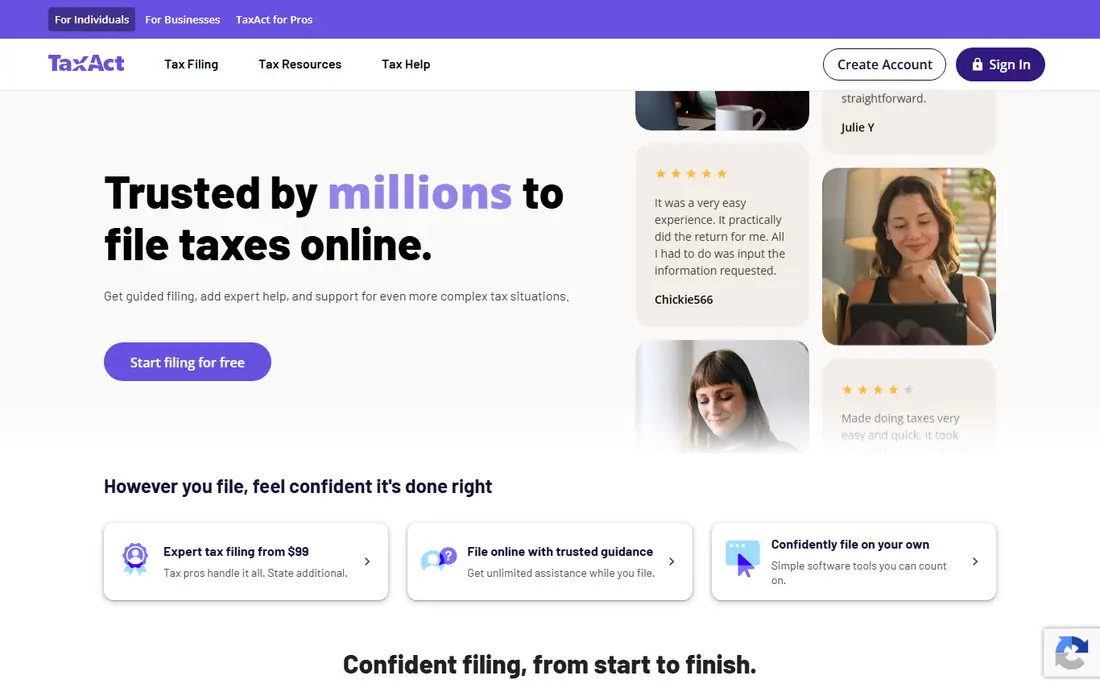
TaxAct is a budget-conscious mainstream option for self-employed filers who want guided filing without paying a premium brand price. Public listings place TaxAct Self-Employed around $109.99 federal, with state filing extra, and the product covers Schedule C, business expenses, and common self-employment situations. For sole proprietors with a clear set of expenses and income sources, TaxAct files the same core forms as more expensive tools. The trade-off is polish and support depth. The interface is functional rather than refined, and live expert help is less extensive than TurboTax Live or H&R Block expert options. That matters less for confident filers who know their deductions, and more for first-time filers who want hand-holding. If price matters and you are comfortable with a simpler interface, TaxAct is a solid middle option.
- Lower price than premium brands in public listings
- Supports Schedule C and business forms
- Straightforward guided flow
- Interface is less polished than TurboTax
- State filing adds cost
- Expert help is more limited than premium tiers
FreeTaxUSA is the value leader for confident self-employed filers. Federal filing is free for every tax situation in public listings, including Schedule C, rentals, and investments, with state filing around $15.99 per state. A low-cost Deluxe upgrade adds extra support features, but the core filing remains free at the federal level. For a sole proprietor who knows their expenses and does not need a guided interview at every step, the saving versus TurboTax or H&R Block is substantial. The catch is guidance. FreeTaxUSA asks more of the filer, because it does not hold your hand through every deduction decision in the same way as TurboTax. That is fine for experienced filers, but first-time self-employed filers may prefer a more guided tool for year one, then switch to FreeTaxUSA once they understand their return. This guide is general information only, not tax advice, so check your own situation before choosing a low-guidance tool.
- Federal filing free for all forms, including Schedule C
- State filing around $15.99 in public listings
- Low-cost Deluxe upgrade for support
- Guidance is lighter than premium tools
- Support is more limited
- Interface is simpler and less hand-holding
TaxSlayer suits gig workers, freelancers, and sole proprietors who want a low-cost, mainstream filing product. Public listings place TaxSlayer Self-Employed around $74.99 federal, with state filing around $47.99, though seasonal pricing changes apply. The product covers Schedule C, multiple 1099 forms, and common gig income situations, and the mobile experience is practical for filers who work from a phone. The limits are tiering and guidance. The free tier covers only simple situations, so most self-employed filers will need a paid tier, and the guidance is lighter than TurboTax or H&R Block. For a gig worker with a straightforward set of expenses, TaxSlayer offers good value. For a complex year with depreciation, inventory, or multiple businesses, a more guided tool or a tax professional may be a better fit.
- Low-cost Self-Employed tier in public listings
- Supports Schedule C and gig income
- Mobile-friendly filing
- Free tier has narrow eligibility
- State filing adds cost
- Guidance is lighter than premium brands
Cash App Taxes, formerly Credit Karma Tax, offers fully free federal and state filing with no paid tiers in public listings. That makes it one of the cheapest ways to file a self-employed return, provided your situation fits the forms it supports. The interface is simple, the filing flow is straightforward, and there are no upsells pushing you to a paid tier during the process. The trade-off is support. Cash App Taxes offers limited live support compared with TurboTax Live or H&R Block expert options, and it does not offer the same range of assisted tiers. For a confident filer with a straightforward sole proprietor return, that is often fine. For a filer who wants live help, an expert review, or help with a complex situation, a paid tool or a tax professional will be a better choice. Check form support for your specific situation before starting a return.
- Free federal and state filing
- No paid tiers or upsells in public listings
- Simple interface
- Live support is limited
- Fewer expert tiers than premium brands
- Some complex situations may need another tool
Jackson Hewitt Online suits filers who prefer a flat price over a tier maze. Public listings have placed Jackson Hewitt Online at $25 flat for federal plus state filing, covering many tax situations, though seasonal offers change and the live price should be checked. That flat structure is appealing for self-employed filers who dislike watching the price rise as forms are added during filing. The catch is that there is no free plan, and the online guidance is less deep than TurboTax or H&R Block premium tiers. The office network is a useful backup, especially for filers who want in-person help after starting online. For a self-employed filer who wants a simple, flat price and does not need extensive live guidance, Jackson Hewitt Online is worth checking, with the live price confirmed before filing.
- Flat-price online filing in public listings
- Covers many tax situations in one price
- Office network for in-person help
- No free plan in most listings
- Flat price still varies by season and offer
- Online guidance is less deep than premium tools
E-file.com is a smaller, low-cost online filing option that suits price-conscious self-employed filers. Public listings place its premium tiers well below TurboTax and H&R Block for a similar federal plus state total, and the product supports Schedule C and common self-employment forms in its paid tiers. For a confident filer who wants to keep costs down and does not need a large brand name, E-file.com is a practical alternative to the free and budget tools above. The limits are support depth and brand scale. E-file.com does not offer the same expert review network or office backup as H&R Block, and its guidance is lighter than TurboTax. That is acceptable for many sole proprietors, but first-time filers or filers with complex situations should weigh the saving against the value of guidance. Check the live pricing, form support, and state cost for your return before choosing E-file.com.
- Low-cost online filing
- Supports self-employed forms in paid tiers
- Simple pricing structure
- Smaller brand than TurboTax or H&R Block
- Support and guidance are more limited
- State pricing varies
How we picked these
We reviewed official feature and pricing pages, tax form support listings, and public reviews for tax software that supports self-employed filing in October 2026. We favoured tools that clearly support Schedule C, self-employment tax, and 1099 income in a stated tier, rather than tools that only support simple wage returns. We checked federal and state pricing where it was published, and where seasonal pricing changed often, we wrote See website and noted public listing figures in the text. Public reviews helped us note common limits, such as tier gating and support depth, but we did not treat review scores as proof of accuracy or of any filing outcome.
How to choose tax software when you are self employed
Start with your forms, not with brand names. List your income sources, business expenses, home office use, vehicle use, and any rental or investment income, then check that the tier you plan to buy supports all of those forms. A free tier that does not support Schedule C is not a bargain for a self-employed filer, because you will be pushed to a paid tier partway through filing. Next, compare the total cost, federal plus state, not just the headline federal price, because state charges change the ranking. Then decide how much guidance you need. First-time filers, filers with depreciation or inventory, and filers with a large or unusual year usually benefit from a guided tool or a tax professional. Confident filers with a straightforward sole proprietor return can save money with FreeTaxUSA, Cash App Taxes, or a low-cost tier. Finally, keep good records all year. Tax software can only file what you enter, so a clean expense log, 1099 forms, and receipts will matter more than which brand you choose. This guide is general information only, not tax advice, and it makes no promises about refunds or filing outcomes.
Frequently asked questions
What is the best tax software for self employed?
The best tax software for self-employed filers depends on guidance needs and budget. TurboTax and H&R Block are best for guided filing with expert help, TaxAct and TaxSlayer are best for budget guided filing, and FreeTaxUSA and Cash App Taxes are best for low-cost or free filing. Choose by total federal plus state cost, Schedule C support, and how much help you want during filing.
What is the best tax software for sole proprietor filers?
For sole proprietors, FreeTaxUSA is a strong value choice because federal filing is free, including Schedule C, with state filing around $15.99 in public listings. TurboTax and H&R Block are stronger for first-time sole proprietors who want guided help, while TaxAct and TaxSlayer offer a middle path. The best choice depends on whether you want guidance or the lowest cost for a return you already understand.
What is the best tax software for freelancers with 1099 income?
Freelancers with 1099 income need a tool that supports multiple 1099 forms and Schedule C, which all of the paid tiers in this list do. TurboTax, H&R Block, TaxAct, TaxSlayer, and FreeTaxUSA all handle 1099 income, with price and guidance as the main differences. Import tools that pull 1099 data directly can save time, so check import support for the platforms that issue your 1099 forms.
What is the best free tax software for self employed?
FreeTaxUSA offers free federal filing for self-employed returns, and Cash App Taxes offers free federal and state filing, both in public listings. Those are the strongest free options for self-employed filers, though support and guidance are lighter than premium tools. Free does not mean suitable for every situation, so check form support, state cost, and whether you need expert help before choosing a free tool.
What is the best tax software for independent contractors?
Independent contractors have similar needs to freelancers, with Schedule C, self-employment tax, and business expenses as the core forms. TaxSlayer and TaxAct are strong value options for contractors, while TurboTax and H&R Block suit contractors who want more guidance. Contractors with multiple clients, home office deductions, and vehicle expenses should check that the chosen tier supports all of those items without extra form charges.
Should I use tax software or hire a tax professional?
Use tax software when your return is straightforward, you understand your expenses, and you are comfortable entering the data yourself. Hire a tax professional when your year is complex, involves multiple businesses, depreciation, inventory, or entity changes, or when you are unsure about deductions. This guide is general information only, not tax advice, and a professional can review your specific situation in a way software alone cannot.
Sources we checked (8)

Online Jobs is an independent blog about careers, online work, learning new skills and the tools that help people earn. More about us.
Keep reading
All posts
Top AI Financial Software
Searching for top AI financial software? We compared 9 AI finance tools for AP, spend, close, forecasting and bookkeeping to help teams choose wisely.
Quicken Alternatives
Compare the best quicken alternatives for Mac, Windows, and small business owners, from Monarch Money and YNAB to Copilot, Tiller, and Banktivity in 2026.
QuickBooks Online Alternatives
Looking for quickbooks online alternatives? We compared 8 accounting tools on invoicing, bank feeds, payroll, pricing and fit for small businesses today.