Best Star Apps in 2026: 8 Apps Compared

How we put this together: we compare official feature and pricing pages, app store listings, privacy policies and public user reviews. Prices change, so check the provider's site before you pay.
Key takeaways
- Free apps cover most beginner needs, including star identification, constellations, and planet positions.
- Paid upgrades mainly add deeper catalogues, telescope control, and offline sky data for remote sites.
- A red night mode matters for real observing, since a bright screen ruins dark adaptation.
- Satellite and ISS tracking is a separate strength, so check it if passes and flyovers interest you.
Quick comparison
| Name | Who it suits | Starting price | Free option | |
|---|---|---|---|---|
 Stellarium | realistic planetarium views | Free | Yes | Visit |
 Sky Tonight | what is visible tonight | Free | Yes | Visit |
 Star Walk 2 | beautiful AR stargazing | Free | Yes | Visit |
 SkySafari | serious observing and telescopes | Free | Yes | Visit |
 Night Sky | guided sky tours | Free | Yes | Visit |
 Star Chart | simple star identification | Free | Yes | Visit |
 SkyView | camera-based sky labels | Free | Yes | Visit |
 NASA App | space news and ISS sightings | Free | Yes | Visit |
The best star apps
Star apps turn a phone into a sky map: point it up, and labels appear for stars, planets, and constellations. Some apps focus on simple identification, others add deep catalogues and telescope control for serious observing.
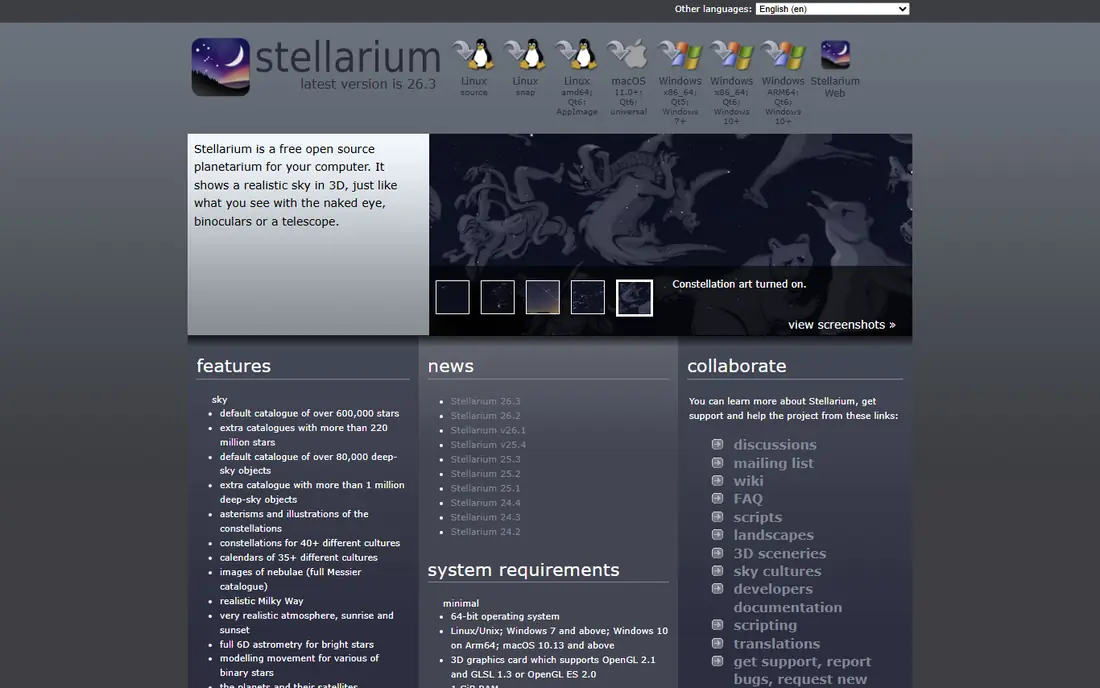
If realistic planetarium views is the priority, Stellarium deserves a close look. Stellarium suits learners and planners who want an accurate, realistic simulation of the sky. In practice, that means realistic sky rendering with atmosphere and Milky Way views and large star and deep-sky catalogues on desktop and mobile. What stands out most is Its time controls and location settings let you plan a session at home, then check the same sky outside. Time controls let you preview any date and location That combination is why it earns a place in this list, rather than sitting as an also-ran. The honest catch is The catch is depth, since beginners may need time to find the simple point-at-sky view among many options. Mobile Plus features cost extra for the deepest catalogues The full feature set can feel dense for first-time users Check that trade-off against your own workload before you commit, and confirm the current plan on the vendor site.
- Realistic sky rendering with atmosphere and Milky Way views
- Large star and deep-sky catalogues on desktop and mobile
- Time controls let you preview any date and location
- Mobile Plus features cost extra for the deepest catalogues
- The full feature set can feel dense for first-time users
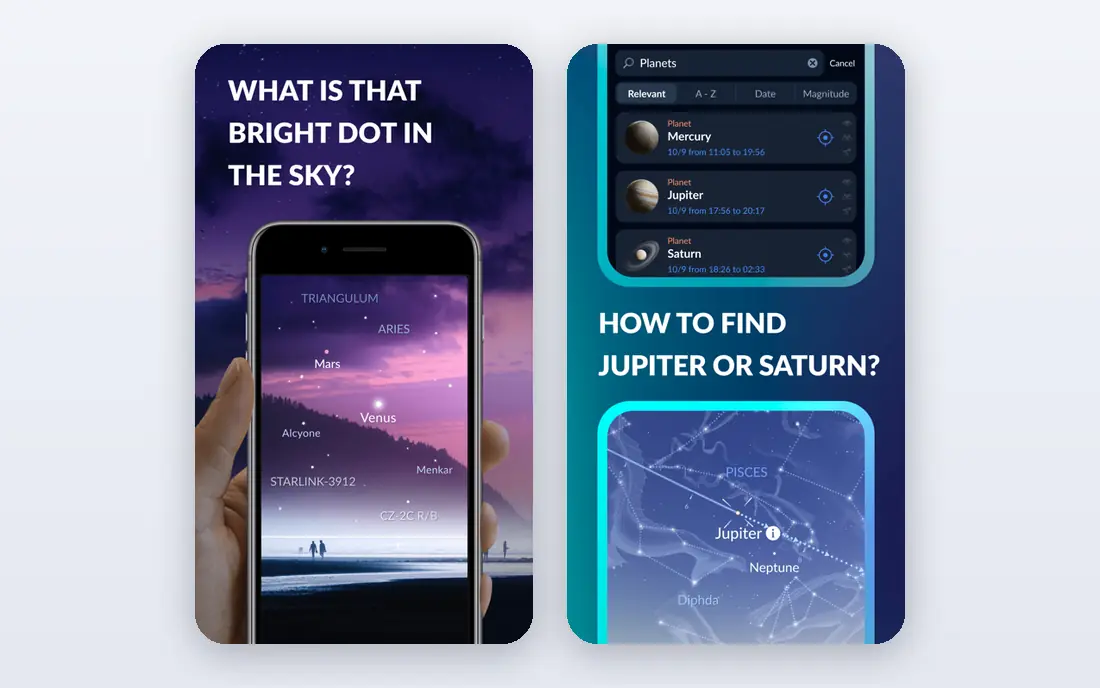
Sky Tonight takes a practical route to what is visible tonight, with less setup fuss than many rivals. Sky Tonight suits casual observers who want a quick answer to what is worth looking at tonight. In practice, that means a clear tonight summary of visible objects and point-at-sky identification for stars and planets. The strongest point here is Its tonight view and event reminders make it easy to step outside at the right time without planning a full session. Event reminders for eclipses, meteor showers, and passes That combination is why it earns a place in this list, rather than sitting as an also-ran. The trade-off to weigh is The limit is catalogue depth, so telescope owners chasing faint objects may need a second app. Deep-sky catalogue is thinner than specialist planetarium apps Some advanced planning tools sit behind paid options Check that trade-off against your own workload before you commit, and confirm the current plan on the vendor site.
- A clear tonight summary of visible objects
- Point-at-sky identification for stars and planets
- Event reminders for eclipses, meteor showers, and passes
- Deep-sky catalogue is thinner than specialist planetarium apps
- Some advanced planning tools sit behind paid options
For teams focused on beautiful AR stargazing, Star Walk 2 offers a clear and direct fit. Star Walk 2 suits families and beginners who want stargazing to feel immediate and visual. In practice, that means attractive AR view that is easy to show friends and children and labels for stars, constellations, planets, and satellites. Where this tool pulls ahead is Its polished AR view makes constellations easy to follow, even for children on their first night out. Night mode and time travel for learning the sky That combination is why it earns a place in this list, rather than sitting as an also-ran. The limit to check first is The catch is ads in the free version, so the paid edition is worth it if you observe often. Free version includes ads unless you buy the full edition Catalogue depth is lighter than pro planetarium apps Check that trade-off against your own workload before you commit, and confirm the current plan on the vendor site.
- Attractive AR view that is easy to show friends and children
- Labels for stars, constellations, planets, and satellites
- Night mode and time travel for learning the sky
- Free version includes ads unless you buy the full edition
- Catalogue depth is lighter than pro planetarium apps
SkySafari earns its place here through serious observing and telescopes, rather than through headline features alone. SkySafari suits amateur astronomers who plan sessions and may control a telescope from the app. In practice, that means large object databases across free and paid tiers and telescope control on higher tiers. The detail that matters most is Its observing lists and search tools help you build a target list for the night and work through it in order. Observing lists and session planning tools That combination is why it earns a place in this list, rather than sitting as an also-ran. The drawback that matters is The trade-off is learning time, since the range of settings rewards patient setup before your first session. Paid tiers are needed for the largest catalogues and control The interface takes longer to learn than simple AR apps Check that trade-off against your own workload before you commit, and confirm the current plan on the vendor site.
- Large object databases across free and paid tiers
- Telescope control on higher tiers
- Observing lists and session planning tools
- Paid tiers are needed for the largest catalogues and control
- The interface takes longer to learn than simple AR apps
When guided sky tours matters most, Night Sky is one of the stronger options in this list. Night Sky suits beginners who enjoy guided tours as much as raw sky maps. In practice, that means guided tours and stories about constellations and planets and aR identification with a clean, friendly design. A closer look shows Its tours and event alerts turn a casual look upward into a short learning session. Notifications for ISS passes and sky events That combination is why it earns a place in this list, rather than sitting as an also-ran. The watch-out here is The limit is depth for advanced observers, who may outgrow it once they want faint deep-sky targets. Some content and features require in-app purchases Catalogue depth is aimed at casual users, not specialists Check that trade-off against your own workload before you commit, and confirm the current plan on the vendor site.
- Guided tours and stories about constellations and planets
- AR identification with a clean, friendly design
- Notifications for ISS passes and sky events
- Some content and features require in-app purchases
- Catalogue depth is aimed at casual users, not specialists
Star Chart is best understood as a tool for simple star identification, built around that single job. Star Chart suits users who want one simple job done well: name the bright object overhead. In practice, that means simple point-at-sky identification for stars and planets and works well as a quick reference on a night out. The main strength is Its uncluttered view loads fast and avoids menus when you are standing outside in the dark. A long-standing, easy interface for new users That combination is why it earns a place in this list, rather than sitting as an also-ran. The compromise is The catch is scope, since serious planning and faint object hunting need a more complete app. Feature set is basic beside modern planetarium apps Telescope control and deep planning tools are limited Check that trade-off against your own workload before you commit, and confirm the current plan on the vendor site.
- Simple point-at-sky identification for stars and planets
- Works well as a quick reference on a night out
- A long-standing, easy interface for new users
- Feature set is basic beside modern planetarium apps
- Telescope control and deep planning tools are limited
Buyers who need camera-based sky labels should start with SkyView and compare outward from there. SkyView suits visitors and beginners who want to point a phone camera at the sky and read labels at once. In practice, that means camera overlay that labels objects in real time and night mode and constellation overlays. What gives this option its edge is Its camera overlay feels natural at star parties, where you can share the view with people nearby. Good for quick identification at star parties That combination is why it earns a place in this list, rather than sitting as an also-ran. The point to test before buying is The limit is planning depth, so use it for identification and pair it with a planner for longer sessions. Some features require the paid version Catalogue and planning tools are lighter than pro apps Check that trade-off against your own workload before you commit, and confirm the current plan on the vendor site.
- Camera overlay that labels objects in real time
- Night mode and constellation overlays
- Good for quick identification at star parties
- Some features require the paid version
- Catalogue and planning tools are lighter than pro apps
NASA App rounds out this list for space news and ISS sightings, with a balance of price and features. NASA App suits space fans who want mission news and ISS passes alongside basic sky interest. In practice, that means official NASA news, images, and mission coverage and iSS sighting alerts based on your location. The part worth noting is Its sighting alerts and live coverage connect backyard observing to real missions overhead. Live coverage and educational video content That combination is why it earns a place in this list, rather than sitting as an also-ran. The weakness to plan around is The catch is that it complements, rather than replaces, a dedicated star map app for identification. It is not a full planetarium or telescope tool Sky map features are thinner than dedicated star apps Check that trade-off against your own workload before you commit, and confirm the current plan on the vendor site.
- Official NASA news, images, and mission coverage
- ISS sighting alerts based on your location
- Live coverage and educational video content
- It is not a full planetarium or telescope tool
- Sky map features are thinner than dedicated star apps
How we picked these
We compared official feature pages, pricing pages, and app store listings for each product, then checked privacy policies and public reviews where they clarified limits, free tiers, or plan rules. We did not claim hands-on testing we did not carry out, and we treated vendor claims with care where a plan page was vague. Where pricing was not published on the vendor site, we wrote See website rather than guessing a figure. Prices and plan limits change often, so use this guide to shortlist two or three options, then confirm the current price, free tier, and feature set on the vendor site before you buy.
How to pick a star app for your nights outside
Think about where you observe, and whether you own a telescope. A backyard beginner and a telescope owner need different catalogues.
Start with identification, not catalogues
If you are new, choose an app with a clear point-at-sky view, constellation lines, and planet labels. A huge catalogue helps little if the basic view is cluttered or hard to read in the dark.
Check night mode and offline use
Red night mode protects your night vision, and offline catalogues matter at dark sites with poor signal. Test both before a trip, not on the night itself.
Match the app to your telescope
Telescope owners should check mount control, observing lists, and deep-sky catalogues. Beginners can skip those features and save money until they buy their first scope.
Frequently asked questions
What is the best app for stargazing for beginners?
A free app with a point-at-sky view, constellation lines, and a tonight summary suits most beginners. It should show what is visible now without forcing you through menus. Paid catalogues can wait until you want fainter objects.
What is the best app for astronomy on a phone?
The best astronomy app balances an accurate sky simulation with clear object details and observing lists. Planetarium apps suit planning at home, while simpler AR apps suit quick identification outside.
Do star apps work without internet?
Many star apps work offline for basic sky maps once the catalogue is downloaded, though news, images, and satellite data may need a connection. Download maps and lists before you travel to a dark site.
What is the best sky app for telescope users?
Telescope users should look for mount control, large deep-sky catalogues, and observing lists that can be sorted by visibility. Check that your mount type is supported before you pay for a Pro tier.
Are free star apps good enough?
Yes, for most casual stargazing, free tiers show stars, planets, constellations, and the Moon clearly. Paid tiers mainly help telescope owners and observers chasing faint deep-sky targets.
Sources we checked (8)

Online Jobs is an independent blog about careers, online work, learning new skills and the tools that help people earn. More about us.
Keep reading
All posts
Best Vocabulary Apps
We compare 8 vocabulary apps in 2026, free and paid, for English learners, students, and test prep, with honest notes on what each one does best for daily use.

Best Udemy Alternatives
Explore the best Udemy alternatives for 2026, including Coursera, Skillshare, and LinkedIn Learning, with pricing, certificates, and who each platform suits.
Best Tools for Virtual Tutoring
Compare the best tools for virtual tutoring, from one-to-one tutor marketplaces to free self-paced learning, with pricing, subjects and honest limits.