Best Spanish Learning Apps in 2026: 8 Apps Compared

How we put this together: we compare official feature and pricing pages, app store listings, privacy policies and public user reviews. Prices change, so check the provider's site before you pay.
Key takeaways
- Duolingo is the easiest free starting point, while Babbel and Pimsleur give more structure for learners who want to speak with confidence.
- No single app covers every skill well, so most learners get better results by pairing a course app with reading, listening, or speaking practice.
- Paid prices and promotions change often, so check the vendor pricing page before you buy and confirm what is included in each plan.
- Short daily lessons work best when they match your goal, whether that goal is travel phrases, work conversations, or long-term study.
Quick comparison
| Name | Who it suits | Starting price | Free option | |
|---|---|---|---|---|
 Duolingo | Building a daily habit for free | Free | Yes | Visit |
 Babbel | Structured lessons with real-life dialogues | See website | Free trial | Visit |
 Rosetta Stone | Learning through pictures and context | See website | No | Visit |
 Pimsleur | Speaking practice during commutes and walks | See website | Free trial | Visit |
 Busuu | Guided courses with feedback from other learners | See website | Yes | Visit |
 Memrise | Learning words and phrases as native speakers say them | Free | Yes | Visit |
 LingQ | Reading and listening to content you choose | Free | Yes | Visit |
 Mondly | Quick, playful lessons for beginners | See website | Yes | Visit |
The best Spanish learning apps
Spanish rewards steady practice, and the right app depends on how you like to learn. Some apps focus on short games, others on full conversations, and a few on reading real material. We compared the options below on lesson style, speaking practice, price clarity, and who each one suits best.
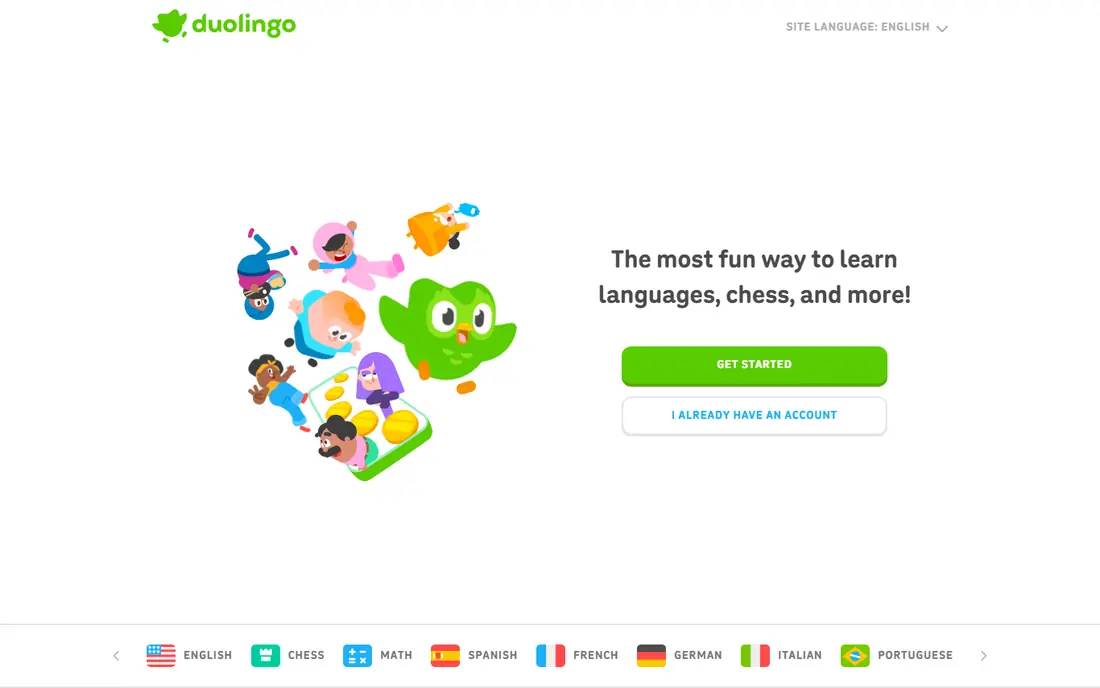
Duolingo is our pick for most people who are just getting started. The lessons are short, the format is easy to follow, and the free plan covers a large amount of core material. Streaks, points, and daily goals help many learners return the next day, which matters more than any single lesson feature. For a first taste of Spanish, or for keeping a habit alive during a busy week, it is hard to beat.
The trade-off is depth. Grammar rules are often learned by example rather than by clear explanation, and the app does not replace real conversation. Learners who want to talk about work, health, or family life in detail will need extra speaking practice elsewhere. Still, as a low-cost, low-pressure starting point, Duolingo does its job well, and paid plans mainly remove ads and add convenience features.
- Free core lessons
- Short, game-like sessions
- Clear streaks and goals
- Limited grammar explanation
- Speaking practice is lighter than in tutor-led options
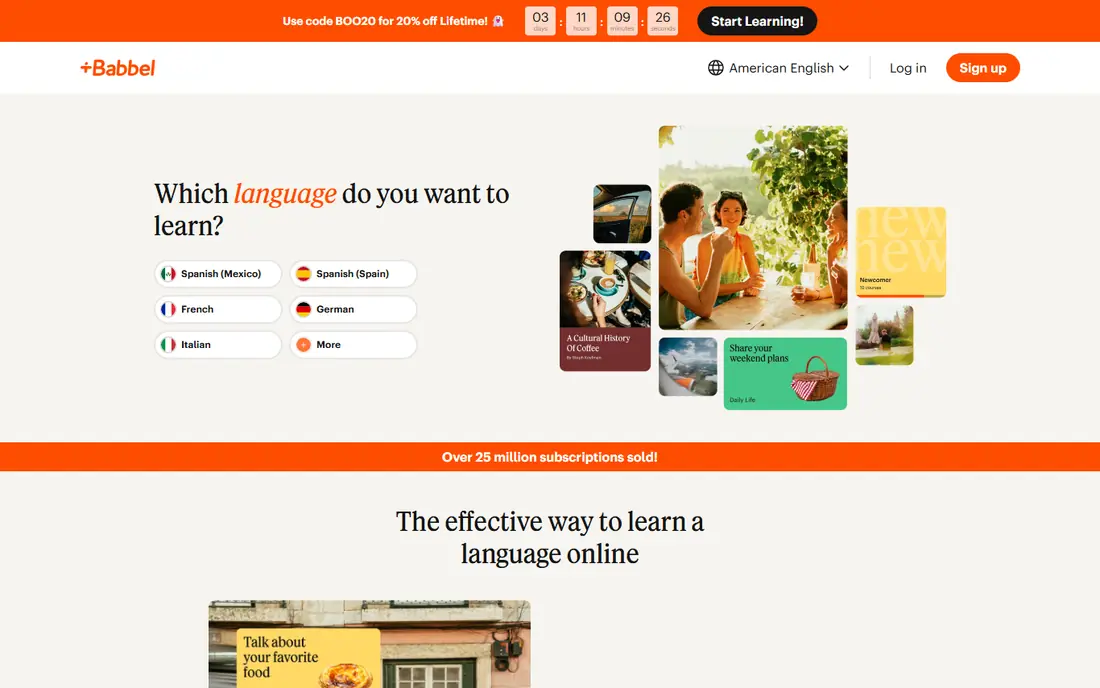
Babbel takes a more classroom-like path, with lessons that build toward conversations you might actually have. Topics cover travel, work, food, and daily life, and grammar points appear when they are useful rather than as a separate drill. Speech recognition gives a basic check on pronunciation, and review sessions bring back words before they fade. That structure suits learners who like to know why a sentence works, not just how to repeat it.
Babbel offers separate tracks for European Spanish and Mexican Spanish, which is a helpful detail for travelers and for people with family in a particular region. The first lesson of each course is free, so you can test the teaching style before paying. The main drawback is cost over time, since full access requires a subscription, and the best value usually comes from longer plans.
- Lessons built around practical conversations
- Grammar tips inside lessons
- Review tools for retention
- Paid plans are needed for full access
- Prices vary by plan and promotion
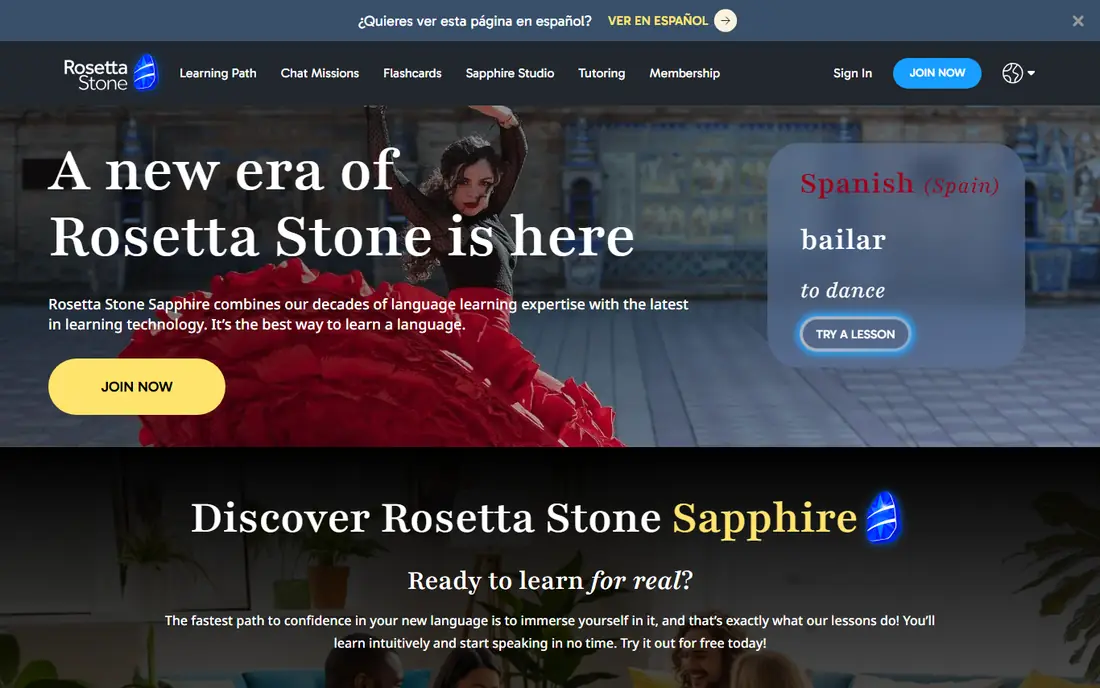
Rosetta Stone teaches mainly through images, spoken words, and context, with very little translation. That approach can help learners stop translating every word in their head and start linking Spanish words directly to meaning. Pronunciation practice is part of the core method, and the lesson format stays steady from one unit to the next, which some learners find calming.
The same method can also feel slow or unclear when a new grammar pattern is hard to guess from pictures alone. Advanced learners may find the pace repetitive, and there is no free tier to try the full course. Rosetta Stone fits best for beginners and lower-intermediate learners who enjoy visual learning and want a steady, guided path.
- Strong visual method
- Speech practice built in
- Consistent lesson format
- Little direct grammar explanation
- No free plan for full courses
Pimsleur is built around listening and responding, which makes it a strong choice for people who want to speak early. Each lesson asks you to recall words and build sentences out loud, rather than tapping a correct answer on a screen. That active recall is useful for pronunciation and for remembering phrases under pressure, such as ordering food or asking for directions.
Because the method is audio-first, reading and writing get less attention, and learners who want to read Spanish news or write messages will need a second tool. Lessons run longer than the quick sessions in many rival apps, so Pimsleur suits commuters and walkers more than people with only five spare minutes. A free trial lets you test whether the slower, spoken pace fits your routine.
- Audio-first lessons that prompt you to speak
- Spaced repetition for recall
- Hands-free study
- Less reading and writing practice
- Lessons are longer than most app sessions
Busuu offers a clear course path with short lessons, grammar review, and vocabulary practice. What sets it apart is the community: learners can submit writing and speaking exercises for correction by native speakers, and they can return the favor for people learning their own language. That human feedback can catch small errors that an automated check might miss, such as word choice or natural phrasing.
The free plan gives only a sample of the course, so serious study requires a paid plan. Premium plans add offline mode, grammar review, and certificates for completed levels. Busuu is a good middle ground for learners who want structure plus a human touch, without booking live lessons.
- Clear levels from beginner to intermediate
- Community corrections
- Offline access on paid plans
- Free plan is limited
- Advanced material is thinner than beginner material
Memrise centers on how Spanish sounds in real life. Short clips of native speakers show pronunciation, rhythm, and natural phrasing, which helps learners move past textbook Spanish. The review system repeats words at increasing intervals, a method that supports long-term memory. The free plan is genuinely useful for vocabulary, which makes Memrise a good companion app even if you use another app as your main course.
Memrise is not a full grammar course, and learners who want detailed explanations of verb forms will need another source. Some features, such as unlimited speaking practice, sit behind the paid plan, and prices can differ between the website and app stores. Used as a vocabulary and listening partner, Memrise earns its place.
- Short videos of native speakers
- Spaced repetition
- Useful free material
- Grammar teaching is light
- Paid prices vary by platform and offer
LingQ takes a different route: instead of fixed lessons, you read and listen to articles, stories, and podcasts, and you save unknown words for review. That method suits learners who already know basic Spanish and want to grow vocabulary through topics they enjoy, from cooking to football to current affairs. You can also import your own articles and videos, which turns material you already like into study material.
The free plan limits how many words you can save, so regular learners will likely need Premium. The interface also has more moving parts than a simple lesson app, and beginners may feel lost at first. For intermediate learners who enjoy reading and listening, LingQ is a strong and flexible choice.
- Large library of real content
- Word tracking and review
- Import your own material
- Free plan limits saved words
- Interface takes time to learn
Mondly keeps lessons short and visual, with topics that cover everyday situations such as travel, shopping, and restaurants. Speech recognition checks pronunciation, and chatbot-style dialogues give low-pressure speaking practice. The daily lesson format helps beginners build a routine without feeling overwhelmed, and one subscription covers many languages, which suits households with mixed interests.
Depth is the limit. Grammar explanations are brief, and the material does not go as far as a full course for advanced learners. Mondly works best as a first step, a travel refresher, or a fun second app alongside a more structured course. Try the free material first to see if the style clicks.
- Short topic-based lessons
- Speech recognition
- Chatbot-style conversation practice
- Grammar depth is limited
- Advanced learners will outgrow it quickly
How we picked these
We compared official feature pages, pricing pages, and app store listings for apps that offer a Spanish course and work in the United States in October 2026. We favored apps with a clear Spanish track, regular updates, and a free plan or trial where possible, and we mixed well-known leaders with smaller options that offer a distinct method. We did not claim hands-on testing that did not happen, and we left out apps that lacked a real Spanish course or a working official homepage. Prices change with promotions, so where a price was not stable on the vendor site at the time of writing, we wrote See website.
Choosing the right app for your goal
Start with your goal, not with the app store ranking. If you want to survive a holiday, pick an app with travel phrases, listening practice, and offline lessons. If you want to talk with family or colleagues, favor speaking practice, grammar support, and review tools that keep new verbs in memory. If you already read Spanish fairly well, a content-based tool such as LingQ may teach you more than another beginner course.
A simple way to test an app
Use the free plan or trial for at least a week before paying. Pay attention to lesson length, voice quality, and whether you actually return the next day. Check the renewal terms, the cancellation steps, and whether the price shown is monthly or an annual total divided by twelve. A plan that looks cheap per month can still cost more upfront, so read the billing page in full.
Pairing apps for faster progress
Most learners benefit from two tools: one structured course and one source of real Spanish. That second source can be a podcast, a graded reader, a conversation partner, or a vocabulary app. Keep the total daily time realistic, such as fifteen to thirty minutes, and protect speaking time even if it feels awkward at first. Progress in Spanish usually comes from regular, small sessions rather than long, rare ones.
Frequently asked questions
What is the best app to learn Spanish for beginners?
Duolingo and Mondly are good first steps because lessons are short and the free material is generous. Babbel and Busuu give more structure once you want grammar support and clearer progression. Try two free options for a week and keep the one you return to without prompting.
What is the best app to learn Spanish fast before a trip?
For a trip, favor apps with travel topics, listening practice, and offline access, such as Pimsleur for speaking and Memrise for phrases. Focus on greetings, directions, food, transport, and numbers, and practice saying them out loud. No app alone will make you fluent in a few weeks, but focused phrase practice can make a trip much easier.
Are free Spanish learning apps good enough?
Free plans can carry a beginner a long way, especially Duolingo for core lessons and Memrise for vocabulary. Paid plans mainly add full courses, offline access, and extra practice tools. If you study daily and add real listening or speaking, a free plan plus one paid course is often enough.
Which app is best for learning Spanish grammar?
Babbel gives the clearest grammar support inside lessons among the apps here, with tips that appear when a pattern matters. Busuu also includes grammar review on paid plans. Learners who want deep grammar study may still want a textbook or a tutor alongside an app.
Is Duolingo or Babbel better for Spanish?
Duolingo is better for building a free daily habit, while Babbel is better for structured, conversation-led study with grammar support. Many learners use Duolingo for daily review and Babbel as their main course. Your choice should follow your budget, your time, and whether you prefer games or guided lessons.
Can an app alone make you fluent in Spanish?
An app can build vocabulary, listening, and basic speaking, but fluency also needs real conversation, reading, and listening to native material. Pair an app with speaking practice, Spanish media, and regular review. That mix closes the gap between knowing words and using them in a real conversation.
Sources we checked (8)

Online Jobs is an independent blog about careers, online work, learning new skills and the tools that help people earn. More about us.
Keep reading
All posts
Best Quizlet Alternatives
Quizlet alternatives compared for 2026, including free options, learn mode, spaced repetition and classroom tools, with pros, cons and honest pricing notes.

Best Online Learning Platforms
We compared 9 best online learning platforms on price, certificates, and free access, so you can learn a new skill fast without paying for the wrong plan.
Best Audiobook Apps
Looking for the best audiobook apps? We compared eight audiobook platforms for price, library size, free options, and listening features and trial options.